Kazerouni Anum S, Gadde Manasa, Gardner Andrea, Hormuth David A, Jarrett Angela M, Johnson Kaitlyn E, Lima Ernesto A B F, Lorenzo Guillermo, Phillips Caleb, Brock Amy, Yankeelov Thomas E
Department of Biomedical Engineering, The University of Texas at Austin, Austin, TX 78712, USA.
Department of Diagnostic Medicine, The University of Texas at Austin, Austin, TX 78712, USA.
iScience. 2020 Nov 13;23(12):101807. doi: 10.1016/j.isci.2020.101807. eCollection 2020 Dec 18.
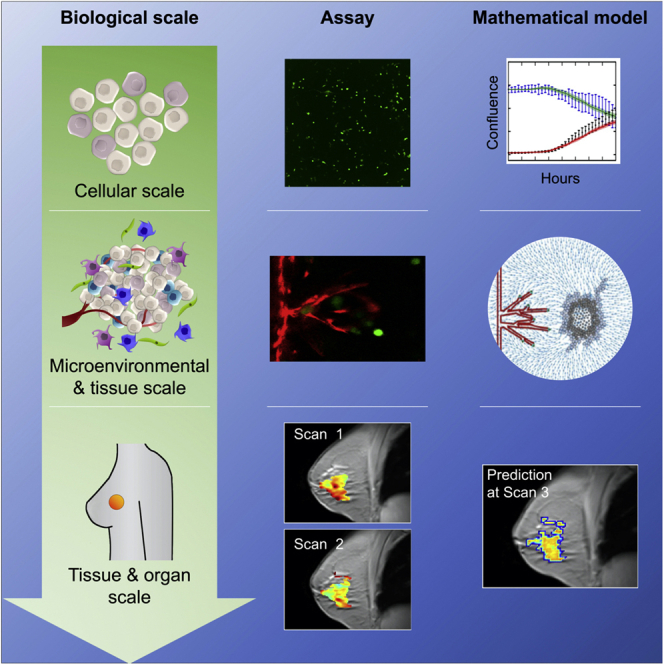
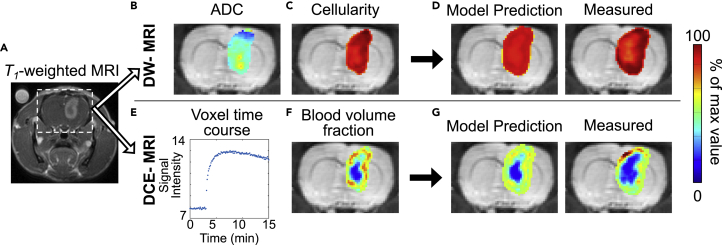
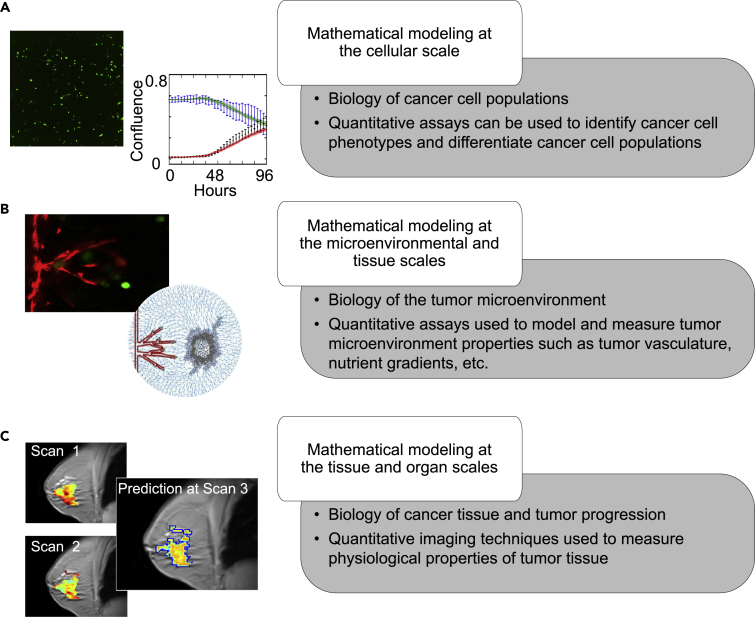
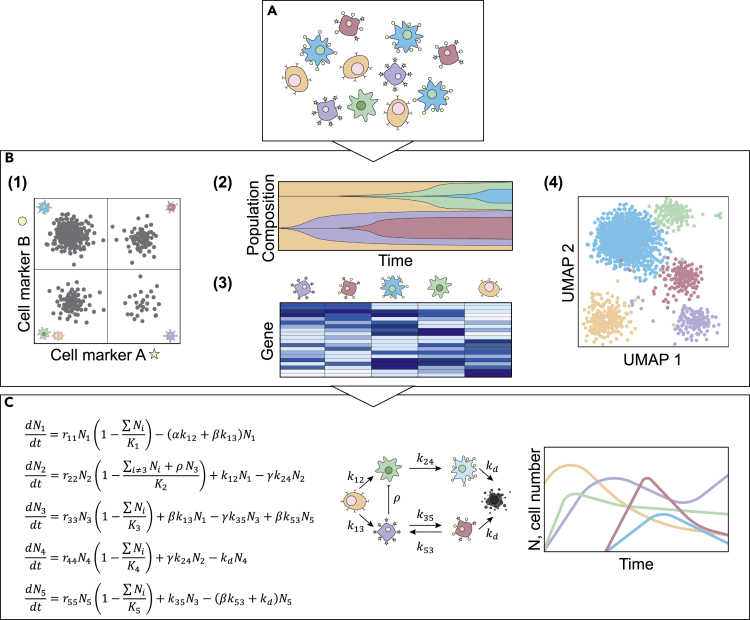
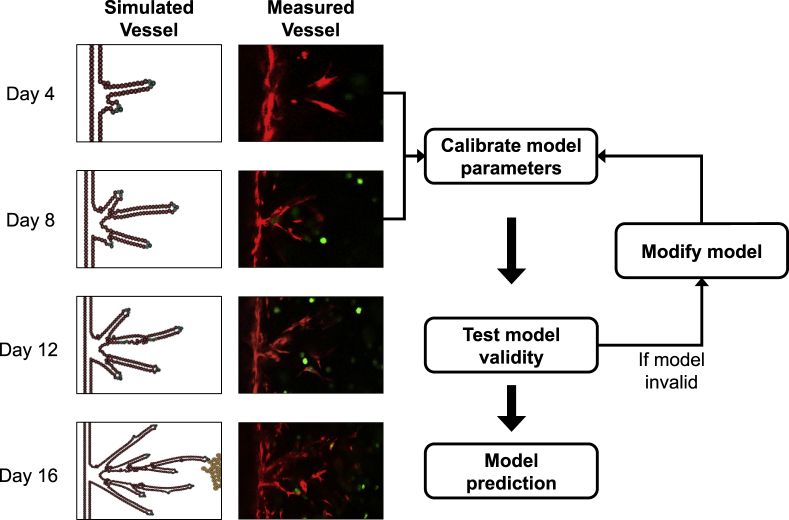
We provide an overview on the use of biological assays to calibrate and initialize mechanism-based models of cancer phenomena. Although artificial intelligence methods currently dominate the landscape in computational oncology, mathematical models that seek to explicitly incorporate biological mechanisms into their formalism are of increasing interest. These models can guide experimental design and provide insights into the underlying mechanisms of cancer progression. Historically, these models have included a myriad of parameters that have been difficult to quantify in biologically relevant systems, limiting their practical insights. Recently, however, there has been much interest calibrating biologically based models with the quantitative measurements available from (for example) RNA sequencing, time-resolved microscopy, and imaging. In this contribution, we summarize how a variety of experimental methods quantify tumor characteristics from the molecular to tissue scales and describe how such data can be directly integrated with mechanism-based models to improve predictions of tumor growth and treatment response.
我们概述了使用生物学测定法来校准和初始化基于机制的癌症现象模型。尽管目前人工智能方法在计算肿瘤学领域占据主导地位,但试图将生物学机制明确纳入其形式体系的数学模型正越来越受到关注。这些模型可以指导实验设计,并深入了解癌症进展的潜在机制。从历史上看,这些模型包含了大量难以在生物学相关系统中量化的参数,限制了它们的实际应用价值。然而,最近人们对利用(例如)RNA测序、时间分辨显微镜和成像等获得的定量测量数据来校准基于生物学的模型产生了浓厚兴趣。在本论文中,我们总结了多种实验方法如何从分子尺度到组织尺度量化肿瘤特征,并描述了这些数据如何直接与基于机制的模型相结合,以改进对肿瘤生长和治疗反应的预测。