Khaliq Waqas, Großmann Peter, Neugebauer Sophie, Kleyman Anna, Domizi Roberta, Calcinaro Sara, Brealey David, Gräler Markus, Kiehntopf Michael, Schäuble Sascha, Singer Mervyn, Panagiotou Gianni, Bauer Michael
Bloomsbury Institute of Intensive Care Medicine, Division of Medicine, University College London, Glower Street, London WC1E 6BT, UK.
Systems Biology and Bioinformatics, Leibniz Institute for Natural Product Research and Infection Biology, Hans Knöll Institute, Adolf-Reichwein-Straße 23, D-07745 Jena, Germany.
Comput Struct Biotechnol J. 2020 Nov 21;18:3678-3691. doi: 10.1016/j.csbj.2020.11.009. eCollection 2020.
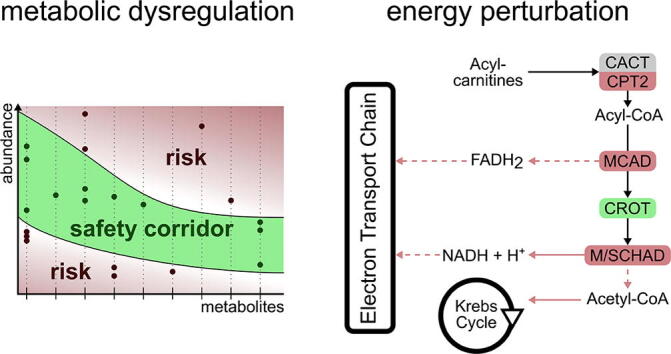
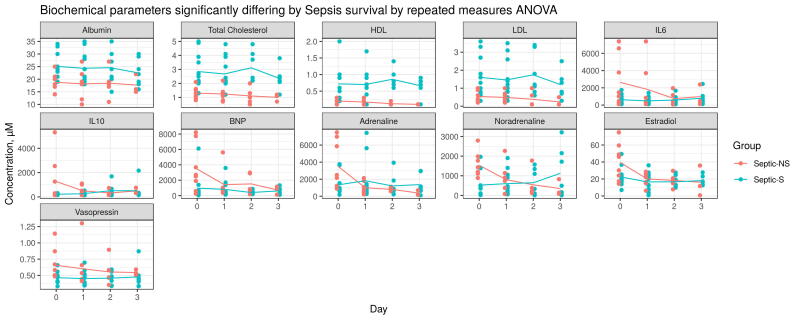
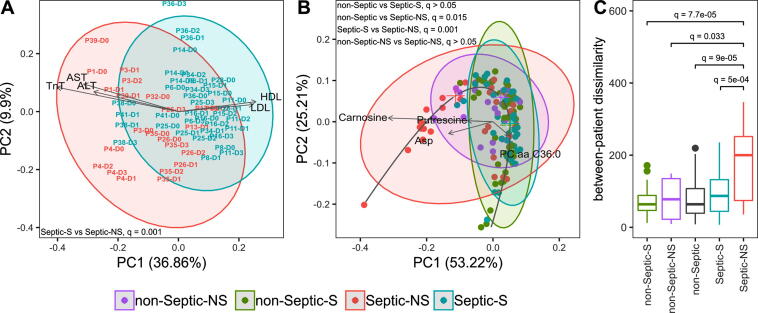
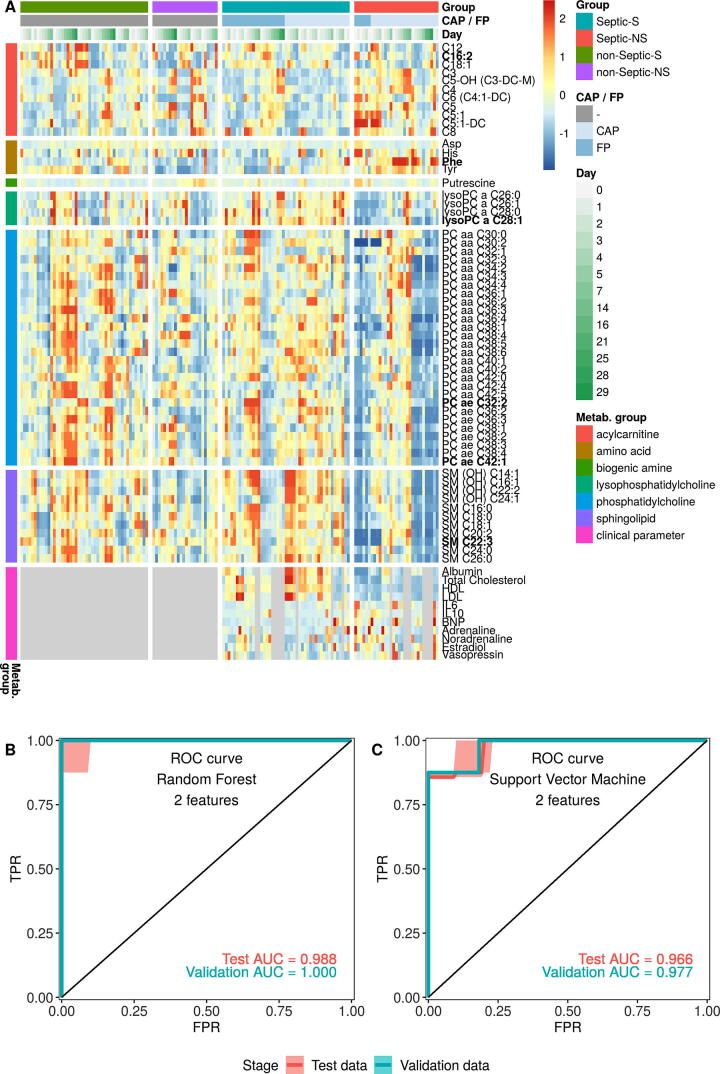
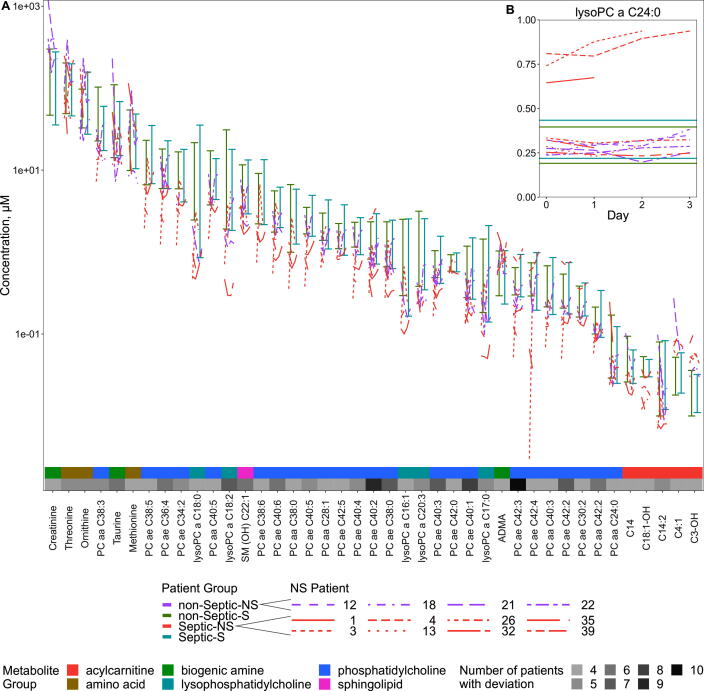
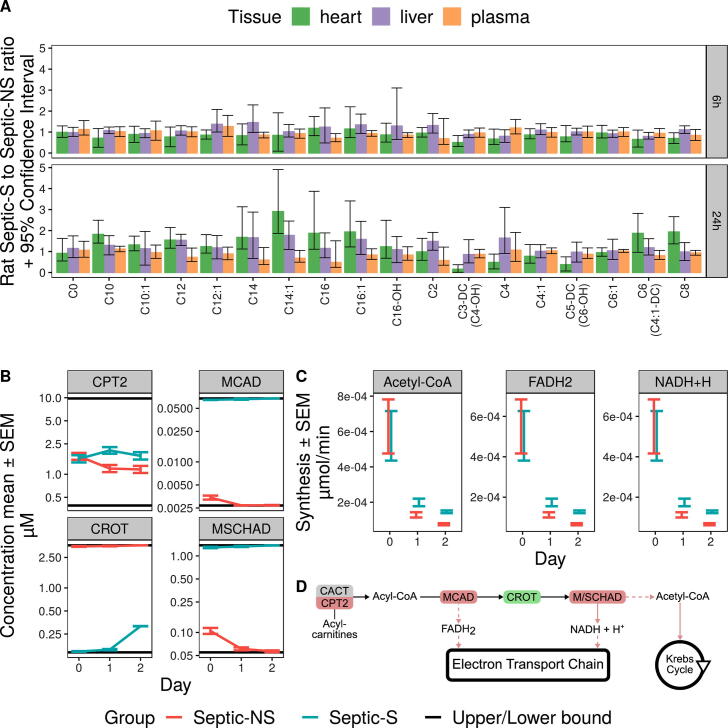
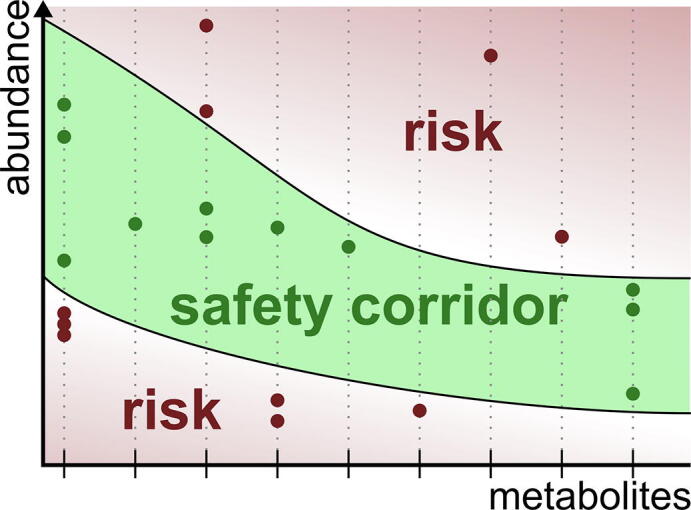
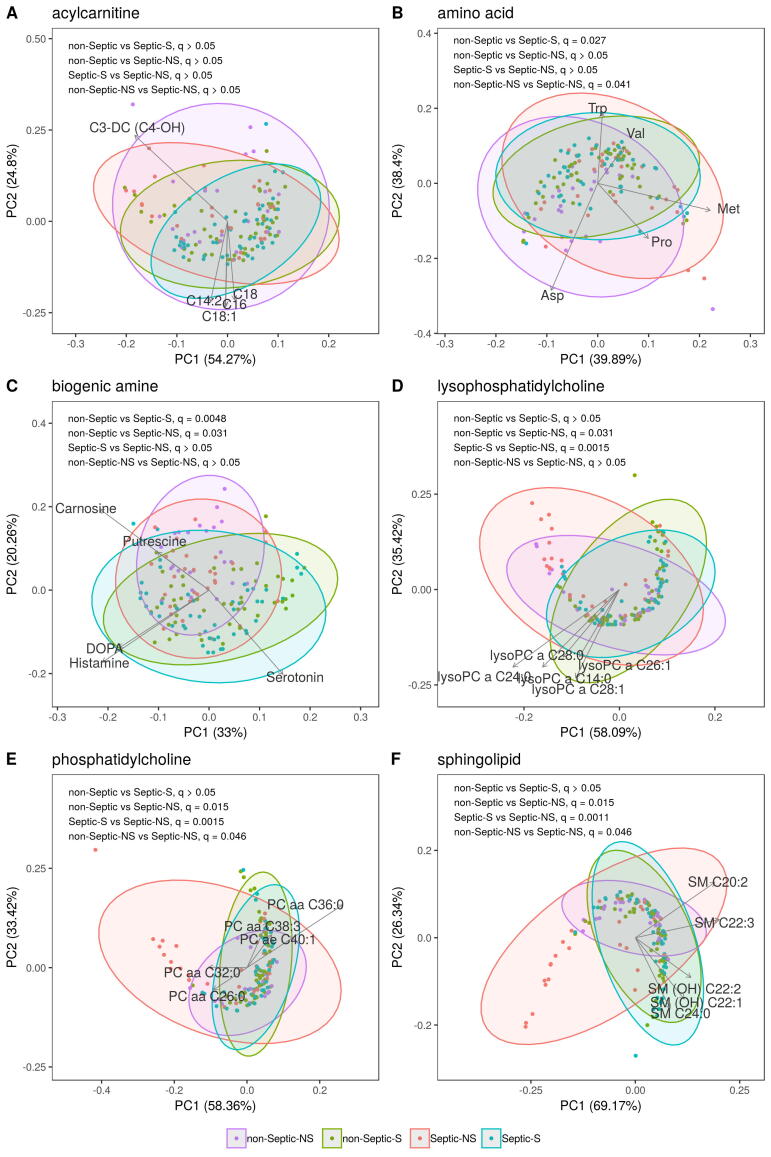
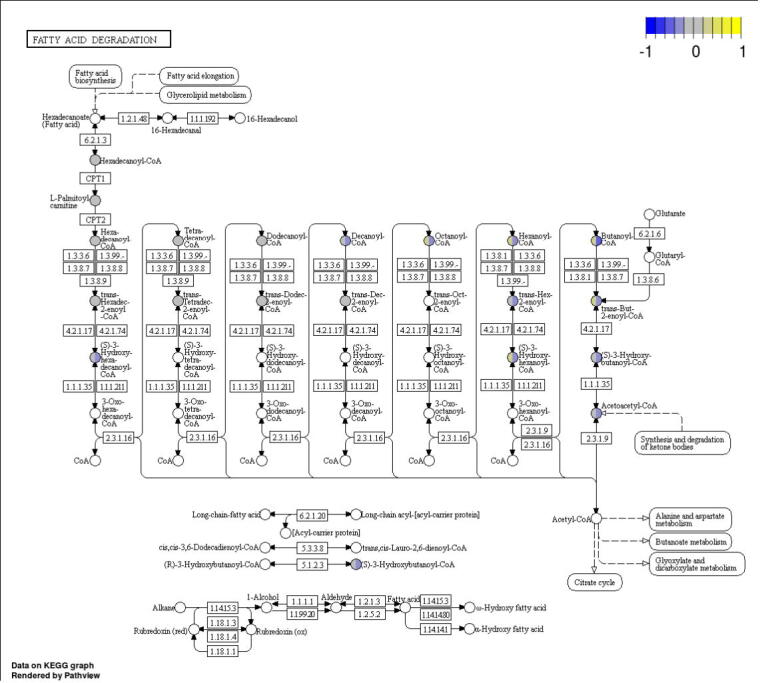
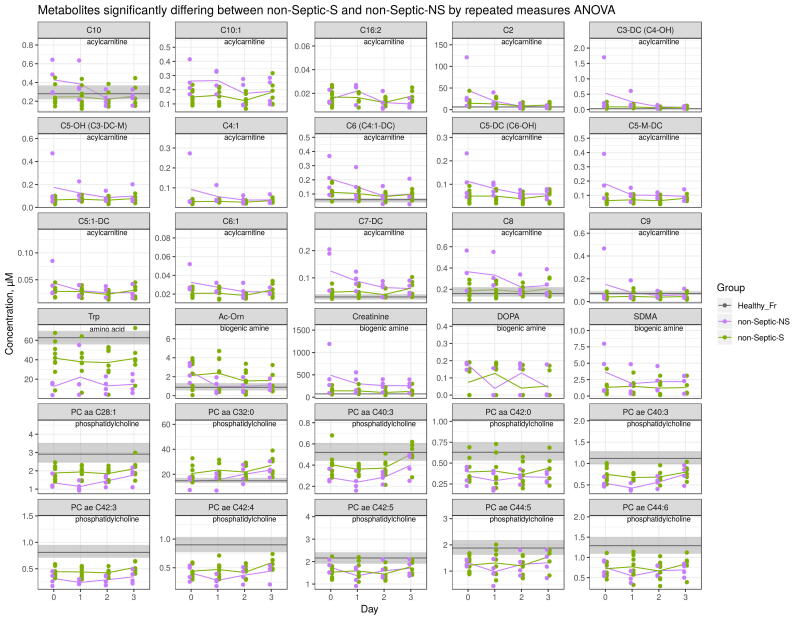
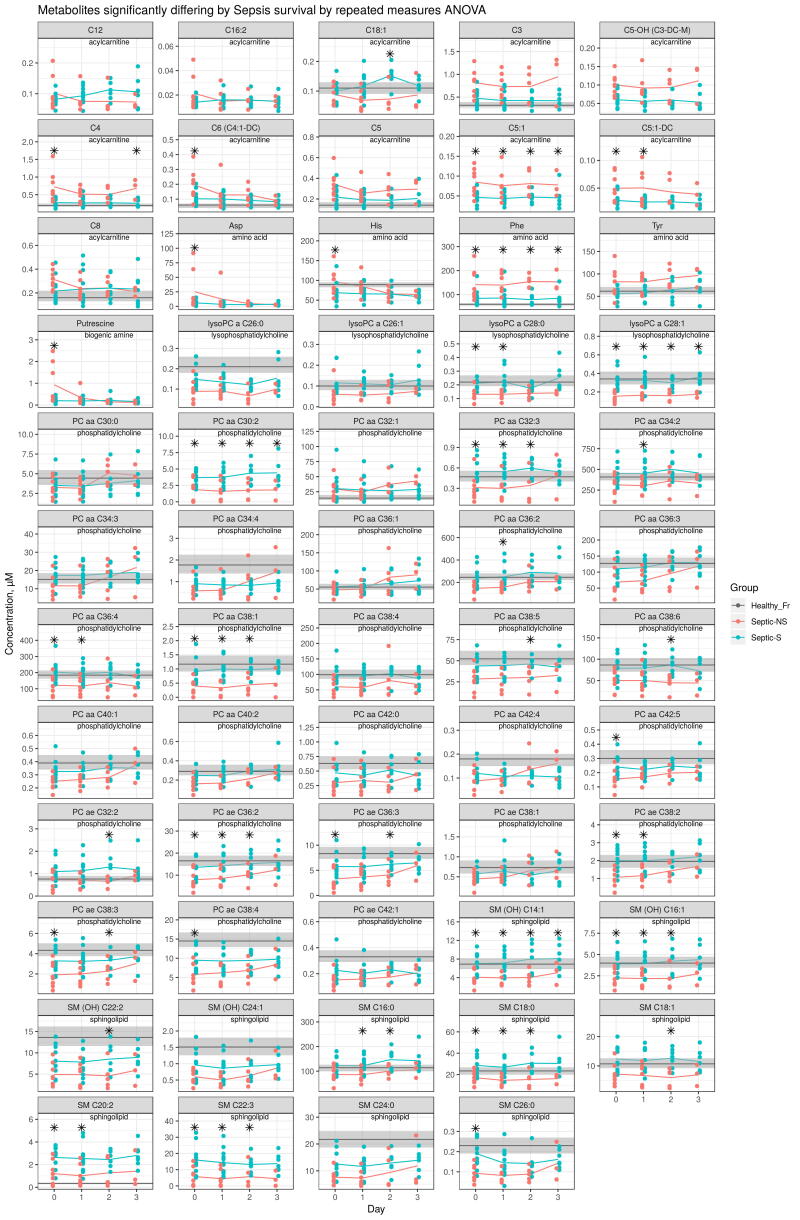
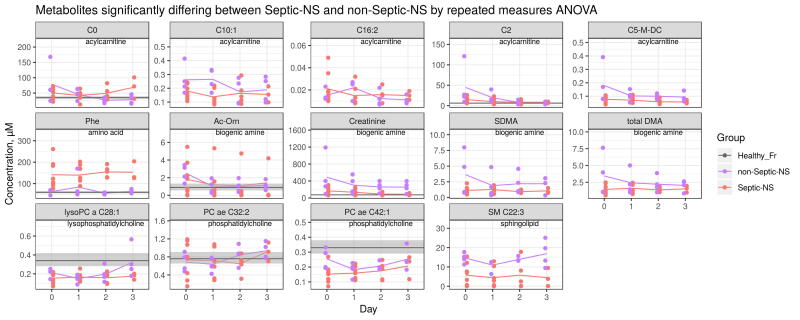
Sepsis remains a major cause of death despite advances in medical care. Metabolic deregulation is an important component of the survival process. Metabolomic analysis allows profiling of critical metabolic functions with the potential to classify patient outcome. Our prospective longitudinal characterization of 33 septic and non-septic critically ill patients showed that deviations, independent of direction, in plasma levels of lipid metabolites were associated with sepsis mortality. We identified a coupling of metabolic signatures between liver and plasma of a rat sepsis model that allowed us to apply a human kinetic model of mitochondrial beta-oxidation to reveal differing enzyme concentrations for medium/short-chain hydroxyacyl-CoA dehydrogenase (elevated in survivors) and crotonase (elevated in non-survivors). These data suggest a need to monitor cellular energy metabolism beyond the available biomarkers. A loss of metabolic adaptation appears to be reflected by an inability to maintain cellular (fatty acid) metabolism within a "corridor of safety".
尽管医疗护理有所进步,但脓毒症仍是主要死因。代谢失调是生存过程的一个重要组成部分。代谢组学分析能够描绘关键代谢功能,具有对患者预后进行分类的潜力。我们对33例脓毒症和非脓毒症危重症患者进行的前瞻性纵向特征分析表明,脂质代谢物血浆水平的偏差(与方向无关)与脓毒症死亡率相关。我们在大鼠脓毒症模型中确定了肝脏和血浆之间代谢特征的耦合,这使我们能够应用线粒体β-氧化的人体动力学模型,以揭示中/短链羟酰基辅酶A脱氢酶(幸存者中升高)和巴豆酸酶(非幸存者中升高)的不同酶浓度。这些数据表明,需要监测现有生物标志物以外的细胞能量代谢。代谢适应能力的丧失似乎表现为无法在“安全走廊”内维持细胞(脂肪酸)代谢。