• 文献检索
  • 文档翻译
  • 深度研究
  • 学术资讯
  • Suppr Zotero 插件Zotero 插件
  • 邀请有礼
  • 套餐&价格
  • 历史记录
应用&插件
Suppr Zotero 插件Zotero 插件浏览器插件Mac 客户端Windows 客户端微信小程序
定价
高级版会员购买积分包购买API积分包
服务
文献检索文档翻译深度研究API 文档MCP 服务
关于我们
关于 Suppr公司介绍联系我们用户协议隐私条款
关注我们

Suppr 超能文献

核心技术专利:CN118964589B侵权必究
粤ICP备2023148730 号-1Suppr @ 2026

文献检索

告别复杂PubMed语法,用中文像聊天一样搜索,搜遍4000万医学文献。AI智能推荐,让科研检索更轻松。

立即免费搜索

文件翻译

保留排版,准确专业,支持PDF/Word/PPT等文件格式,支持 12+语言互译。

免费翻译文档

深度研究

AI帮你快速写综述,25分钟生成高质量综述,智能提取关键信息,辅助科研写作。

立即免费体验

负责任的建模:传染病流行病学的单元测试。

Responsible modelling: Unit testing for infectious disease epidemiology.

机构信息

Big Data Institute, Li Ka Shing Centre for Health Information and Discovery, University of Oxford, UK. Centre for Environment and Health, School of Public Health, Imperial College, UK.

Big Data Institute, Li Ka Shing Centre for Health Information and Discovery, University of Oxford, UK. MathSys CDT, University of Warwick, UK.

出版信息

Epidemics. 2020 Dec;33:100425. doi: 10.1016/j.epidem.2020.100425. Epub 2020 Nov 26.

DOI:10.1016/j.epidem.2020.100425
PMID:33307443
原文链接:https://pmc.ncbi.nlm.nih.gov/articles/PMC7690327/
Abstract

Infectious disease epidemiology is increasingly reliant on large-scale computation and inference. Models have guided health policy for epidemics including COVID-19 and Ebola and endemic diseases including malaria and tuberculosis. Yet a coding bug may bias results, yielding incorrect conclusions and actions causing avoidable harm. We are ethically obliged to make our code as free of error as possible. Unit testing is a coding method to avoid such bugs, but it is rarely used in epidemiology. We demonstrate how unit testing can handle the particular quirks of infectious disease models and aim to increase the uptake of this methodology in our field.

摘要

传染病流行病学越来越依赖于大规模的计算和推理。模型为包括 COVID-19 和埃博拉在内的传染病以及包括疟疾和结核病在内的地方病的卫生政策提供了指导。然而,一个编码错误可能会使结果产生偏差,得出错误的结论和采取行动,从而造成可避免的伤害。我们有道德义务使我们的代码尽可能没有错误。单元测试是一种避免此类错误的编码方法,但在流行病学中很少使用。我们展示了单元测试如何处理传染病模型的特殊问题,并旨在增加我们领域对这种方法的采用。
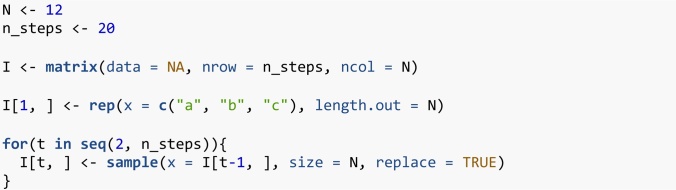
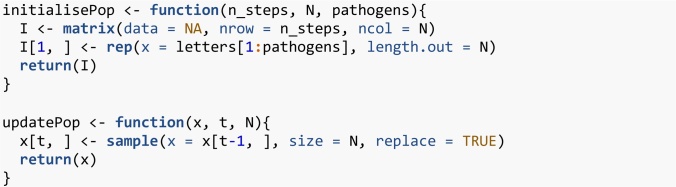
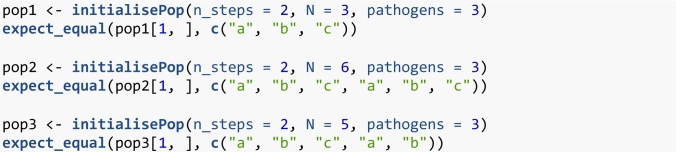
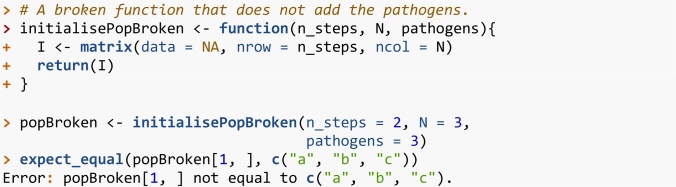
https://cdn.ncbi.nlm.nih.gov/pmc/blobs/61e1/7762784/fa1c6d4baf18/fx20.jpg
https://cdn.ncbi.nlm.nih.gov/pmc/blobs/61e1/7762784/f570fbd44446/gr1.jpg
https://cdn.ncbi.nlm.nih.gov/pmc/blobs/61e1/7762784/775089abc5ef/fx1.jpg
https://cdn.ncbi.nlm.nih.gov/pmc/blobs/61e1/7762784/df79a12ae0b8/gr2.jpg
https://cdn.ncbi.nlm.nih.gov/pmc/blobs/61e1/7762784/2b34fd2a93e5/gr3.jpg
https://cdn.ncbi.nlm.nih.gov/pmc/blobs/61e1/7762784/35cd74a067bf/gr4.jpg
https://cdn.ncbi.nlm.nih.gov/pmc/blobs/61e1/7762784/59710a65ab5c/fx2.jpg
https://cdn.ncbi.nlm.nih.gov/pmc/blobs/61e1/7762784/ec86363db17a/fx3.jpg
https://cdn.ncbi.nlm.nih.gov/pmc/blobs/61e1/7762784/65ed29171ddd/fx4.jpg
https://cdn.ncbi.nlm.nih.gov/pmc/blobs/61e1/7762784/a0bc8b30bdde/fx5.jpg
https://cdn.ncbi.nlm.nih.gov/pmc/blobs/61e1/7762784/9c5e610fa53a/fx6.jpg
https://cdn.ncbi.nlm.nih.gov/pmc/blobs/61e1/7762784/9195a0b8f31b/fx7.jpg
https://cdn.ncbi.nlm.nih.gov/pmc/blobs/61e1/7762784/be26a2bd2529/fx8.jpg
https://cdn.ncbi.nlm.nih.gov/pmc/blobs/61e1/7762784/18d0fc254bba/fx9.jpg
https://cdn.ncbi.nlm.nih.gov/pmc/blobs/61e1/7762784/f666d664ce07/fx10.jpg
https://cdn.ncbi.nlm.nih.gov/pmc/blobs/61e1/7762784/9e9eed966636/fx11.jpg
https://cdn.ncbi.nlm.nih.gov/pmc/blobs/61e1/7762784/95c353c0ae95/fx12.jpg
https://cdn.ncbi.nlm.nih.gov/pmc/blobs/61e1/7762784/517fc0c3074f/fx13.jpg
https://cdn.ncbi.nlm.nih.gov/pmc/blobs/61e1/7762784/14429618d72e/fx14.jpg
https://cdn.ncbi.nlm.nih.gov/pmc/blobs/61e1/7762784/0d5bf23bfaa0/fx15.jpg
https://cdn.ncbi.nlm.nih.gov/pmc/blobs/61e1/7762784/9e5866e7afab/fx16.jpg
https://cdn.ncbi.nlm.nih.gov/pmc/blobs/61e1/7762784/6e95aaa6b5e2/fx17.jpg
https://cdn.ncbi.nlm.nih.gov/pmc/blobs/61e1/7762784/89524ffde26a/fx18.jpg
https://cdn.ncbi.nlm.nih.gov/pmc/blobs/61e1/7762784/5aba5eeddc07/fx19.jpg
https://cdn.ncbi.nlm.nih.gov/pmc/blobs/61e1/7762784/fa1c6d4baf18/fx20.jpg
https://cdn.ncbi.nlm.nih.gov/pmc/blobs/61e1/7762784/f570fbd44446/gr1.jpg
https://cdn.ncbi.nlm.nih.gov/pmc/blobs/61e1/7762784/775089abc5ef/fx1.jpg
https://cdn.ncbi.nlm.nih.gov/pmc/blobs/61e1/7762784/df79a12ae0b8/gr2.jpg
https://cdn.ncbi.nlm.nih.gov/pmc/blobs/61e1/7762784/2b34fd2a93e5/gr3.jpg
https://cdn.ncbi.nlm.nih.gov/pmc/blobs/61e1/7762784/35cd74a067bf/gr4.jpg
https://cdn.ncbi.nlm.nih.gov/pmc/blobs/61e1/7762784/59710a65ab5c/fx2.jpg
https://cdn.ncbi.nlm.nih.gov/pmc/blobs/61e1/7762784/ec86363db17a/fx3.jpg
https://cdn.ncbi.nlm.nih.gov/pmc/blobs/61e1/7762784/65ed29171ddd/fx4.jpg
https://cdn.ncbi.nlm.nih.gov/pmc/blobs/61e1/7762784/a0bc8b30bdde/fx5.jpg
https://cdn.ncbi.nlm.nih.gov/pmc/blobs/61e1/7762784/9c5e610fa53a/fx6.jpg
https://cdn.ncbi.nlm.nih.gov/pmc/blobs/61e1/7762784/9195a0b8f31b/fx7.jpg
https://cdn.ncbi.nlm.nih.gov/pmc/blobs/61e1/7762784/be26a2bd2529/fx8.jpg
https://cdn.ncbi.nlm.nih.gov/pmc/blobs/61e1/7762784/18d0fc254bba/fx9.jpg
https://cdn.ncbi.nlm.nih.gov/pmc/blobs/61e1/7762784/f666d664ce07/fx10.jpg
https://cdn.ncbi.nlm.nih.gov/pmc/blobs/61e1/7762784/9e9eed966636/fx11.jpg
https://cdn.ncbi.nlm.nih.gov/pmc/blobs/61e1/7762784/95c353c0ae95/fx12.jpg
https://cdn.ncbi.nlm.nih.gov/pmc/blobs/61e1/7762784/517fc0c3074f/fx13.jpg
https://cdn.ncbi.nlm.nih.gov/pmc/blobs/61e1/7762784/14429618d72e/fx14.jpg
https://cdn.ncbi.nlm.nih.gov/pmc/blobs/61e1/7762784/0d5bf23bfaa0/fx15.jpg
https://cdn.ncbi.nlm.nih.gov/pmc/blobs/61e1/7762784/9e5866e7afab/fx16.jpg
https://cdn.ncbi.nlm.nih.gov/pmc/blobs/61e1/7762784/6e95aaa6b5e2/fx17.jpg
https://cdn.ncbi.nlm.nih.gov/pmc/blobs/61e1/7762784/89524ffde26a/fx18.jpg
https://cdn.ncbi.nlm.nih.gov/pmc/blobs/61e1/7762784/5aba5eeddc07/fx19.jpg
https://cdn.ncbi.nlm.nih.gov/pmc/blobs/61e1/7762784/fa1c6d4baf18/fx20.jpg

相似文献

1
Responsible modelling: Unit testing for infectious disease epidemiology.负责任的建模:传染病流行病学的单元测试。
Epidemics. 2020 Dec;33:100425. doi: 10.1016/j.epidem.2020.100425. Epub 2020 Nov 26.
2
Reproducibility of COVID-era infectious disease models.新冠时代传染病模型的可重复性。
Epidemics. 2024 Mar;46:100743. doi: 10.1016/j.epidem.2024.100743. Epub 2024 Jan 23.
3
Mathematical Modelling of COVID-19 Transmission in Kenya: A Model with Reinfection Transmission Mechanism.肯尼亚 COVID-19 传播的数学建模:具有再感染传播机制的模型。
Comput Math Methods Med. 2021 Oct 16;2021:5384481. doi: 10.1155/2021/5384481. eCollection 2021.
4
Data science approaches to infectious disease surveillance.数据科学方法在传染病监测中的应用。
Philos Trans A Math Phys Eng Sci. 2022 Jan 10;380(2214):20210115. doi: 10.1098/rsta.2021.0115. Epub 2021 Nov 22.
5
Stochastic dynamics for reinfection by transmitted diseases.传染病再感染的随机动力学。
Phys Rev E. 2017 Jun;95(6-1):062135. doi: 10.1103/PhysRevE.95.062135. Epub 2017 Jun 29.
6
Facilitating Understanding, Modeling and Simulation of Infectious Disease Epidemics in the Age of COVID-19.促进对 COVID-19 时代传染病流行的理解、建模和模拟。
Front Public Health. 2021 Feb 12;9:593417. doi: 10.3389/fpubh.2021.593417. eCollection 2021.
7
Special issue on Erice 'MathCompEpi 2015' Proceedings.关于“Erice 'MathCompEpi 2015' 会议论文集”的特刊。
Math Biosci Eng. 2018 Feb 1;15(1):i-iv. doi: 10.3934/mbe.201801i.
8
Fogarty International Center collaborative networks in infectious disease modeling: Lessons learnt in research and capacity building.福格蒂国际中心传染病建模合作网络:研究与能力建设中的经验教训。
Epidemics. 2019 Mar;26:116-127. doi: 10.1016/j.epidem.2018.10.004. Epub 2018 Oct 23.
9
Fast and principled simulations of the SIR model on temporal networks.在时变网络上快速且有原则的 SIR 模型模拟。
PLoS One. 2021 Feb 12;16(2):e0246961. doi: 10.1371/journal.pone.0246961. eCollection 2021.
10
Advancing digital methods in the fight against communicable diseases.在抗击传染病方面推进数字方法。
Int Health. 2015 Mar;7(2):79-81. doi: 10.1093/inthealth/ihv008.

引用本文的文献

1
Epihiper-A high performance computational modeling framework to support epidemic science.Epihiper——一个支持流行病科学的高性能计算建模框架。
PNAS Nexus. 2024 Dec 11;4(1):pgae557. doi: 10.1093/pnasnexus/pgae557. eCollection 2025 Jan.
2
An ODE model of yaws elimination in Lihir Island, Papua New Guinea.巴布亚新几内亚利希尔岛雅司病消除的常微分方程模型。
PeerJ. 2022 Mar 17;10:e13018. doi: 10.7717/peerj.13018. eCollection 2022.
3
Contact tracing is an imperfect tool for controlling COVID-19 transmission and relies on population adherence.

本文引用的文献

1
Critiqued coronavirus simulation gets thumbs up from code-checking efforts.受批评的新冠病毒模拟通过代码检查获得认可。
Nature. 2020 Jun;582(7812):323-324. doi: 10.1038/d41586-020-01685-y.
2
Modelling for policy: The five principles of the Neglected Tropical Diseases Modelling Consortium.政策建模:被忽视热带病建模联盟的五项原则
PLoS Negl Trop Dis. 2020 Apr 9;14(4):e0008033. doi: 10.1371/journal.pntd.0008033. eCollection 2020 Apr.
3
Commentary on Ferguson, et al., "Impact of Non-pharmaceutical Interventions (NPIs) to Reduce COVID-19 Mortality and Healthcare Demand".
接触者追踪是控制 COVID-19 传播的一种不完善的工具,依赖于人群的依从性。
Nat Commun. 2021 Sep 13;12(1):5412. doi: 10.1038/s41467-021-25531-5.
4
Mathematical modelling of the use of insecticide-treated nets for elimination of visceral leishmaniasis in Bihar, India.印度比哈尔邦使用杀虫剂处理过的蚊帐消除内脏利什曼病的数学模型
R Soc Open Sci. 2021 Jun 30;8(6):201960. doi: 10.1098/rsos.201960. eCollection 2021 Jun.
5
Engagement and adherence trade-offs for SARS-CoV-2 contact tracing.SARS-CoV-2 接触者追踪中的参与度和依从度权衡。
Philos Trans R Soc Lond B Biol Sci. 2021 Jul 19;376(1829):20200270. doi: 10.1098/rstb.2020.0270. Epub 2021 May 31.
评 Ferguson 等人的“减少 COVID-19 死亡率和医疗需求的非药物干预(NPIs)的影响”一文。
Bull Math Biol. 2020 Apr 8;82(4):52. doi: 10.1007/s11538-020-00726-x.
4
Feasibility of controlling COVID-19 outbreaks by isolation of cases and contacts.通过隔离病例和接触者控制 COVID-19 疫情爆发的可行性。
Lancet Glob Health. 2020 Apr;8(4):e488-e496. doi: 10.1016/S2214-109X(20)30074-7. Epub 2020 Feb 28.
5
Characterization of Leptazolines A-D, Polar Oxazolines from the Cyanobacterium sp., Reveals a Glitch with the "Willoughby-Hoye" Scripts for Calculating NMR Chemical Shifts.Leptazolines A-D 的特征,来自蓝藻 sp. 的极性恶唑啉,揭示了“Willoughby-Hoye”脚本计算 NMR 化学位移的一个缺陷。
Org Lett. 2019 Oct 18;21(20):8449-8453. doi: 10.1021/acs.orglett.9b03216. Epub 2019 Oct 8.
6
Guidelines for multi-model comparisons of the impact of infectious disease interventions.传染病干预措施影响的多模型比较指南。
BMC Med. 2019 Aug 19;17(1):163. doi: 10.1186/s12916-019-1403-9.
7
EpiModel: An R Package for Mathematical Modeling of Infectious Disease over Networks.EpiModel:一个用于通过网络对传染病进行数学建模的R软件包。
J Stat Softw. 2018 Apr;84. doi: 10.18637/jss.v084.i08. Epub 2018 Apr 20.
8
Lessons from a decade of individual-based models for infectious disease transmission: a systematic review (2006-2015).基于个体的传染病传播模型十年经验教训:一项系统综述(2006 - 2015年)
BMC Infect Dis. 2017 Sep 11;17(1):612. doi: 10.1186/s12879-017-2699-8.
9
Learning from multi-model comparisons: Collaboration leads to insights, but limitations remain.从多模型比较中学习:合作带来见解,但局限性仍然存在。
Epidemics. 2017 Mar;18:1-3. doi: 10.1016/j.epidem.2017.02.014.
10
Retraction.撤回。
J Clin Oncol. 2016 Sep 20;34(27):3358-9. doi: 10.1200/JCO.2016.69.0875. Epub 2016 Aug 15.