Abusrewil Sumaya, Brown Jason L, Delaney Christopher D, Butcher Mark C, Kean Ryan, Gamal Dalia, Scott J Alun, McLean William, Ramage Gordon
Glasgow Endodontics & Oral Sciences Research Group, Glasgow Dental School, School of Medicine, Dentistry and Nursing, College of Medical, Veterinary and Life Sciences, Glasgow University, Glasgow G2 3JZ, UK.
Department of Biological Sciences, Glasgow Caledonian University, Cowcaddens Road, Glasgow G4 0BA, UK.
Microorganisms. 2020 Dec 14;8(12):1988. doi: 10.3390/microorganisms8121988.
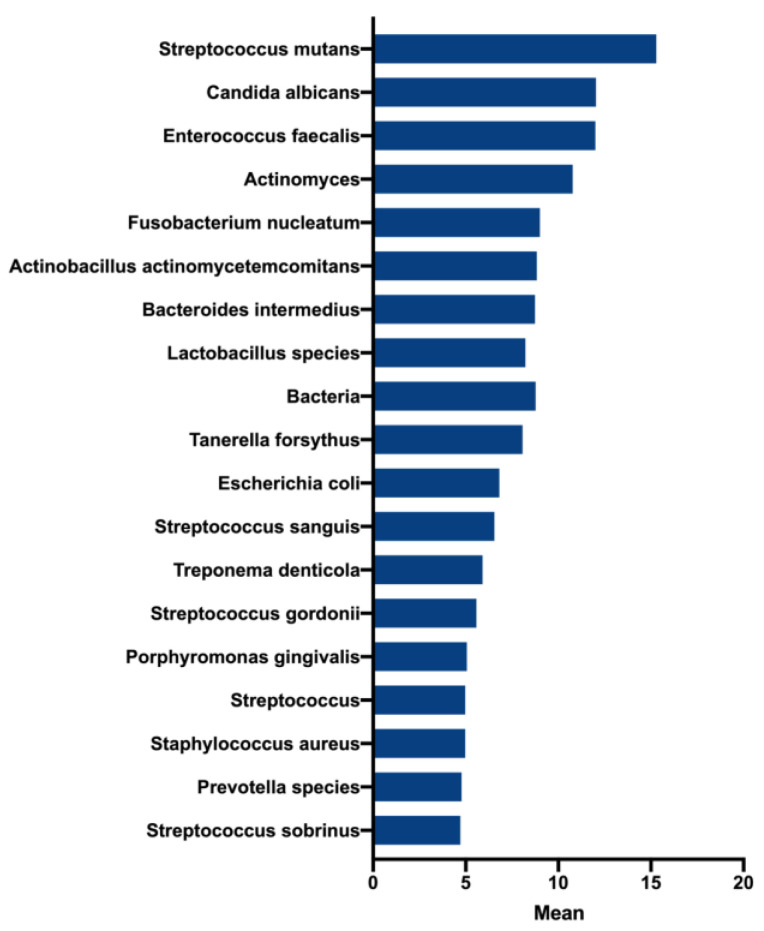
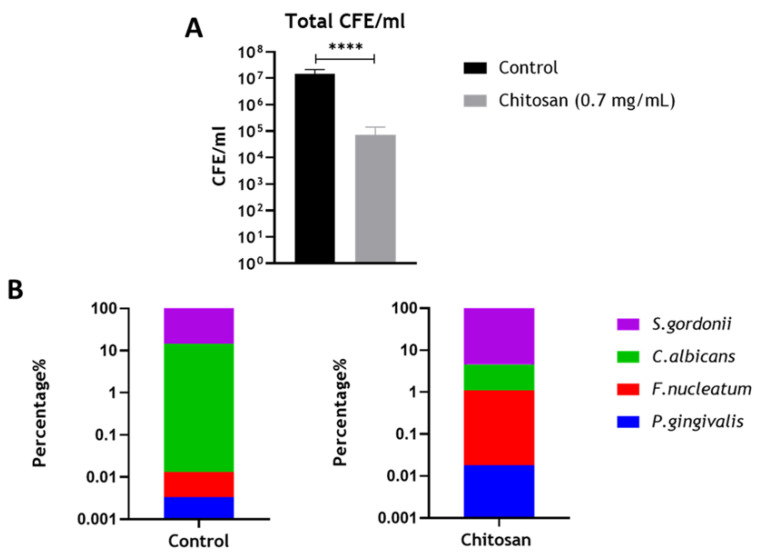
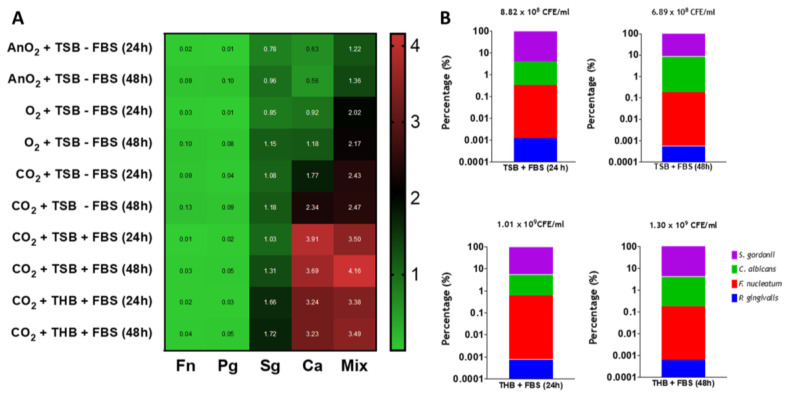
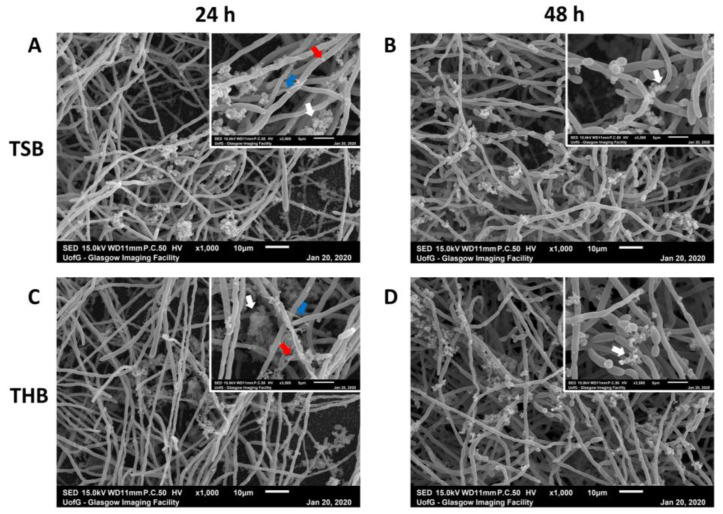
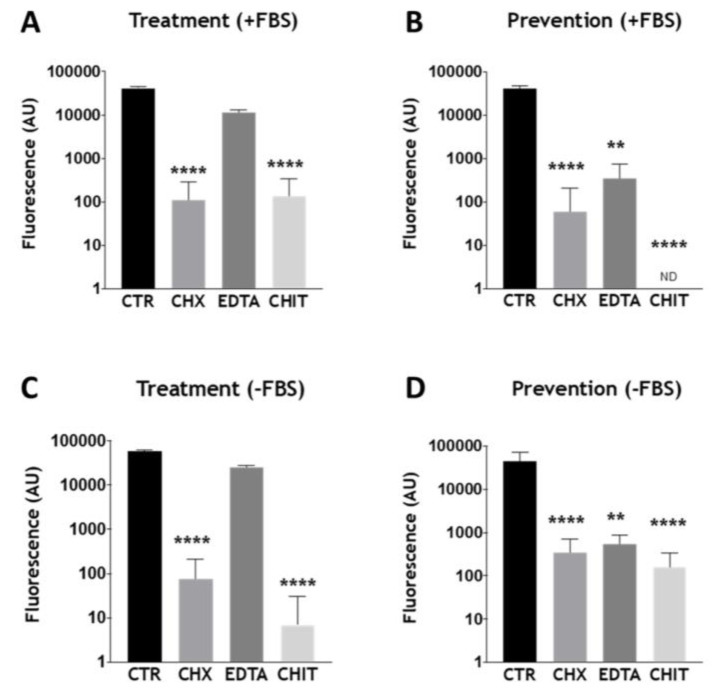
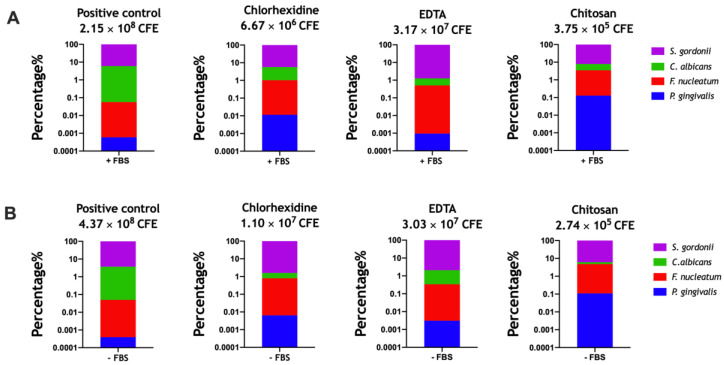
There is a growing realization that endodontic infections are often polymicrobial, and may contain spp. Despite this understanding, the development of new endodontic irrigants and models of pathogenesis remains limited to mono-species biofilm models and is bacterially focused. The purpose of this study was to develop and optimize an interkingdom biofilm model of endodontic infection and use this to test suitable anti-biofilm actives. Biofilms containing , , and were established from ontological analysis. Biofilms were optimized in different media and atmospheric conditions, prior to quantification and imaging, and subsequently treated with chlorhexidine, EDTA, and chitosan. These studies demonstrated that either media supplemented with serum were equally optimal for biofilm growth, which were dominated by , followed by . Assessment of antimicrobial activity showed significant effectiveness of each antimicrobial, irrespective of serum. Chitosan was most effective (3 log reduction), and preferentially targeted in both biofilm treatment and inhibition models. Chitosan was similarly effective at preventing biofilm growth on a dentine substrate. This study has shown that a reproducible and robust complex interkingdom model, which when tested with the antifungal chitosan, supports the notion of as a key structural component.
人们越来越认识到,牙髓感染通常是多微生物的,可能包含多种菌种。尽管有这种认识,但新型牙髓冲洗剂的开发和发病机制模型仍局限于单菌种生物膜模型,且以细菌为重点。本研究的目的是开发和优化牙髓感染的跨界生物膜模型,并以此测试合适的抗生物膜活性物质。通过本体分析建立了包含[具体菌种1]、[具体菌种2]和[具体菌种3]的生物膜。在进行定量和成像之前,在不同培养基和大气条件下对生物膜进行优化,随后用洗必泰、乙二胺四乙酸和壳聚糖进行处理。这些研究表明,添加血清的两种培养基对生物膜生长同样最佳,生物膜以[优势菌种1]为主,其次是[优势菌种2]。抗菌活性评估显示,每种抗菌剂都有显著效果,与血清无关。壳聚糖最有效(减少3个对数级),在生物膜处理和抑制模型中均优先靶向[具体菌种]。壳聚糖在防止生物膜在牙本质基质上生长方面同样有效。本研究表明,一种可重复且稳健的复杂跨界模型,在用抗真菌壳聚糖测试时,支持[具体菌种]作为关键结构成分的观点。