• 文献检索
  • 文档翻译
  • 深度研究
  • 学术资讯
  • Suppr Zotero 插件Zotero 插件
  • 邀请有礼
  • 套餐&价格
  • 历史记录
应用&插件
Suppr Zotero 插件Zotero 插件浏览器插件Mac 客户端Windows 客户端微信小程序
定价
高级版会员购买积分包购买API积分包
服务
文献检索文档翻译深度研究API 文档MCP 服务
关于我们
关于 Suppr公司介绍联系我们用户协议隐私条款
关注我们

Suppr 超能文献

核心技术专利:CN118964589B侵权必究
粤ICP备2023148730 号-1Suppr @ 2026

文献检索

告别复杂PubMed语法,用中文像聊天一样搜索,搜遍4000万医学文献。AI智能推荐,让科研检索更轻松。

立即免费搜索

文件翻译

保留排版,准确专业,支持PDF/Word/PPT等文件格式,支持 12+语言互译。

免费翻译文档

深度研究

AI帮你快速写综述,25分钟生成高质量综述,智能提取关键信息,辅助科研写作。

立即免费体验

重症新冠病毒肺炎患者的嗅觉和味觉:自我报告与检测结果对比

Smell and Taste in Severe CoViD-19: Self-Reported vs. Testing.

作者信息

Mazzatenta Andrea, Neri Giampiero, D'Ardes Damiano, De Luca Carlo, Marinari Stefano, Porreca Ettore, Cipollone Francesco, Vecchiet Jacopo, Falcicchia Chiara, Panichi Vincenzo, Origlia Nicola, Di Giulio Camillo

机构信息

Neurophysiology, Olfaction and Chemoreception Laboratory, Physiology and Physiopathology Section, Neuroscience, Imaging and Clinical Sciences Department, 'G. d'Annunzio' University of Chieti-Pescara, Chieti, Italy.

Medicine and Aging Sciences Department, 'G. d'Annunzio'University of Chieti-Pescara, Chieti, Italy.

出版信息

Front Med (Lausanne). 2020 Dec 2;7:589409. doi: 10.3389/fmed.2020.589409. eCollection 2020.

DOI:10.3389/fmed.2020.589409
PMID:33344476
原文链接:https://pmc.ncbi.nlm.nih.gov/articles/PMC7745760/
Abstract

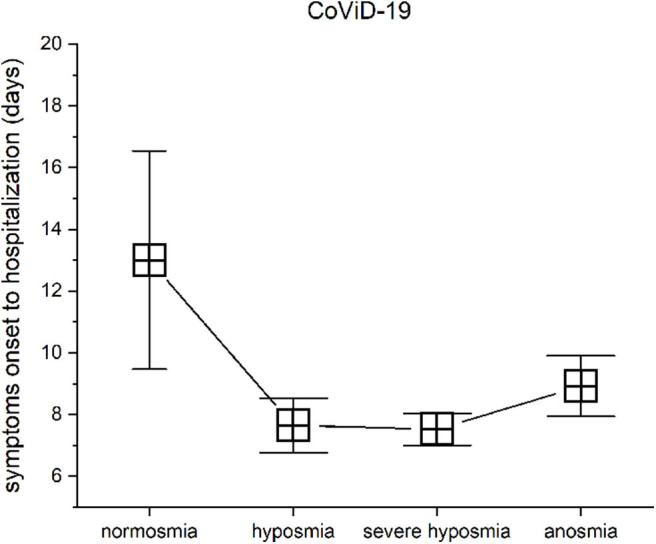
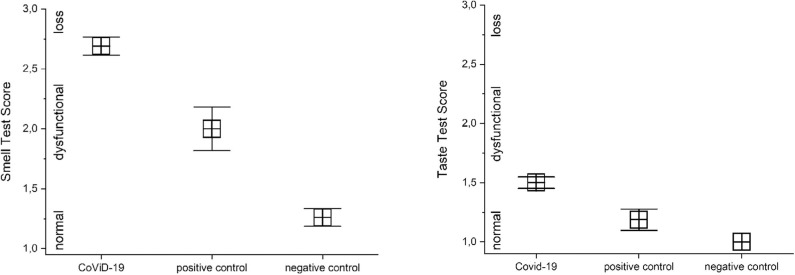
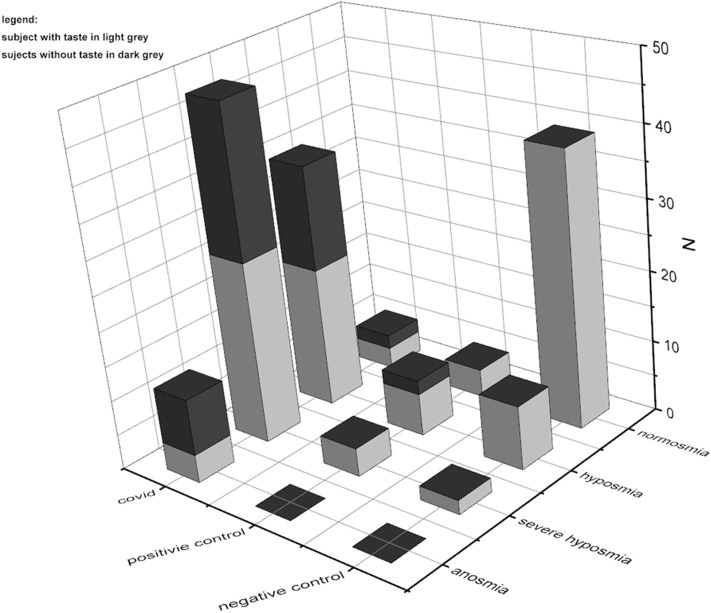
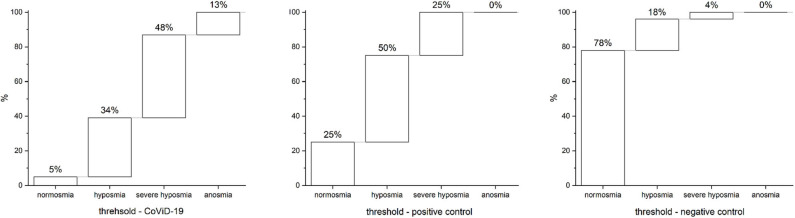
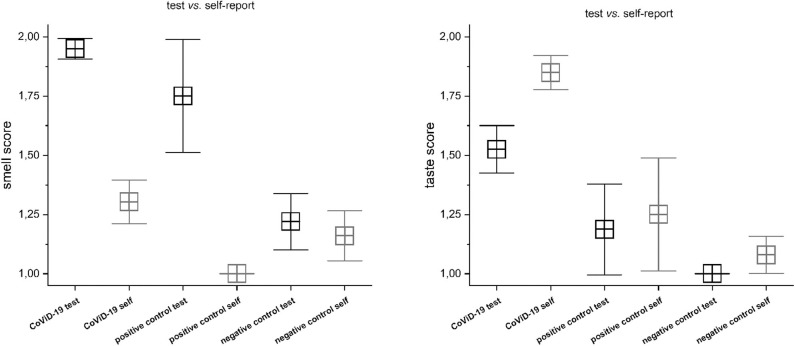
One of the most striking reported symptoms in CoViD-19 is loss of smell and taste. The frequency of these impairments and their specificity as a potential central nervous system function biomarker are of great interest as a diagnostic clue for CoViD-19 infection as opposed to other similar symptomatologic diseases and because of their implication in viral pathogenesis. Here severe CoViD-19 was investigated by comparing self-report vs. testing of smell and taste, thus the objective severity of olfactory impairment and their possible correlation with other symptoms. Because a significant discrepancy between smell and taste testing vs. self-report results ( < 0.001) emerges in our result, we performed a statistical analysis highlighting disagreement among normosmia ( < 0.05), hyposmia, severe hyposmia, and anosmia ( < 0.001) and, in hypogeusia and severe hypogeusia, while no differences are observed in normogeusia and ageusia. Therefore, we analyzed the olfactory threshold by an objective test revealing the distribution of hyposmic (34%), severe hyposmic (48%), and anosmic (13%) patients in severe CoViD-19. In severe CoViD-19 patients, taste is lost in 4.3% of normosmic individuals, 31.9% of hyposmic individuals, 46.8% of severe hyposmic individuals, and 17% of anosmic individuals. Moreover, 95% of 100 CoViD-19 patients objectively tested were affected by smell dysfunction, while 47% were affected by taste dysfunction. Furthermore, analysis by objective testing also highlighted that the severity of smell dysfunction in CoViD-19 subjects did not correlate with age and sex. In conclusion, we report by objective testing that the majority of CoViD-19 patients report severe anosmia, that most of the subjects have olfactory impairment rather than taste impairment, and, finally, that the olfactory impairment correlate with symptom onset and hospitalization ( < 0.05). Patients who exhibit severe olfactory impairment had been hospitalized for about a week from symptom onset; double time has taken place in subjects with normosmia. Our results may be limited by the relatively small number of study participants, but these suggest by objective testing that hyposmia, severe hyposmia, and anosmia may relate directly to infection severity and neurological damage. The smell test assessment could be a potential screening symptom that might contribute to the decision to test suspected cases or guide quarantine instructions, further therapeutic approach, and evaluation of neurological damage.

摘要

新型冠状病毒肺炎(COVID-19)报告的最显著症状之一是嗅觉和味觉丧失。这些功能障碍的发生率及其作为潜在中枢神经系统功能生物标志物的特异性,作为COVID-19感染相对于其他类似症状性疾病的诊断线索,以及因其在病毒发病机制中的意义,备受关注。在此,通过比较自我报告与嗅觉和味觉测试,对重症COVID-19进行了研究,从而了解嗅觉障碍的客观严重程度及其与其他症状的可能相关性。由于我们的研究结果显示嗅觉和味觉测试与自我报告结果之间存在显著差异(<0.001),我们进行了一项统计分析,突出了嗅觉正常(<0.05)、嗅觉减退、严重嗅觉减退和嗅觉丧失(<0.001)之间的不一致,以及味觉减退和严重味觉减退的情况,而在味觉正常和味觉丧失方面未观察到差异。因此,我们通过客观测试分析了嗅觉阈值,揭示了重症COVID-19患者中嗅觉减退(34%)、严重嗅觉减退(48%)和嗅觉丧失(13%)的分布情况。在重症COVID-19患者中,嗅觉正常个体中有4.3%失去味觉,嗅觉减退个体中有31.9%失去味觉,严重嗅觉减退个体中有46.8%失去味觉,嗅觉丧失个体中有17%失去味觉。此外,在100例接受客观测试的COVID-19患者中,95%存在嗅觉功能障碍,47%存在味觉功能障碍。此外,客观测试分析还突出显示,COVID-19患者嗅觉功能障碍的严重程度与年龄和性别无关。总之,我们通过客观测试报告,大多数COVID-19患者存在严重嗅觉丧失,大多数受试者存在嗅觉障碍而非味觉障碍,最后,嗅觉障碍与症状发作和住院相关(<0.05)。出现严重嗅觉障碍的患者从症状发作开始已住院约一周;嗅觉正常的受试者住院时间为两倍。我们的结果可能受到研究参与者数量相对较少的限制,但这些结果通过客观测试表明,嗅觉减退、严重嗅觉减退和嗅觉丧失可能与感染严重程度和神经损伤直接相关。嗅觉测试评估可能是一种潜在的筛查症状,可能有助于决定对疑似病例进行检测或指导隔离指示、进一步的治疗方法以及神经损伤的评估。
https://cdn.ncbi.nlm.nih.gov/pmc/blobs/5087/7745760/b77c7f07d3f8/fmed-07-589409-g0007.jpg
https://cdn.ncbi.nlm.nih.gov/pmc/blobs/5087/7745760/58f52840e590/fmed-07-589409-g0001.jpg
https://cdn.ncbi.nlm.nih.gov/pmc/blobs/5087/7745760/b82eed9c089c/fmed-07-589409-g0002.jpg
https://cdn.ncbi.nlm.nih.gov/pmc/blobs/5087/7745760/6feba01c0af0/fmed-07-589409-g0003.jpg
https://cdn.ncbi.nlm.nih.gov/pmc/blobs/5087/7745760/b2fd1a1e6f51/fmed-07-589409-g0004.jpg
https://cdn.ncbi.nlm.nih.gov/pmc/blobs/5087/7745760/4698000cce66/fmed-07-589409-g0005.jpg
https://cdn.ncbi.nlm.nih.gov/pmc/blobs/5087/7745760/fb4b81387a70/fmed-07-589409-g0006.jpg
https://cdn.ncbi.nlm.nih.gov/pmc/blobs/5087/7745760/b77c7f07d3f8/fmed-07-589409-g0007.jpg
https://cdn.ncbi.nlm.nih.gov/pmc/blobs/5087/7745760/58f52840e590/fmed-07-589409-g0001.jpg
https://cdn.ncbi.nlm.nih.gov/pmc/blobs/5087/7745760/b82eed9c089c/fmed-07-589409-g0002.jpg
https://cdn.ncbi.nlm.nih.gov/pmc/blobs/5087/7745760/6feba01c0af0/fmed-07-589409-g0003.jpg
https://cdn.ncbi.nlm.nih.gov/pmc/blobs/5087/7745760/b2fd1a1e6f51/fmed-07-589409-g0004.jpg
https://cdn.ncbi.nlm.nih.gov/pmc/blobs/5087/7745760/4698000cce66/fmed-07-589409-g0005.jpg
https://cdn.ncbi.nlm.nih.gov/pmc/blobs/5087/7745760/fb4b81387a70/fmed-07-589409-g0006.jpg
https://cdn.ncbi.nlm.nih.gov/pmc/blobs/5087/7745760/b77c7f07d3f8/fmed-07-589409-g0007.jpg

相似文献

1
Smell and Taste in Severe CoViD-19: Self-Reported vs. Testing.重症新冠病毒肺炎患者的嗅觉和味觉:自我报告与检测结果对比
Front Med (Lausanne). 2020 Dec 2;7:589409. doi: 10.3389/fmed.2020.589409. eCollection 2020.
2
Physiological discrimination and correlation between olfactory and gustatory dysfunction in long-term COVID-19.长期 COVID-19 患者嗅觉和味觉功能障碍的生理学差异及相关性。
Physiol Rep. 2022 Nov;10(22):e15486. doi: 10.14814/phy2.15486.
3
Visual Analogue Scale for the Evaluation of Olfactory and Gustatory Dysfunction of COVID-19 Patients in Northwestern Greece.用于评估希腊西北部新冠病毒肺炎患者嗅觉和味觉功能障碍的视觉模拟量表
Cureus. 2023 Mar 20;15(3):e36413. doi: 10.7759/cureus.36413. eCollection 2023 Mar.
4
Olfactory and gustatory dysfunctions as a clinical presentation of mild-to-moderate forms of the coronavirus disease (COVID-19): a multicenter European study.嗅觉和味觉障碍作为冠状病毒病(COVID-19)轻至中度形式的临床特征:一项多中心欧洲研究。
Eur Arch Otorhinolaryngol. 2020 Aug;277(8):2251-2261. doi: 10.1007/s00405-020-05965-1. Epub 2020 Apr 6.
5
The clinical course of smell and taste loss in COVID-19 hospitalized patients.新冠病毒肺炎住院患者嗅觉和味觉丧失的临床病程
Hippokratia. 2020 Apr-Jun;24(2):66-71.
6
Long-Term Subjective and Objective Assessment of Smell and Taste in COVID-19.COVID-19 患者嗅觉和味觉的长期主观和客观评估
Cells. 2022 Feb 24;11(5):788. doi: 10.3390/cells11050788.
7
Taste and smell function in long-term survivors after childhood medulloblastoma/CNS-PNET.儿童髓母细胞瘤/中枢神经系统胚胎瘤后长期幸存者的味觉和嗅觉功能。
Support Care Cancer. 2022 Jul;30(7):6155-6162. doi: 10.1007/s00520-022-07048-9. Epub 2022 Apr 15.
8
Olfactory function and viral recovery in COVID-19.新冠病毒感染患者的嗅觉功能和病毒恢复情况。
Brain Behav. 2021 Mar;11(3):e02006. doi: 10.1002/brb3.2006. Epub 2021 Jan 19.
9
Gaining Back What Is Lost: Recovering the Sense of Smell in Mild to Moderate Patients After COVID-19.重拾失去的嗅觉:新冠康复患者中轻度至中度嗅觉丧失的嗅觉恢复。
Chem Senses. 2020 Dec 5;45(9):875-881. doi: 10.1093/chemse/bjaa066.
10
Long-lasting olfactory dysfunction in COVID-19 patients.新冠病毒感染患者的持久嗅觉功能障碍。
Eur Arch Otorhinolaryngol. 2022 Jul;279(7):3485-3492. doi: 10.1007/s00405-021-07153-1. Epub 2021 Nov 10.

引用本文的文献

1
Sensory Insights in Aging: Exploring the Impact on Improving Dietary Through Sensory Enhancement.衰老中的感官洞察:探索通过感官增强对改善饮食的影响。
Food Sci Nutr. 2025 Mar 3;13(3):e70074. doi: 10.1002/fsn3.70074. eCollection 2025 Mar.
2
Practical Review of Olfactory Training and COVID-19.嗅觉训练与新冠病毒病实用综述
J Rhinol. 2022 Nov;29(3):127-133. doi: 10.18787/jr.2022.00407. Epub 2022 Nov 15.
3
Bidirectional relationship between olfaction and Parkinson's disease.嗅觉与帕金森病之间的双向关系。

本文引用的文献

1
Objective Olfactory Findings in Hospitalized Severe COVID-19 Patients.住院的重症新型冠状病毒肺炎患者的嗅觉检查结果
Pathogens. 2020 Jul 31;9(8):627. doi: 10.3390/pathogens9080627.
2
Psychophysical tests reveal impaired olfaction but preserved gustation in COVID-19 patients.心理物理学测试显示,新冠患者嗅觉受损但味觉保留。
Int Forum Allergy Rhinol. 2020 Sep;10(9):1105-1107. doi: 10.1002/alr.22655. Epub 2020 Jul 21.
3
COVID-19: A Global Threat to the Nervous System.新型冠状病毒肺炎:对神经系统的全球威胁。
NPJ Parkinsons Dis. 2024 Dec 5;10(1):232. doi: 10.1038/s41531-024-00838-4.
4
Spectrum of COVID-19 cases in Arkhangelsk, Northwest Russia: Findings from a population-based study linking serosurvey, registry data, and self-reports of symptoms.俄罗斯西北部阿尔汉格尔斯克地区 COVID-19 病例谱:一项基于人群的研究的发现,该研究将血清学调查、登记数据和症状自我报告联系起来。
PLoS One. 2024 Oct 11;19(10):e0311287. doi: 10.1371/journal.pone.0311287. eCollection 2024.
5
Clinical symptoms and faecal shedding of SARS-CoV-2 RNA among hospitalized COVID-19 patients: Implication for transmission.住院COVID-19患者的临床症状及SARS-CoV-2 RNA粪便排泄情况:对传播的意义
PLOS Glob Public Health. 2024 Aug 28;4(8):e0003571. doi: 10.1371/journal.pgph.0003571. eCollection 2024.
6
Assessment of olfactory recovery after COVID-19: cross-sectional study.COVID-19 后嗅觉恢复的评估:横断面研究。
Eur Arch Otorhinolaryngol. 2024 Sep;281(9):4827-4834. doi: 10.1007/s00405-024-08646-5. Epub 2024 Apr 19.
7
Mechanisms of COVID-19-associated olfactory dysfunction.COVID-19 相关嗅觉功能障碍的发病机制。
Neuropathol Appl Neurobiol. 2024 Apr;50(2):e12960. doi: 10.1111/nan.12960.
8
Taste loss as a distinct symptom of COVID-19: a systematic review and meta-analysis.味觉丧失是 COVID-19 的一个独特症状:系统评价和荟萃分析。
Chem Senses. 2023 Jan 1;48. doi: 10.1093/chemse/bjad043.
9
SARS-Cov-2 Cycle Threshold Value and Olfactory Dysfunction in COVID-19 Patients.新冠病毒感染患者中新冠病毒2型的循环阈值与嗅觉功能障碍
Iran J Otorhinolaryngol. 2023 Sep;35(130):263-273. doi: 10.22038/IJORL.2023.71462.3429.
10
Olfactory dysfunction among patients with COVID-19.新冠患者嗅觉功能障碍。
Saudi Med J. 2023 Nov;44(11):1085-1103. doi: 10.15537/smj.2023.44.11.20230264.
Ann Neurol. 2020 Jul;88(1):1-11. doi: 10.1002/ana.25807.
4
Loss of Smell and Taste in 2013 European Patients With Mild to Moderate COVID-19.2013年欧洲轻至中度新冠肺炎患者的嗅觉和味觉丧失情况
Ann Intern Med. 2020 Oct 20;173(8):672-675. doi: 10.7326/M20-2428. Epub 2020 May 26.
5
The role of self-reported smell and taste disorders in suspected COVID‑19.自我报告的嗅觉和味觉障碍在疑似 COVID-19 中的作用。
Eur Arch Otorhinolaryngol. 2020 Sep;277(9):2625-2630. doi: 10.1007/s00405-020-06069-6. Epub 2020 May 23.
6
Olfactory and gustatory function impairment in COVID-19 patients: Italian objective multicenter-study.新冠病毒患者嗅觉和味觉功能障碍:意大利多中心客观研究。
Head Neck. 2020 Jul;42(7):1560-1569. doi: 10.1002/hed.26269. Epub 2020 May 21.
7
Olfactory Dysfunction in COVID-19: Diagnosis and Management.新冠病毒感染中的嗅觉功能障碍:诊断与管理
JAMA. 2020 Jun 23;323(24):2512-2514. doi: 10.1001/jama.2020.8391.
8
The Prevalence of Olfactory and Gustatory Dysfunction in COVID-19 Patients: A Systematic Review and Meta-analysis.新冠病毒患者嗅觉和味觉功能障碍的流行情况:系统评价和荟萃分析。
Otolaryngol Head Neck Surg. 2020 Jul;163(1):3-11. doi: 10.1177/0194599820926473. Epub 2020 May 5.
9
Clinical and epidemiological characteristics of 1420 European patients with mild-to-moderate coronavirus disease 2019.1420 例轻症至中症 2019 年冠状病毒病欧洲患者的临床和流行病学特征。
J Intern Med. 2020 Sep;288(3):335-344. doi: 10.1111/joim.13089. Epub 2020 Jun 17.
10
Objective evaluation of anosmia and ageusia in COVID-19 patients: Single-center experience on 72 cases.新冠病毒感染者嗅觉丧失和味觉丧失的客观评估:72 例患者的单中心经验。
Head Neck. 2020 Jun;42(6):1252-1258. doi: 10.1002/hed.26204. Epub 2020 Apr 29.