Jin Suho, Kostka Kristin, Posada Jose D, Kim Yeesuk, Seo Seung In, Lee Dong Yun, Shah Nigam H, Roh Sungwon, Lim Young-Hyo, Chae Sun Geu, Jin Uram, Son Sang Joon, Reich Christian, Rijnbeek Peter R, Park Rae Woong, You Seng Chan
Department of Biomedical Informatics, Ajou University School of Medicine, Suwon 16499, Korea.
Real World Solutions, IQVIA, Cambridge, MA 02139, USA.
J Pers Med. 2020 Dec 18;10(4):288. doi: 10.3390/jpm10040288.
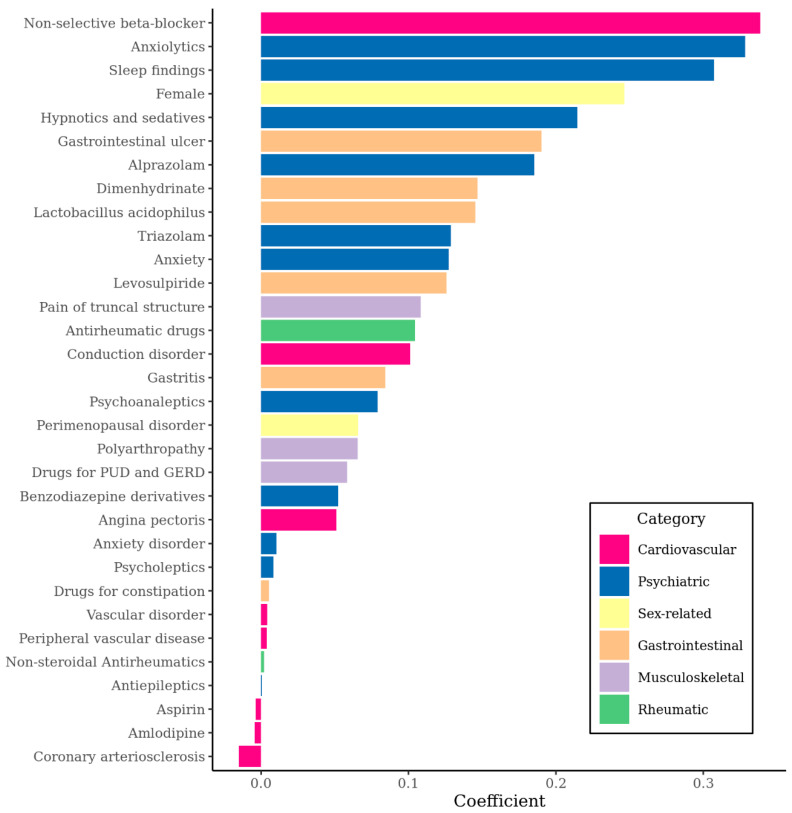
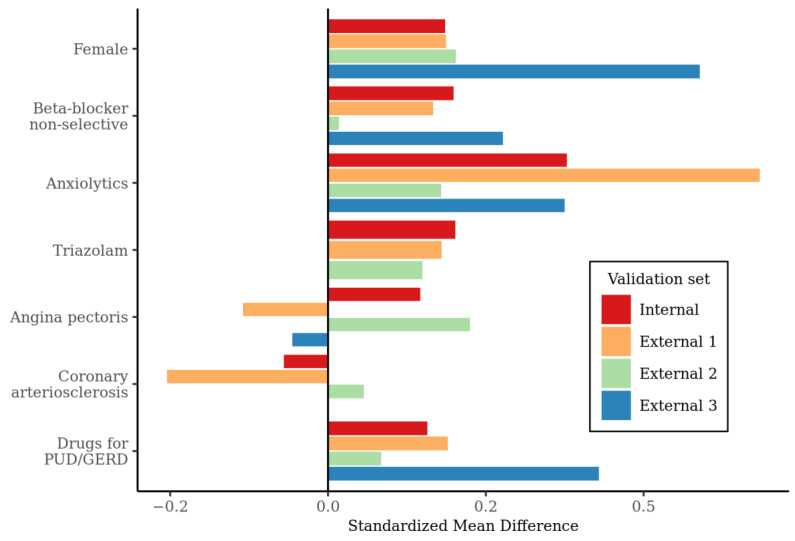
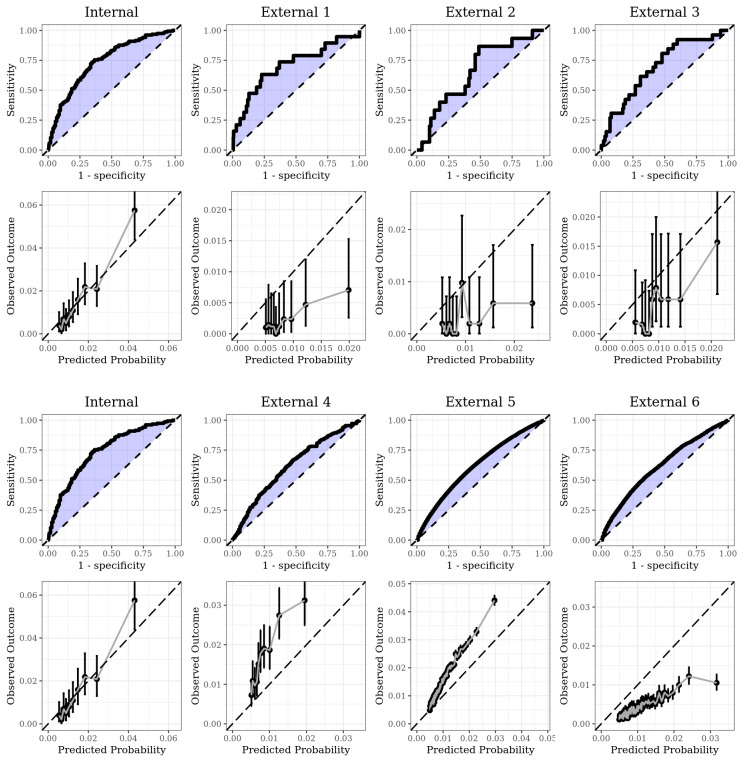
Incident depression has been reported to be associated with poor prognosis in patients with cardiovascular disease (CVD), which might be associated with beta-blocker therapy. Because early detection and intervention can alleviate the severity of depression, we aimed to develop a machine learning (ML) model predicting the onset of major depressive disorder (MDD). A model based on 1 regularized logistic regression was trained against the South Korean nationwide administrative claims database to identify risk factors for the incident MDD after beta-blocker therapy in patients with CVD. We identified 50,397 patients initiating beta-blockers for CVD, with 774 patients developing MDD within 365 days after initiating beta-blocker therapy. An area under the receiver operating characteristic curve (AUC) of 0.74 was achieved. A history of non-selective beta-blockers and factors related to anxiety disorder, sleeping problems, and other chronic diseases were the most strong predictors. AUCs of 0.62-0.71 were achieved in the external validation conducted on six independent electronic health records and claims databases in the USA and South Korea. In conclusion, an ML model that identifies patients at high-risk for incident MDD was developed. Application of ML to identify susceptible patients for adverse events of treatment may serve as an important approach for personalized medicine.
据报道,新发抑郁症与心血管疾病(CVD)患者的不良预后相关,这可能与β受体阻滞剂治疗有关。由于早期检测和干预可以减轻抑郁症的严重程度,我们旨在开发一种预测重度抑郁症(MDD)发作的机器学习(ML)模型。基于1个正则化逻辑回归的模型针对韩国全国行政索赔数据库进行训练,以识别CVD患者接受β受体阻滞剂治疗后发生MDD的风险因素。我们确定了50397例开始使用β受体阻滞剂治疗CVD的患者,其中774例在开始β受体阻滞剂治疗后的365天内发生了MDD。受试者工作特征曲线(AUC)下面积达到0.74。非选择性β受体阻滞剂治疗史以及与焦虑症、睡眠问题和其他慢性病相关的因素是最强的预测因素。在美国和韩国的六个独立电子健康记录和索赔数据库上进行的外部验证中,AUC为0.62 - 0.71。总之,开发了一种识别MDD新发高危患者的ML模型。应用ML识别治疗不良事件的易感患者可能是个性化医疗的重要方法。