Collaborative Antwerp Psychiatric Research Institute (CAPRI), Department of Biomedical Sciences, University of Antwerp, Stationsstraat 22c, 2570, Duffel, Belgium.
University Psychiatric Hospital Duffel, VZW Emmaüs, Duffel, Belgium.
BMC Med. 2020 Dec 23;18(1):400. doi: 10.1186/s12916-020-01867-5.
Major depressive disorder (MDD) shows large heterogeneity of symptoms between patients, but within patients, particular symptom clusters may show similar trajectories. While symptom clusters and networks have mostly been studied using cross-sectional designs, temporal dynamics of symptoms within patients may yield information that facilitates personalized medicine. Here, we aim to cluster depressive symptom dynamics through dynamic time warping (DTW) analysis.
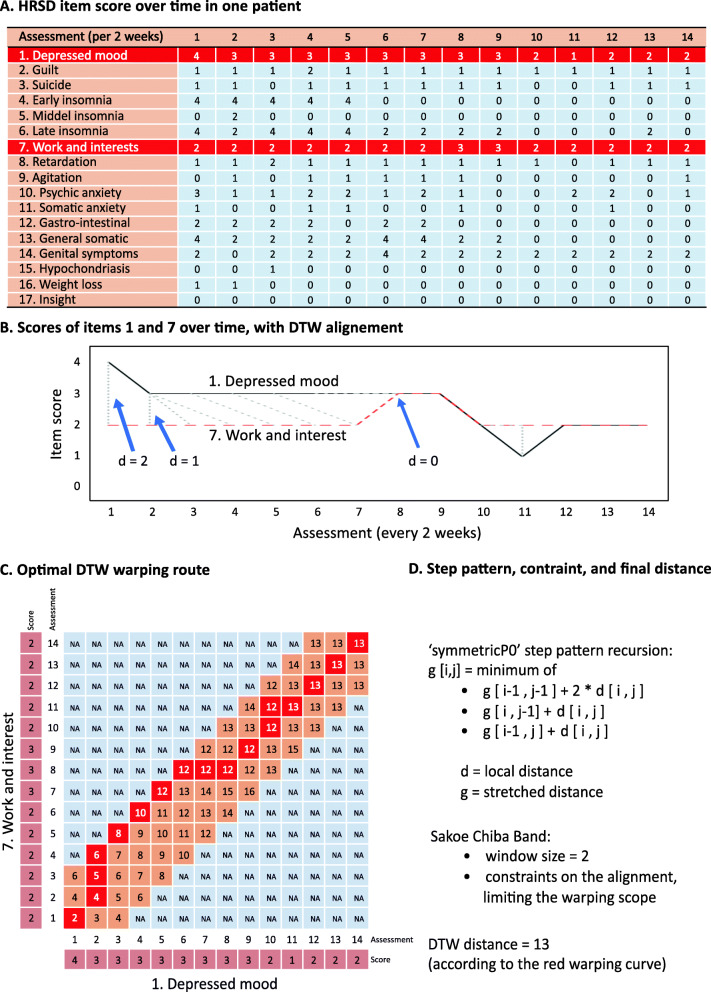
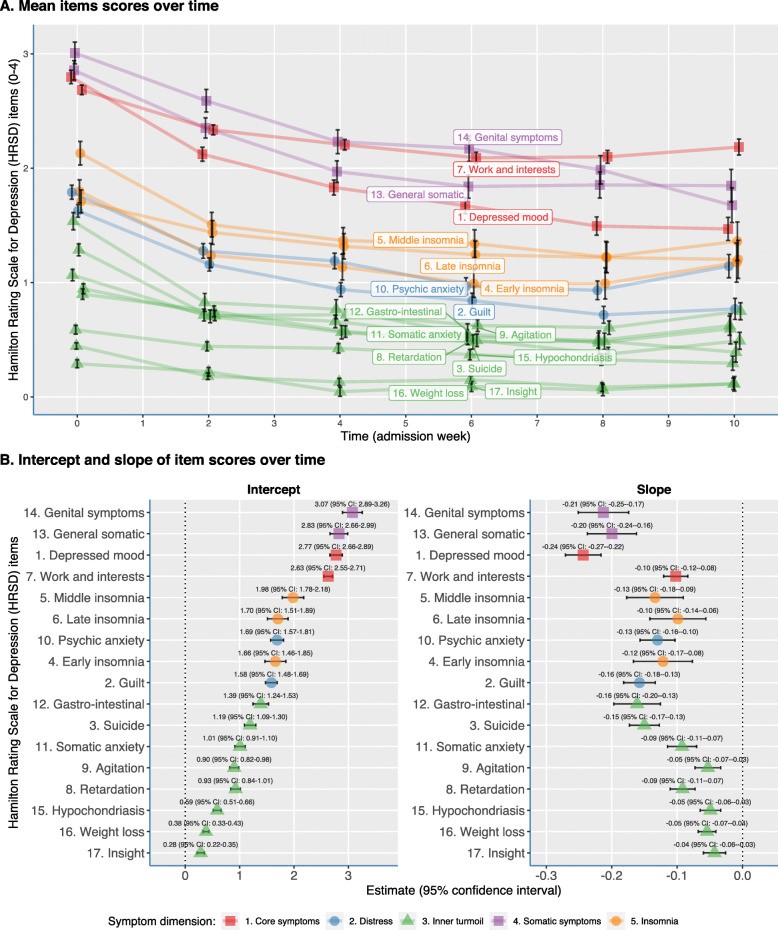
The 17-item Hamilton Rating Scale for Depression (HRSD-17) was administered every 2 weeks for a median of 11 weeks in 255 depressed inpatients. The DTW analysis modeled the temporal dynamics of each pair of individual HRSD-17 items within each patient (i.e., 69,360 calculated "DTW distances"). Subsequently, hierarchical clustering and network models were estimated based on similarities in symptom dynamics both within each patient and at the group level.
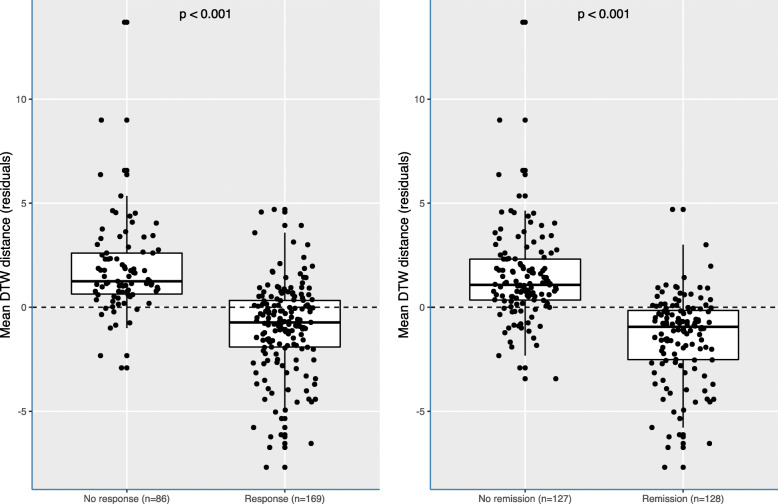
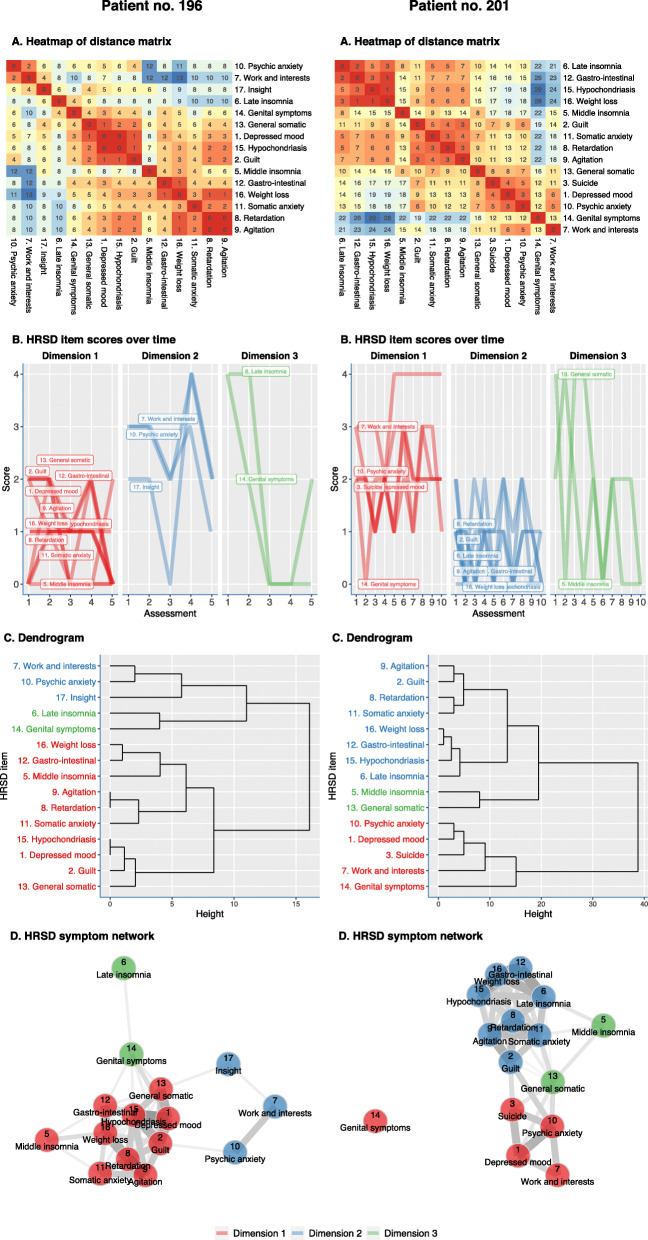
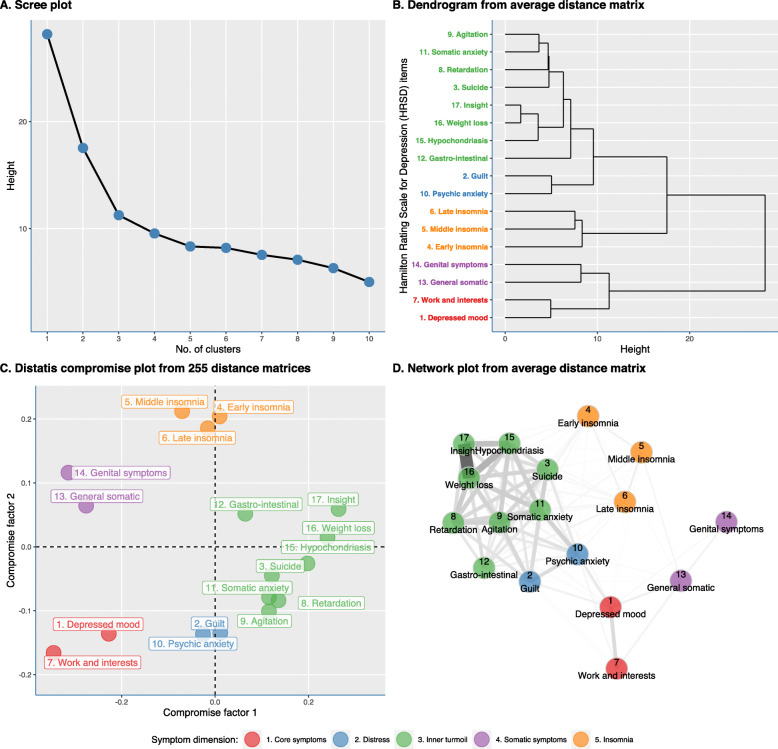
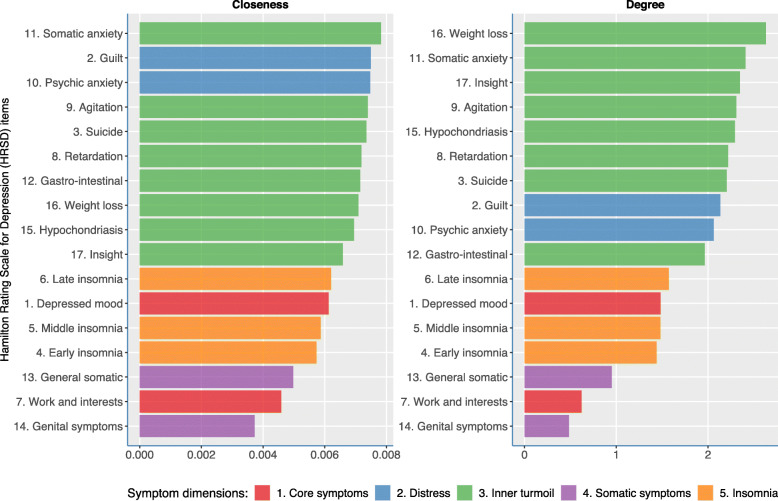
The sample had a mean age of 51 (SD 15.4), and 64.7% were female. Clusters and networks based on symptom dynamics markedly differed across patients. At the group level, five dynamic symptom clusters emerged, which differed from a previously published cross-sectional network. Patients who showed treatment response or remission had the shortest average DTW distance, indicating denser networks with more synchronous symptom trajectories.
Symptom dynamics over time can be clustered and visualized using DTW. DTW represents a promising new approach for studying symptom dynamics with the potential to facilitate personalized psychiatric care.
重度抑郁症(MDD)患者之间的症状存在较大的异质性,但在患者内部,特定的症状群可能表现出相似的轨迹。虽然症状群和网络主要通过横断面设计进行研究,但患者内部症状的时间动态可能提供有助于个性化医疗的信息。在这里,我们旨在通过动态时间规整(DTW)分析对抑郁症状动态进行聚类。
对 255 名住院抑郁症患者进行了 17 项汉密尔顿抑郁量表(HRSD-17)的评估,每两周评估一次,中位数为 11 周。DTW 分析对每个患者内部每对个体 HRSD-17 项的时间动态进行建模(即计算了 69360 个“DTW 距离”)。随后,基于每个患者内部和组水平上症状动态的相似性,对分层聚类和网络模型进行了估计。
样本的平均年龄为 51 岁(标准差 15.4),女性占 64.7%。基于症状动态的聚类和网络在患者之间差异显著。在组水平上,出现了五个动态症状群,这与以前发表的横断面网络不同。表现出治疗反应或缓解的患者具有最短的平均 DTW 距离,表明具有更密集网络和更同步的症状轨迹。
可以使用 DTW 对随时间变化的症状动态进行聚类和可视化。DTW 代表了一种研究症状动态的很有前途的新方法,有可能促进个性化的精神卫生护理。