Center for Pharmaceutical and Medical Technology, Agency for the Assessment and Application of Technology, LAPTIAB Building 611, Puspiptek Area, Serpong, Tangerang-Selatan, Indonesia.
Asian Pac J Cancer Prev. 2020 Dec 1;21(12):3735-3741. doi: 10.31557/APJCP.2020.21.12.3735.
The purpose of this research was to evaluate the cytotoxic, cell cycle arrest, and apoptotic induction activities of the fruit of S. nigrum L. ethanolic-70% extract against MCF-7 human breast cancer cell.
S. nigrum L. ripe fruit was blended and macerated with ethanol 70% and the filtrate was evaporated. The semisolid extract was then analyzed phytochemically. Cytotoxic analysis was performed using MCF-7 cancer and Vero normal cell by MTT method and followed by apoptotic and cell cycle arrest analysis using flow cytometry.
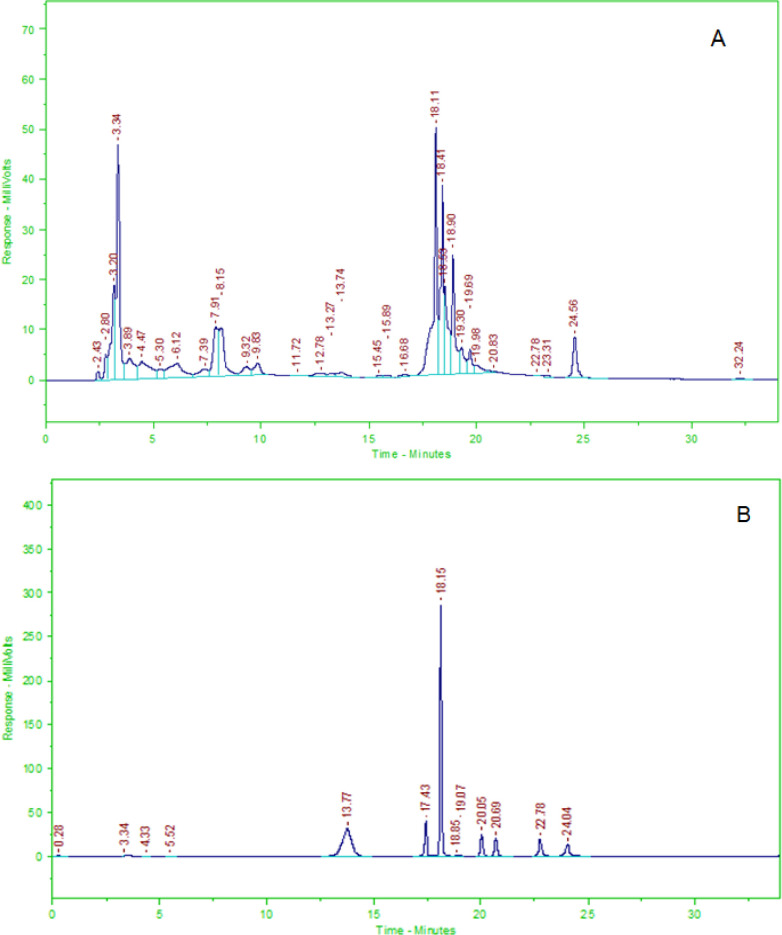
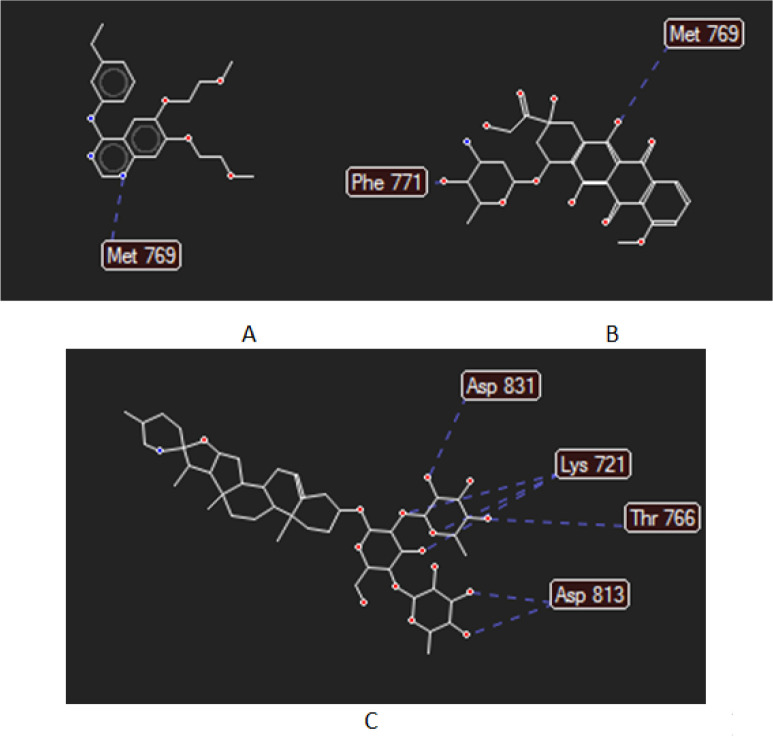
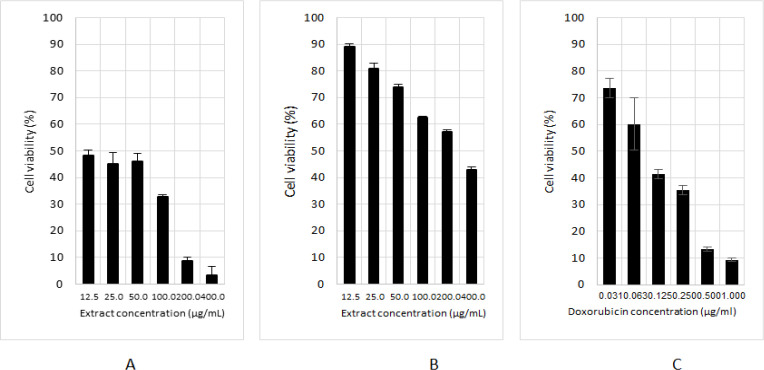
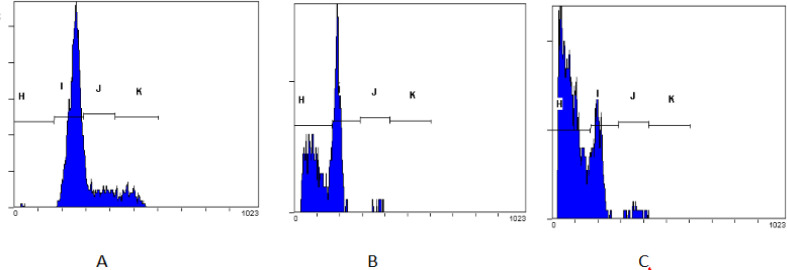
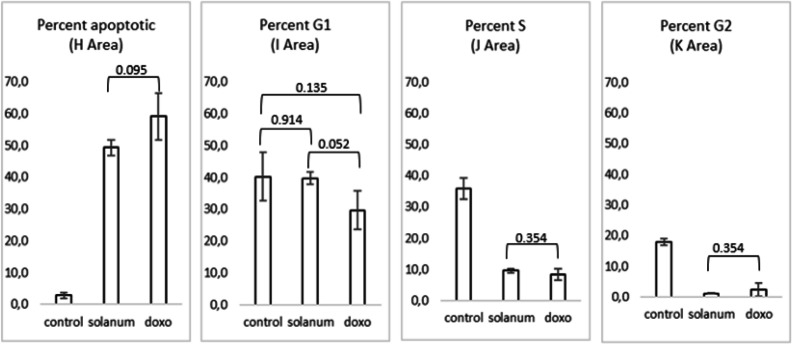
The phytochemical analysis resulted that extract contained total phenolic and flavonoid compounds with the level of 1.545±0.080% and 0.212±0.002%, respectively. Glycitin was the highest level of isoflavone compound, namely, 375.0844 mg/100 g extract. The cytotoxic evaluation revealed that the extract exhibited a selectively toxic effect between cancer and normal cell. The extract inhibited MCF-7 proliferation with IC50 value about 40.77±4.86 μg/mL and conversely toward Vero cell at lower cytotoxic activity with an IC50 value of 298.96±27.28 μg/mL. Evaluation of MCF-7 cell cycles demonstrated that the extract arrested the cell cycle in the S phase and continued to the G2/M phase at the half of the IC50 value. The extract induced apoptotic of MCF-7 cell about 43.31% in which this activity was nearly the same with doxorubicin as a positive control (59.14%). However, solamargine was predicted as the most active anticancer compounds by a molecular docking study so that it was suggested to measure the level of this compound.
It can be concluded that the fruit of S. nigrum L. ethanolic-70% extract demonstrated cytotoxic activity toward MCF-7 breast cancer cell and nontoxic on Vero normal cell. Solamargine was predicted as the most active anticancer compound. This extract had an opportunity to be developed as a potential anticancer agent to overcome breast cancer diseases.
本研究旨在评估黑果枸杞乙醇 70%提取物对 MCF-7 人乳腺癌细胞的细胞毒性、细胞周期阻滞和凋亡诱导作用。
将黑果枸杞成熟果实粉碎后用 70%乙醇浸渍提取,滤液减压浓缩得半固体提取物,进行化学成分预试。采用 MTT 法检测 MCF-7 癌细胞和 Vero 正常细胞的细胞毒性,流式细胞术检测细胞凋亡和细胞周期阻滞。
化学成分预试结果表明,提取物中含有总酚和总黄酮化合物,含量分别为 1.545±0.080%和 0.212±0.002%。大豆苷元是异黄酮化合物中含量最高的,为 375.0844mg/100g 提取物。细胞毒性评价表明,提取物对癌细胞和正常细胞具有选择性毒性作用。提取物对 MCF-7 细胞增殖的抑制作用具有浓度依赖性,IC50 值约为 40.77±4.86μg/mL,而对 Vero 细胞的细胞毒性较低,IC50 值为 298.96±27.28μg/mL。对 MCF-7 细胞周期的评估表明,提取物在 IC50 值的一半时将细胞周期阻滞在 S 期,并继续进入 G2/M 期。提取物诱导 MCF-7 细胞凋亡约 43.31%,与阳性对照阿霉素(59.14%)相当。然而,分子对接研究预测,二甲氨基乙氧基莨菪碱是最具活性的抗癌化合物,因此建议检测该化合物的水平。
黑果枸杞乙醇 70%提取物对 MCF-7 乳腺癌细胞具有细胞毒性,对 Vero 正常细胞无毒性。二甲氨基乙氧基莨菪碱被预测为最具活性的抗癌化合物。该提取物有机会被开发为治疗乳腺癌的潜在抗癌药物。