Pirintsos S A, Bariotakis M, Kampa M, Sourvinos G, Lionis C, Castanas E
Department of Biology, University of Crete, Heraklion, Greece.
Botanical Garden, University of Crete, Rethymnon, Greece.
Front Pharmacol. 2020 Nov 24;11:522213. doi: 10.3389/fphar.2020.522213. eCollection 2020.
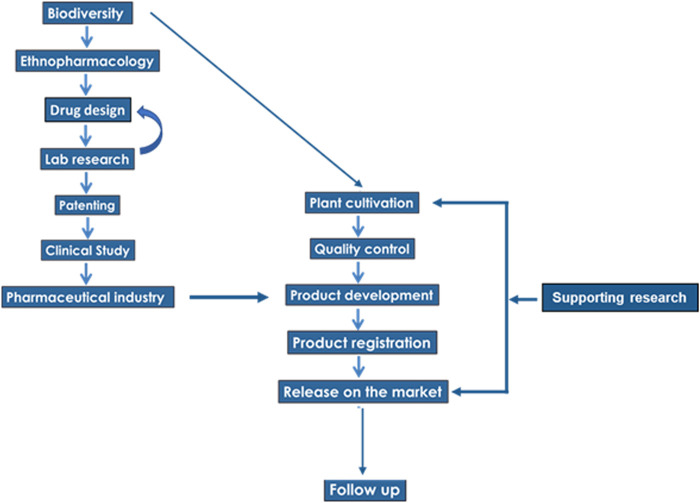
This review performs a comprehensive assessment of the therapeutic potential of three native herbs of Crete ( (L.) Cav., Mill. and L.), their phytochemical constituents, health benefits and issues relevant to their safety, within a translational context. Issues discussed comprise: 1) Ethnopharmacological uses of the three herbs, reviewed through an extensive search of the literature; 2) Systematic analysis of the major phytochemical constituents of each plant, and their medicinal properties; 3) To what extent could the existing medicinal properties be combined and produce an additive or synergistic effect; 4) Possible safety issues. We conclude with a specific example of the use of a combination of the essential oils of these plants as an effective anti-viral product and the experience gained in a case of a plant-based pharmaceutical development, by presenting the major steps and the continuum of the translational chain.
本综述在转化医学背景下,对克里特岛的三种本土草药(刺山柑(Capparis spinosa L.)、牛至(Origanum vulgare Mill.)和鼠尾草(Salvia fruticosa L.))的治疗潜力、植物化学成分、健康益处以及与其安全性相关的问题进行了全面评估。讨论的问题包括:1)通过广泛的文献检索回顾这三种草药的民族药理学用途;2)对每种植物的主要植物化学成分及其药用特性进行系统分析;3)现有药用特性在多大程度上可以结合并产生相加或协同作用;4)可能的安全问题。我们通过介绍转化链的主要步骤和连续性,以这些植物精油组合作为有效抗病毒产品的具体使用实例以及植物基药物开发案例中获得的经验作为总结。