Australian Centre for Field Robotics, The University of Sydney, Sydney, NSW 2006, Australia.
Cohda Wireless, 27 Greenhill Road, Wayville, SA 5034, Australia.
Sensors (Basel). 2020 Dec 30;21(1):200. doi: 10.3390/s21010200.
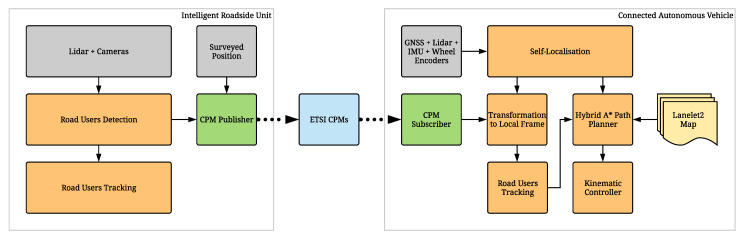
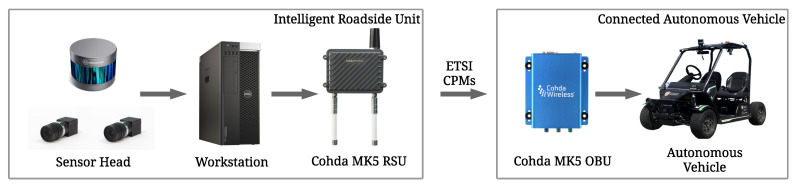
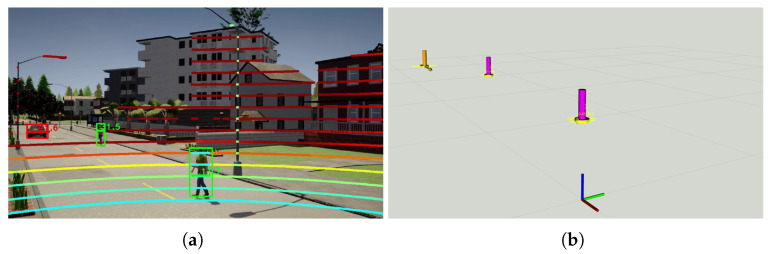
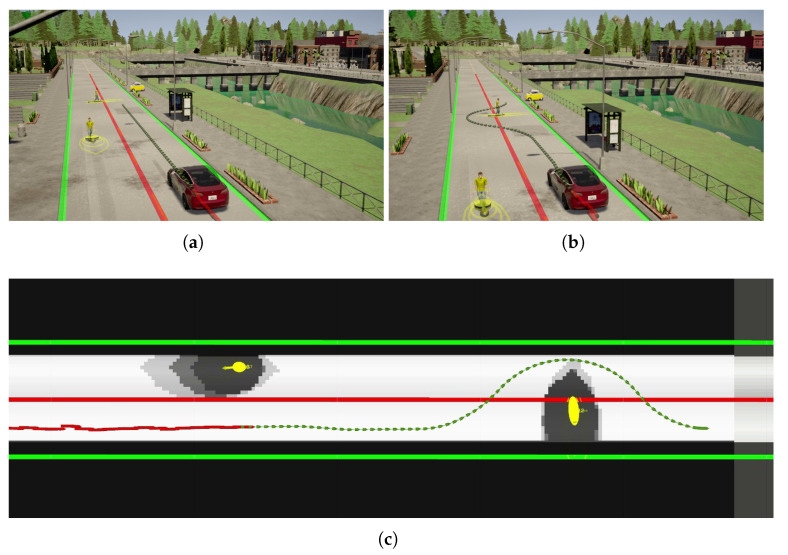
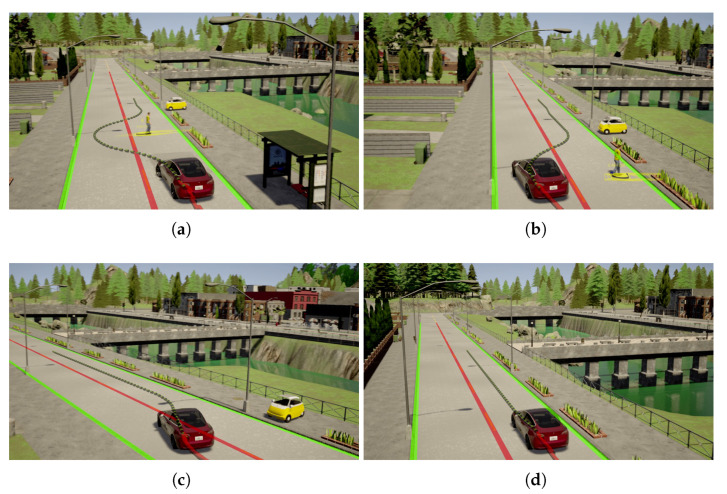
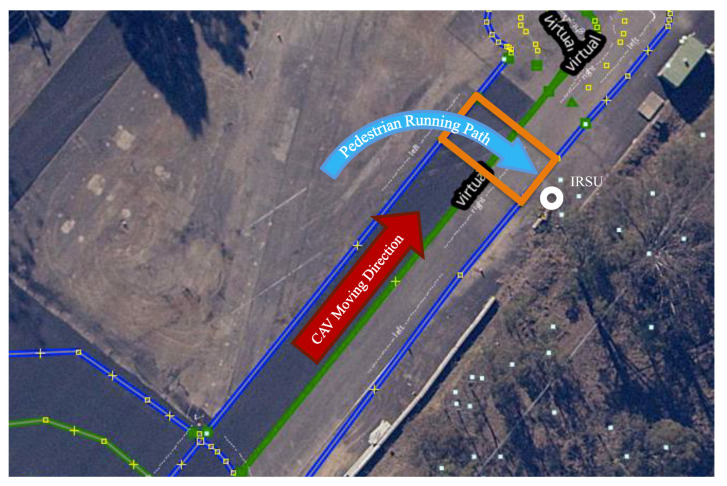
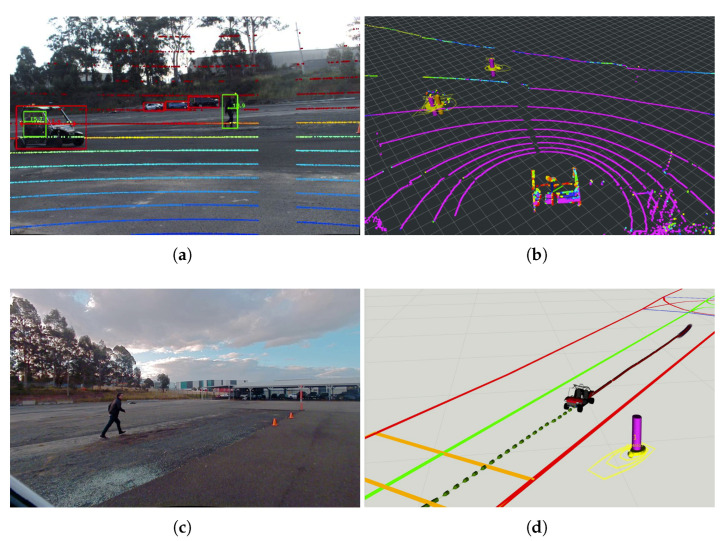
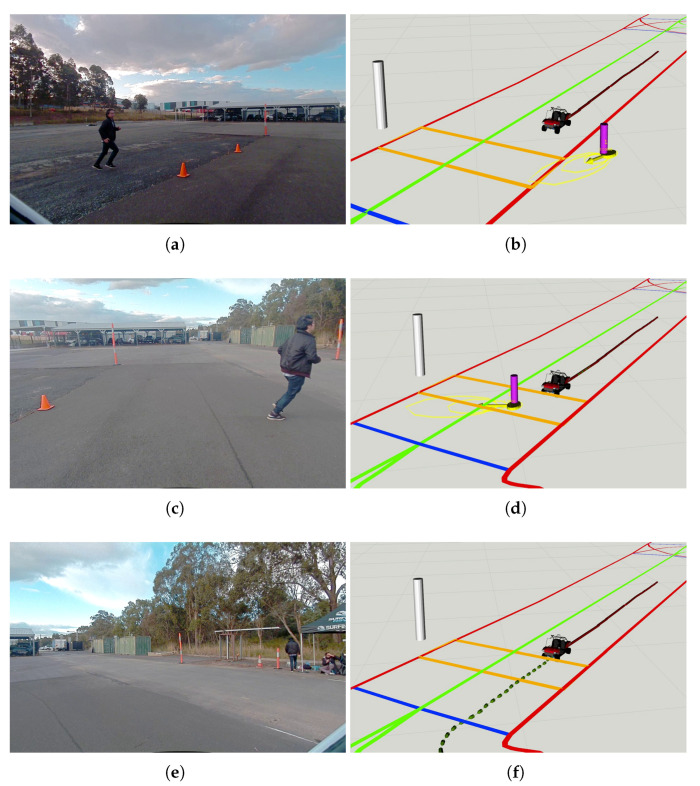
Cooperative perception, or collective perception (CP), is an emerging and promising technology for intelligent transportation systems (ITS). It enables an ITS station (ITS-S) to share its local perception information with others by means of vehicle-to-X (V2X) communication, thereby achieving improved efficiency and safety in road transportation. In this paper, we present our recent progress on the development of a connected and automated vehicle (CAV) and intelligent roadside unit (IRSU). The main contribution of the work lies in investigating and demonstrating the use of CP service within intelligent infrastructure to improve awareness of vulnerable road users (VRU) and thus safety for CAVs in various traffic scenarios. We demonstrate in experiments that a connected vehicle (CV) can "see" a pedestrian around the corners. More importantly, we demonstrate how CAVs can autonomously and safely interact with walking and running pedestrians, relying only on the CP information from the IRSU through vehicle-to-infrastructure (V2I) communication. This is one of the first demonstrations of urban vehicle automation using only CP information. We also address in the paper the handling of collective perception messages (CPMs) received from the IRSU, and passing them through a pipeline of CP information coordinate transformation with uncertainty, multiple road user tracking, and eventually path planning/decision-making within the CAV. The experimental results were obtained with manually driven CV, fully autonomous CAV, and an IRSU retrofitted with vision and laser sensors and a road user tracking system.
协同感知,或集体感知(CP),是智能交通系统(ITS)中的一项新兴且有前途的技术。它使 ITS 站(ITS-S)能够通过车对 X(V2X)通信与其他站共享其本地感知信息,从而提高道路运输的效率和安全性。在本文中,我们介绍了我们在开发联网自动驾驶汽车(CAV)和智能路侧单元(IRSU)方面的最新进展。这项工作的主要贡献在于研究和展示在智能基础设施中使用 CP 服务来提高对弱势道路使用者(VRU)的感知,从而提高 CAV 在各种交通场景中的安全性。我们在实验中证明,联网车辆(CV)可以“看到”拐角处的行人。更重要的是,我们展示了 CAV 如何仅依靠 IRSU 通过车对基础设施(V2I)通信提供的 CP 信息,自主、安全地与步行和奔跑的行人交互。这是首次仅使用 CP 信息展示城市车辆自动化的实验之一。我们还在本文中讨论了处理从 IRSU 接收的集体感知消息(CPM)的问题,并通过具有不确定性的 CP 信息坐标变换管道、多道路使用者跟踪,以及最终在 CAV 内进行路径规划/决策来传递这些消息。实验结果是使用手动驾驶的 CV、完全自主的 CAV 和配备视觉和激光传感器以及道路使用者跟踪系统的改装 IRSU 获得的。