Hunter Medical Research Institute (HMRI), New Lambton, New South Wales, Australia.
School of Medicine and Public health, University of Newcastle, Callaghan, New South Wales, 2308, Australia.
Implement Sci. 2021 Jan 7;16(1):1. doi: 10.1186/s13012-020-01068-x.
Despite the known benefits of healthy eating in childhood, few Australian childcare services provide food that is consistent with dietary guidelines. The effectiveness of a web-based menu planning intervention to increase childcare service provision of healthy foods and decrease provision of discretionary foods in long day-care services in Australia was assessed in a randomised controlled trial. Here we consider the costs, consequences, cost-effectiveness and budget impact of the intervention using data collected within the trial.
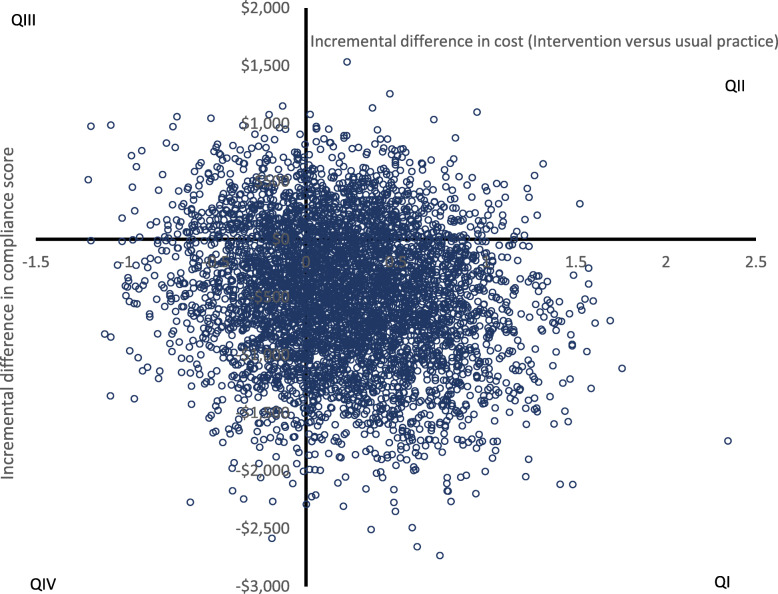
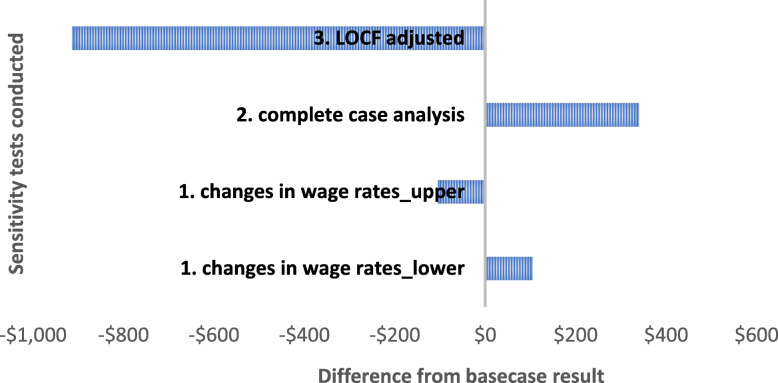
The prospective trial-based economic evaluation involved 54 childcare services across New South Wales (NSW), Australia. Services were randomised to a 12-month intervention or usual care. The intervention involved access to a web-based menu planning and decision support tool and online resources. Effectiveness measures included mean number of food groups, overall menu and individual food group compliance with dietary guidelines, and mean servings of food groups at 12 months. Costs (reported in $AUD, 2017/18) were evaluated from both health sector and societal perspectives. The direct cost to support uptake of the intervention was calculated, as were costs to each childcare service. The incremental cost of the intervention was calculated as the net difference in the cost to undertake menu planning and review plus the direct cost of the intervention. Incremental cost-effectiveness ratios (ICERs) including uncertainty intervals were estimated for differences in costs and effects between intervention and control groups. A relative value index was calculated to determine overall value for money.
Over the 12 months of the trial, we calculated a difference in cost between usual practice and intervention groups of - $482 (95% UI - $859, - $56). While the measured increase in menu and food group compliance within the trial did not reach statistical significance, there were significant improvements in mean servings of fruit and discretionary food, represented in the cost-consequence analysis. The calculated relative value index of 1.1 suggests that the intervention returns acceptable value for money for the outcomes generated.
Compared to usual practice, web-based programmes may offer an efficient and sustainable alternative for childcare services to improve the provision of healthy foods to children in their care.
Australian New Zealand Clinical Trials Registry ACTRN12616000974404.
尽管人们已知健康饮食对儿童有益,但澳大利亚很少有儿童保育服务机构提供符合饮食指南的食物。本随机对照试验评估了一种基于网络的菜单规划干预措施在澳大利亚长期日托服务中增加儿童保育服务机构提供健康食品和减少提供随意性食品的有效性。在这里,我们根据试验中收集的数据考虑了干预措施的成本、后果、成本效益和预算影响。
这项前瞻性基于试验的经济评估涉及澳大利亚新南威尔士州的 54 家儿童保育服务机构。服务机构被随机分配到为期 12 个月的干预组或常规护理组。该干预措施包括使用基于网络的菜单规划和决策支持工具以及在线资源。有效性措施包括 12 个月时食物组的平均数量、整体菜单和个别食物组对饮食指南的遵守情况以及食物组的平均份量。(以澳元报告,2017/18 年)从卫生部门和社会两个角度评估了成本。计算了支持干预措施采用的直接成本,以及每个儿童保育服务机构的成本。计算了干预措施的增量成本,即进行菜单规划和审查的净费用加上干预措施的直接成本。对干预组和对照组之间的成本和效果差异进行了增量成本效益比(ICER)的估计,包括不确定区间。计算了相对价值指数以确定整体资金价值。
在试验的 12 个月期间,我们计算了常规实践与干预组之间的成本差异为-482 澳元(95%置信区间-859,-56)。虽然试验中菜单和食物组遵守情况的测量增加没有达到统计学意义,但在水果和随意性食物的平均份量方面有了显著改善,这在成本-结果分析中有所体现。计算出的相对价值指数为 1.1,表明该干预措施为所产生的结果提供了可接受的资金价值。
与常规实践相比,基于网络的计划可能为儿童保育服务机构提供一种高效和可持续的替代方案,以改善其对儿童的健康食品供应。
澳大利亚和新西兰临床试验注册 ACTRN12616000974404。