Grant Dale, Tomlinson David, Tsintzas Kostas, Kolić Petra, Onambele-Pearson Gladys Leopoldine
Department of Sports and Exercise Sciences, Research Centre for Musculoskeletal Science and Sports Medicine, Manchester Metropolitan University, Manchester, United Kingdom.
MRC Versus Arthritis Centre for Musculoskeletal Ageing Research, Faculty of Medicine & Health Sciences, School of Life Sciences, The University of Nottingham Medical School, Queen's Medical Centre, Nottingham, United Kingdom.
Front Physiol. 2020 Dec 11;11:574595. doi: 10.3389/fphys.2020.574595. eCollection 2020.
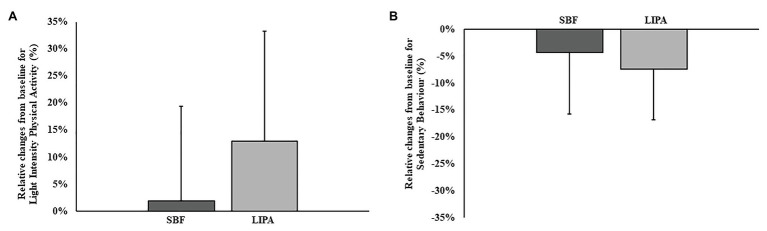
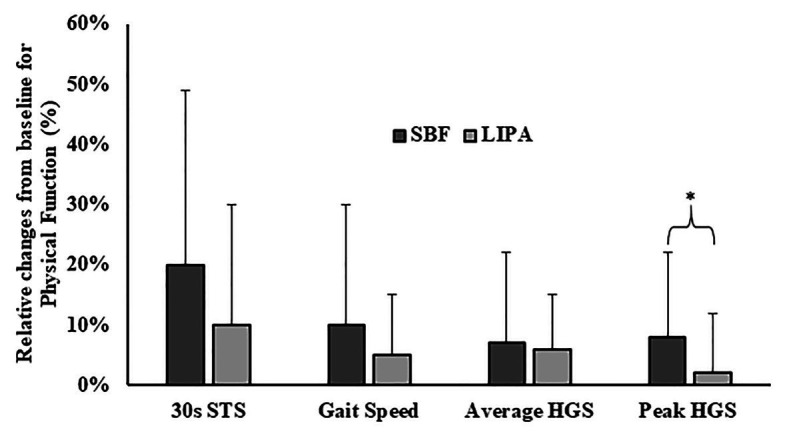
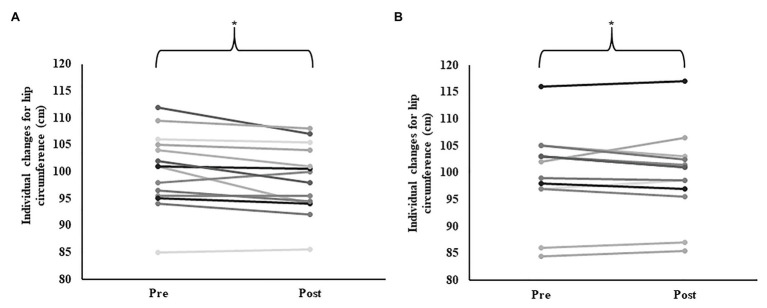
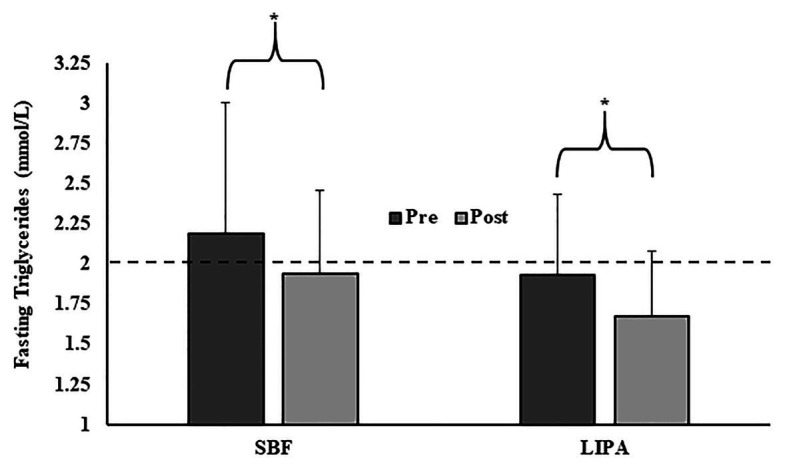
The COVID-19 pandemic is limiting outdoor and community-based activities, especially for older adults owing to the requirement for self-isolation, potentially increasing prolonged sedentary behavior (SB). Given a poor tolerance for intense exercise, SB displacement with light intensity physical activity (LIPA) is a promising health enhancing alternative. Therefore, the aims of this study were to investigate the effects of two different types of SB displacement on health outcomes in older adults and any differential impact of associated LIPA pattern. 28 older women (age: 73 ± 5 years, height: 1.60 ± 0.07 m, weight: 67 ± 10 kg, and BMI: 26.1 ± 3.6 kg/m) underwent overnight fasted dual energy x-ray absorptiometry (DEXA) imaging, blood sampling, and functional assessments before being randomly allocated to one of two groups: (1) single continuous bout of 45-50 min LIPA daily ( = 14); or (2) SB fragmentation (SBF; ~48 min LIPA daily, 2 min LIPA for every 30 min of SB; = 14). Compliance was systematically monitored using tri-axial accelerometery. All measures were taken at weeks 0 and 8. Physical behavior significantly altered (decreased SB/increased LIPA; < 0.05) and to a similar extent in both groups. We observed a significant reduction in serum triglycerides [ = 0.045, effect size ( ) = 0.15; SBF: -0.26 ± 0.77 mmol/L, LIPA: -0.26 ± 0.51 mmol/L], improved 30 s sit-to-stand (STS) count ( = 0.002, = 0.32, 2 ± 3 STS) and speed ( = 0.009, = 0.35, -10 ± 33%), as well as increased average handgrip strength ( = 0.001, = 0.45, 6 ± 12%), and gait speed ( = 0.005, = 0.27, 0.09 ± 0.16 m/s) in both groups. Interestingly, SBF caused a greater increase in peak handgrip strength (8 ± 14%), compared to LIPA (2 ± 10%; = 0.04, = 0.38). SB displacement induced significant improvements in fasting triglycerides, gait speed, as-well as STS endurance/speed in older women. Frequent vs. continuous SB displacement also caused greater increases in handgrip strength. While both SB displacement protocols display promise as efficacious home-based interventions for self-isolating older adults, our results would suggest a physical functioning advantage of the SBF protocol for certain outcomes.
新冠疫情限制了户外活动和基于社区的活动,尤其是对老年人而言,由于需要自我隔离,这可能会增加久坐行为(SB)的时长。鉴于老年人对高强度运动耐受性较差,用低强度身体活动(LIPA)替代久坐行为是一种很有前景的促进健康的选择。因此,本研究的目的是调查两种不同类型的久坐行为替代方式对老年人健康状况的影响,以及相关低强度身体活动模式的任何差异影响。28名老年女性(年龄:73±5岁,身高:1.60±0.07米,体重:67±10千克,体重指数:26.1±3.6千克/平方米)在进行过夜禁食双能X线吸收法(DEXA)成像、血液采样和功能评估后,被随机分为两组:(1)每天进行一次持续45 - 50分钟的低强度身体活动(n = 14);或(2)久坐行为碎片化(SBF;每天约48分钟低强度身体活动,每30分钟久坐行为中有2分钟低强度身体活动;n = 14)。使用三轴加速度计系统地监测依从性。所有测量均在第0周和第8周进行。两组的身体行为均有显著改变(久坐行为减少/低强度身体活动增加;P < 0.05),且程度相似。我们观察到两组的血清甘油三酯均显著降低[P = 0.045,效应量(ES) = 0.15;SBF组:-0.26±0.77毫摩尔/升,LIPA组:-0.26±0.51毫摩尔/升],30秒坐立试验(STS)次数增加(P = 0.002,ES = 0.32,增加2±3次)、速度提高(P = 0.009,ES = 0.35,提高-10±33%),平均握力增强(P = 0.001,ES = 0.45,增加6±12%),以及步速加快(P = 0.005,ES = 0.27,加快0.09±0.16米/秒)。有趣的是,与LIPA组(增加2±10%;P = 0.04,ES = 0.38)相比,SBF组的握力峰值增加幅度更大(增加8±14%)。久坐行为替代显著改善了老年女性的空腹甘油三酯、步速以及坐立试验耐力/速度。频繁与持续的久坐行为替代在握力增加方面也有更大幅度的提升。虽然两种久坐行为替代方案都有望成为适合自我隔离老年人的有效居家干预措施,但我们的结果表明,SBF方案在某些结果方面具有身体功能优势。