Zhang Shuting, Jiang Qipeng, Liu Xiaojiao, Liu Liehua, Ding Wei
College of Plant Protection, Southwest University, Chongqing, China.
Front Microbiol. 2020 Nov 30;11:569512. doi: 10.3389/fmicb.2020.569512. eCollection 2020.
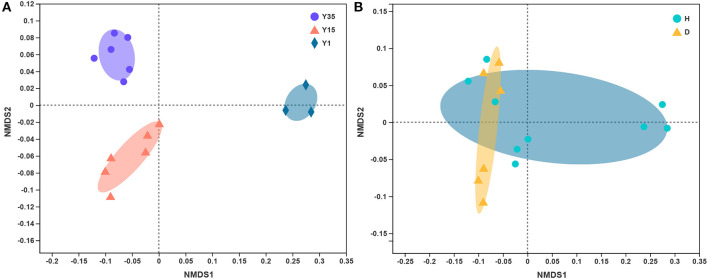
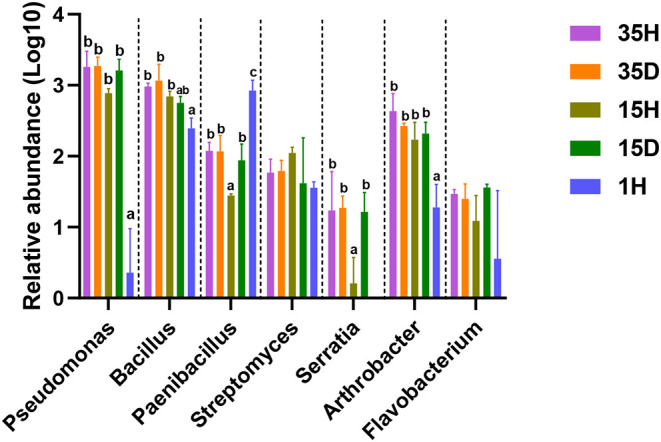
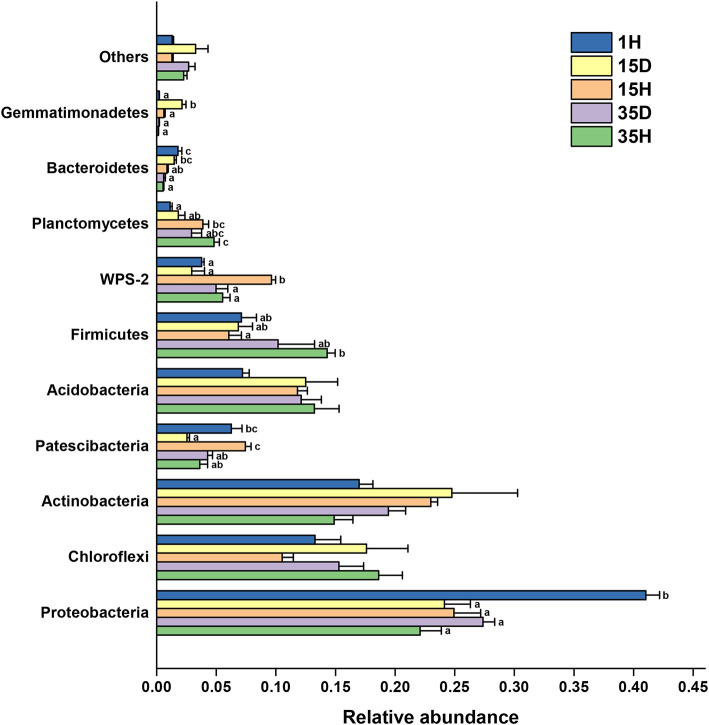
Long-term monoculture cropping is usually accompanied by soil acidification and microbial community shifts. Soil aluminum ions are dissolved under acidic condition (pH < 5.0), and the resulting aluminum bioavailability can cause toxic effects in plants. In this study, we investigated the bacterial community compositions and aluminum toxicity in fields monocultured with ginger for 35 years, 15 years, and 1 year. Within these fields are ginger plants without and with ginger bacterial wilt disease. The results confirmed that the degree of aluminum toxicity in the diseased soil was more severe than that in the healthy soil. Continuous cropping can significantly increase the bacterial diversity and change the bacterial community composition of ginger rhizosphere soil. The relative abundance of plant growth-promoting rhizobacteria (PGPRs) was increased in the soils used for the continuous cropping of ginger. Additionally, aluminum toxicity had a significant positive correlation with , and in healthy soils. Based on these results, aluminum stress may stimulate the increase of PGPRs (, and ), thereby alleviating ginger aluminum toxicity and bacterial wilt in extremely acidic soil (pH < 4.5).
长期单一种植通常伴随着土壤酸化和微生物群落变化。在酸性条件(pH < 5.0)下,土壤铝离子会溶解,由此产生的铝生物有效性会对植物产生毒性作用。在本研究中,我们调查了连续35年、15年和1年种植生姜的单一种植田块中的细菌群落组成和铝毒性。在这些田块中,有未感染生姜青枯病的生姜植株和感染了生姜青枯病的生姜植株。结果证实,患病土壤中的铝毒性程度比健康土壤中的更严重。连作会显著增加生姜根际土壤的细菌多样性并改变细菌群落组成。在用于连作生姜的土壤中,促生根际细菌(PGPRs)的相对丰度增加。此外,在健康土壤中,铝毒性与 、 和 呈显著正相关。基于这些结果,铝胁迫可能刺激PGPRs( 、 和 )的增加,从而缓解极酸性土壤(pH < 4.5)中的生姜铝毒性和青枯病。