Department of Respiratory Medicine, Xiangya Hospital, Central South University, Changsha, PR China.
Department of Respiratory Medicine, Wuhan First Hospital/Wuhan Hospital of Traditional Chinese and Western Medicine, Wuhan, PR China.
Ann Med. 2021 Dec;53(1):169-180. doi: 10.1080/07853890.2020.1851044.
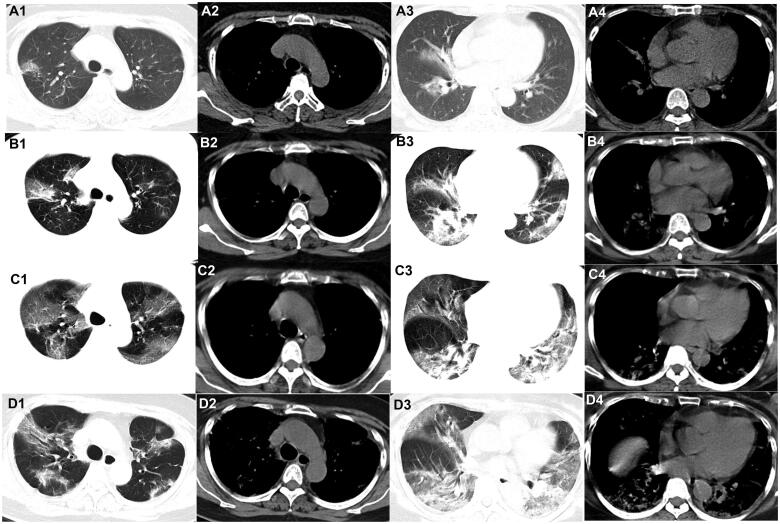
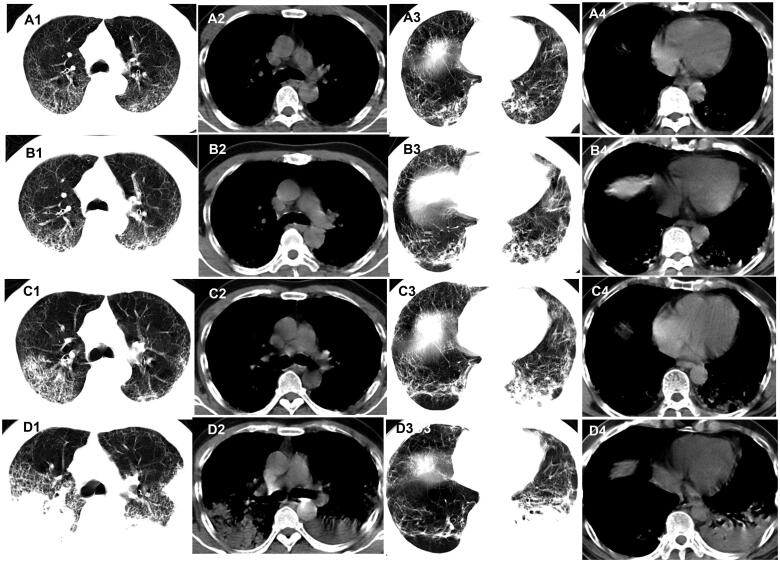
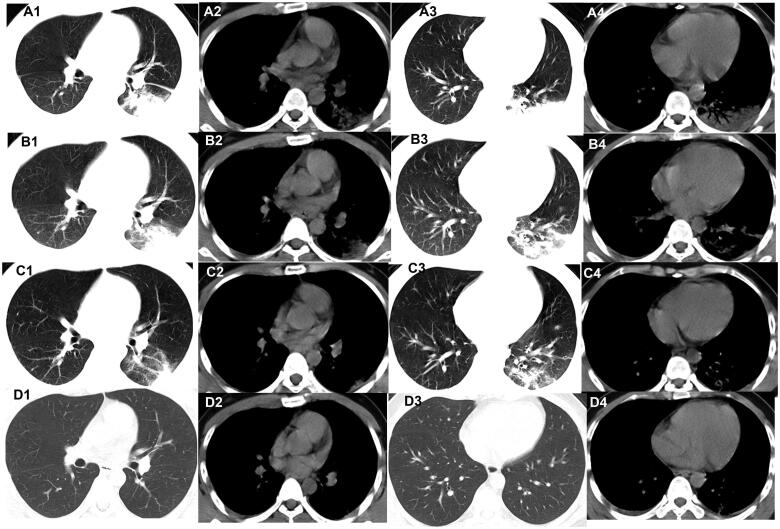
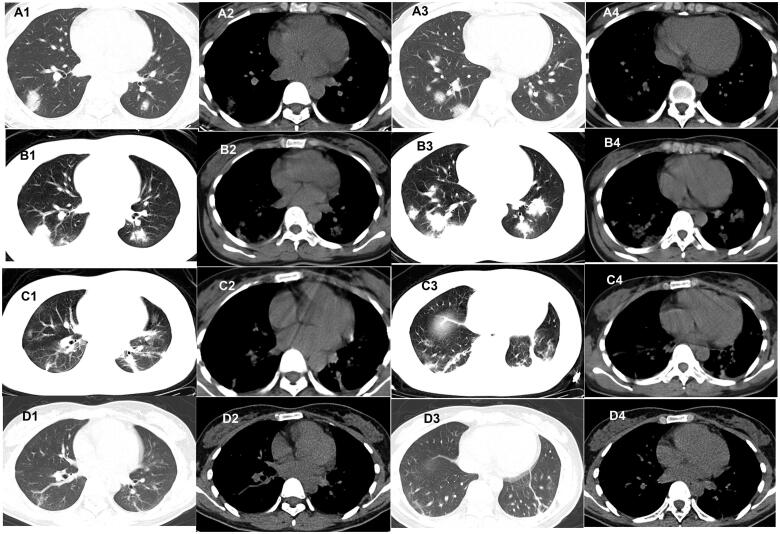
Coronavirus disease 2019 (COVID-19) has rapidly swept across the world. This study aimed to explore the relationship between the chest CT findings and clinical characteristics of COVID-19 patients.
Patients with COVID-19 confirmed by next-generation sequencing or RT-PCR who had undergone more than 4 serial chest CT procedures were retrospectively enrolled.
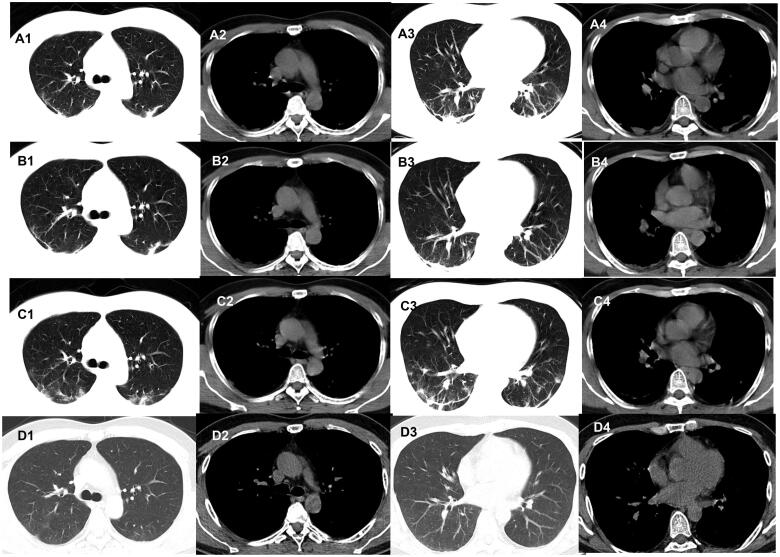
This study included 361 patients - 192 men and 169 women. On initial chest CT, more lesions were identified as multiple bilateral lungs lesions and localised in the peripheral lung. The predominant patterns of abnormality were ground-glass opacities (GGO) (28.5%), consolidation (13.0%), nodule (23.0%), fibrous stripes (5.3%) and mixed (30.2%). Severe cases were more common in patients with a mixed pattern (21.1%) and less common in patients with nodules (2.4%). During follow-up CT, the mediumtotal severity score (TSS) in patients with nodules and fibrous strips was significantly lower than that in patients with mixed patterns in all three stages ( < .01).
Chest CT plays an important role in diagnosing COVID-19. The CT features may vary by age. Different CT features are not only associated with clinical manifestation but also patient prognosis. Key messages The initial chest CT findings of COVID-19 could help us monitor and predict the outcome. Nodules were more common in non severe cases and had a favorable prognosis. The mixed pattern was more common in severe cases and usually had a relatively poor outcome.
2019 年冠状病毒病(COVID-19)在全球迅速蔓延。本研究旨在探讨 COVID-19 患者的胸部 CT 表现与临床特征之间的关系。
回顾性纳入经下一代测序或 RT-PCR 确诊为 COVID-19 且接受了 4 次以上连续胸部 CT 检查的患者。
本研究共纳入 361 例患者,其中男 192 例,女 169 例。初次胸部 CT 时,更多病变被确定为多双侧肺部病变,且局限于外周肺部。异常的主要模式为磨玻璃密度影(GGO)(28.5%)、实变(13.0%)、结节(23.0%)、纤维条纹(5.3%)和混合(30.2%)。混合模式患者中严重病例更为常见(21.1%),而结节患者中则较为少见(2.4%)。在随访 CT 中,结节和纤维带患者的总严重程度评分(TSS)在所有三个阶段均明显低于混合模式患者(均<0.01)。
胸部 CT 在 COVID-19 的诊断中具有重要作用。CT 特征可能因年龄而异。不同的 CT 特征不仅与临床表现有关,而且与患者预后有关。
COVID-19 的初始胸部 CT 表现有助于我们监测和预测结果。结节在非重症病例中更为常见,且预后良好。混合模式在重症病例中更为常见,通常预后较差。