Cobo Ramón, García-Piqueras Jorge, Cobo Juan, Vega José A
Departamento de Morfología y Biología Celular, Grupo SINPOS, Universidad de Oviedo, 33003 Oviedo, Spain.
Departamento de Anatomía e Histología, Universidad de Zaragoza, 50009 Zaragoza, Spain.
J Clin Med. 2021 Jan 10;10(2):227. doi: 10.3390/jcm10020227.
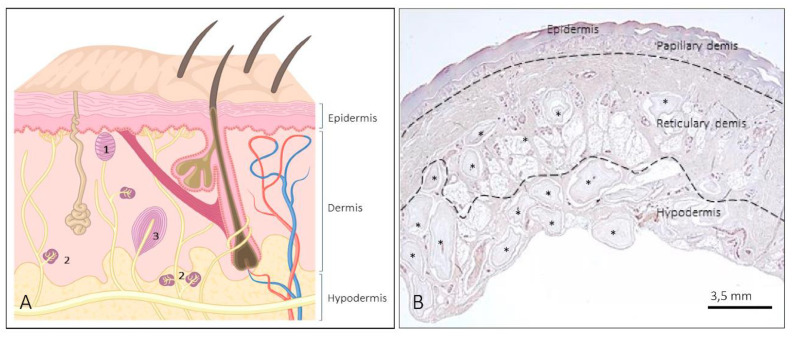
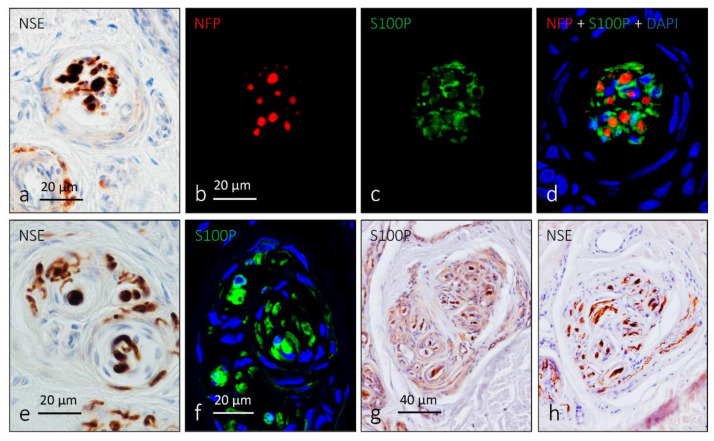
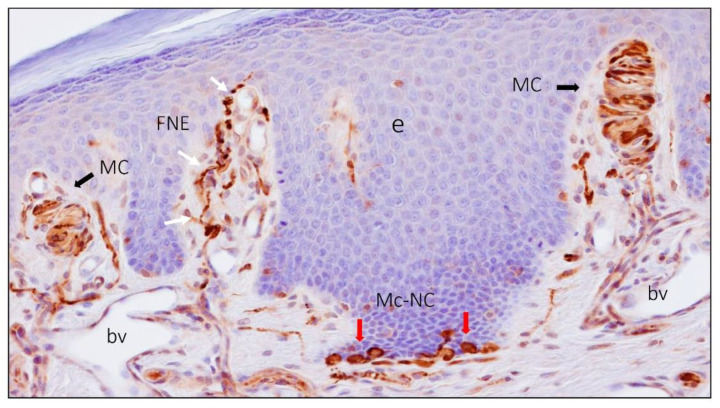
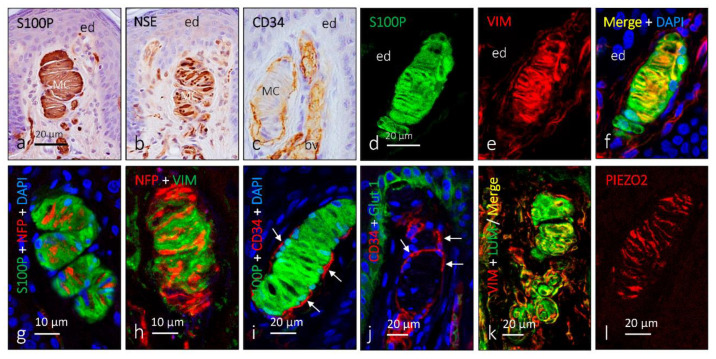
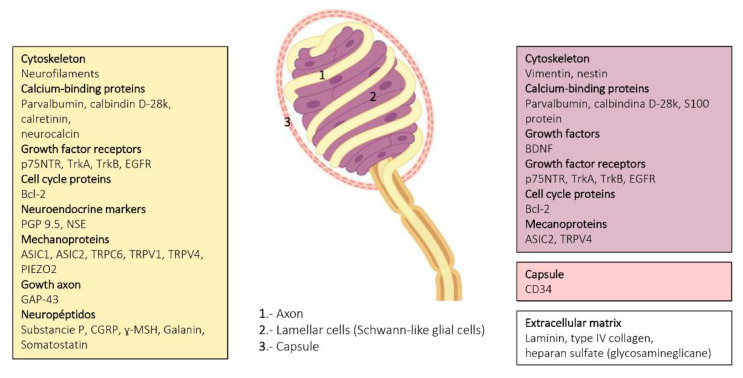
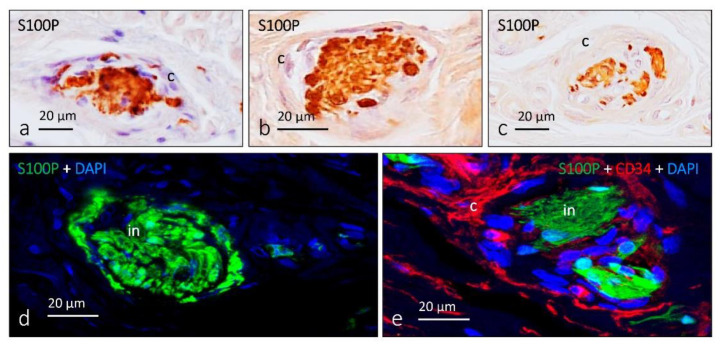
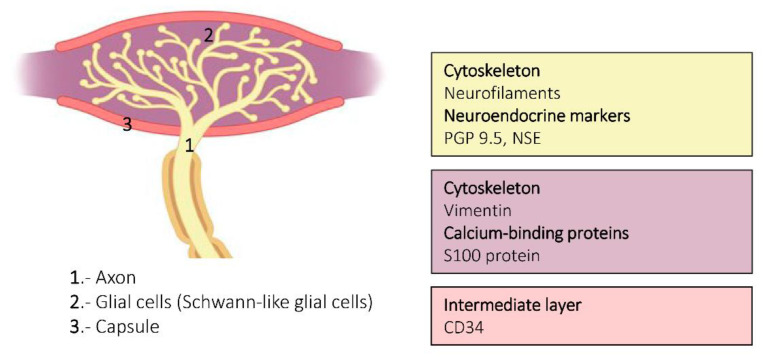
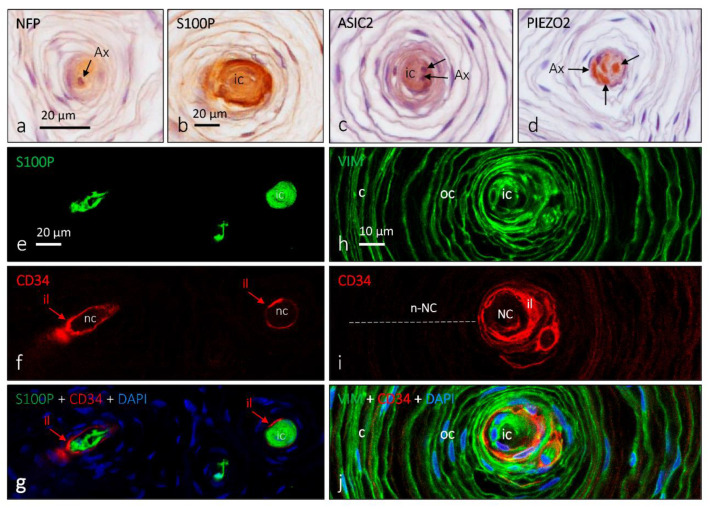
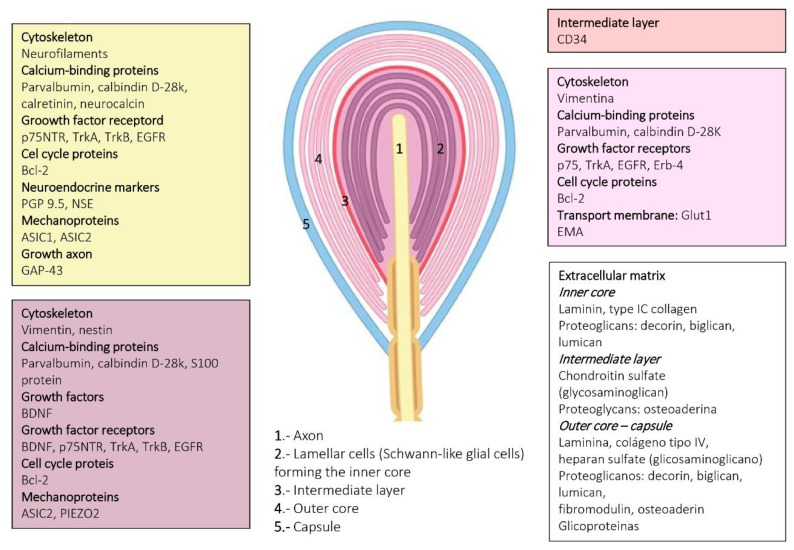
Sensory corpuscles of human skin are terminals of primary mechanoreceptive neurons associated with non-neuronal cells that function as low-threshold mechanoreceptors. Structurally, they consist of an extreme tip of a mechanosensory axon and nonmyelinating peripheral glial cells variably arranged according to the morphotype of the sensory corpuscle, all covered for connective cells of endoneurial and/or perineurial origin. Although the pathologies of sensitive corpuscles are scarce and almost never severe, adequate knowledge of the structure and immunohistochemical profile of these formations is essential for dermatologists and pathologists. In fact, since sensory corpuscles and nerves share a basic structure and protein composition, a cutaneous biopsy may be a complementary method for the analysis of nerve involvement in peripheral neuropathies, systemic diseases, and several pathologies of the central nervous system. Thus, a biopsy of cutaneous sensory corpuscles can provide information for the diagnosis, evolution, and effectiveness of treatments of some pathologies in which they are involved. Here, we updated and summarized the current knowledge about the immunohistochemistry of human sensory corpuscles with the aim to provide information to dermatologists and skin pathologists.
人类皮肤的感觉小体是与作为低阈值机械感受器的非神经元细胞相关的初级机械感受神经元的终末。在结构上,它们由机械感觉轴突的最末端和根据感觉小体形态类型可变排列的无髓外周神经胶质细胞组成,所有这些都被神经内膜和/或神经束膜来源的结缔组织细胞所覆盖。尽管感觉小体的病理学情况稀少且几乎从不严重,但对这些结构的结构和免疫组织化学特征有充分了解,对皮肤科医生和病理学家来说至关重要。事实上,由于感觉小体和神经具有基本相同的结构和蛋白质组成,皮肤活检可能是分析外周神经病变、全身性疾病和几种中枢神经系统疾病中神经受累情况的一种补充方法。因此,皮肤感觉小体的活检可以为某些它们所涉及疾病的诊断、病情发展及治疗效果提供信息。在此,我们更新并总结了关于人类感觉小体免疫组织化学的当前知识,旨在为皮肤科医生和皮肤病理学家提供信息。