Occupational Health Department, Faculty of Public Health and Health Informatics, Umm Al-Qura University, Makkah, Saudi Arabia.
Psychology Discipline, School of Health and Biomedical Sciences, College of Science, Engineering and Health, RMIT University, PO Box 71, Bundoora, VIC, 3083, Australia.
Sci Rep. 2021 Jan 13;11(1):866. doi: 10.1038/s41598-020-79093-5.
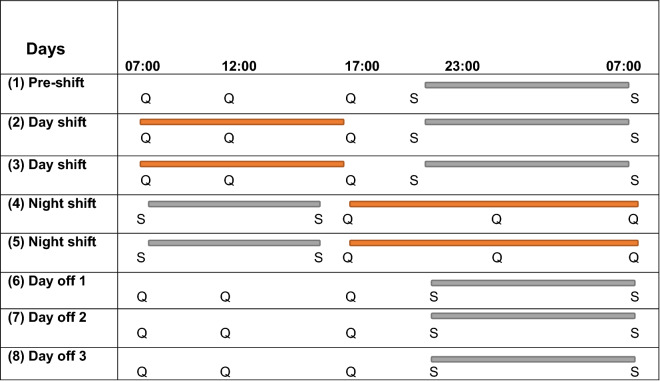
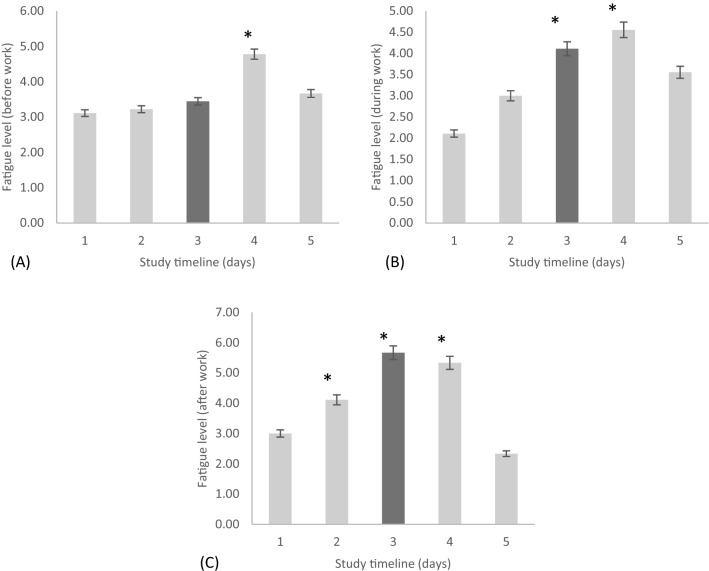
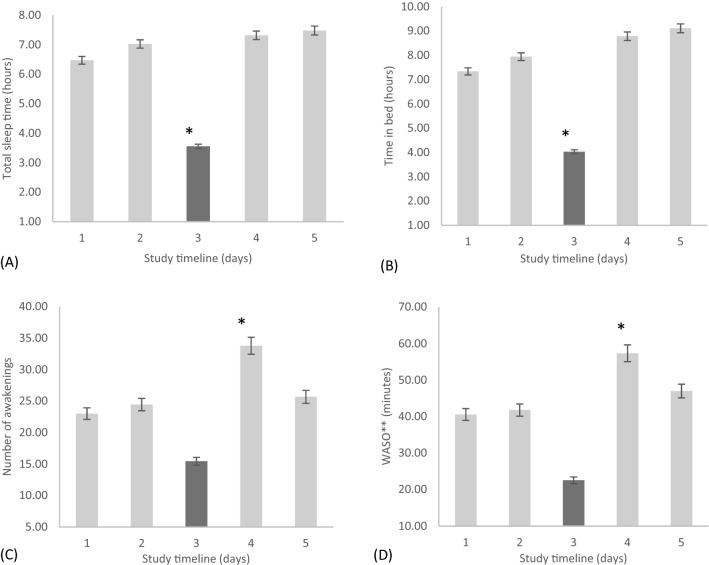
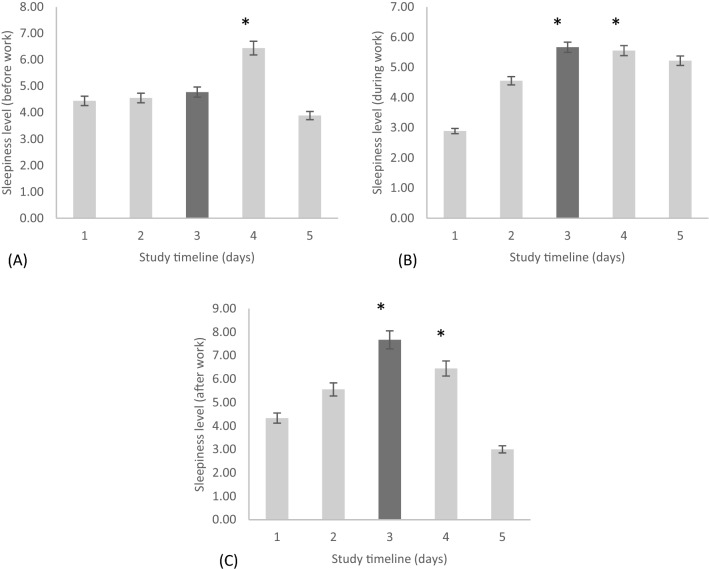
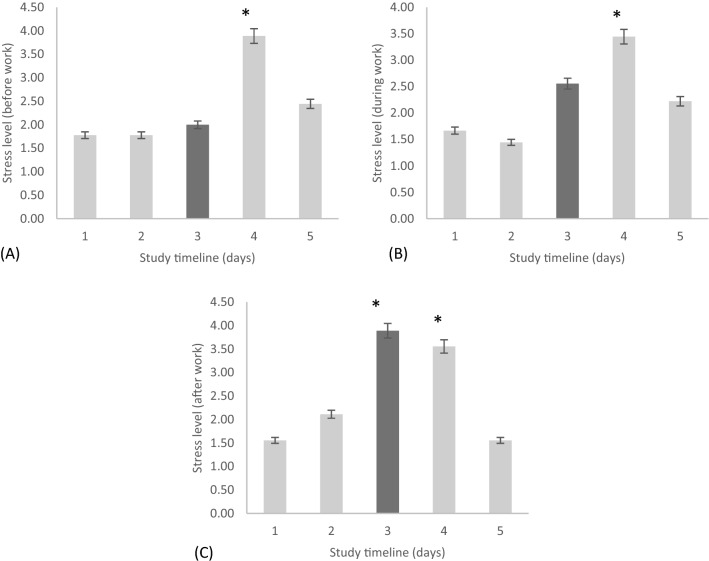
Paramedics working on a rotating shift are at an increased risk of developing chronic health issues due to continuous circadian rhythm disruption. The acute effects of shift rotation and objectively measured sleep have rarely been reported in paramedics. This study investigated the relationships between a rotating shift schedule and sleep (using actigraphy), subjective reports of sleepiness, mood, stress and fatigue. Galvanic Skin Response, energy expenditure and physical activity (BodyMedia SenseWear Armband) were also recorded across the shift schedule. Paramedics were monitored for a period of eight consecutive days across pre-shift, day shift, night shift, and 2 days off. Fifteen paramedics (M age = 39.5 and SD = 10.7 years) who worked rotational shifts experienced sleep restriction during night shift compared to pre-shift, day shift and days off (p < 0.001). Night shift was also associated with higher levels of stress (p < 0.05), fatigue (p < 0.05), and sleepiness (p < 0.05). One day off was related to a return to pre-shift functioning. Such shift-related issues have a compounding negative impact on an already stressful occupation with high rates of physical and mental health issues. Therefore, there is an urgent need to investigate methods to reduce rotating shift burden on the health of paramedics. This could be through further research aimed at providing recommendations for shift work schedules with sufficient periods for sleep and recovery from stress.
从事轮班工作的护理人员由于昼夜节律持续中断,患慢性健康问题的风险增加。轮班旋转和客观测量的睡眠对护理人员的急性影响很少有报道。本研究调查了轮班时间表与睡眠(使用活动记录仪)、睡眠困意、情绪、压力和疲劳的主观报告之间的关系。还记录了皮肤电反应、能量消耗和体力活动(BodyMedia SenseWear 臂带)。在连续八天的轮班期间,对 15 名护理人员(M 年龄=39.5 岁,SD=10.7 岁)进行了监测。与轮班前、白班和休息日相比,夜班时护理人员的睡眠时间受到限制(p<0.001)。夜班还与更高水平的压力(p<0.05)、疲劳(p<0.05)和困意(p<0.05)相关。休息一天与恢复轮班前的功能有关。这种与轮班相关的问题对已经压力很大的职业产生了累积的负面影响,该职业的身心健康问题发生率很高。因此,迫切需要研究减轻轮班对护理人员健康的影响的方法。这可以通过进一步的研究来提供关于有足够睡眠时间和缓解压力的轮班时间表的建议来实现。