Department of Chemistry and Biochemistry, Florida International University, 11200 Southwest Eighth Street, Miami, Florida 33199, United States.
ACS Appl Mater Interfaces. 2021 Mar 3;13(8):9491-9499. doi: 10.1021/acsami.0c20707. Epub 2021 Jan 15.
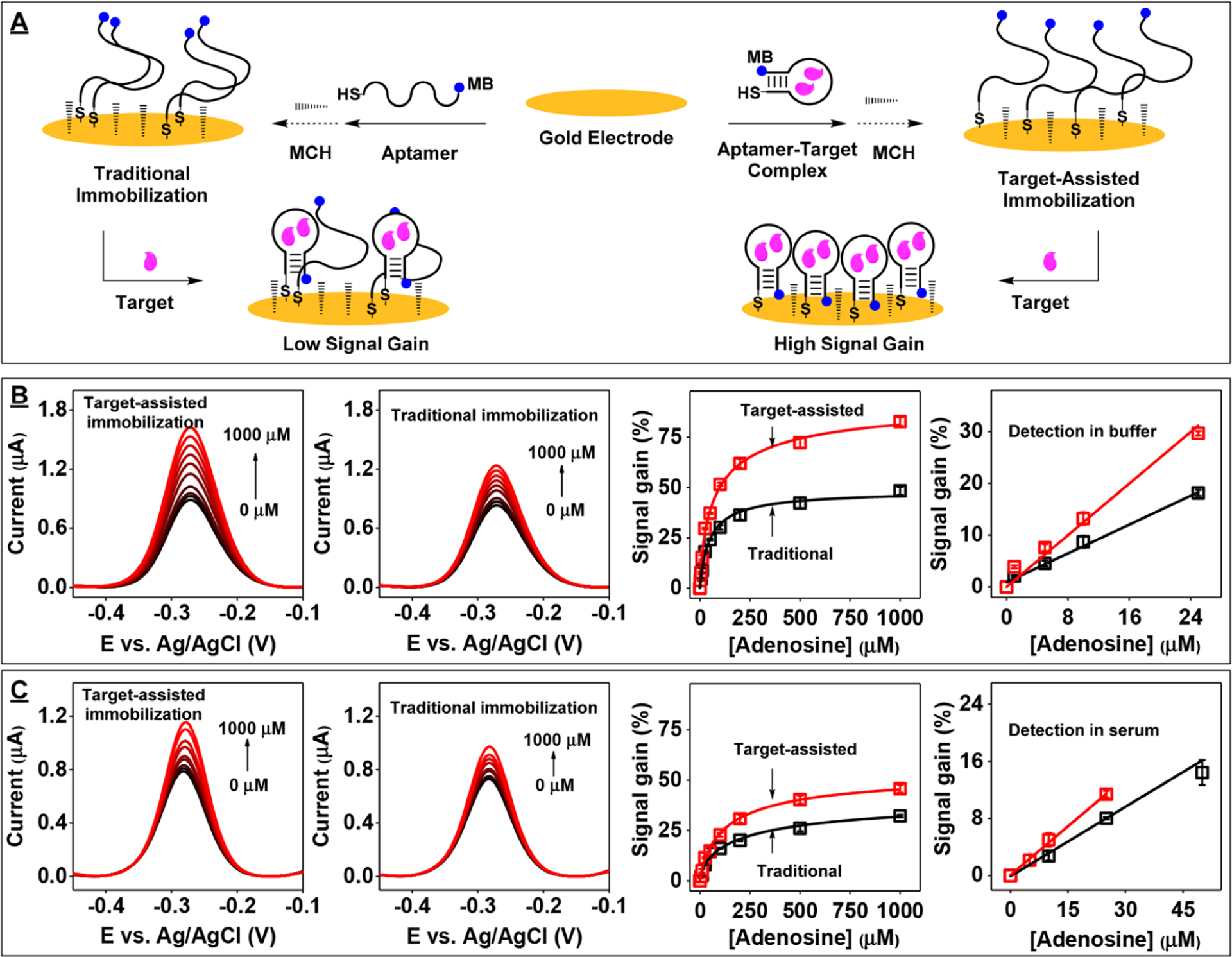
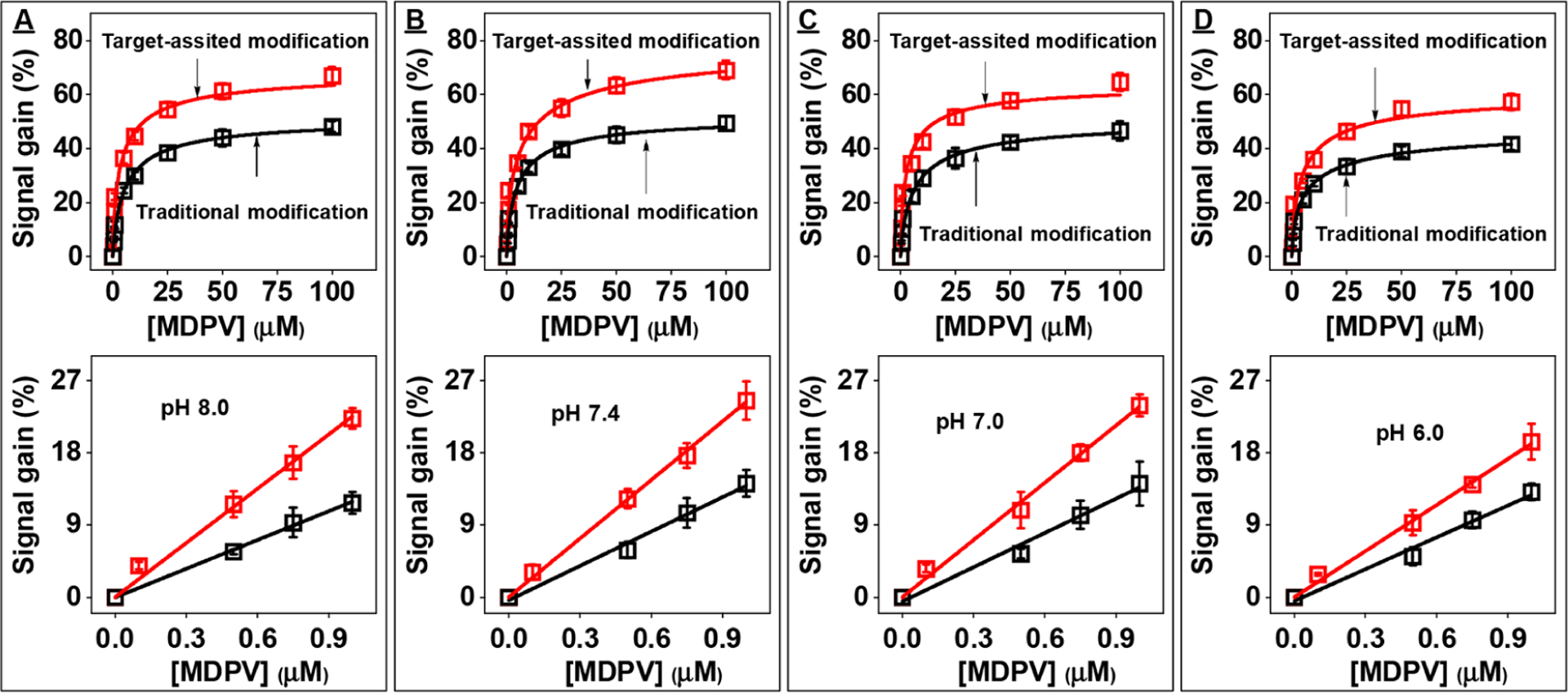
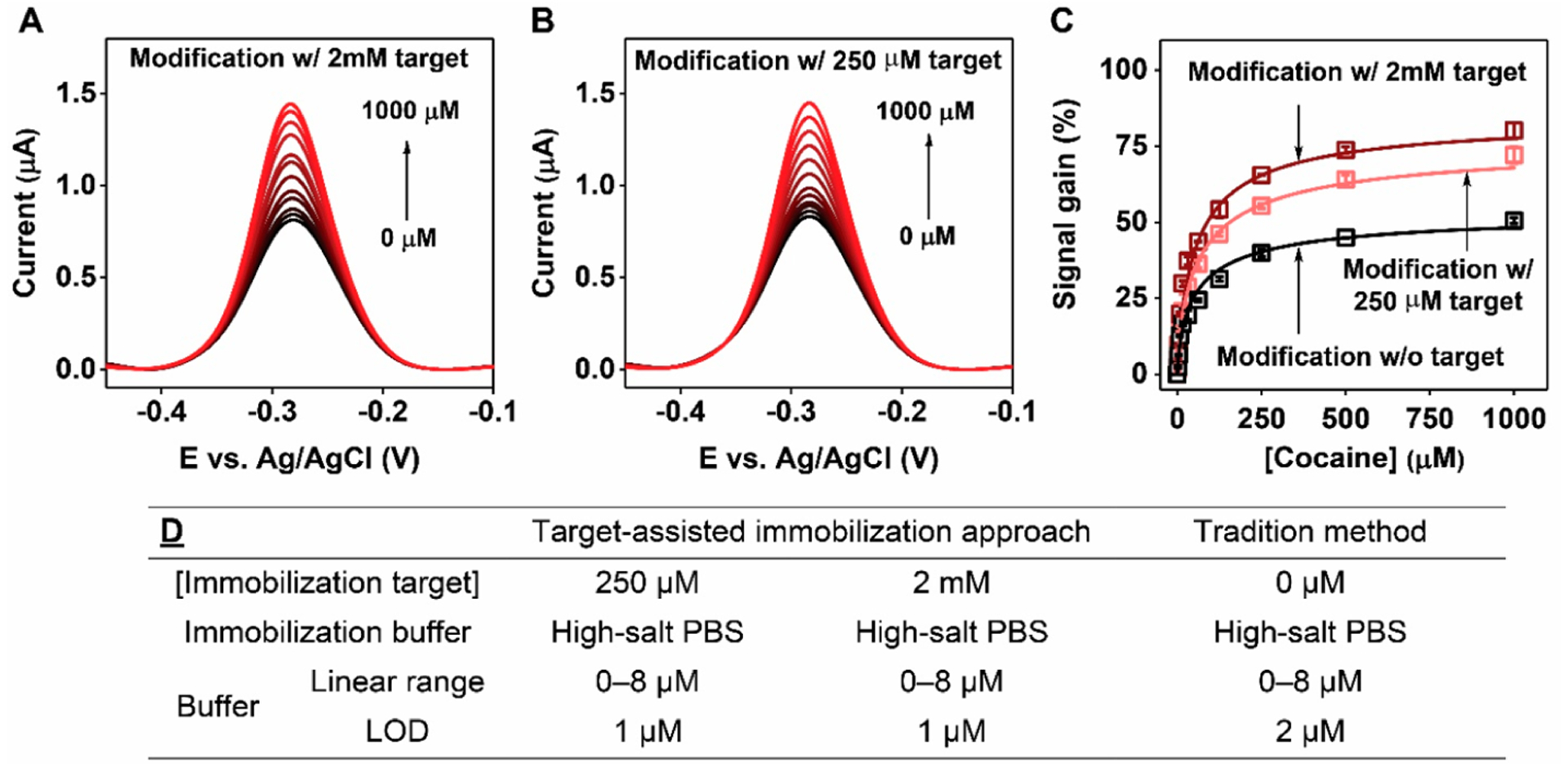
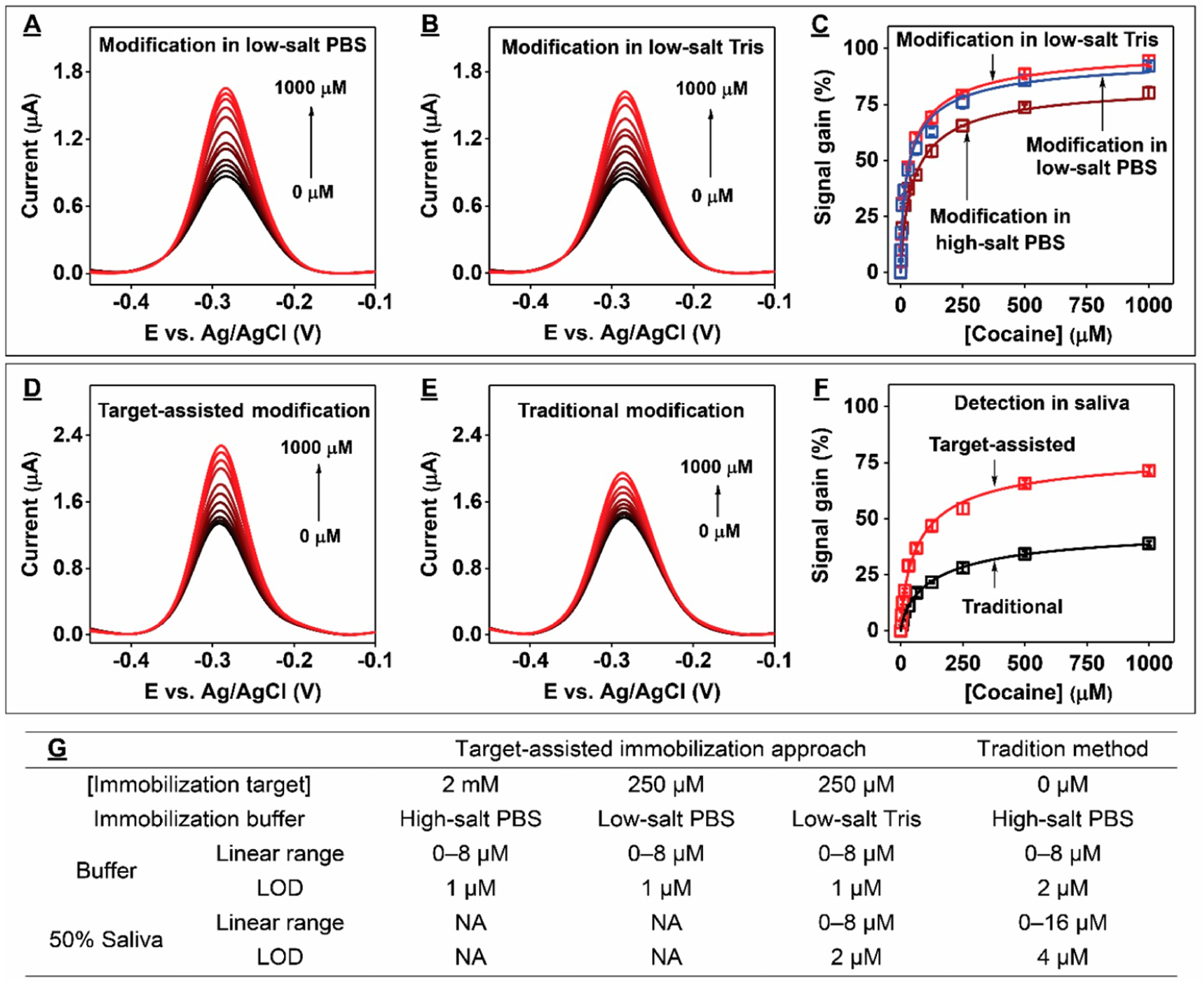
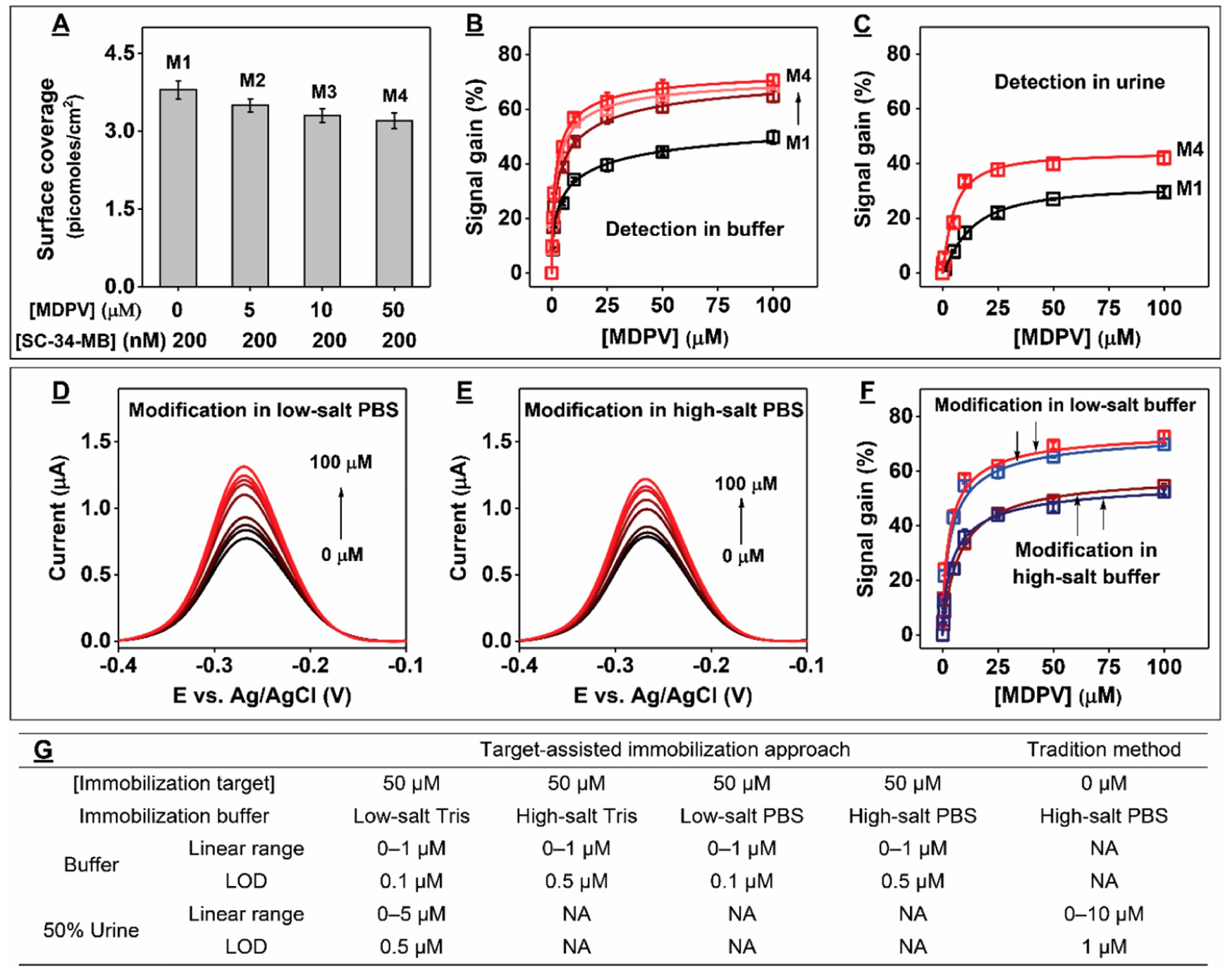
Electrochemical aptamer-based (E-AB) sensors are a versatile sensing platform that can achieve rapid and robust target detection in complex matrices. However, the limited sensitivity of these sensors has impeded their translation from proof-of-concept to commercial products. Surface-bound aptamers must be sufficiently spaced to bind targets and subsequently fold for signal transduction. We hypothesized that electrodes fabricated using conventional methods result in sensing surfaces where only a fraction of aptamers are appropriately spaced to actively respond to the target. As an alternative, we presented a novel aptamer immobilization approach that favors sufficient spacing between aptamers at the microscale to achieve optimal target binding, folding, and signal transduction. We first demonstrated that immobilizing aptamers in their target-bound, folded state on gold electrode surfaces yields an aptamer monolayer that supports greater sensitivity and higher signal-to-noise ratio than traditionally prepared E-AB sensors. We also showed that performing aptamer immobilization under low ionic strength conditions rather than conventional high ionic strength buffer greatly improves E-AB sensor performance. We successfully tested our approach with three different small-molecule-binding aptamers, demonstrating its generalizability. On the basis of these results, we believe our electrode fabrication approach will accelerate development of high-performance sensors with the sensitivity required for real-world analytical applications.
基于电化学适体的 (E-AB) 传感器是一种多功能传感平台,可在复杂基质中实现快速、稳健的目标检测。然而,这些传感器的灵敏度有限,阻碍了它们从概念验证到商业产品的转化。结合在表面的适体必须有足够的间隔来结合靶标,然后折叠进行信号转导。我们假设使用传统方法制造的电极导致的传感表面只有一部分适体适当地间隔开,以主动响应靶标。作为替代方法,我们提出了一种新的适体固定方法,有利于在微尺度上适体之间有足够的间隔,以实现最佳的靶标结合、折叠和信号转导。我们首先证明,将适体固定在金电极表面的其靶结合、折叠状态下,可得到支持更高灵敏度和更高信噪比的适体单层,优于传统制备的 E-AB 传感器。我们还表明,在低离子强度条件下而不是传统的高离子强度缓冲液中进行适体固定可大大提高 E-AB 传感器的性能。我们使用三种不同的小分子结合适体成功测试了我们的方法,证明了其通用性。基于这些结果,我们相信我们的电极制造方法将加速具有实际分析应用所需灵敏度的高性能传感器的发展。