• 文献检索
  • 文档翻译
  • 深度研究
  • 学术资讯
  • Suppr Zotero 插件Zotero 插件
  • 邀请有礼
  • 套餐&价格
  • 历史记录
应用&插件
Suppr Zotero 插件Zotero 插件浏览器插件Mac 客户端Windows 客户端微信小程序
定价
高级版会员购买积分包购买API积分包
服务
文献检索文档翻译深度研究API 文档MCP 服务
关于我们
关于 Suppr公司介绍联系我们用户协议隐私条款
关注我们

Suppr 超能文献

核心技术专利:CN118964589B侵权必究
粤ICP备2023148730 号-1Suppr @ 2026

文献检索

告别复杂PubMed语法,用中文像聊天一样搜索,搜遍4000万医学文献。AI智能推荐,让科研检索更轻松。

立即免费搜索

文件翻译

保留排版,准确专业,支持PDF/Word/PPT等文件格式,支持 12+语言互译。

免费翻译文档

深度研究

AI帮你快速写综述,25分钟生成高质量综述,智能提取关键信息,辅助科研写作。

立即免费体验

为了提供有效的数据驱动响应来预测圣保罗和巴西的新冠疫情。

Towards Providing Effective Data-Driven Responses to Predict the Covid-19 in São Paulo and Brazil.

机构信息

Faculty of Science and Technology, São Paulo State University (UNESP), Presidente Prudente 19060-900, Brazil.

Department of Energy Engineering, São Paulo State University (UNESP), Rosana 19273-000, Brazil.

出版信息

Sensors (Basel). 2021 Jan 13;21(2):540. doi: 10.3390/s21020540.

DOI:10.3390/s21020540
PMID:33451092
原文链接:https://pmc.ncbi.nlm.nih.gov/articles/PMC7828507/
Abstract

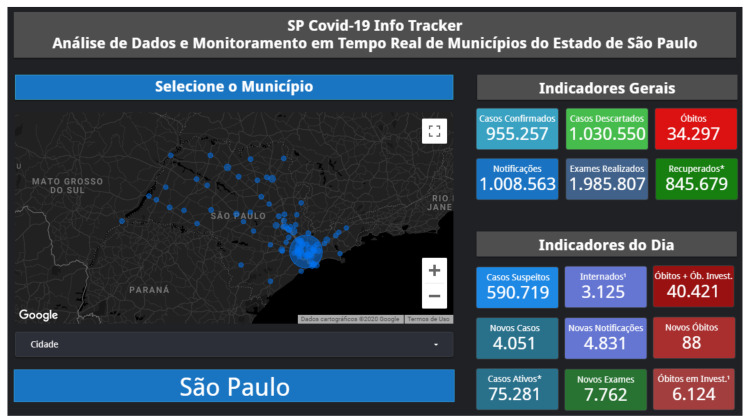
São Paulo is the most populous state in Brazil, home to around 22% of the country's population. The total number of Covid-19-infected people in São Paulo has reached more than 1 million, while its total death toll stands at 25% of all the country's fatalities. Joining the Brazilian academia efforts in the fight against Covid-19, in this paper we describe a unified framework for monitoring and forecasting the Covid-19 progress in the state of São Paulo. More specifically, a freely available, online platform to collect and exploit Covid-19 time-series data is presented, supporting decision-makers while still allowing the general public to interact with data from different regions of the state. Moreover, a novel forecasting data-driven method has also been proposed, by combining the so-called Susceptible-Infectious-Recovered-Deceased model with machine learning strategies to better fit the mathematical model's coefficients for predicting Infections, Recoveries, Deaths, and Viral Reproduction Numbers. We show that the obtained predictor is capable of dealing with badly conditioned data samples while still delivering accurate 10-day predictions. Our integrated computational system can be used for guiding government actions mainly in two basic aspects: real-time data assessment and dynamic predictions of Covid-19 curves for different regions of the state. We extend our analysis and investigation to inspect the virus spreading in Brazil in its regions. Finally, experiments involving the Covid-19 advance in other countries are also given.

摘要

圣保罗州是巴西人口最多的州,约占全国人口的 22%。圣保罗州的新冠病毒感染人数已达 100 多万,总死亡人数占全国死亡人数的 25%。为了加入巴西学术界抗击新冠病毒的努力,在本文中,我们描述了一个用于监测和预测圣保罗州新冠病毒进展的统一框架。更具体地说,我们提出了一个免费的在线平台,用于收集和利用新冠病毒时间序列数据,为决策者提供支持,同时允许公众从该州不同地区与数据进行交互。此外,我们还提出了一种新颖的预测数据驱动方法,通过将所谓的易感-感染-恢复-死亡模型与机器学习策略相结合,更好地拟合数学模型的系数,以预测感染、康复、死亡和病毒繁殖数。我们表明,所得到的预测器能够处理条件较差的数据样本,同时仍然能够提供准确的 10 天预测。我们的集成计算系统可用于指导政府的行动,主要集中在两个基本方面:实时数据评估和对该州不同地区的新冠病毒曲线进行动态预测。我们还扩展了分析和调查,以检查巴西各地区的病毒传播情况。最后,还给出了涉及其他国家新冠病毒进展的实验。
https://cdn.ncbi.nlm.nih.gov/pmc/blobs/72c5/7828507/c8297a6d266e/sensors-21-00540-g014a.jpg
https://cdn.ncbi.nlm.nih.gov/pmc/blobs/72c5/7828507/888a7447a53c/sensors-21-00540-g0A1.jpg
https://cdn.ncbi.nlm.nih.gov/pmc/blobs/72c5/7828507/2a4d8f1a5e9c/sensors-21-00540-g0A2a.jpg
https://cdn.ncbi.nlm.nih.gov/pmc/blobs/72c5/7828507/7d2a533b5cc1/sensors-21-00540-g0A3.jpg
https://cdn.ncbi.nlm.nih.gov/pmc/blobs/72c5/7828507/8f19c127716d/sensors-21-00540-g001.jpg
https://cdn.ncbi.nlm.nih.gov/pmc/blobs/72c5/7828507/bde197e54ba1/sensors-21-00540-g002.jpg
https://cdn.ncbi.nlm.nih.gov/pmc/blobs/72c5/7828507/ad0e9a0da214/sensors-21-00540-g003.jpg
https://cdn.ncbi.nlm.nih.gov/pmc/blobs/72c5/7828507/3ca98419421a/sensors-21-00540-g004a.jpg
https://cdn.ncbi.nlm.nih.gov/pmc/blobs/72c5/7828507/b7811a1473c4/sensors-21-00540-g005.jpg
https://cdn.ncbi.nlm.nih.gov/pmc/blobs/72c5/7828507/925ebf67151b/sensors-21-00540-g006a.jpg
https://cdn.ncbi.nlm.nih.gov/pmc/blobs/72c5/7828507/d01d068fae12/sensors-21-00540-g007.jpg
https://cdn.ncbi.nlm.nih.gov/pmc/blobs/72c5/7828507/fa7e31d0e926/sensors-21-00540-g008.jpg
https://cdn.ncbi.nlm.nih.gov/pmc/blobs/72c5/7828507/ff93d61878ef/sensors-21-00540-g009.jpg
https://cdn.ncbi.nlm.nih.gov/pmc/blobs/72c5/7828507/ce1c19cdc5d9/sensors-21-00540-g010.jpg
https://cdn.ncbi.nlm.nih.gov/pmc/blobs/72c5/7828507/0108d31daa28/sensors-21-00540-g011.jpg
https://cdn.ncbi.nlm.nih.gov/pmc/blobs/72c5/7828507/6ac72595596b/sensors-21-00540-g012.jpg
https://cdn.ncbi.nlm.nih.gov/pmc/blobs/72c5/7828507/c7176abf25c6/sensors-21-00540-g013.jpg
https://cdn.ncbi.nlm.nih.gov/pmc/blobs/72c5/7828507/c8297a6d266e/sensors-21-00540-g014a.jpg
https://cdn.ncbi.nlm.nih.gov/pmc/blobs/72c5/7828507/888a7447a53c/sensors-21-00540-g0A1.jpg
https://cdn.ncbi.nlm.nih.gov/pmc/blobs/72c5/7828507/2a4d8f1a5e9c/sensors-21-00540-g0A2a.jpg
https://cdn.ncbi.nlm.nih.gov/pmc/blobs/72c5/7828507/7d2a533b5cc1/sensors-21-00540-g0A3.jpg
https://cdn.ncbi.nlm.nih.gov/pmc/blobs/72c5/7828507/8f19c127716d/sensors-21-00540-g001.jpg
https://cdn.ncbi.nlm.nih.gov/pmc/blobs/72c5/7828507/bde197e54ba1/sensors-21-00540-g002.jpg
https://cdn.ncbi.nlm.nih.gov/pmc/blobs/72c5/7828507/ad0e9a0da214/sensors-21-00540-g003.jpg
https://cdn.ncbi.nlm.nih.gov/pmc/blobs/72c5/7828507/3ca98419421a/sensors-21-00540-g004a.jpg
https://cdn.ncbi.nlm.nih.gov/pmc/blobs/72c5/7828507/b7811a1473c4/sensors-21-00540-g005.jpg
https://cdn.ncbi.nlm.nih.gov/pmc/blobs/72c5/7828507/925ebf67151b/sensors-21-00540-g006a.jpg
https://cdn.ncbi.nlm.nih.gov/pmc/blobs/72c5/7828507/d01d068fae12/sensors-21-00540-g007.jpg
https://cdn.ncbi.nlm.nih.gov/pmc/blobs/72c5/7828507/fa7e31d0e926/sensors-21-00540-g008.jpg
https://cdn.ncbi.nlm.nih.gov/pmc/blobs/72c5/7828507/ff93d61878ef/sensors-21-00540-g009.jpg
https://cdn.ncbi.nlm.nih.gov/pmc/blobs/72c5/7828507/ce1c19cdc5d9/sensors-21-00540-g010.jpg
https://cdn.ncbi.nlm.nih.gov/pmc/blobs/72c5/7828507/0108d31daa28/sensors-21-00540-g011.jpg
https://cdn.ncbi.nlm.nih.gov/pmc/blobs/72c5/7828507/6ac72595596b/sensors-21-00540-g012.jpg
https://cdn.ncbi.nlm.nih.gov/pmc/blobs/72c5/7828507/c7176abf25c6/sensors-21-00540-g013.jpg
https://cdn.ncbi.nlm.nih.gov/pmc/blobs/72c5/7828507/c8297a6d266e/sensors-21-00540-g014a.jpg

相似文献

1
Towards Providing Effective Data-Driven Responses to Predict the Covid-19 in São Paulo and Brazil.为了提供有效的数据驱动响应来预测圣保罗和巴西的新冠疫情。
Sensors (Basel). 2021 Jan 13;21(2):540. doi: 10.3390/s21020540.
2
Forecasting Covid-19 Dynamics in Brazil: A Data Driven Approach.预测巴西的新冠疫情动态:一种数据驱动的方法。
Int J Environ Res Public Health. 2020 Jul 15;17(14):5115. doi: 10.3390/ijerph17145115.
3
Mathematical modeling of the transmission of SARS-CoV-2-Evaluating the impact of isolation in São Paulo State (Brazil) and lockdown in Spain associated with protective measures on the epidemic of CoViD-19.SARS-CoV-2 传播的数学建模-评估与保护措施相关的巴西圣保罗州隔离和西班牙封锁对 CoViD-19 疫情的影响。
PLoS One. 2021 Jun 15;16(6):e0252271. doi: 10.1371/journal.pone.0252271. eCollection 2021.
4
Mathematical model describing CoViD-19 in São Paulo, Brazil - evaluating isolation as control mechanism and forecasting epidemiological scenarios of release.描述巴西圣保罗地区的 CoViD-19 的数学模型——评估隔离作为控制机制以及预测疫情释放的流行病学情景。
Epidemiol Infect. 2020 Jul 20;148:e155. doi: 10.1017/S0950268820001600.
5
Genomic monitoring of the SARS-CoV-2 B1.1.7 (WHO VOC Alpha) in the Sao Paulo state, Brazil.巴西圣保罗州对 SARS-CoV-2 B1.1.7(世界卫生组织 VOC Alpha)的基因组监测。
Virus Res. 2022 Jan 15;308:198643. doi: 10.1016/j.virusres.2021.198643. Epub 2021 Nov 27.
6
A COVID-19 Pandemic Artificial Intelligence-Based System With Deep Learning Forecasting and Automatic Statistical Data Acquisition: Development and Implementation Study.一种基于人工智能的新冠肺炎大流行深度学习预测与自动统计数据采集系统:开发与实施研究
J Med Internet Res. 2021 May 20;23(5):e27806. doi: 10.2196/27806.
7
A multipurpose machine learning approach to predict COVID-19 negative prognosis in São Paulo, Brazil.一种多用途机器学习方法,用于预测巴西圣保罗的 COVID-19 不良预后。
Sci Rep. 2021 Feb 8;11(1):3343. doi: 10.1038/s41598-021-82885-y.
8
Retrospective Insights of the COVID-19 Epidemic in the Major Latin American City, São Paulo, Southeastern Brazil.巴西东南部大城市圣保罗的 COVID-19 疫情回顾性见解。
Viruses. 2023 Jan 24;15(2):327. doi: 10.3390/v15020327.
9
A New Auto-Regressive Multi-Variable Modified Auto-Encoder for Multivariate Time-Series Prediction: A Case Study with Application to COVID-19 Pandemics.一种用于多变量时间序列预测的新型自回归多变量修正自编码器:以COVID-19大流行应用为例的研究
Int J Environ Res Public Health. 2024 Apr 18;21(4):497. doi: 10.3390/ijerph21040497.
10
Predicting COVID-19 in very large countries: The case of Brazil.预测人口大国的新冠肺炎疫情:以巴西为例。
PLoS One. 2021 Jul 1;16(7):e0253146. doi: 10.1371/journal.pone.0253146. eCollection 2021.

引用本文的文献

1
Integrating artificial intelligence with mechanistic epidemiological modeling: a scoping review of opportunities and challenges.将人工智能与机制性流行病学建模相结合:机遇与挑战的范围综述
Nat Commun. 2025 Jan 10;16(1):581. doi: 10.1038/s41467-024-55461-x.
2
Local protection bubbles: an interpretation of the slowdown in the spread of coronavirus in the city of São Paulo, Brazil, in July 2020.局部保护气泡:对 2020 年 7 月巴西圣保罗市冠状病毒传播速度放缓的一种解释。
Cad Saude Publica. 2023 Dec 15;39(11):e00109522. doi: 10.1590/0102-311XEN109522. eCollection 2023.
3
Dynamic transmission modeling of COVID-19 to support decision-making in Brazil: A scoping review in the pre-vaccine era.

本文引用的文献

1
A Time-Dependent SIR Model for COVID-19 With Undetectable Infected Persons.一种针对新冠病毒病(COVID-19)且存在未被检测出感染者的时间依赖性易感-感染-康复(SIR)模型
IEEE Trans Netw Sci Eng. 2020 Sep 18;7(4):3279-3294. doi: 10.1109/TNSE.2020.3024723. eCollection 2020 Oct 1.
2
Time fused coefficient SIR model with application to COVID-19 epidemic in the United States.具有时间融合系数的SIR模型及其在美国新冠肺炎疫情中的应用
J Appl Stat. 2021 Jun 4;50(11-12):2373-2387. doi: 10.1080/02664763.2021.1936467. eCollection 2023.
3
An evaluation of mathematical models for the outbreak of COVID-19.
支持巴西决策的新冠病毒动态传播建模:疫苗接种前时代的一项范围综述
PLOS Glob Public Health. 2023 Dec 13;3(12):e0002679. doi: 10.1371/journal.pgph.0002679. eCollection 2023.
4
Forecasting COVID-19 spreading through an ensemble of classical and machine learning models: Spain's case study.通过经典机器学习模型和集成学习模型预测 COVID-19 的传播:西班牙案例研究。
Sci Rep. 2023 Apr 25;13(1):6750. doi: 10.1038/s41598-023-33795-8.
5
Space-Distributed Traffic-Enhanced LSTM-Based Machine Learning Model for COVID-19 Incidence Forecasting.基于空间分布式交通增强 LSTM 的机器学习模型用于 COVID-19 发病预测。
Comput Intell Neurosci. 2022 Nov 18;2022:4307708. doi: 10.1155/2022/4307708. eCollection 2022.
6
Using machine learning models to predict the duration of the recovery of COVID-19 patients hospitalized in Fangcang shelter hospital during the Omicron BA. 2.2 pandemic.利用机器学习模型预测在奥密克戎BA.2.2大流行期间方舱医院收治的新冠患者康复所需时长。
Front Med (Lausanne). 2022 Nov 2;9:1001801. doi: 10.3389/fmed.2022.1001801. eCollection 2022.
7
Risk Factors Associated with Mortality in Hospitalized Patients with COVID-19 during the Omicron Wave in Brazil.巴西奥密克戎毒株流行期间新冠肺炎住院患者死亡相关危险因素
Bioengineering (Basel). 2022 Oct 20;9(10):584. doi: 10.3390/bioengineering9100584.
8
Tracking machine learning models for pandemic scenarios: a systematic review of machine learning models that predict local and global evolution of pandemics.追踪大流行情景下的机器学习模型:对预测大流行局部和全球演变的机器学习模型的系统综述
Netw Model Anal Health Inform Bioinform. 2022;11(1):40. doi: 10.1007/s13721-022-00384-0. Epub 2022 Oct 11.
9
A Novel Approach on Deep Learning-Based Decision Support System Applying Multiple Output LSTM-Autoencoder: Focusing on Identifying Variations by PHSMs' Effect over COVID-19 Pandemic.基于深度学习的决策支持系统的新方法,应用多输出 LSTM-自编码器:重点关注 PHSMs 对 COVID-19 大流行的影响所导致的变化识别。
Int J Environ Res Public Health. 2022 Jun 1;19(11):6763. doi: 10.3390/ijerph19116763.
10
Dual attention-based sequential auto-encoder for Covid-19 outbreak forecasting: A case study in Vietnam.用于新冠疫情预测的基于双重注意力的序列自动编码器:越南的案例研究。
Expert Syst Appl. 2022 Oct 1;203:117514. doi: 10.1016/j.eswa.2022.117514. Epub 2022 May 13.
新型冠状病毒肺炎疫情数学模型评估
Precis Clin Med. 2020 Jun;3(2):85-93. doi: 10.1093/pcmedi/pbaa016. Epub 2020 May 22.
4
System inference for the spatio-temporal evolution of infectious diseases: Michigan in the time of COVID-19.传染病时空演变的系统推断:COVID-19 时期的密歇根州
Comput Mech. 2020;66(5):1153-1176. doi: 10.1007/s00466-020-01894-2. Epub 2020 Aug 12.
5
Artificial Intelligence (AI) and Big Data for Coronavirus (COVID-19) Pandemic: A Survey on the State-of-the-Arts.用于冠状病毒(COVID-19)大流行的人工智能(AI)与大数据:技术现状综述
IEEE Access. 2020 Jul 15;8:130820-130839. doi: 10.1109/ACCESS.2020.3009328. eCollection 2020.
6
A review of mathematical modeling, artificial intelligence and datasets used in the study, prediction and management of COVID-19.对用于新型冠状病毒肺炎(COVID-19)研究、预测和管理的数学建模、人工智能及数据集的综述。
Appl Intell (Dordr). 2020;50(11):3913-3925. doi: 10.1007/s10489-020-01770-9. Epub 2020 Jul 6.
7
Modeling the second wave of COVID-19 infections in France and Italy via a stochastic SEIR model.通过随机 SEIR 模型对法国和意大利的第二波 COVID-19 感染进行建模。
Chaos. 2020 Nov;30(11):111101. doi: 10.1063/5.0015943.
8
Modeling and forecasting the early evolution of the Covid-19 pandemic in Brazil.建模与预测巴西新冠疫情的早期演变。
Sci Rep. 2020 Nov 10;10(1):19457. doi: 10.1038/s41598-020-76257-1.
9
A Multimodal Real-Time Feedback Platform Based on Spoken Interactions for Remote Active Learning Support.基于口语交互的多模态实时反馈远程主动学习支持平台。
Sensors (Basel). 2020 Nov 6;20(21):6337. doi: 10.3390/s20216337.
10
Forecast UTI: application for predicting intensive care unit beds in the context of the COVID-19 pandemic.预测尿路感染:在新冠疫情背景下预测重症监护病房床位的应用。
Epidemiol Serv Saude. 2020 Sep 25;29(4):e2020391. doi: 10.1590/S1679-49742020000400023. eCollection 2020.