Department of Radiology, The Institute of Medical Science, The University of Tokyo, 4-6-1 Shirokanedai, Minato-ku, Tokyo, 108-8639, Japan.
Department of Radiology, Juntendo University Graduate School of Medicine, 2-1-1 Hongo, Bunkyo-ku, Tokyo, 113-8421, Japan.
Neuroradiology. 2021 Sep;63(9):1451-1462. doi: 10.1007/s00234-021-02648-4. Epub 2021 Jan 22.
To investigate whether Parkinson's disease (PD) can be differentiated from healthy controls and to identify neural circuit disorders in PD by applying a deep learning technique to parameter-weighted and number of streamlines (NOS)-based structural connectome matrices calculated from diffusion-weighted MRI.
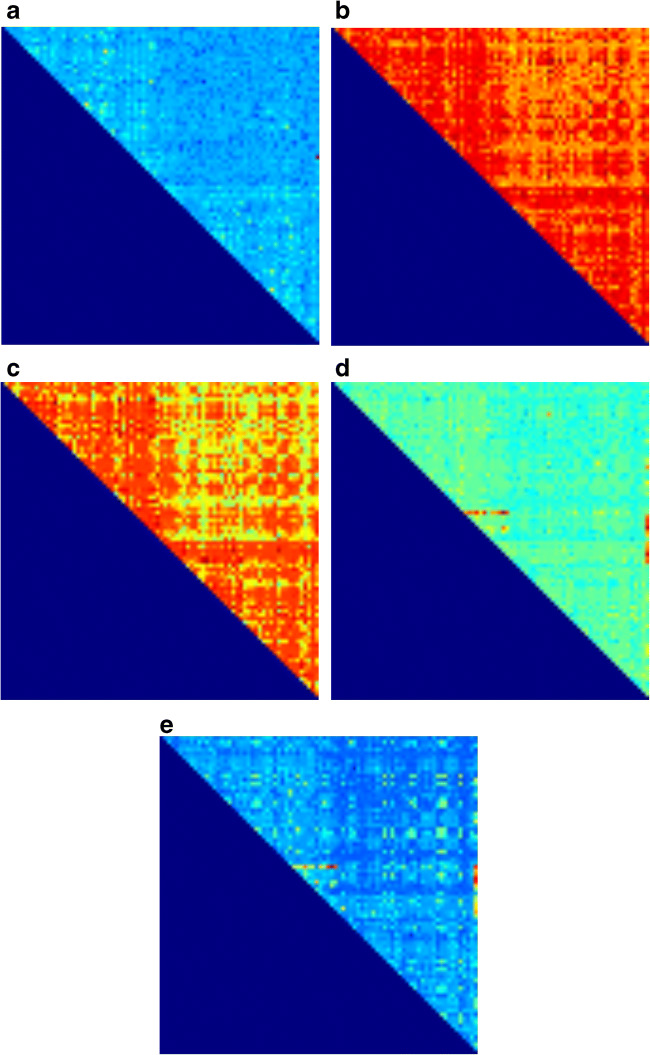
In this prospective study, 115 PD patients and 115 healthy controls were enrolled. NOS-based and parameter-weighted connectome matrices were calculated from MRI images obtained with a 3-T MRI unit. With 5-fold cross-validation, diagnostic performance of convolutional neural network (CNN) models using those connectome matrices in differentiating patients with PD from healthy controls was evaluated. To identify the important brain connections for diagnosing PD, gradient-weighted class activation mapping (Grad-CAM) was applied to the trained CNN models.
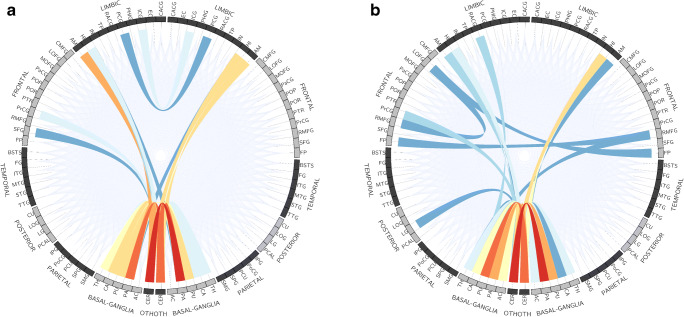
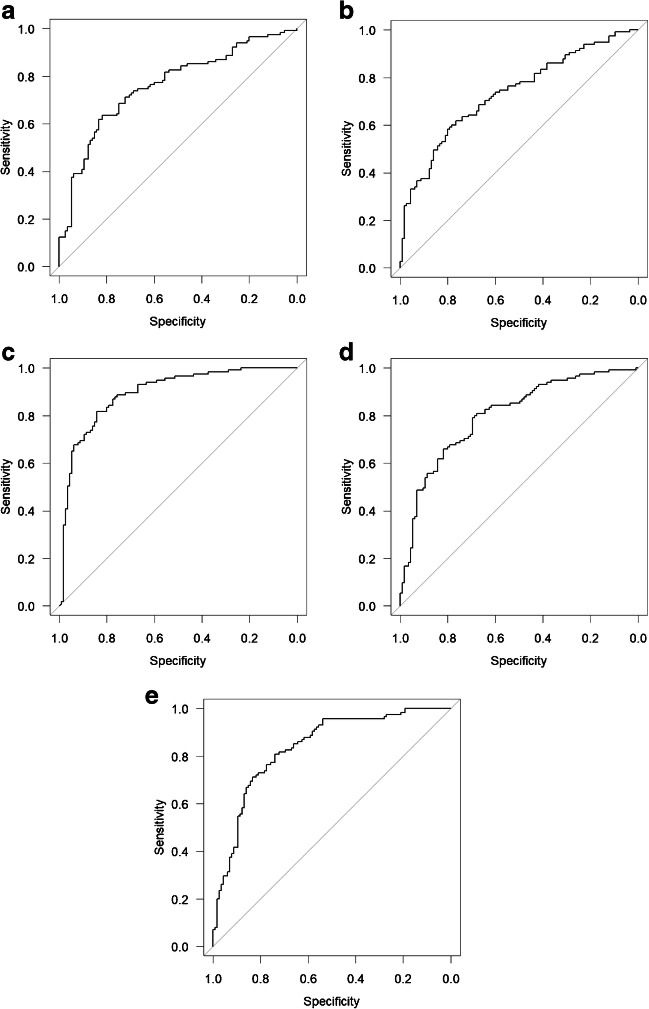
CNN models based on some parameter-weighted structural matrices (diffusion kurtosis imaging (DKI)-weighted, neurite orientation dispersion and density imaging (NODDI)-weighted, and g-ratio-weighted connectome matrices) showed moderate performance (areas under the receiver operating characteristic curve (AUCs) = 0.895, 0.801, and 0.836, respectively) in discriminating PD patients from healthy controls. The DKI-weighted connectome matrix performed significantly better than the conventional NOS-based matrix (AUC = 0.761) (DeLong's test, p < 0.0001). Alterations of neural connections between the basal ganglia and cerebellum were indicated by applying Grad-CAM to the NODDI- and g-ratio-weighted matrices.
Patients with PD can be differentiated from healthy controls by applying the deep learning technique to the parameter-weighted connectome matrices, and neural circuit disorders including those between the basal ganglia on one side and the cerebellum on the contralateral side were visualized.
应用深度学习技术对基于参数权重和束数量(NOS)的扩散加权 MRI 结构连接体矩阵进行分析,探讨其是否可用于区分帕金森病(PD)患者与健康对照者,并识别 PD 患者的神经环路紊乱。
前瞻性纳入 115 例 PD 患者和 115 例健康对照者。采用 3.0T MRI 仪获取 MRI 图像,计算基于参数权重和 NOS 的连接体矩阵。通过 5 折交叉验证,评估卷积神经网络(CNN)模型基于这些连接体矩阵对 PD 患者与健康对照者进行区分的诊断效能。为了识别有助于诊断 PD 的重要脑连接,采用梯度加权类激活映射(Grad-CAM)对训练好的 CNN 模型进行分析。
基于某些参数权重结构矩阵(扩散峰度成像(DKI)加权、神经丝取向分散和密度成像(NODDI)加权和 g 比值加权连接体矩阵)的 CNN 模型对 PD 患者与健康对照者的区分具有中等效能(受试者工作特征曲线下面积(AUC)分别为 0.895、0.801 和 0.836)。与传统的 NOS 加权矩阵(AUC=0.761)相比,DKI 加权连接体矩阵的表现明显更好(DeLong 检验,p<0.0001)。对 NODDI 加权和 g 比值加权矩阵应用 Grad-CAM 可显示基底节与小脑之间神经连接的改变。
通过将深度学习技术应用于参数权重连接体矩阵,可区分 PD 患者与健康对照者,并且可以可视化包括一侧基底节与对侧小脑之间在内的神经环路紊乱。