Stanford University, Department of Biology, Stanford, United States.
University of California, Microbiology and Immunology, San Francisco, San Francisco, United States.
Elife. 2021 Jan 25;10:e61921. doi: 10.7554/eLife.61921.
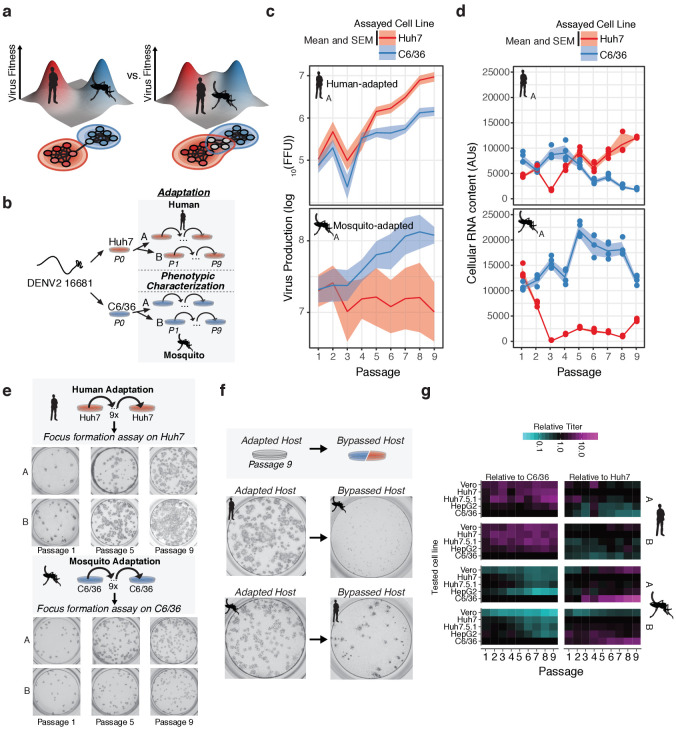
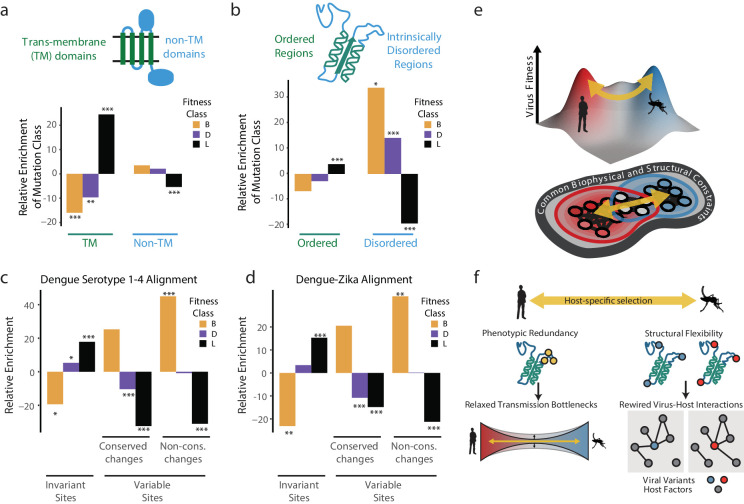
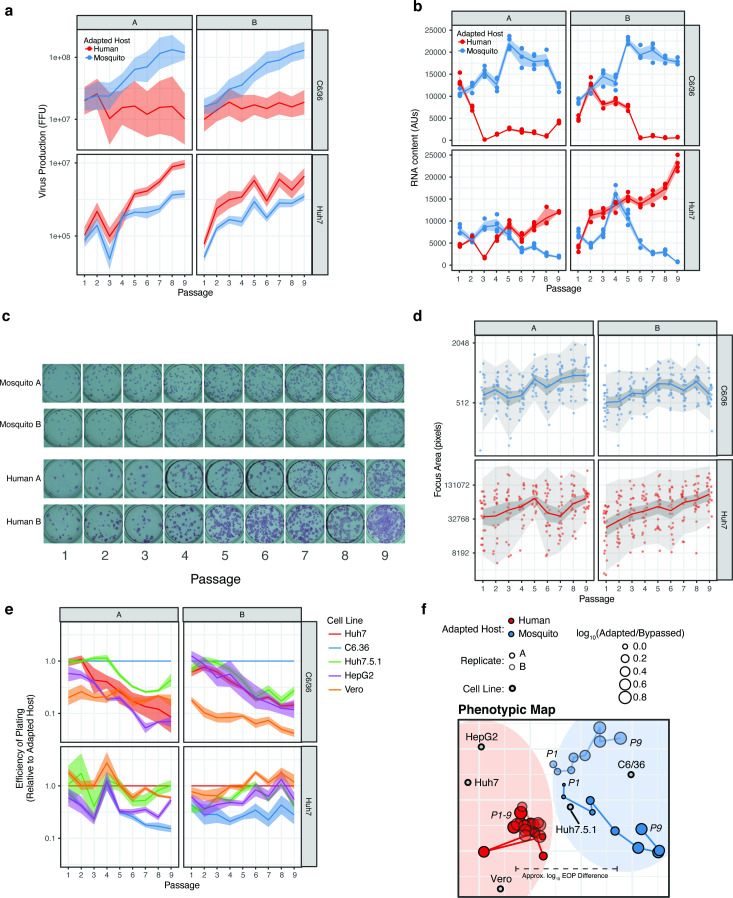
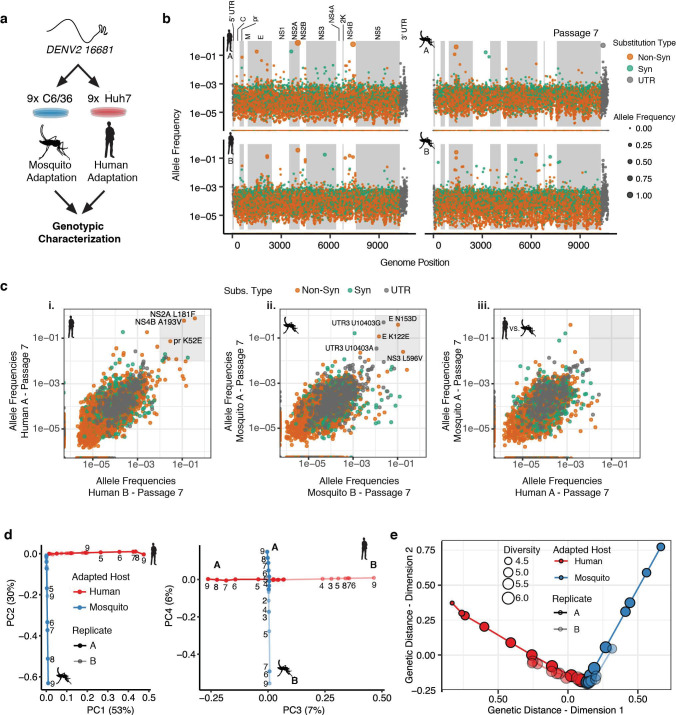
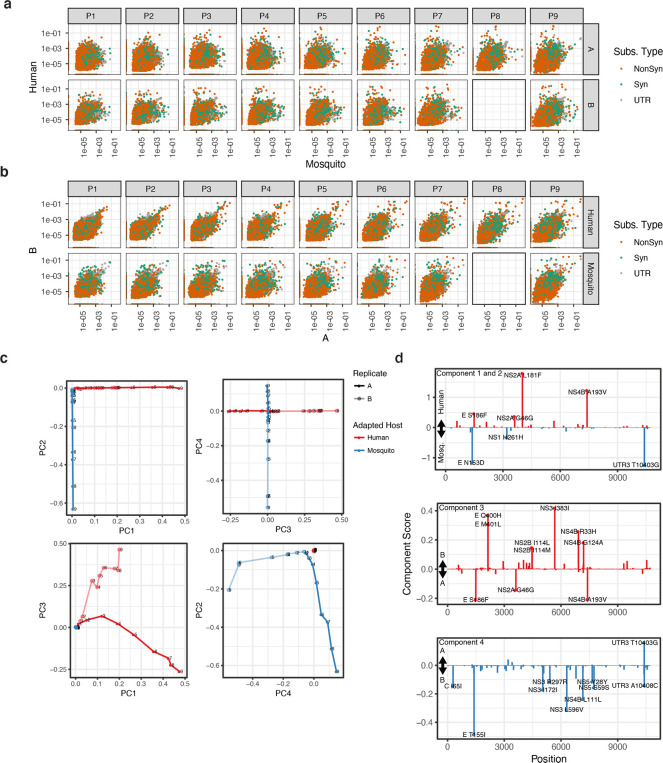
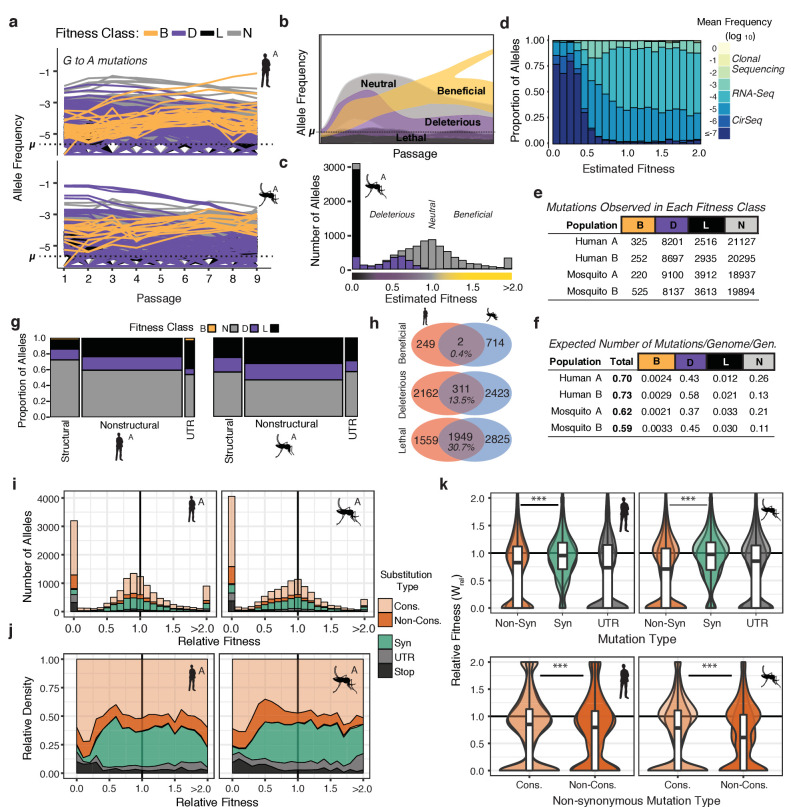
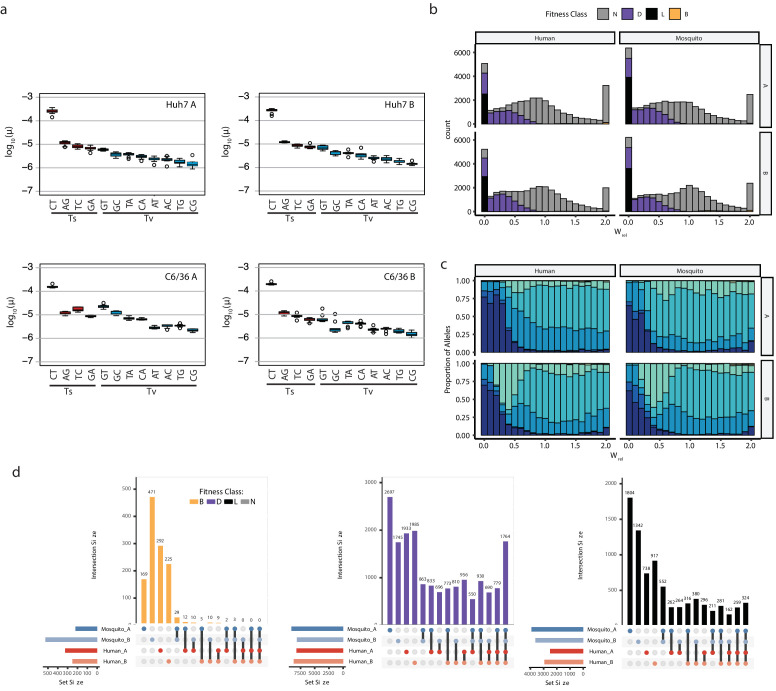
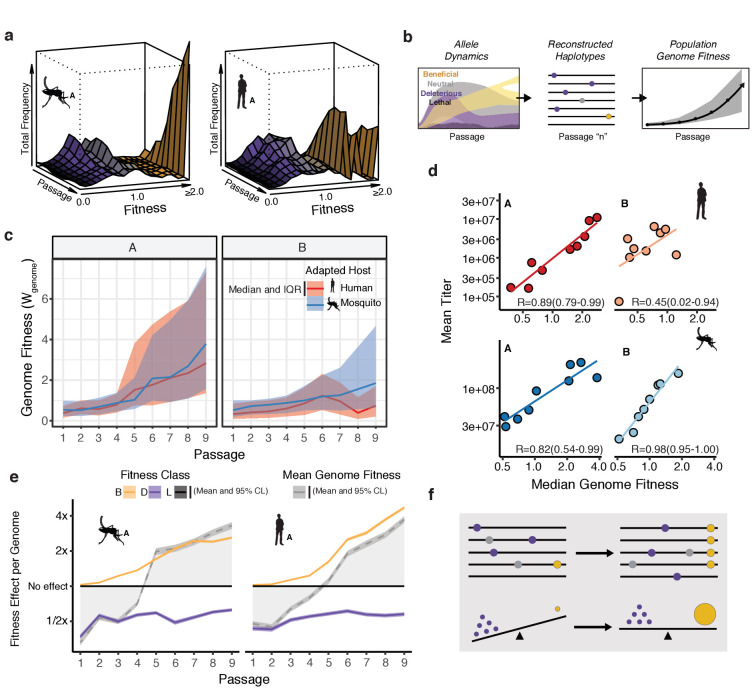
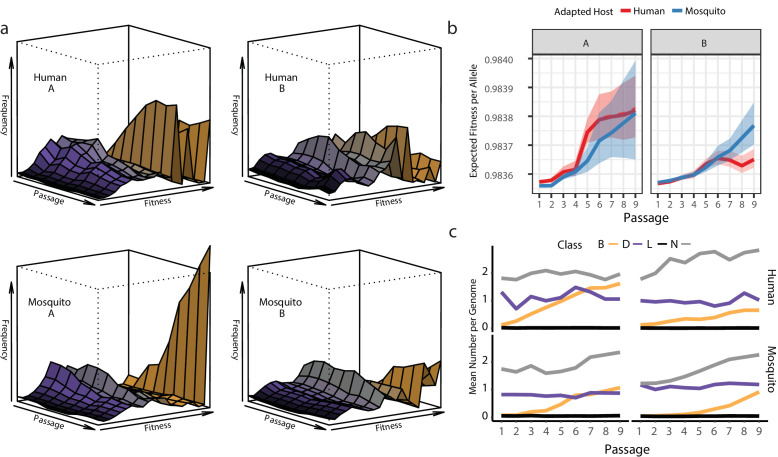
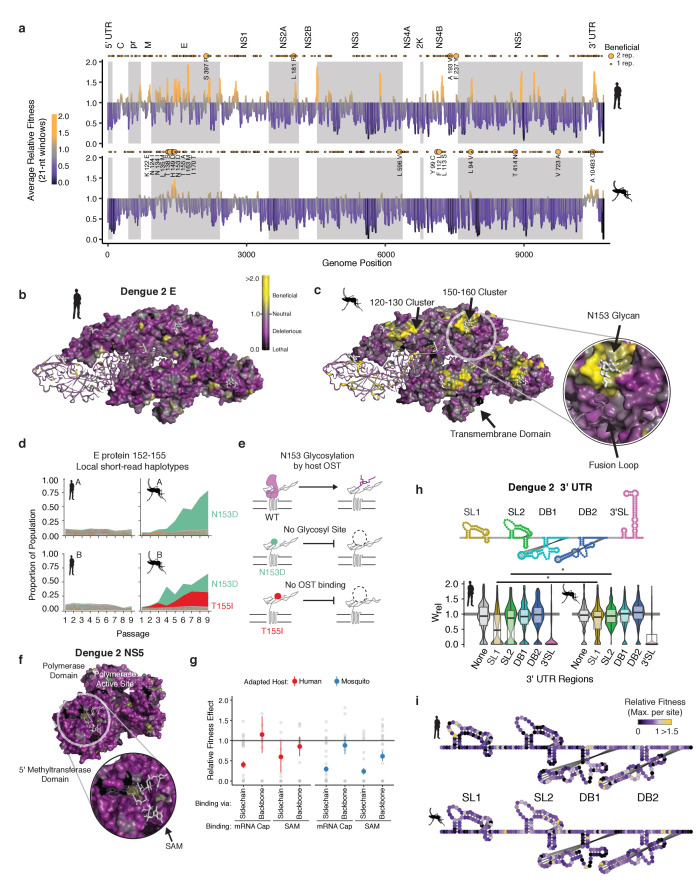
Dengue virus (DENV) cycles between mosquito and mammalian hosts. To examine how DENV populations adapt to these different host environments, we used serial passage in human and mosquito cell lines and estimated fitness effects for all single-nucleotide variants in these populations using ultra-deep sequencing. This allowed us to determine the contributions of beneficial and deleterious mutations to the collective fitness of the population. Our analysis revealed that the continuous influx of a large burden of deleterious mutations counterbalances the effect of rare, host-specific beneficial mutations to shape the path of adaptation. Beneficial mutations preferentially map to intrinsically disordered domains in the viral proteome and cluster to defined regions in the genome. These phenotypically redundant adaptive alleles may facilitate host-specific DENV adaptation. Importantly, the evolutionary constraints described in our simple system mirror trends observed across DENV and Zika strains, indicating it recapitulates key biophysical and biological constraints shaping long-term viral evolution.
登革热病毒(DENV)在蚊子和哺乳动物宿主之间循环。为了研究 DENV 种群如何适应这些不同的宿主环境,我们使用人源和蚊子细胞系进行了连续传代,并使用超深度测序估计了这些种群中所有单核苷酸变异的适应度效应。这使我们能够确定有益和有害突变对种群整体适应度的贡献。我们的分析表明,大量有害突变的持续涌入抵消了罕见的、宿主特异性的有益突变的影响,从而塑造了适应的轨迹。有益突变优先映射到病毒蛋白质组中的无规卷曲结构域,并聚集在基因组中的特定区域。这些表型冗余的适应性等位基因可能有助于宿主特异性 DENV 的适应。重要的是,我们在简单系统中描述的进化限制反映了在 DENV 和寨卡病毒株中观察到的趋势,表明它再现了塑造长期病毒进化的关键生物物理和生物学限制。