Department of Obstetrics and Gynecology, Northwestern University, Chicago, IL, 60611, USA.
Integrated Molecular Structure Education and Research Center (IMSERC), Northwestern University, Evanston, IL, 60208, USA.
Chemosphere. 2021 May;270:129003. doi: 10.1016/j.chemosphere.2020.129003. Epub 2020 Dec 7.
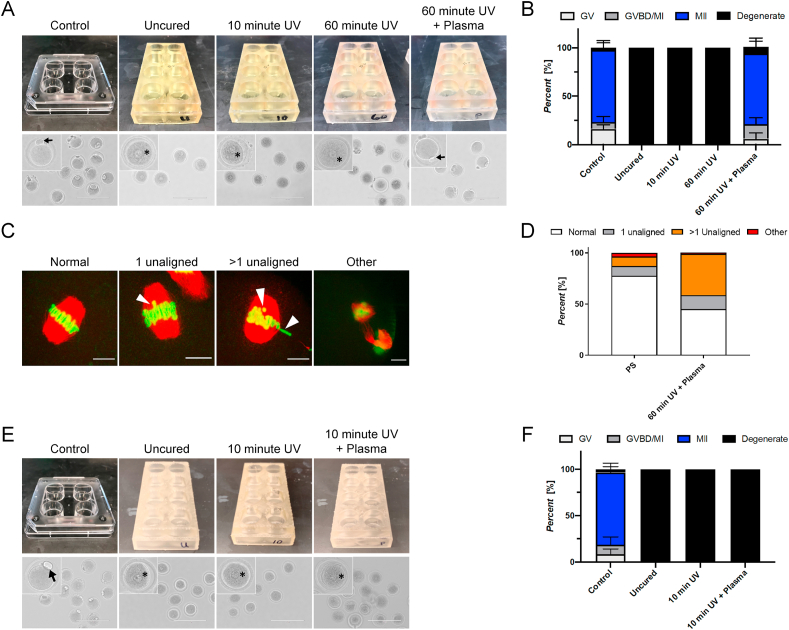
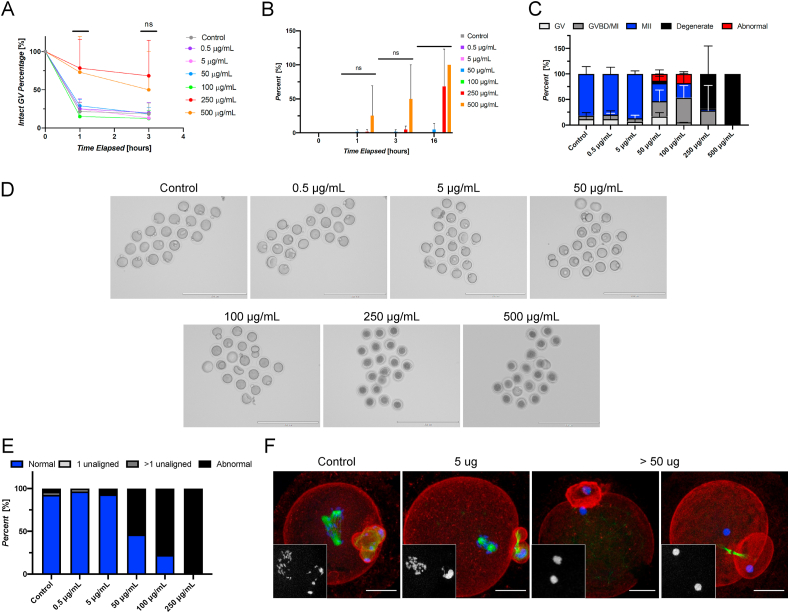
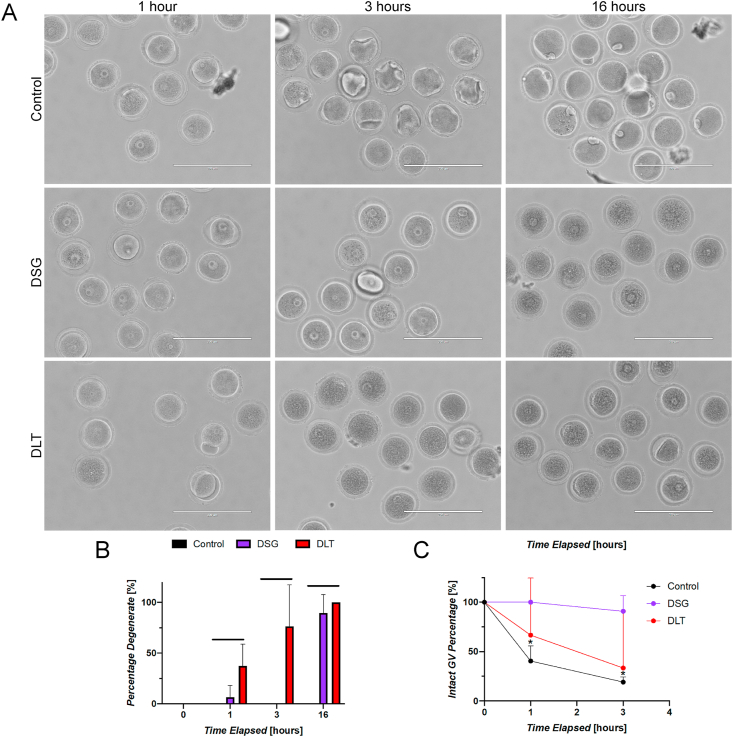
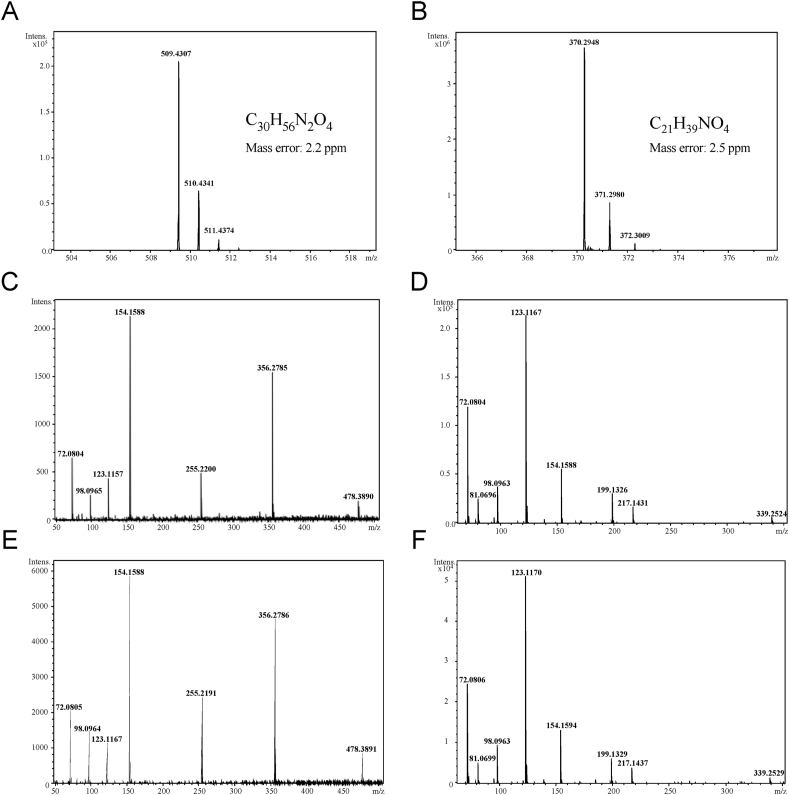
We recently engineered the first female reproductive tract on a chip (EVATAR), to enable sex-based ex vivo research. To increase the scalability and accessibility of EVATAR, we turned to 3D printing (3DP) technologies, selecting two biocompatible 3DP resins, Dental SG (DSG) and Dental LT (DLT) to generate 3DP microphysiologic platforms. Due to the known sensitivity of reproductive cells to leachable compounds, we first screened for toxicity of these biomaterials using an in vitro mammalian oocyte maturation assay. Culture of mouse oocytes in 3DP plates using conventionally treated DSG resin resulted in rapid oocyte degeneration. Oxygen plasma treatment of the surface of printed DSG resin prevented this degeneration, and the majority of the resulting oocytes progressed through meiosis in vitro. However, 57.0% ± 37.2% of the cells cultured in the DSG resin plates exhibited abnormal chromosome morphology compared to 19.4% ± 17.3% of controls cultured in polystyrene. All tested DLT resin conditions, including plasma treatment, resulted in complete and rapid oocyte degeneration. To identify the ovo-toxic component of DLT, we analyzed DLT leachate using mass spectroscopy. We identified Tinuvin 292, a commercial light stabilizer, as a major component of the DLT leachate, which resulted in a dose-dependent disruption of meiotic progression and increase in chromosomal abnormalities with oocyte exposure, showing significant ovo-toxicity in mammals. Severe reproductive toxicity induced by in vitro exposure to these 3D-printed resins highlights potential risks of deploying insufficiently characterized materials for biomedical applications and underscores the need for more rigorous evaluation and designation of biocompatible materials.
我们最近设计了第一个女性生殖道芯片(EVATAR),以实现基于性别的体外研究。为了提高 EVATAR 的可扩展性和可及性,我们转向 3D 打印(3DP)技术,选择了两种生物相容性的 3DP 树脂,牙科 SG(DSG)和牙科 LT(DLT),以生成 3DP 微生理平台。由于已知生殖细胞对可浸出化合物敏感,我们首先使用体外哺乳动物卵母细胞成熟测定法筛选这些生物材料的毒性。使用常规处理的 DSG 树脂在 3DP 板中培养的小鼠卵母细胞迅速退化。对印刷 DSG 树脂表面进行氧气等离子体处理可防止这种退化,并且大多数产生的卵母细胞在体外进行减数分裂。然而,与在聚苯乙烯中培养的对照组相比,在 DSG 树脂板中培养的细胞中 57.0%±37.2%表现出异常染色体形态,而 19.4%±17.3%。所有测试的 DLT 树脂条件,包括等离子体处理,均导致卵母细胞完全和迅速退化。为了鉴定 DLT 的卵毒性成分,我们使用质谱分析法分析了 DLT 浸出液。我们确定 Tinuvin 292 是 DLT 浸出液的主要成分,它是一种商业光稳定剂,它会导致减数分裂进程的剂量依赖性破坏,并随着卵母细胞暴露而增加染色体异常,这表明其在哺乳动物中有严重的卵毒性。在体外暴露于这些 3D 打印树脂会引起严重的生殖毒性,这突出了在生物医学应用中部署特征描述不足的材料所带来的潜在风险,并强调需要更严格的评估和指定生物相容性材料。