Belhadi Amine, Kamble Sachin, Jabbour Charbel Jose Chiappetta, Gunasekaran Angappa, Ndubisi Nelson Oly, Venkatesh Mani
Cadi Ayyad University, Marrakech, Morocco.
EDHEC Business School, Roubaix, France.
Technol Forecast Soc Change. 2021 Feb;163:120447. doi: 10.1016/j.techfore.2020.120447. Epub 2020 Nov 6.
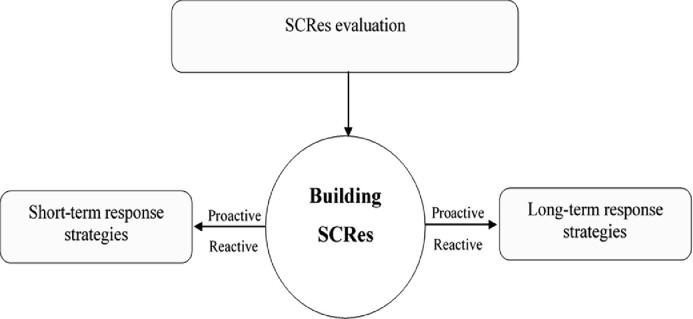
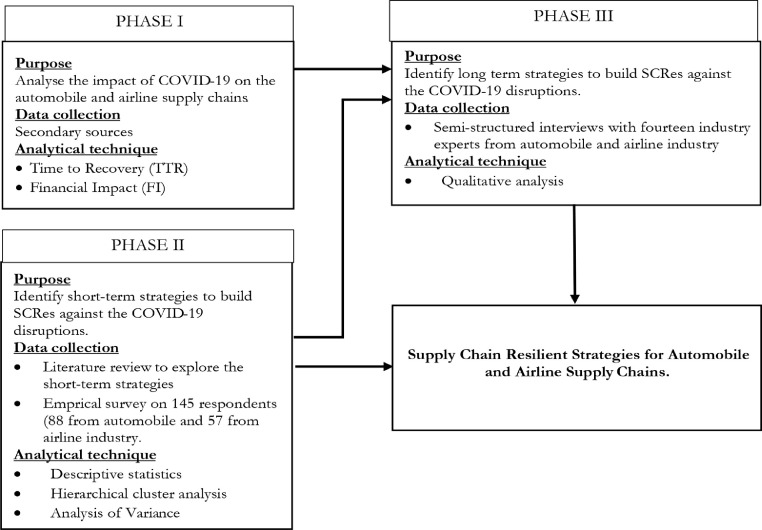
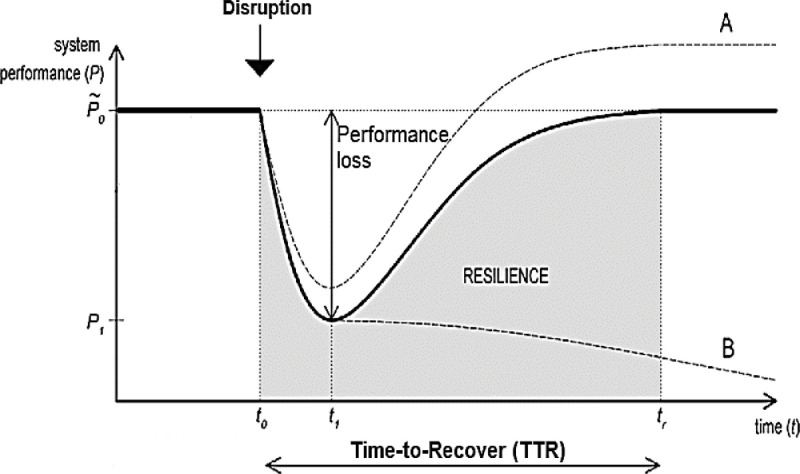
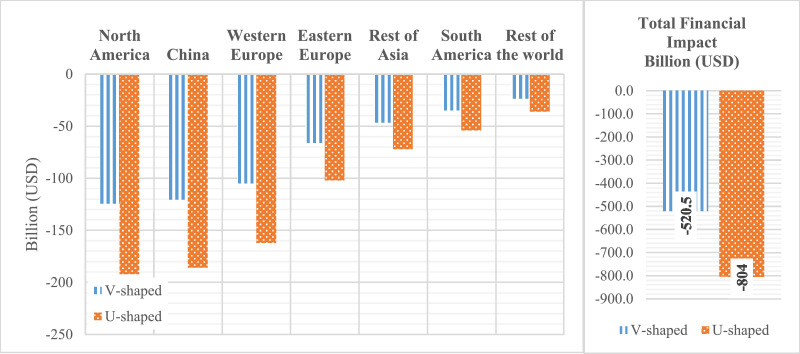
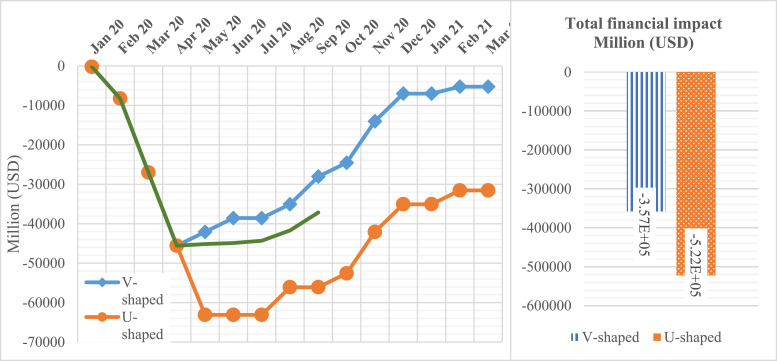
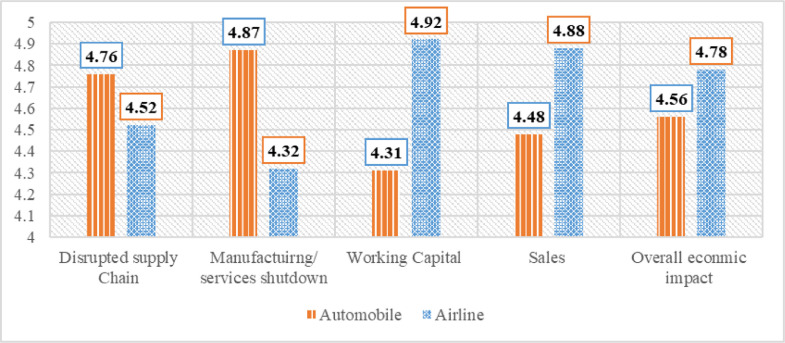
There has been an increased interest among scholars to investigate supply chain resilience (SCRes) in manufacturing and service operations during emerging situations. Grounded in the SCRes theory, this study provides insights into the impact of the COVID-19 outbreak on the automobile and airline supply chain. Both the short and long-term response strategies adopted by the two supply chains are assessed, using a combination of qualitative and quantitative techniques in three distinct phases. In phase one, we use a sequential mixed-method for resilience evaluation, integrating Time-to-Recovery (TTR) and Financial Impact (FI) analysis. In phase two, we conduct an empirical survey involving 145 firms to evaluate the short-term SCRes response strategies. In the third phase, we conduct semi-structured interviews with supply chain executives both from the automobile and airline industries to understand the long-term SCRes response strategies. Our findings indicate that: (i) the automobile industry perceived that the best strategies to mitigate risks related to COVID-19, were to develop localized supply sources and use advanced industry 4.0 (I4.0) technologies. (ii) The airline industry on the other hand, perceived that the immediate need was to get ready for business continuity challenges posed by COVID-19, by defining their operations both at the airports and within the flights. (iii) Importantly, both the sectors perceived Big Data Analytics (BDA) to play a significant role by providing real-time information on various supply chain activities to overcome the challenges posed by COVID-19. (iv) Cooperation among supply chain stakeholders is perceived, as needed to overcome the challenges of the pandemic, and to accelerate the use of digital technologies.
学者们对在新出现的情况下研究制造业和服务业运营中的供应链弹性(SCRes)越来越感兴趣。基于供应链弹性理论,本研究深入探讨了新冠疫情爆发对汽车和航空供应链的影响。使用定性和定量技术相结合的方法,分三个不同阶段评估了这两个供应链采取的短期和长期应对策略。在第一阶段,我们使用顺序混合方法进行弹性评估,整合恢复时间(TTR)和财务影响(FI)分析。在第二阶段,我们对145家公司进行了实证调查,以评估短期供应链弹性应对策略。在第三阶段,我们对汽车和航空行业的供应链高管进行了半结构化访谈,以了解长期供应链弹性应对策略。我们的研究结果表明:(i)汽车行业认为,减轻与新冠疫情相关风险的最佳策略是开发本地化供应源并使用先进的工业4.0(I4.0)技术。(ii)另一方面,航空行业认为,当务之急是通过确定机场和航班上的运营,为新冠疫情带来的业务连续性挑战做好准备。(iii)重要的是,两个行业都认为大数据分析(BDA)通过提供有关各种供应链活动的实时信息,在克服新冠疫情带来的挑战方面发挥了重要作用。(iv)人们认为,供应链利益相关者之间需要合作,以克服疫情的挑战,并加速数字技术的使用。