Neurocomputation and Neuroimaging Unit, Freie Universität Berlin, Germany.
Humboldt-Universität zu Berlin, Faculty of Philosophy, Berlin School of Mind and Brain, Berlin, Germany.
PLoS Comput Biol. 2021 Feb 2;17(2):e1008068. doi: 10.1371/journal.pcbi.1008068. eCollection 2021 Feb.
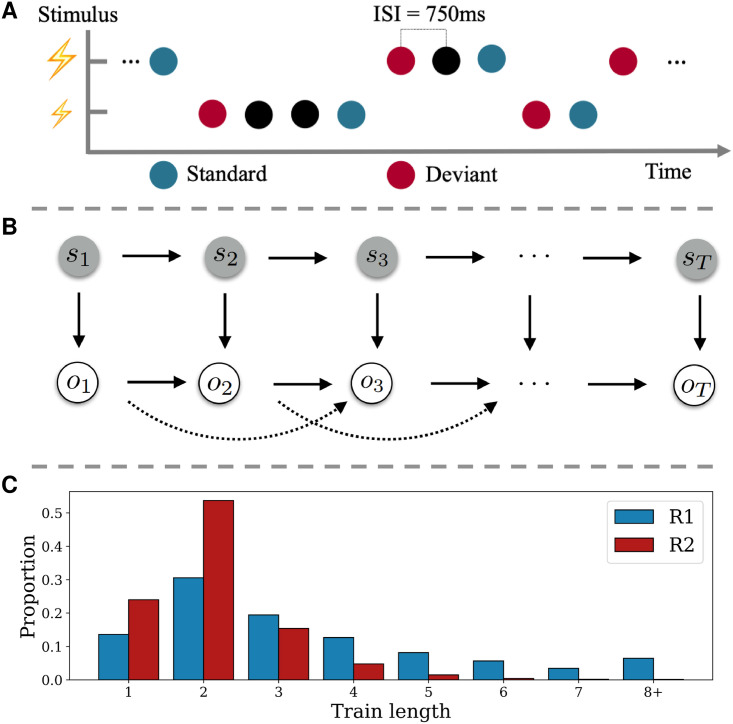
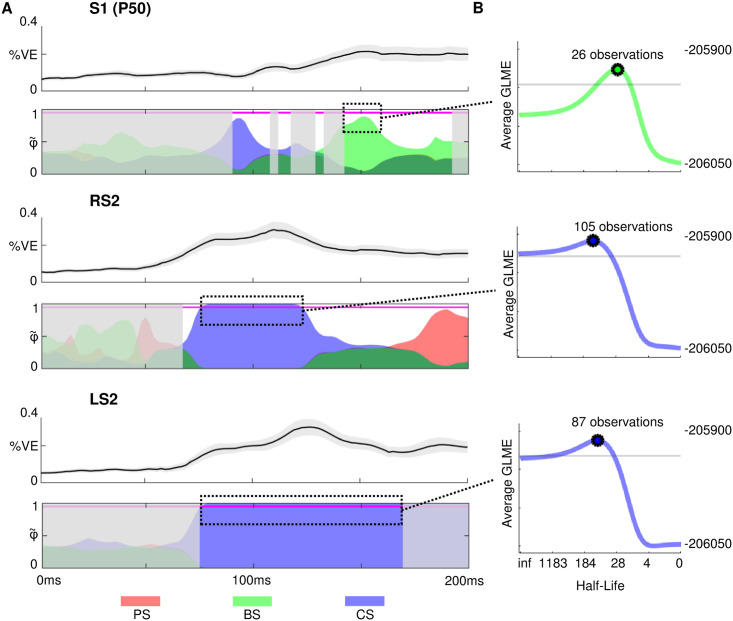
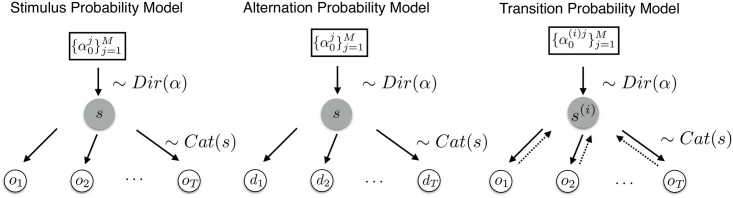
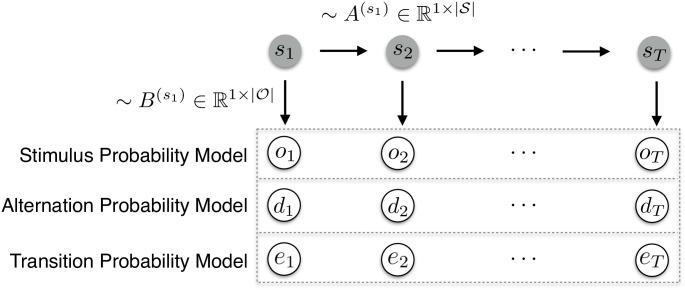
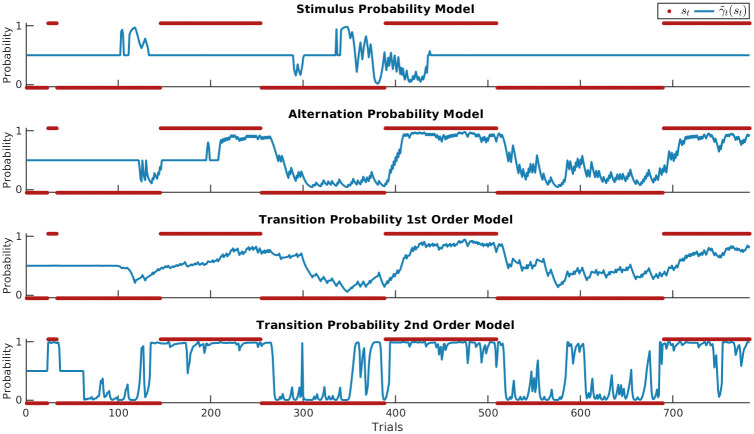
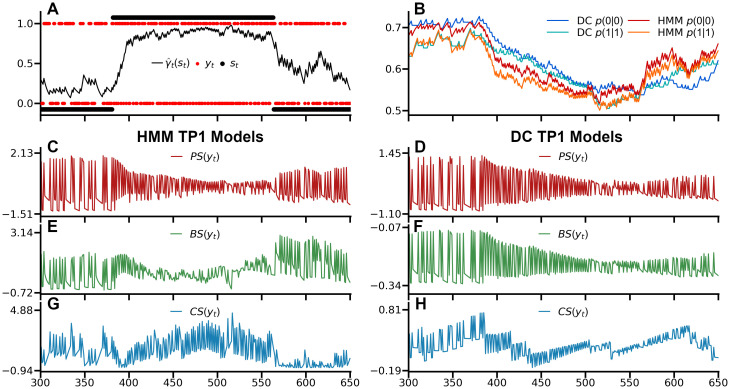
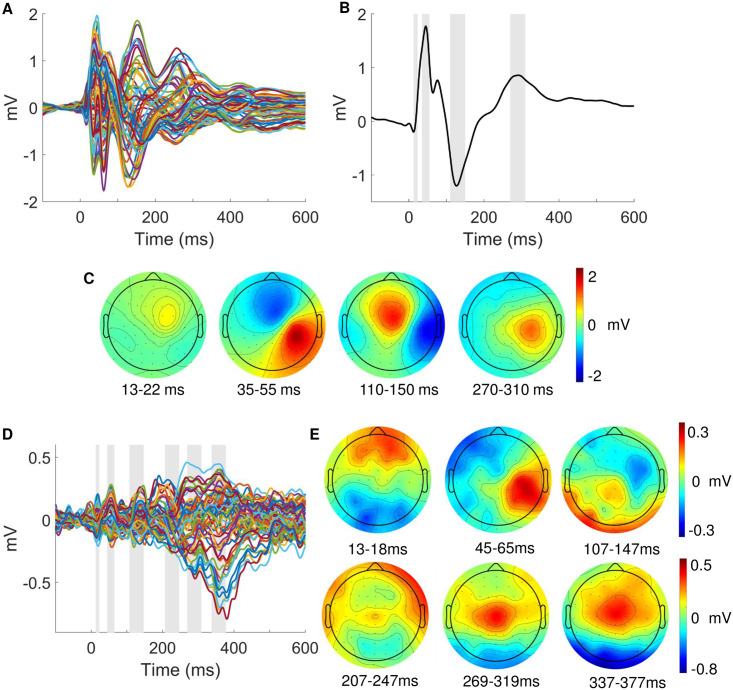
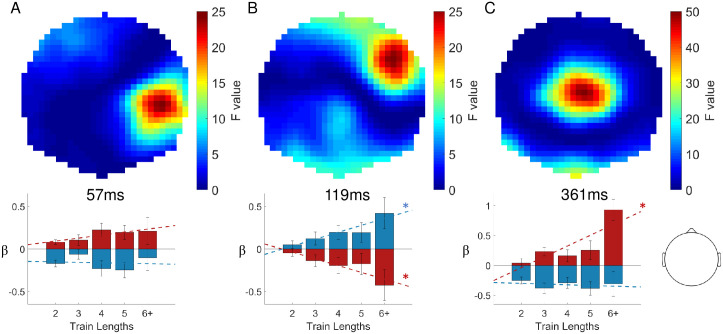
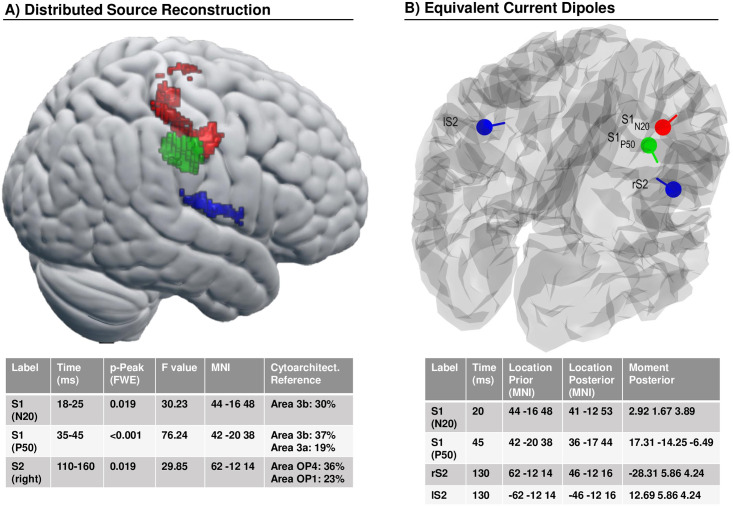
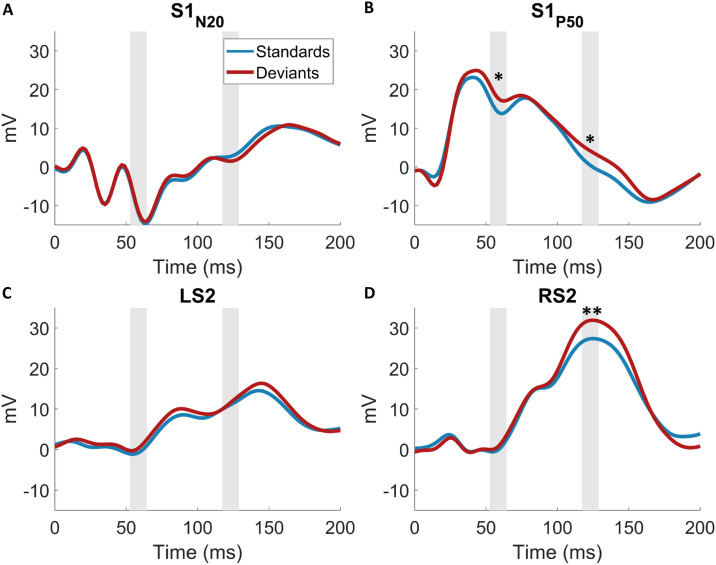
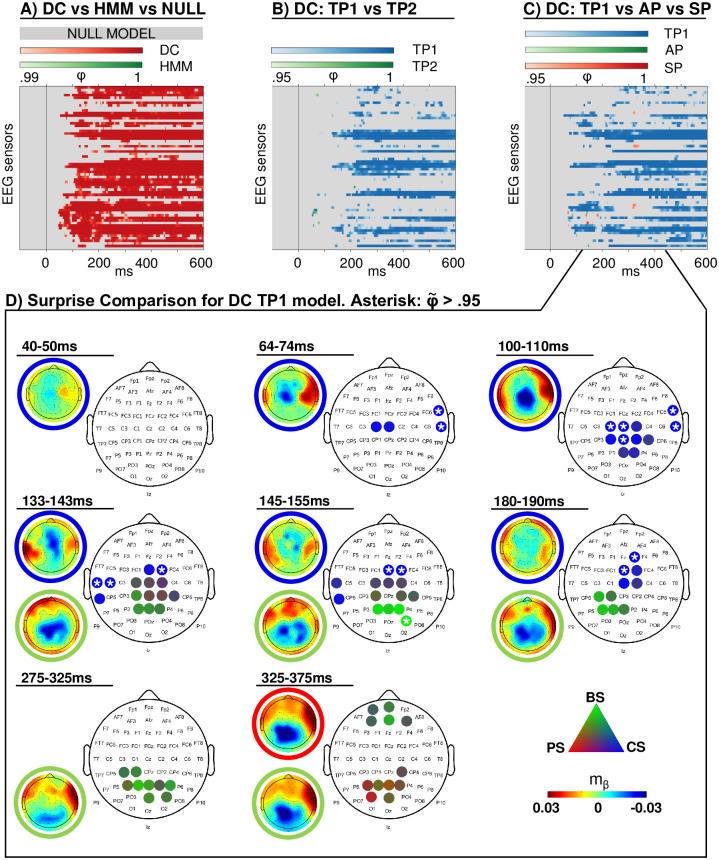
Tracking statistical regularities of the environment is important for shaping human behavior and perception. Evidence suggests that the brain learns environmental dependencies using Bayesian principles. However, much remains unknown about the employed algorithms, for somesthesis in particular. Here, we describe the cortical dynamics of the somatosensory learning system to investigate both the form of the generative model as well as its neural surprise signatures. Specifically, we recorded EEG data from 40 participants subjected to a somatosensory roving-stimulus paradigm and performed single-trial modeling across peri-stimulus time in both sensor and source space. Our Bayesian model selection procedure indicates that evoked potentials are best described by a non-hierarchical learning model that tracks transitions between observations using leaky integration. From around 70ms post-stimulus onset, secondary somatosensory cortices are found to represent confidence-corrected surprise as a measure of model inadequacy. Indications of Bayesian surprise encoding, reflecting model updating, are found in primary somatosensory cortex from around 140ms. This dissociation is compatible with the idea that early surprise signals may control subsequent model update rates. In sum, our findings support the hypothesis that early somatosensory processing reflects Bayesian perceptual learning and contribute to an understanding of its underlying mechanisms.
追踪环境的统计规律对于塑造人类行为和感知很重要。有证据表明,大脑使用贝叶斯原理来学习环境依赖性。然而,对于某些感觉,特别是对于某些感觉,其使用的算法仍然知之甚少。在这里,我们描述了体感学习系统的皮质动力学,以研究生成模型的形式及其神经惊讶特征。具体来说,我们从 40 名接受体感游动刺激范式的参与者中记录了 EEG 数据,并在传感器和源空间中进行了整个刺激后时间的单试建模。我们的贝叶斯模型选择过程表明,诱发电位最好由一个非层次学习模型来描述,该模型使用泄漏积分来跟踪观测之间的转换。从刺激后约 70ms 开始,发现次级体感皮层将置信度校正后的惊讶作为模型不充分的度量来表示。从大约 140ms 开始,在初级体感皮层中发现了反映模型更新的贝叶斯惊讶编码的迹象。这种分离与早期惊讶信号可能控制后续模型更新率的想法是一致的。总之,我们的研究结果支持了早期体感处理反映贝叶斯感知学习的假设,并有助于理解其潜在机制。