State Key Laboratory of Agrobiotechnology, College of Biological Sciences, China Agricultural University, Beijing, China.
Tsinghua-Peking Joint Center for Life Sciences and Max Planck Partner Group, School of Life Sciences, Tsinghua University, Beijing, China.
J Cell Biol. 2021 Apr 5;220(4). doi: 10.1083/jcb.202005103.
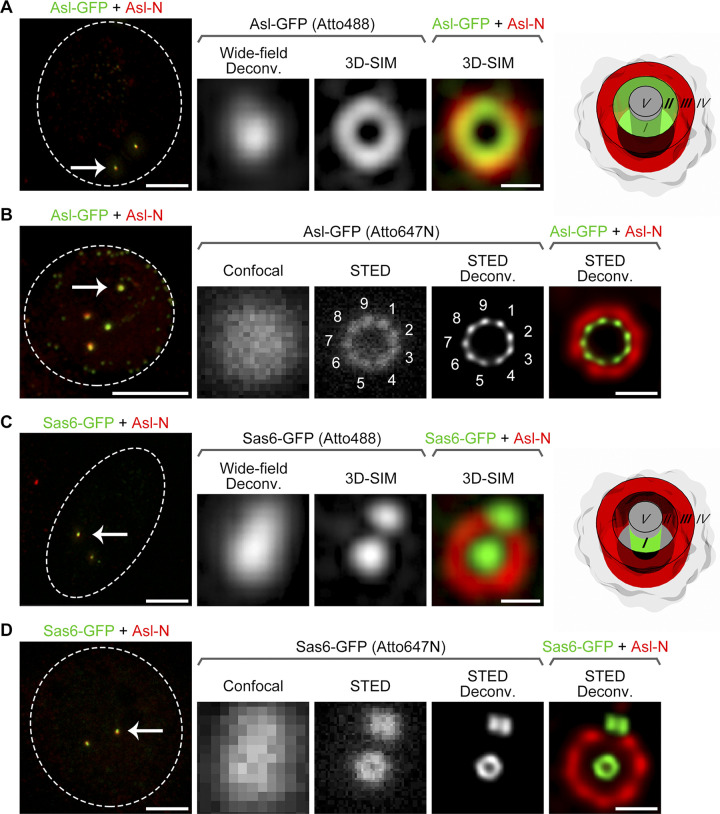
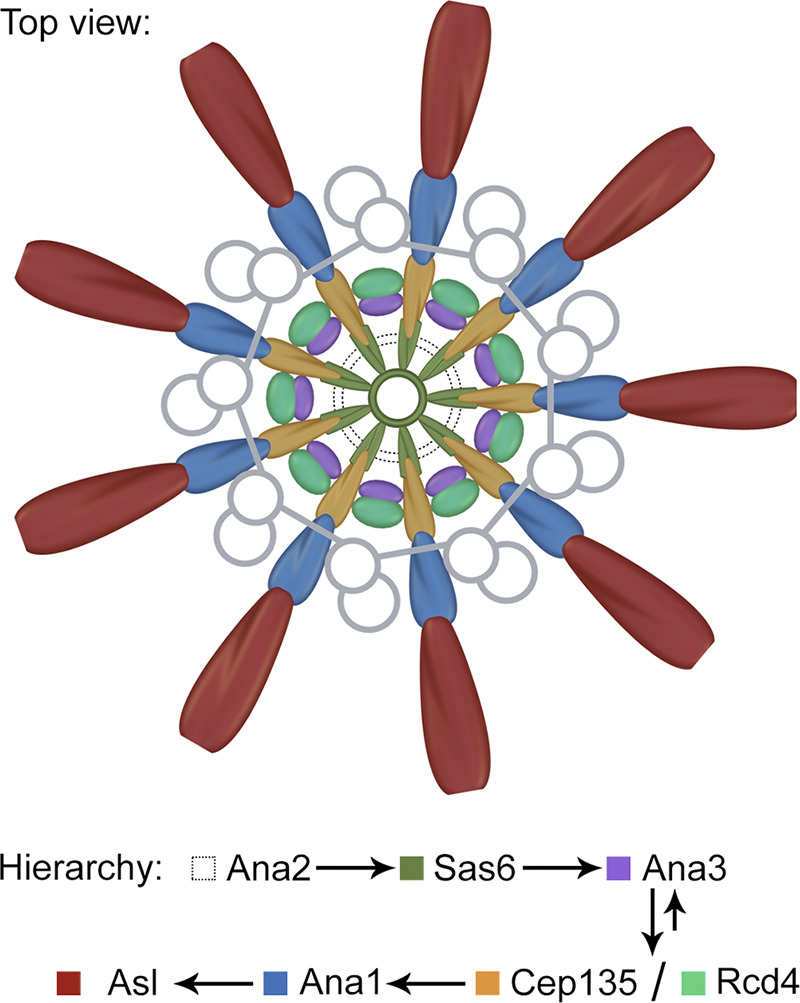
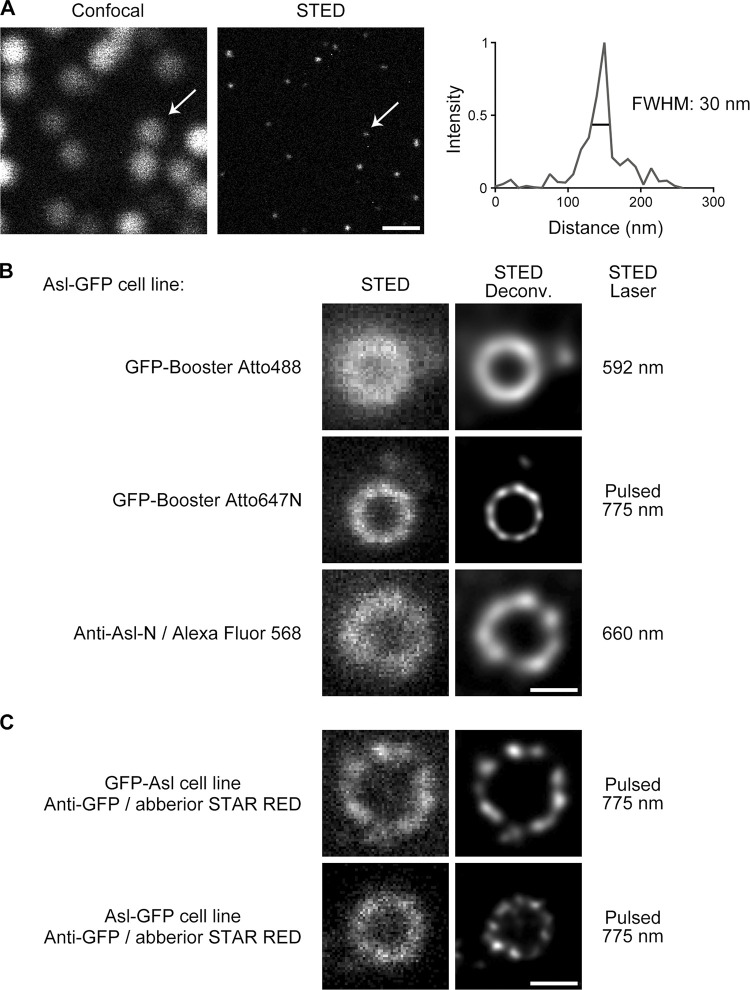
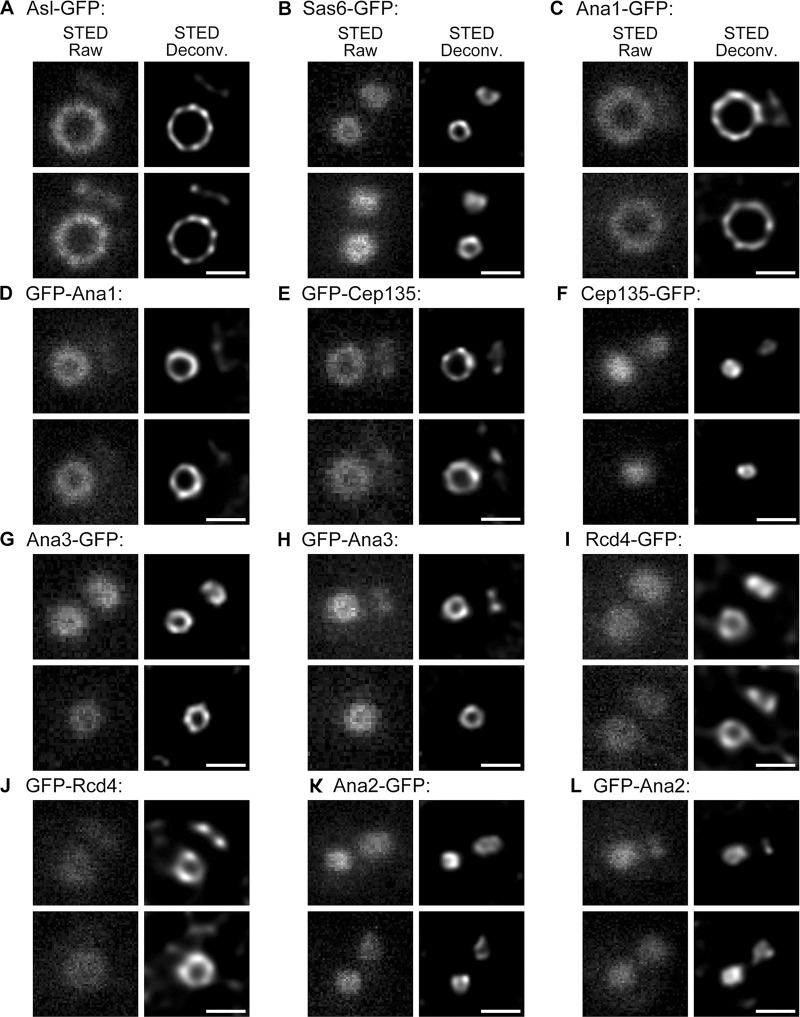
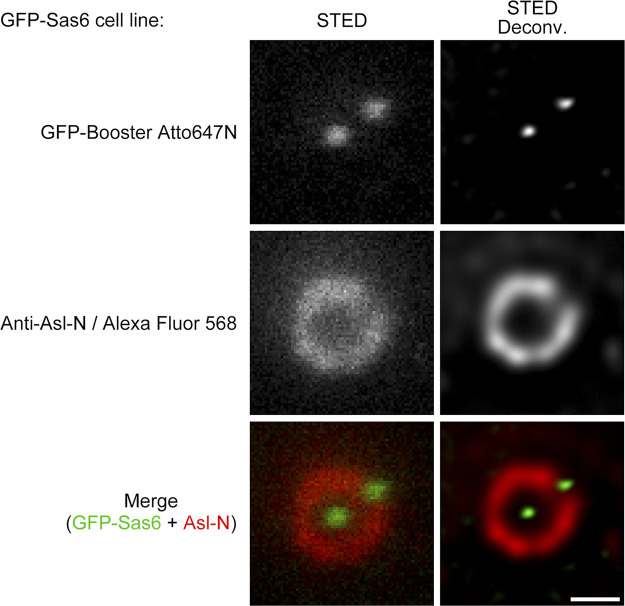
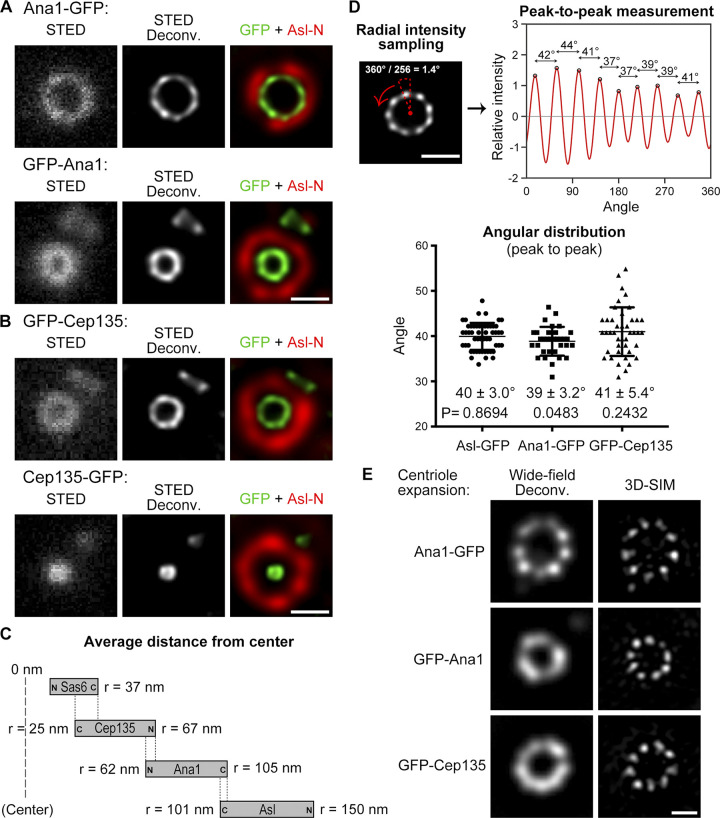
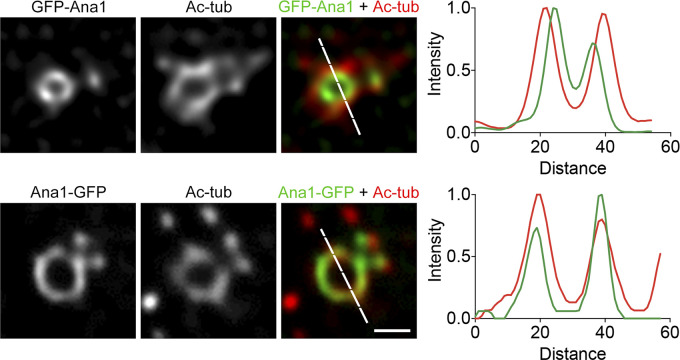
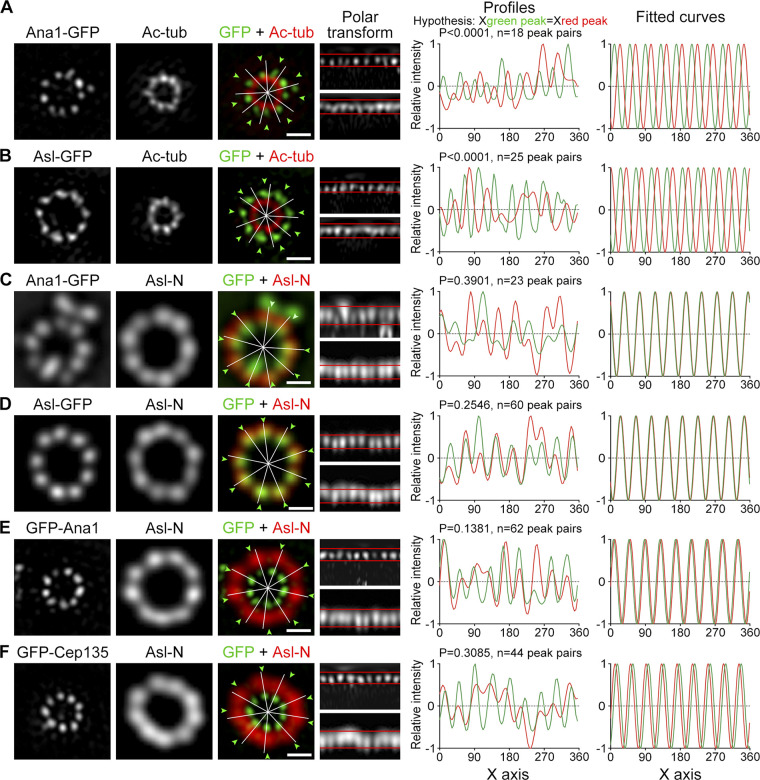
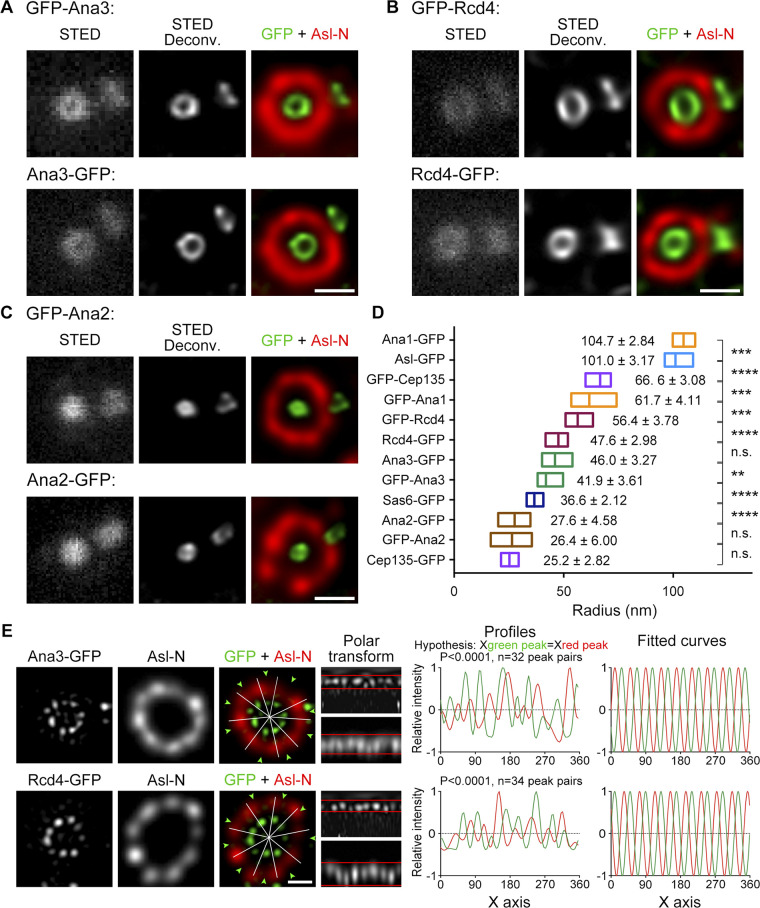
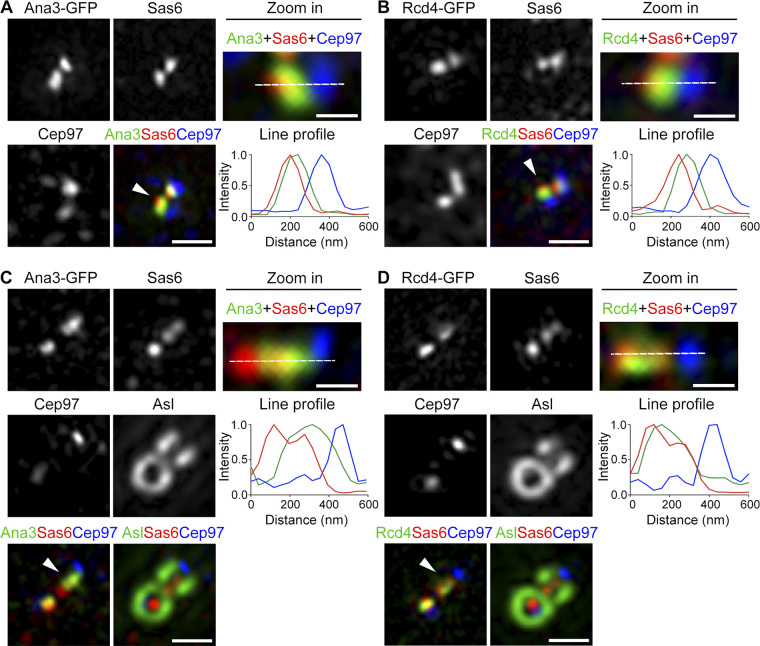
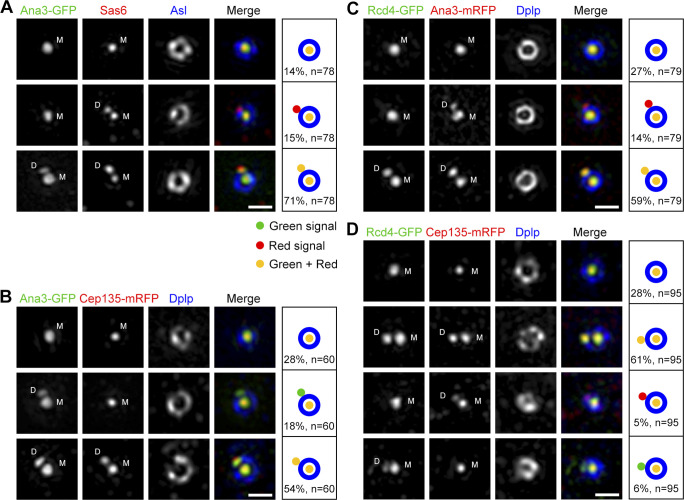
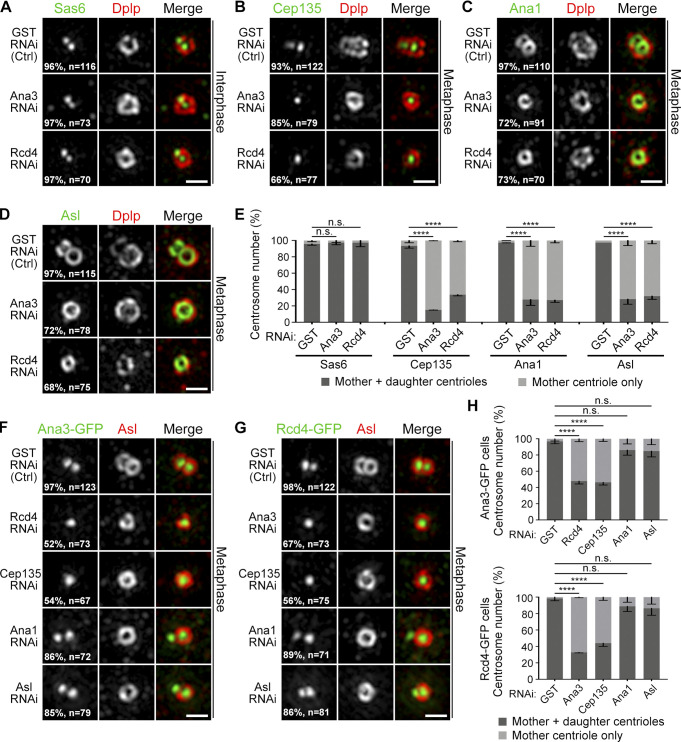
The centrosome is the main microtubule-organizing center in animal cells. It comprises of two centrioles and the surrounding pericentriolar material. Protein organization at the outer layer of the centriole and outward has been studied extensively; however, an overall picture of the protein architecture at the centriole core has been missing. Here we report a direct view of Drosophila centriolar proteins at ∼50-nm resolution. This reveals a Sas6 ring at the C-terminus, where it overlaps with the C-terminus of Cep135. The ninefold symmetrical pattern of Cep135 is further conveyed through Ana1-Asterless axes that extend past the microtubule wall from between the blades. Ana3 and Rcd4, whose termini are close to Cep135, are arranged in ninefold symmetry that does not match the above axes. During centriole biogenesis, Ana3 and Rcd4 are sequentially loaded on the newly formed centriole and are required for centriole-to-centrosome conversion through recruiting the Cep135-Ana1-Asterless complex. Together, our results provide a spatiotemporal map of the centriole core and implications of how the structure might be built.
中心体是动物细胞中主要的微管组织中心。它由两个中心粒和周围的中心粒周围物质组成。中心粒外层和向外的蛋白质组织已经得到了广泛的研究;然而,中心粒核心的蛋白质结构的全貌仍然缺失。在这里,我们报告了约 50nm 分辨率的果蝇中心粒蛋白的直接观察结果。这揭示了 Sas6 环在 C 末端,在那里它与 Cep135 的 C 末端重叠。Cep135 的九倍对称模式进一步通过 Ana1-Asterless 轴传递,该轴从叶片之间延伸到微管壁之外。靠近 Cep135 的 Ana3 和 Rcd4 以九倍对称排列,与上述轴不匹配。在中心体发生过程中,Ana3 和 Rcd4 依次加载到新形成的中心粒上,并通过招募 Cep135-Ana1-Asterless 复合物,对中心体到中心体的转化是必需的。总之,我们的结果提供了中心粒核心的时空图谱,并暗示了结构可能是如何构建的。