Luan Fei, Wang Ziyan, Yang Yan, Ji Yafei, Lv Haizhen, Han Keqing, Liu Daoheng, Shang Xiaofei, He Xirui, Zeng Nan
Department of Pharmacology, College of Pharmacy, Chengdu University of Traditional Chinese Medicine, Chengdu, China.
Department of Clinical Pharmacy, Shaanxi Provincial Hospital of Tuberculosis Prevention and Treatment, Xi'an, China.
Front Pharmacol. 2021 Jan 21;11:569800. doi: 10.3389/fphar.2020.569800. eCollection 2020.
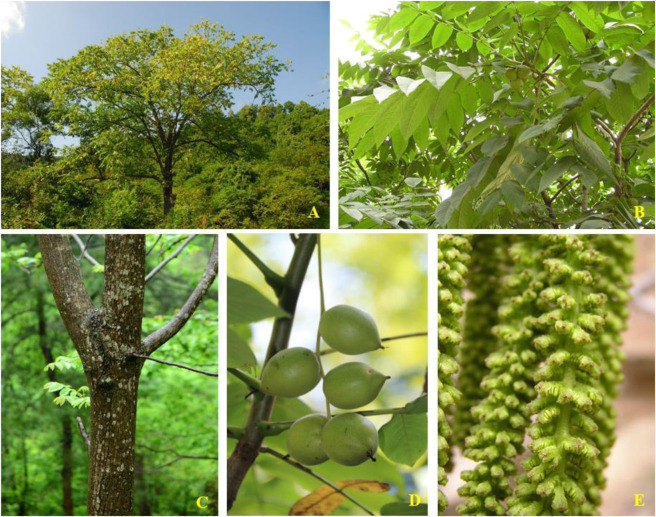
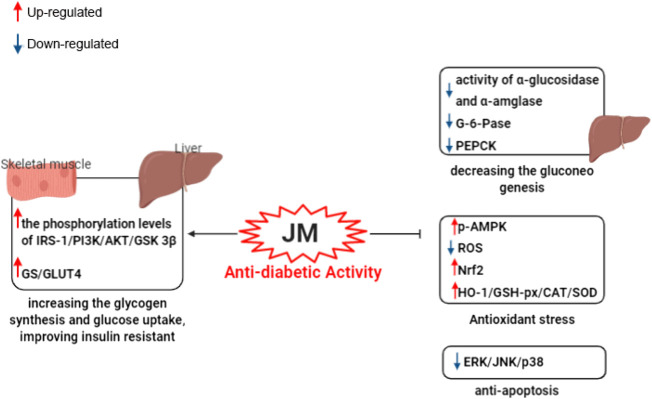
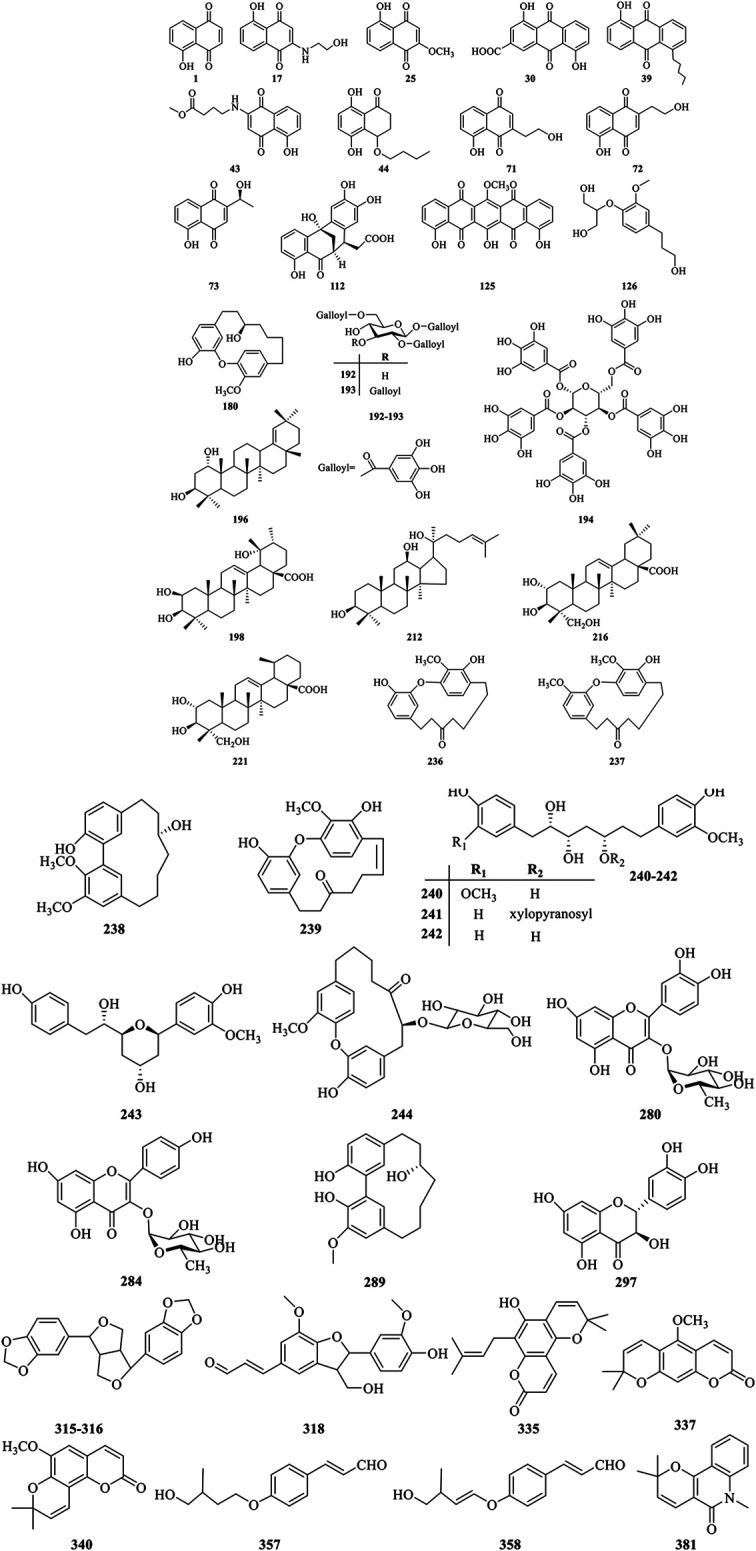
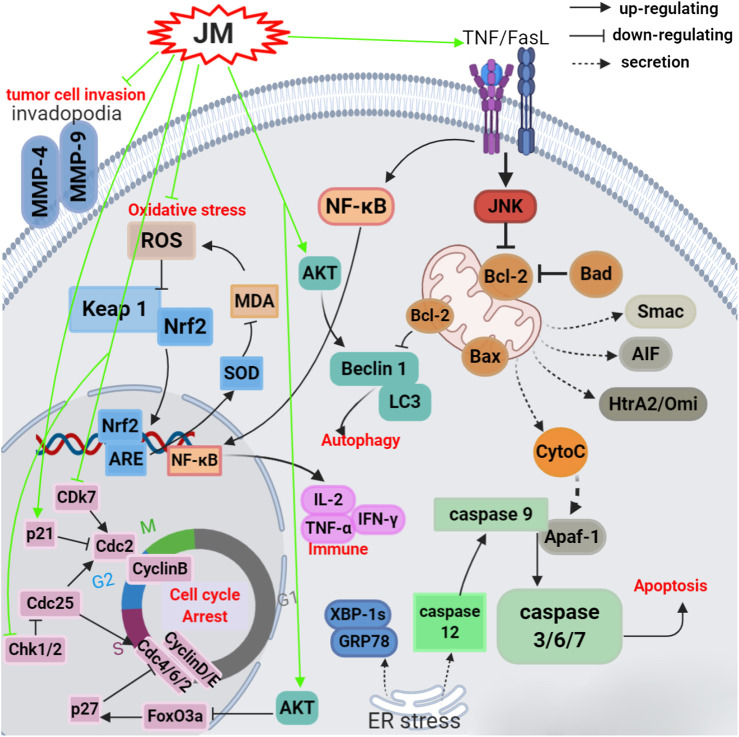
Maxim., also known as "Manchurian walnut" (Chinese) and "Onigurumi" (Japanese), is a medicinal plant widely distributed in Western and Central Asia, especially in China. It has been traditionally used to treat cancer, gastric ulcers, diarrhea, dysentery, dermatosis, uterine prolapse, and leukopenia. To date, more than 400 constituents including quinones (e.g. naphthoquinones, anthraquinones, naphthalenones, tetralones), phenolics, flavonoids, triterpenoids, coumarins, lignans, phenylpropanoids, diarylheptanoids, and steroids, were isolated and structurally identified from different plant parts of . Among them, quinones, phenolics, triterpenoids, and diarylheptanoids, as the major bioactive substances, have been extensively studied and displayed significant bioactivity. Previous studies have demonstrated that and a few of its active components exhibit a wide range of pharmacologically important properties, such as antitumor, immunomodulatory, anti-inflammatory, neuroprotective, anti-diabetic, antiviral, antimicrobial, and anti-melanogenesis activities. However, many investigations on biological activities were mainly based on crude extracts of this plant, and the major bioactive ingredients responsible for these bioactivities have not been well identified. Further and studies on the mechanisms of action of the pure bioactive compounds, and more elaborate toxicity studies as well as clinical studies are needed to ensure safety and effectiveness of the plant for human use. Taken together, the present review will provide some specific useful suggestions guide to further investigations and applications of this plant in the preparation of medicines and functional foods.
麻疯树,又称“东北核桃”(中文)和“鬼见愁”(日文),是一种广泛分布于西亚和中亚地区,尤其是中国的药用植物。传统上,它被用于治疗癌症、胃溃疡、腹泻、痢疾、皮肤病、子宫脱垂和白细胞减少症。迄今为止,已从麻疯树的不同植物部位分离并鉴定出400多种成分,包括醌类(如萘醌、蒽醌、萘烯酮、四氢萘酮)、酚类、黄酮类、三萜类、香豆素类、木脂素类、苯丙素类、二芳基庚烷类和甾体类。其中,醌类、酚类三萜类和二芳基庚烷类作为主要生物活性物质,已得到广泛研究并显示出显著的生物活性。先前的研究表明,麻疯树及其一些活性成分具有广泛的药理学重要特性,如抗肿瘤、免疫调节、抗炎、神经保护、抗糖尿病、抗病毒、抗菌和抗黑素生成活性。然而,许多关于其生物活性的研究主要基于该植物的粗提物,对这些生物活性起主要作用的生物活性成分尚未得到很好的鉴定。需要进一步对纯生物活性化合物的作用机制进行研究,并开展更详细的毒性研究以及临床研究,以确保该植物对人类使用的安全性和有效性。综上所述,本综述将为该植物在药物和功能性食品制备中的进一步研究和应用提供一些具体有用的建议指南。