Department of Gastroenterology, Dietetics and Internal Diseases, Poznan University of Medical Sciences, Heliodor Swiecicki Hospital, 60-355 Poznan, Poland.
Department of Endocrinology, Metabolism and Internal Medicine, Poznan University of Medical Sciences, 60-355 Poznan, Poland.
Nutrients. 2021 Feb 4;13(2):513. doi: 10.3390/nu13020513.
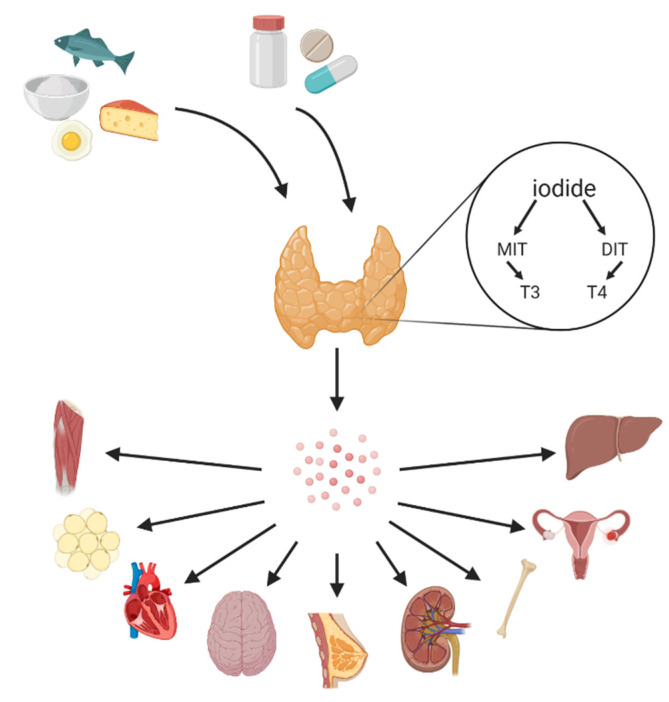
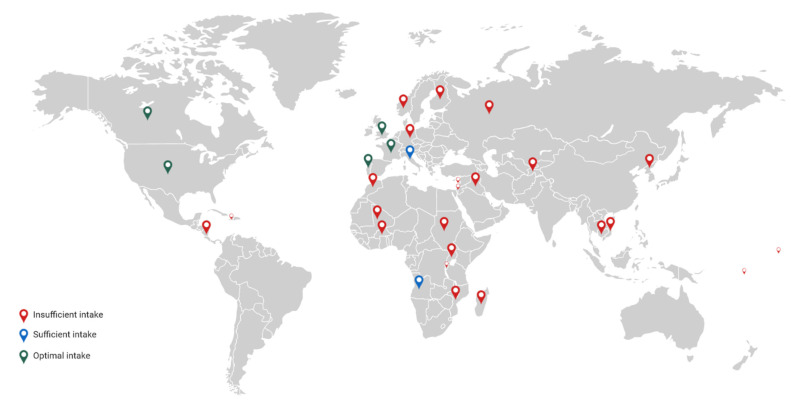
Iodine deficiency is a global issue and affects around 2 billion people worldwide, with pregnant women as a high-risk group. Iodine-deficiency prevention began in the 20th century and started with global salt iodination programmes, which aimed to improve the iodine intake status globally. Although it resulted in the effective eradication of the endemic goitre, it seems that salt iodination did not resolve all the issues. Currently, it is recommended to limit the consumption of salt, which is the main source of iodine, as a preventive measure of non-communicable diseases, such as hypertension or cancer the prevalence of which is increasing. In spite of the fact that there are other sources of iodine, such as fish, seafood, dairy products, water, and vegetables, the high consumption of processed food with a high content of unionised salt, alternative diets or limited salt intake can still lead to iodine deficiency. Thus, iodine deficiency remains a relevant issue, with new, preventive solutions necessary. However, it appears that there is no diet which would fully cover the iodine requirements, and iodine food supplementation is still required.
碘缺乏是一个全球性问题,影响着全球约 20 亿人,其中孕妇是高风险人群。碘缺乏的预防始于 20 世纪,开始于全球盐碘化计划,旨在改善全球的碘摄入状况。尽管它有效地根除了地方性甲状腺肿,但似乎盐碘化并没有解决所有问题。目前,建议限制盐的消费,因为盐是碘的主要来源,是预防高血压或癌症等非传染性疾病的措施,而这些疾病的患病率正在上升。尽管有其他来源的碘,如鱼、海鲜、奶制品、水和蔬菜,但高消费加工食品中含有高含量的游离盐、替代饮食或限制盐的摄入仍可能导致碘缺乏。因此,碘缺乏仍然是一个相关的问题,需要新的预防措施。然而,似乎没有一种饮食可以完全满足碘的需求,因此仍然需要进行碘食物补充。