Università degli Studi di Firenze, Via Luigi sacconi 6, 50019, Sesto Fiorentino, Italy.
Consorzio per lo Sviluppo dei Sistemi a Grande Interfase - CSGI, Via della Lastruccia 3, 50019, Sesto Fiorentino, Italy.
J Biomol NMR. 2021 Mar;75(2-3):97-107. doi: 10.1007/s10858-021-00358-w. Epub 2021 Feb 12.
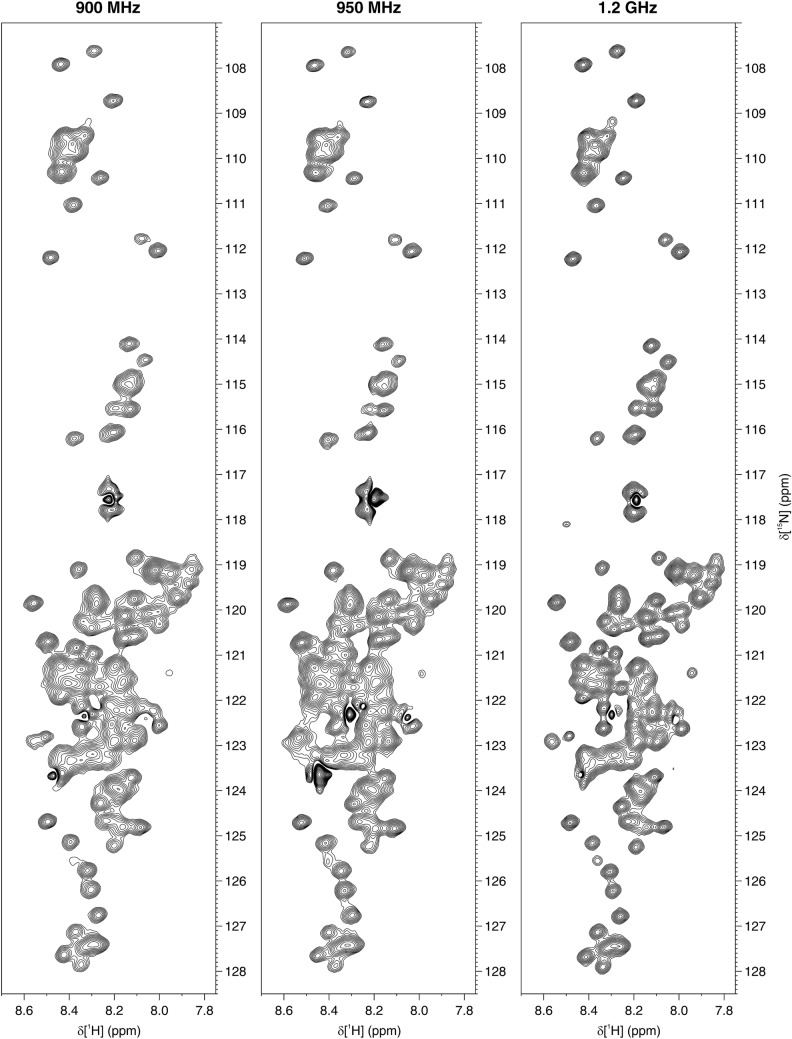
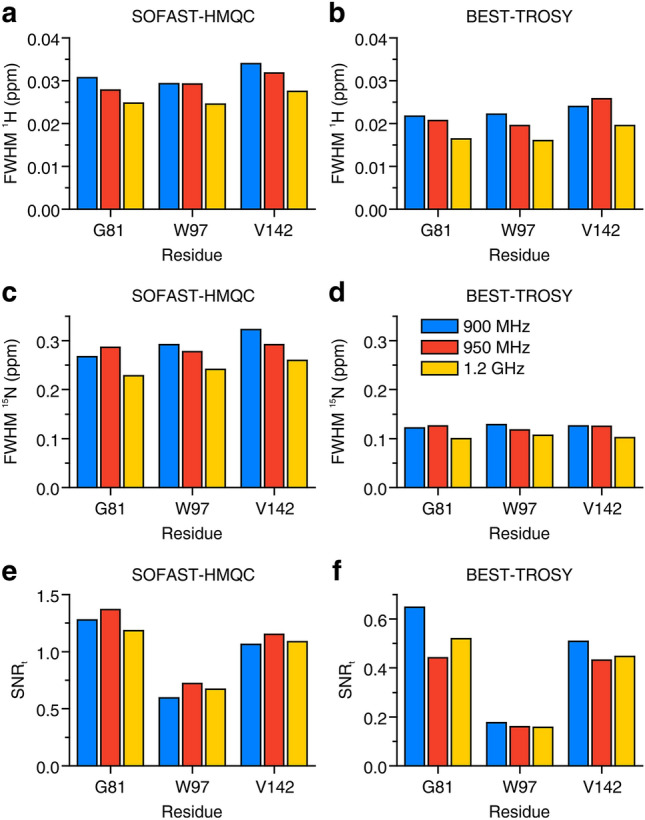
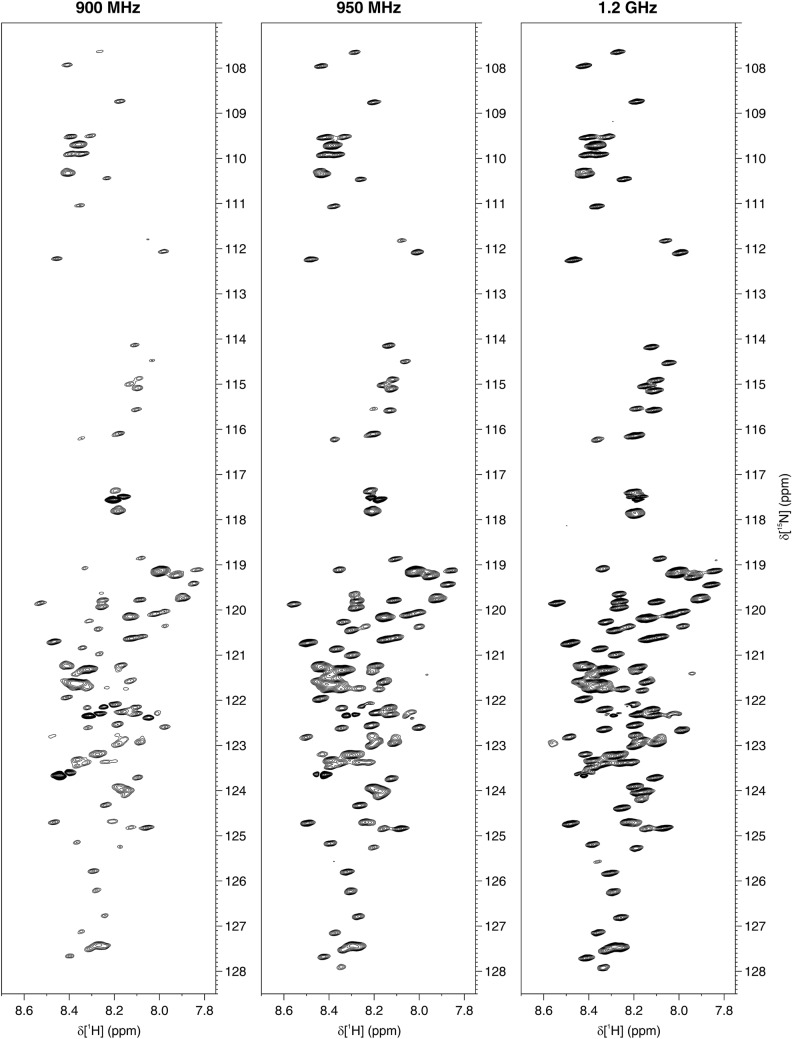
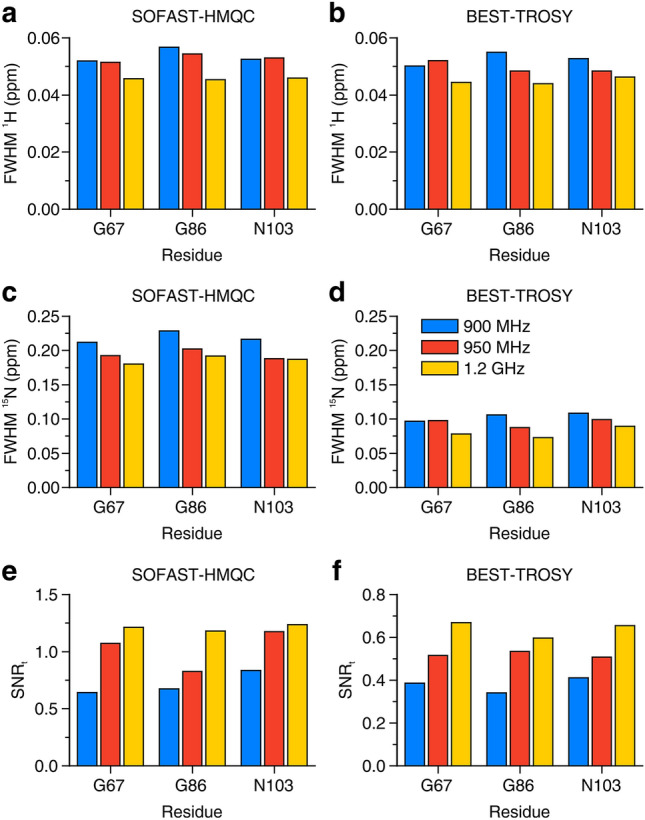
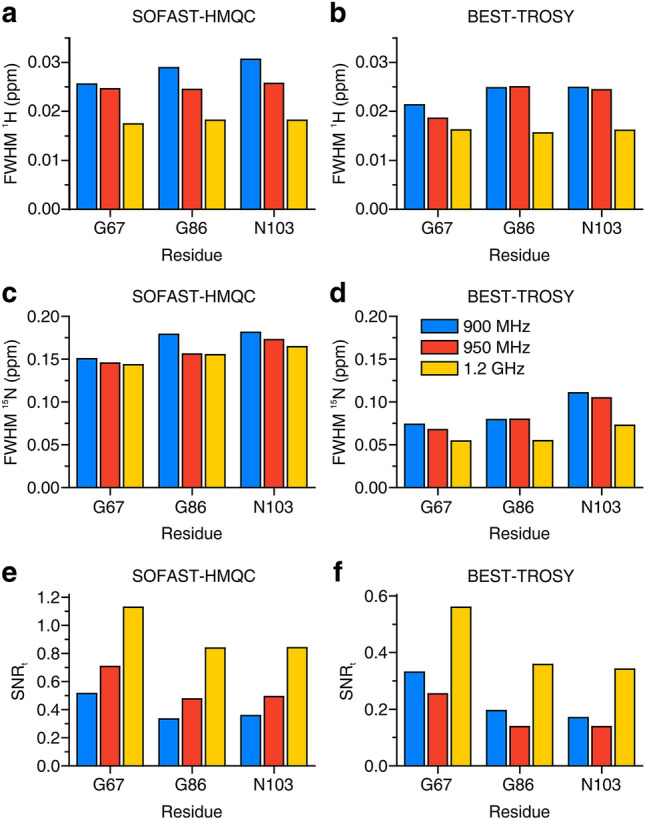
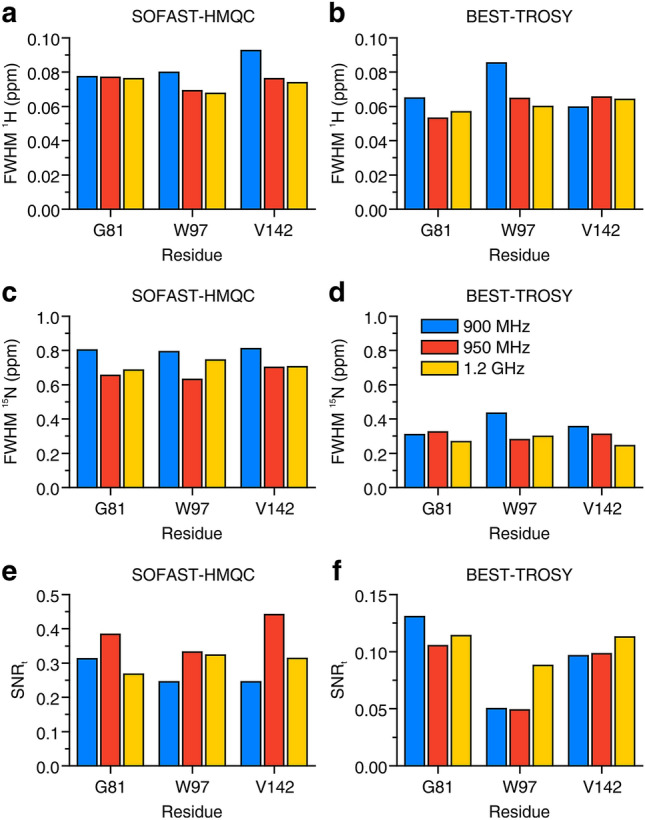
In-cell NMR spectroscopy provides precious structural and functional information on biological macromolecules in their native cellular environment at atomic resolution. However, the intrinsic low sensitivity of NMR imposes a big limitation in the applicability of the methodology. In this respect, the recently developed commercial 1.2 GHz NMR spectrometer is expected to introduce significant benefits. However, cell samples may suffer from detrimental effects at ultrahigh fields, that must be carefully evaluated. Here we show the first in-cell NMR spectra recorded at 1.2 GHz on human cells, and we compare resolution and sensitivity against those obtained at 900 and 950 MHz. To evaluate the effects of different spin relaxation rates, SOFAST-HMQC and BEST-TROSY spectra were recorded on intracellular α-synuclein and carbonic anhydrase. Major improvements are observed at 1.2 GHz when analyzing unfolded proteins, such as α-synuclein, while the TROSY scheme improves the resolution for both globular and unfolded proteins.
细胞内 NMR 光谱学在原子分辨率下提供了关于生物大分子在其天然细胞环境中的宝贵结构和功能信息。然而,NMR 的固有低灵敏度对该方法的适用性施加了很大的限制。在这方面,最近开发的商业 1.2GHz NMR 光谱仪有望带来重大的益处。然而,超高场可能会对细胞样品产生有害影响,必须对此进行仔细评估。在这里,我们展示了在 1.2GHz 下首次在人类细胞中记录的细胞内 NMR 光谱,并将分辨率和灵敏度与在 900 和 950MHz 下获得的结果进行了比较。为了评估不同自旋弛豫率的影响,在细胞内α-突触核蛋白和碳酸酐酶上记录了 SOFAST-HMQC 和 BEST-TROSY 光谱。在分析展开蛋白(如α-突触核蛋白)时,在 1.2GHz 下观察到了主要的改进,而 TROSY 方案则提高了球状和展开蛋白的分辨率。