Kerr Gaige Hunter, Badr Hamada S, Gardner Lauren M, Perez-Saez Javier, Zaitchik Benjamin F
Department of Occupational and Environmental Health, George Washington University, Washington, DC, USA.
Department of Earth and Planetary Sciences, Johns Hopkins University, Baltimore, MD, USA.
One Health. 2021 Jun;12:100225. doi: 10.1016/j.onehlt.2021.100225. Epub 2021 Feb 9.
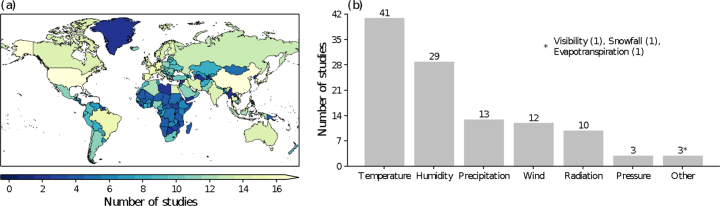
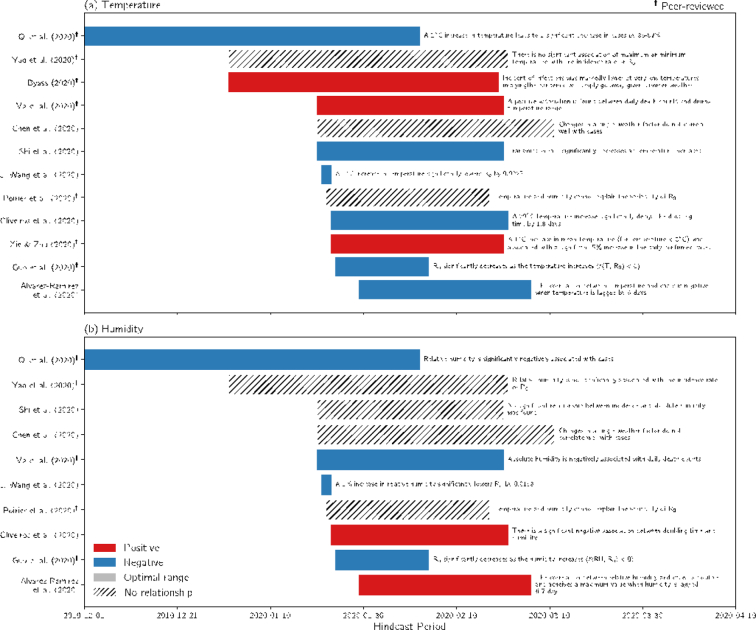
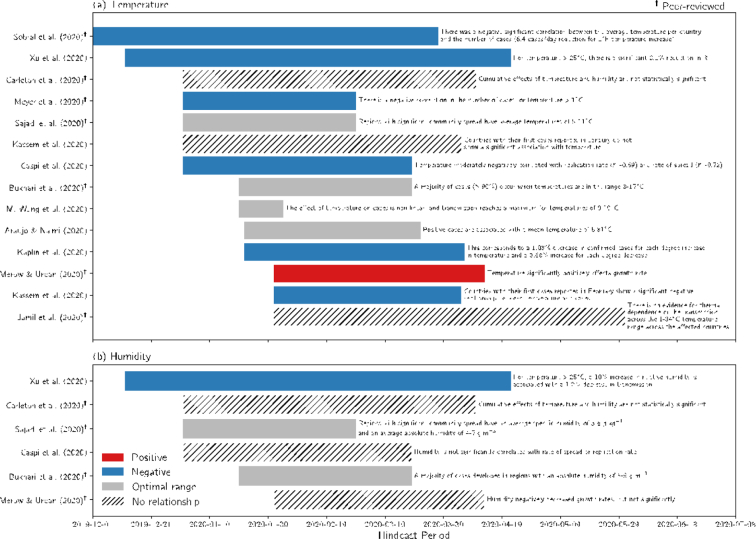
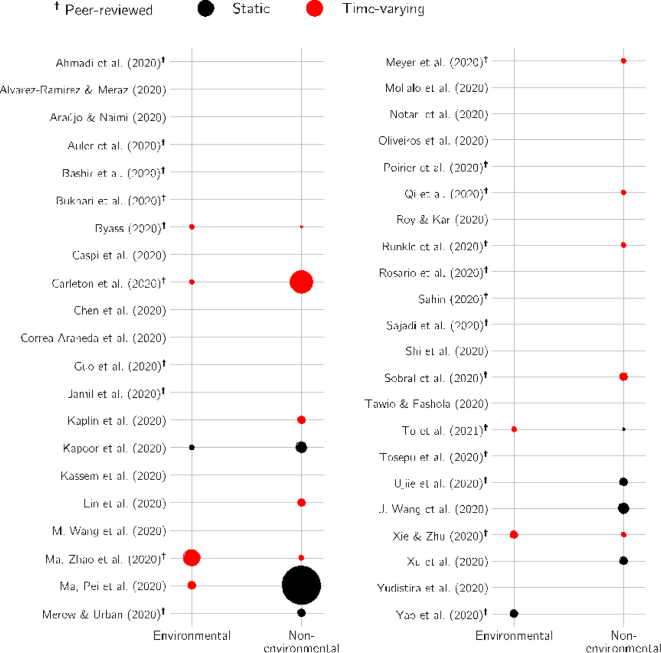
Meteorological variables, such as the ambient temperature and humidity, play a well-established role in the seasonal transmission of respiratory viruses and influenza in temperate climates. Since the onset of the novel coronavirus disease 2019 (COVID-19) pandemic, a growing body of literature has attempted to characterize the sensitivity of COVID-19 to meteorological factors and thus understand how changes in the weather and seasonality may impede COVID-19 transmission. Here we select a subset of this literature, summarize the diversity in these studies' scopes and methodologies, and show the lack of consensus in their conclusions on the roles of temperature, humidity, and other meteorological factors on COVID-19 transmission dynamics. We discuss how several aspects of studies' methodologies may challenge direct comparisons across studies and inflate the importance of meteorological factors on COVID-19 transmission. We further comment on outstanding challenges for this area of research and how future studies might overcome them by carefully considering robust modeling approaches, adjusting for mediating and covariate effects, and choosing appropriate scales of analysis.
气象变量,如环境温度和湿度,在温带气候中呼吸道病毒和流感的季节性传播中发挥着既定作用。自2019年新型冠状病毒病(COVID-19)大流行开始以来,越来越多的文献试图描述COVID-19对气象因素的敏感性,从而了解天气变化和季节性如何阻碍COVID-19的传播。在此,我们选取了该文献的一个子集,总结了这些研究在范围和方法上的多样性,并表明它们在温度、湿度和其他气象因素对COVID-19传播动态的作用方面缺乏共识。我们讨论了研究方法的几个方面如何对跨研究的直接比较构成挑战,并夸大了气象因素对COVID-19传播的重要性。我们进一步评论了该研究领域面临的突出挑战,以及未来研究如何通过仔细考虑稳健的建模方法、调整中介和协变量效应以及选择合适的分析尺度来克服这些挑战。