Center for Drug Discovery, Baylor College of Medicine, Houston, TX, USA.
Department of Pathology and Immunology, Baylor College of Medicine, Houston, TX, USA.
Oncogene. 2021 Mar;40(11):2081-2095. doi: 10.1038/s41388-021-01681-0. Epub 2021 Feb 24.
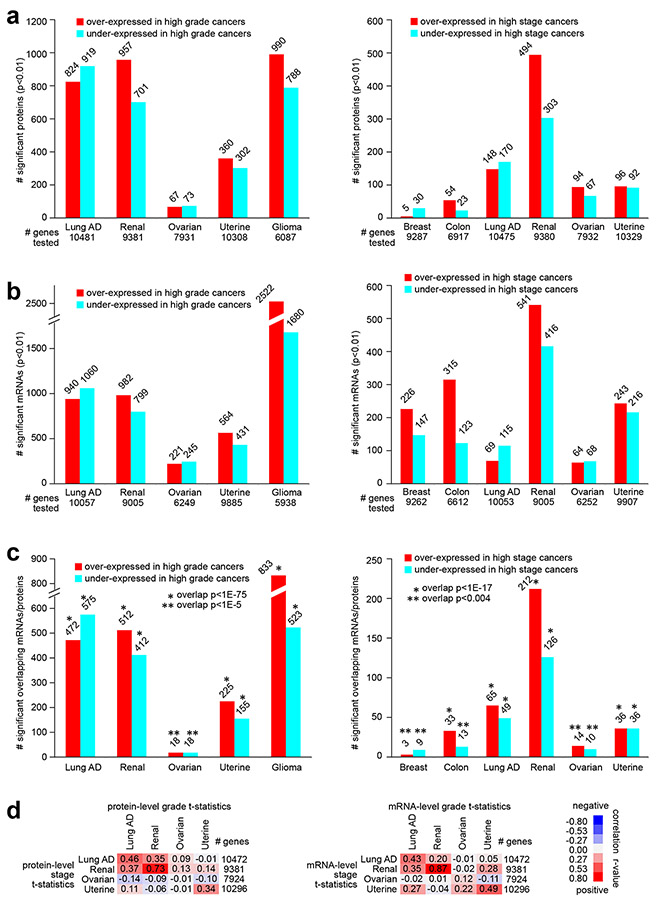
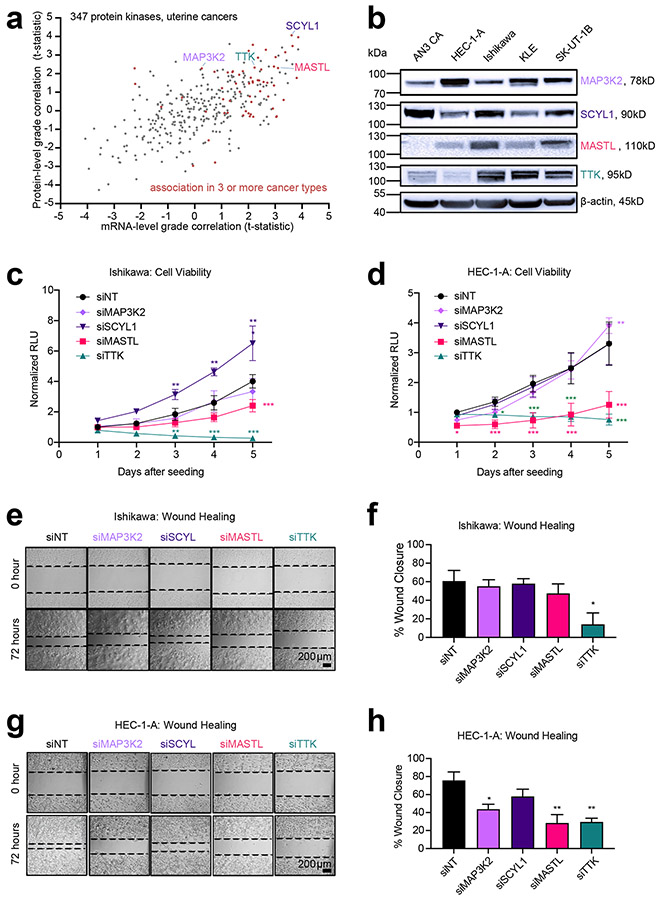
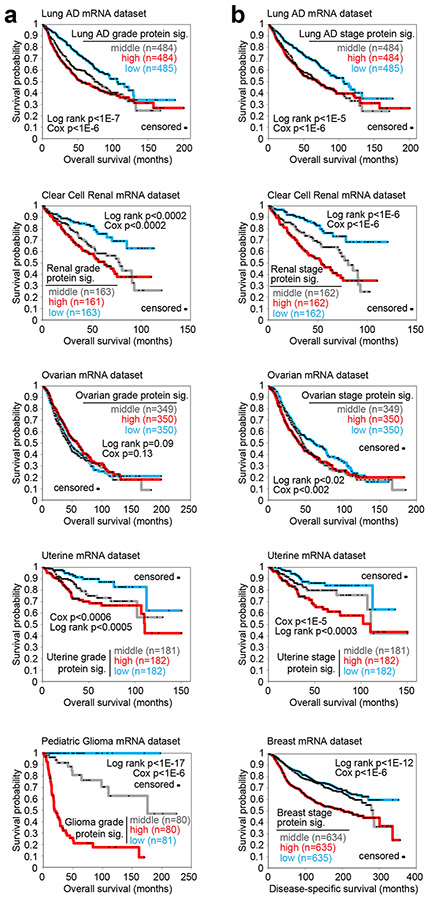
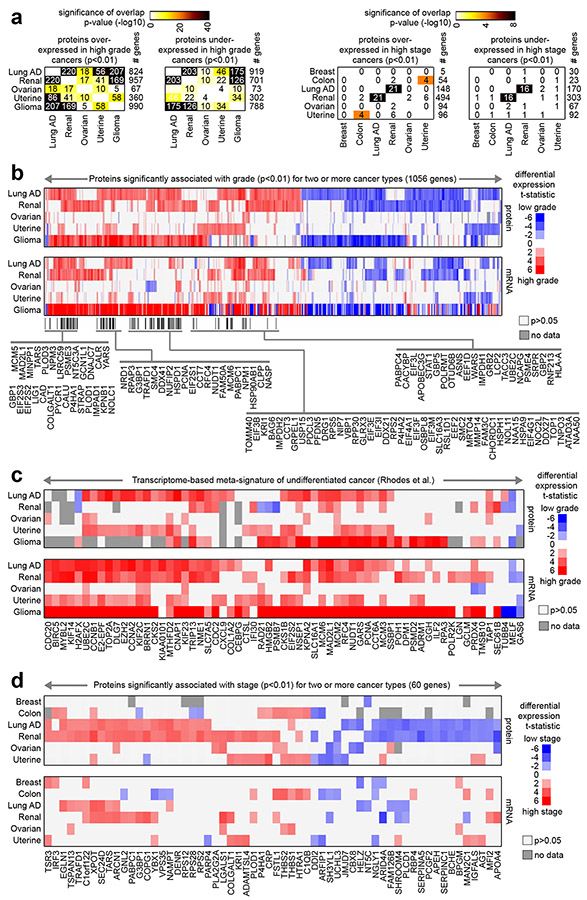
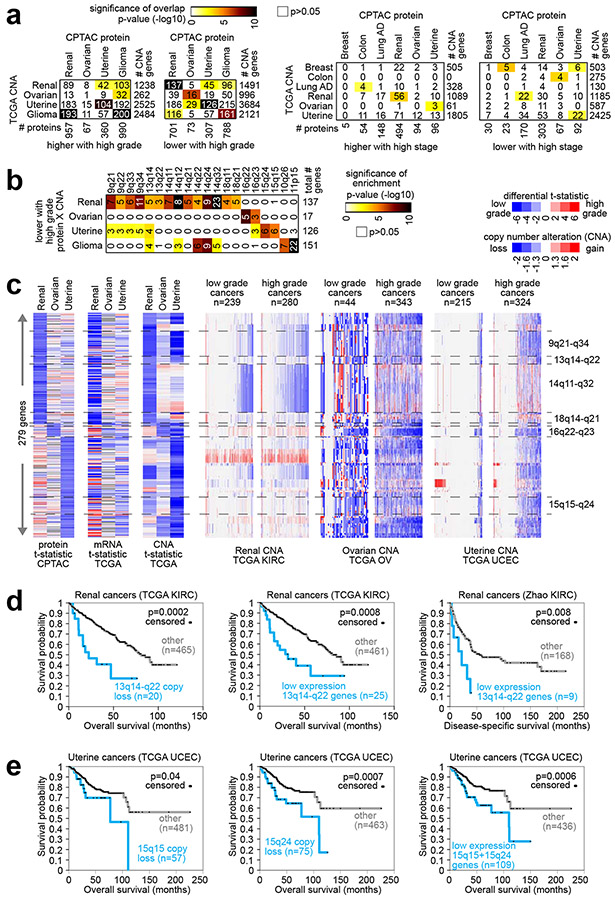
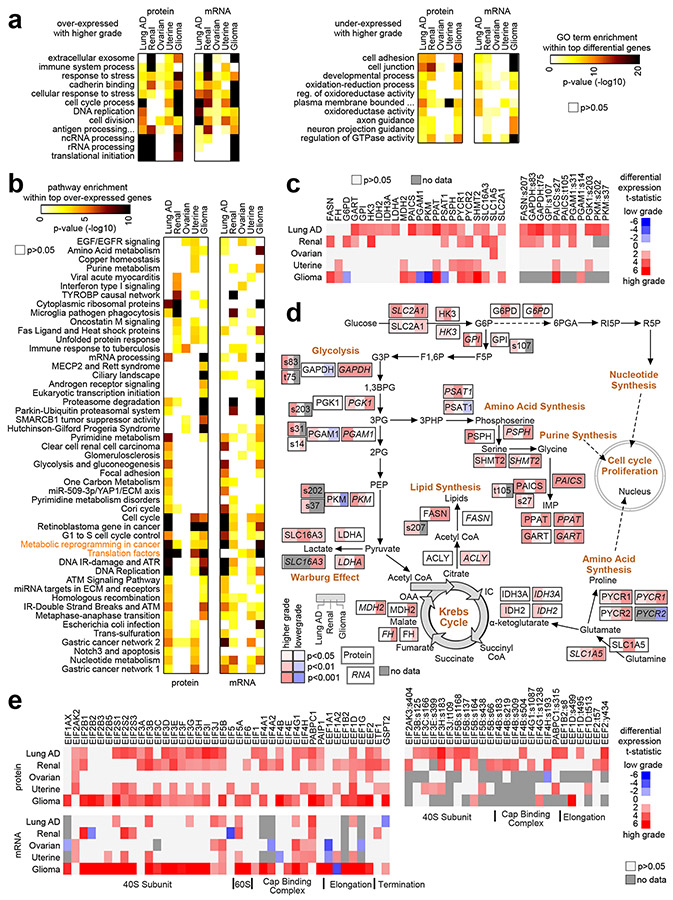
Proteomic signatures associated with clinical measures of more aggressive cancers could yield molecular clues as to disease drivers. Here, utilizing the Clinical Proteomic Tumor Analysis Consortium (CPTAC) mass-spectrometry-based proteomics datasets, we defined differentially expressed proteins and mRNAs associated with higher grade or higher stage, for each of seven cancer types (breast, colon, lung adenocarcinoma, clear cell renal, ovarian, uterine, and pediatric glioma), representing 794 patients. Widespread differential patterns of total proteins and phosphoproteins involved some common patterns shared between different cancer types. More proteins were associated with higher grade than higher stage. Most proteomic signatures predicted patient survival in independent transcriptomic datasets. The proteomic grade signatures, in particular, involved DNA copy number alterations. Pathways of interest were enriched within the grade-associated proteins across multiple cancer types, including pathways of altered metabolism, Warburg-like effects, and translation factors. Proteomic grade correlations identified protein kinases having functional impact in vitro in uterine endometrial cancer cells, including MAP3K2, MASTL, and TTK. The protein-level grade and stage associations for all proteins profiled-along with corresponding information on phosphorylation, pathways, mRNA expression, and copy alterations-represent a resource for identifying new potential targets. Proteomic analyses are often concordant with corresponding transcriptomic analyses, but with notable exceptions.
与更具侵袭性癌症的临床指标相关的蛋白质组学特征可能为疾病驱动因素提供分子线索。在这里,我们利用临床蛋白质组肿瘤分析联盟(CPTAC)基于质谱的蛋白质组学数据集,定义了与每种七种癌症(乳腺癌、结肠癌、肺腺癌、透明细胞肾、卵巢、子宫和小儿神经胶质瘤)的更高分级或更高分期相关的差异表达蛋白和 mRNAs,代表了 794 名患者。总蛋白和磷酸化蛋白的广泛差异表达模式涉及到不同癌症类型之间一些共同的模式。与更高分期相比,更多的蛋白与更高的分级相关。大多数蛋白质组学特征预测了独立转录组学数据集中的患者生存。特别是蛋白质组学分级特征涉及 DNA 拷贝数改变。在多个癌症类型中,分级相关蛋白中的感兴趣途径被富集,包括代谢改变途径、Warburg 样效应和翻译因子途径。蛋白质组学分级相关性鉴定了在子宫子宫内膜癌细胞中具有功能影响的蛋白激酶,包括 MAP3K2、MASTL 和 TTK。所有蛋白质的蛋白质水平分级和分期关联-以及磷酸化、途径、mRNA 表达和拷贝改变的对应信息-代表了识别新的潜在靶标的资源。蛋白质组学分析通常与相应的转录组学分析一致,但也有明显的例外。