Center for Communicable Disease Dynamics, Department of Epidemiology, Harvard T.H. Chan School of Public Health, Boston, MA, 02115, USA.
Department of Mathematics and Statistics, Vassar College, Poughkeepsie, NY, 12604, USA.
Eur J Epidemiol. 2021 Feb;36(2):179-196. doi: 10.1007/s10654-021-00727-7. Epub 2021 Feb 25.
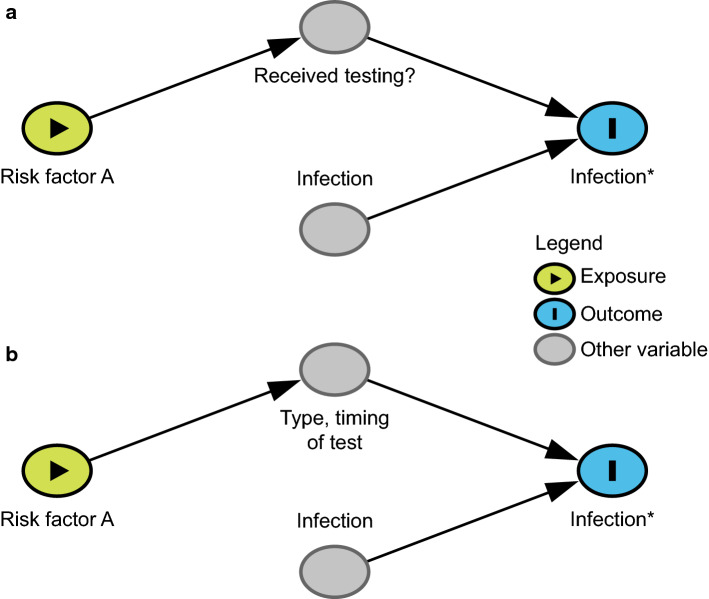
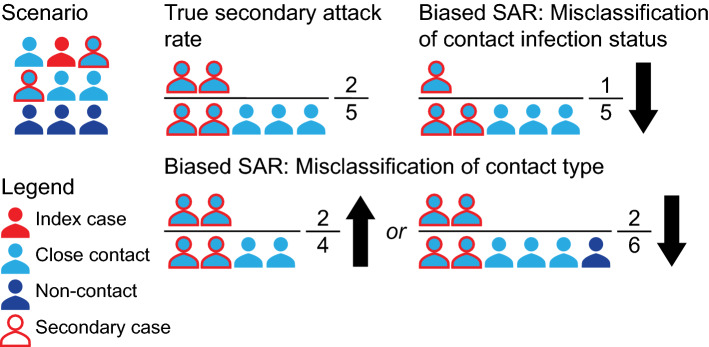
In response to the coronavirus disease (COVID-19) pandemic, public health scientists have produced a large and rapidly expanding body of literature that aims to answer critical questions, such as the proportion of the population in a geographic area that has been infected; the transmissibility of the virus and factors associated with high infectiousness or susceptibility to infection; which groups are the most at risk of infection, morbidity and mortality; and the degree to which antibodies confer protection to re-infection. Observational studies are subject to a number of different biases, including confounding, selection bias, and measurement error, that may threaten their validity or influence the interpretation of their results. To assist in the critical evaluation of a vast body of literature and contribute to future study design, we outline and propose solutions to biases that can occur across different categories of observational studies of COVID-19. We consider potential biases that could occur in five categories of studies: (1) cross-sectional seroprevalence, (2) longitudinal seroprotection, (3) risk factor studies to inform interventions, (4) studies to estimate the secondary attack rate, and (5) studies that use secondary attack rates to make inferences about infectiousness and susceptibility.
针对冠状病毒病(COVID-19)大流行,公共卫生科学家已经产生了大量且迅速扩展的文献,旨在回答关键问题,例如在地理区域内感染人口的比例;病毒的传染性以及与高传染性或易感性相关的因素;哪些群体最容易感染、发病和死亡;以及抗体对再次感染的保护程度。观察性研究受到多种不同偏倚的影响,包括混杂、选择偏倚和测量误差,这些偏倚可能会威胁到其有效性或影响对其结果的解释。为了帮助批判性地评估大量文献并为未来的研究设计做出贡献,我们概述并提出了解决 COVID-19 观察性研究中不同类别可能出现的偏倚的方法。我们考虑了可能出现在五类研究中的潜在偏倚:(1)横断面血清流行率,(2)纵向血清保护率,(3)风险因素研究以提供干预信息,(4)估计二次攻击率的研究,以及(5)使用二次攻击率来推断传染性和易感性的研究。