Microbiologie Moléculaire et Biochimie Structurale (MMSB), Université Lyon 1, CNRS, Inserm, UMR5086, 69007 Lyon, France.
University of Lyon, Université Lyon 1, INSA de Lyon, CNRS UMR 5240 Microbiologie Adaptation et Pathogénie, 69622 Villeurbanne, France.
Nucleic Acids Res. 2021 Apr 6;49(6):3584-3598. doi: 10.1093/nar/gkab126.
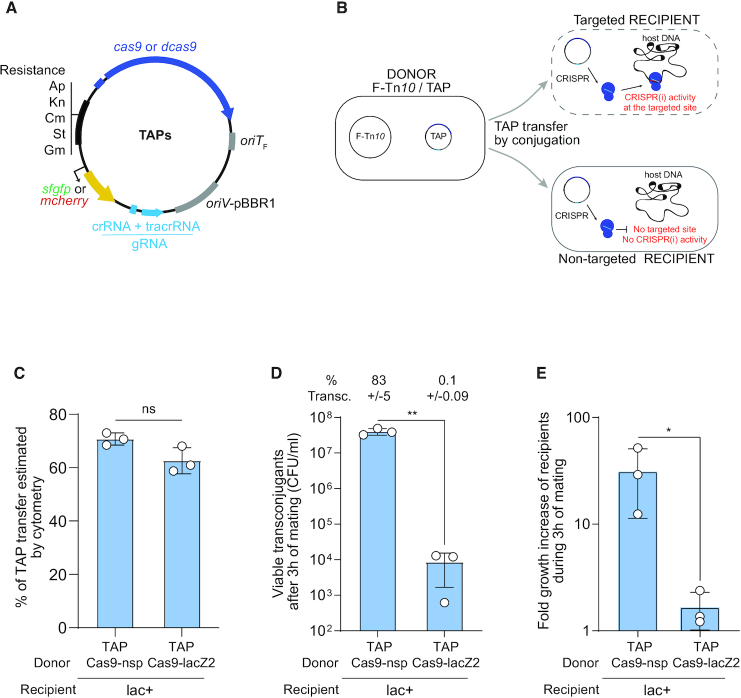
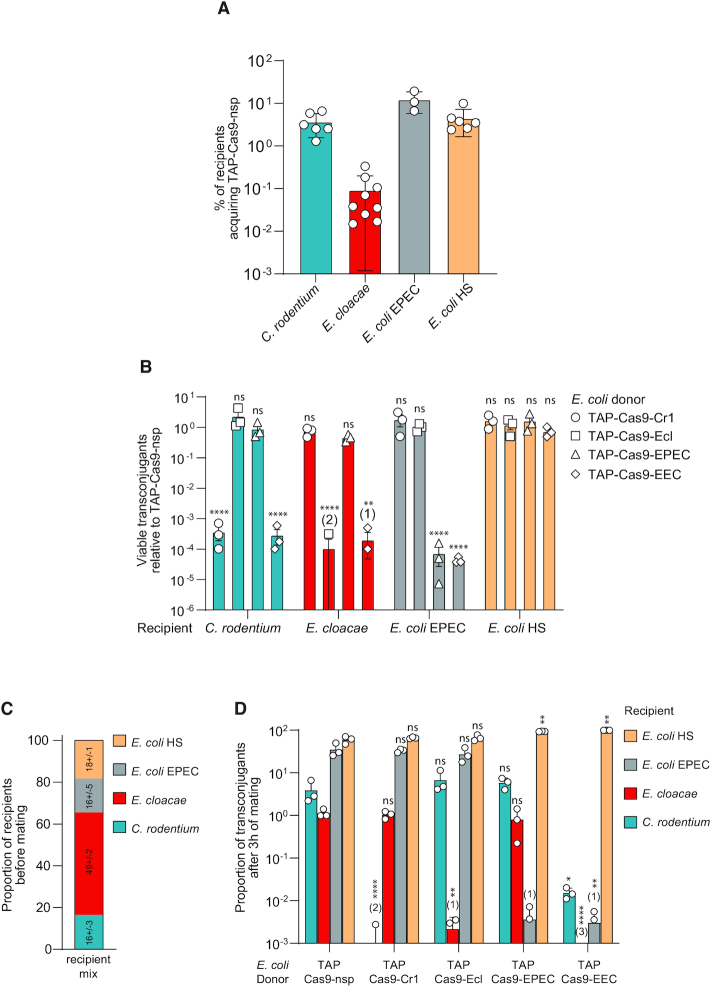
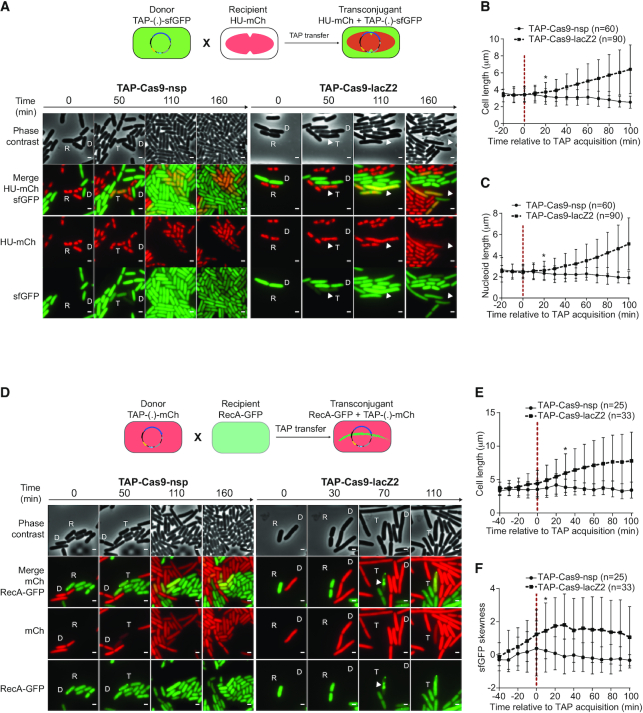
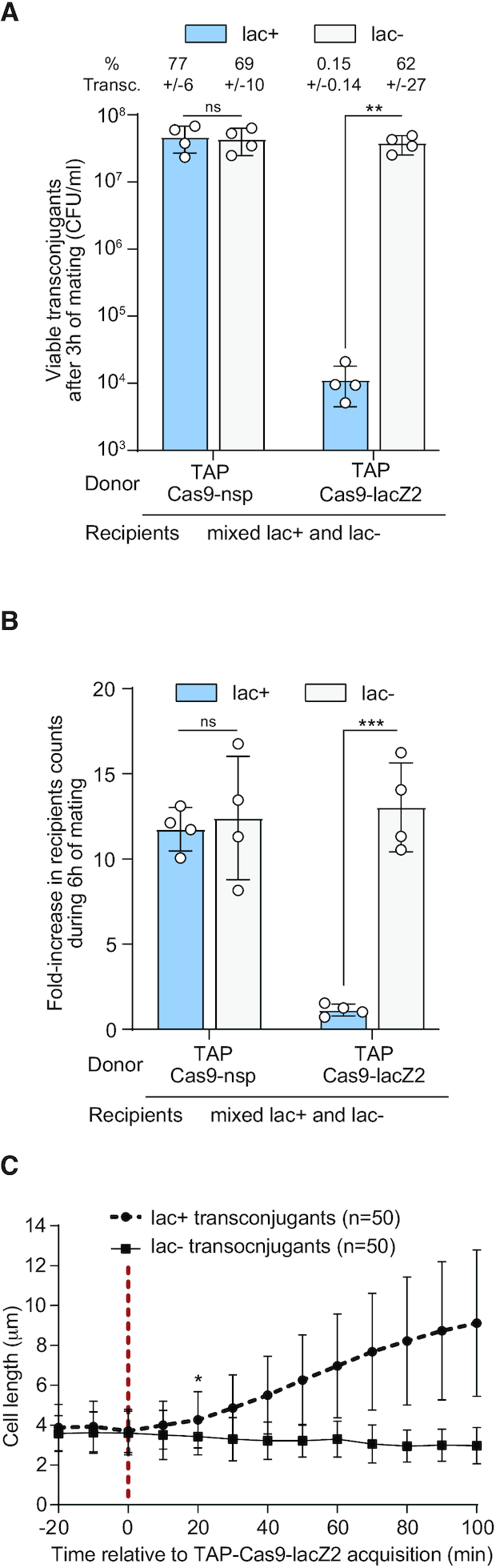
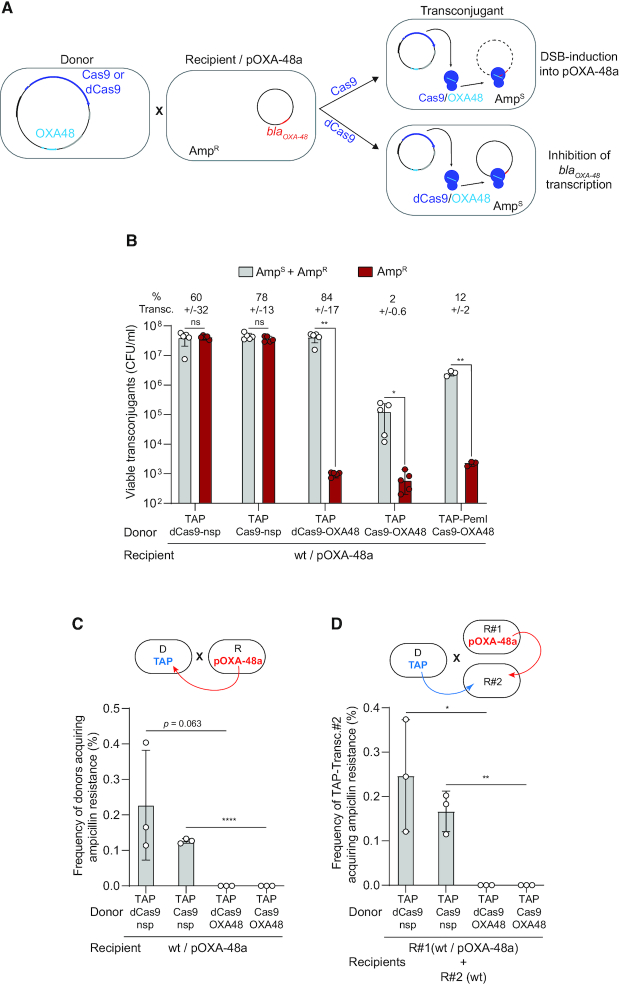
The global emergence of drug-resistant bacteria leads to the loss of efficacy of our antibiotics arsenal and severely limits the success of currently available treatments. Here, we developed an innovative strategy based on targeted-antibacterial-plasmids (TAPs) that use bacterial conjugation to deliver CRISPR/Cas systems exerting a strain-specific antibacterial activity. TAPs are highly versatile as they can be directed against any specific genomic or plasmid DNA using the custom algorithm (CSTB) that identifies appropriate targeting spacer sequences. We demonstrate the ability of TAPs to induce strain-selective killing by introducing lethal double strand breaks (DSBs) into the targeted genomes. TAPs directed against a plasmid-born carbapenem resistance gene efficiently resensitise the strain to the drug. This work represents an essential step toward the development of an alternative to antibiotic treatments, which could be used for in situ microbiota modification to eradicate targeted resistant and/or pathogenic bacteria without affecting other non-targeted bacterial species.
全球耐药菌的出现导致我们的抗生素武器库失去疗效,并严重限制了现有治疗方法的成功。在这里,我们开发了一种基于靶向抗菌质粒(TAP)的创新策略,该策略利用细菌接合将 CRISPR/Cas 系统传递到具有特定菌株的抗菌活性。TAP 非常通用,因为它们可以使用定制算法(CSTB)针对任何特定的基因组或质粒 DNA 进行定向,该算法可识别适当的靶向间隔序列。我们通过在靶向基因组中引入致命的双链断裂(DSBs)来证明 TAP 诱导菌株选择性杀伤的能力。针对质粒携带的碳青霉烯类耐药基因的 TAP 可有效恢复该菌株对该药物的敏感性。这项工作是朝着开发抗生素替代疗法迈出的重要一步,该疗法可用于原位微生物组修饰,以消除靶向耐药菌和/或病原菌,而不影响其他非靶向细菌物种。