de Oliveira Alice Rodrigues, Gozalo-Marcilla Miguel, Ringer Simone Katja, Schauvliege Stijn, Fonseca Mariana Werneck, Trindade Pedro Henrique Esteves, Puoli Filho José Nicolau Prospero, Luna Stelio Pacca Loureiro
Department of Veterinary Surgery and Animal Reproduction, School of Veterinary Medicine and Animal Science, São Paulo State University Universidade Estadual Paulista (UNESP), Botucatu, Brazil.
The Royal (Dick) School of Veterinary Studies and The Roslin Institute, The University of Edinburgh, Edinburgh, United Kingdom.
Front Vet Sci. 2021 Feb 16;8:611729. doi: 10.3389/fvets.2021.611729. eCollection 2021.
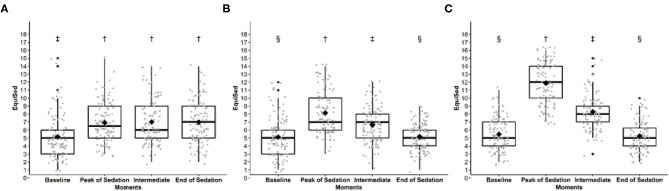
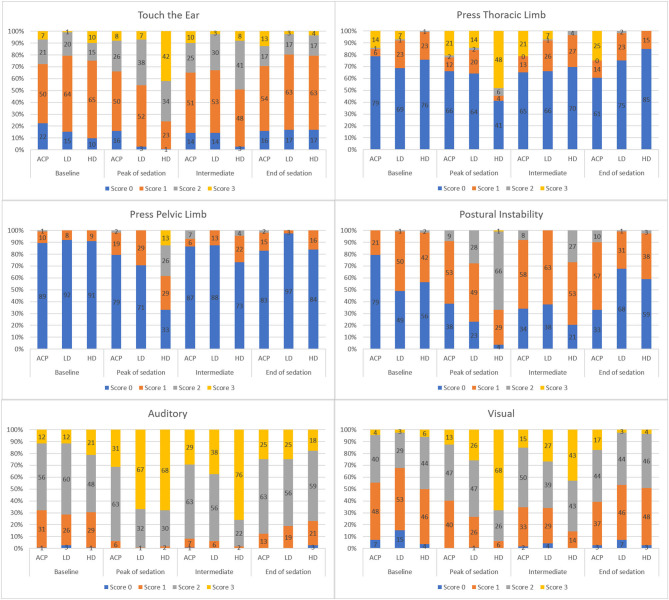
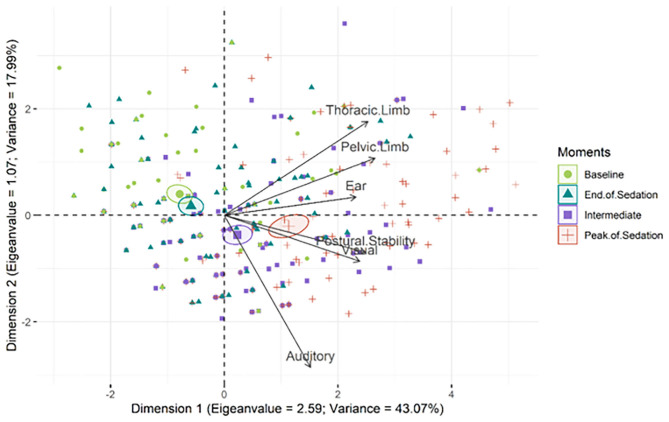
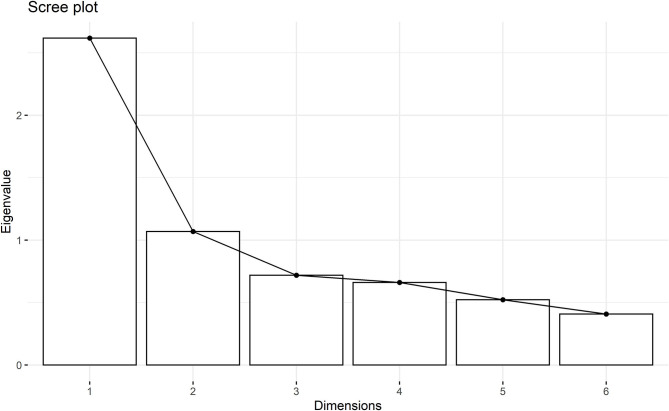
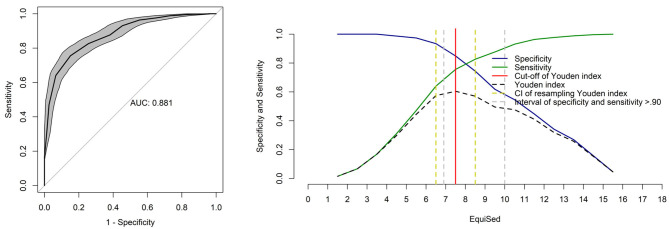
The lack of standardization of sedation scales in horses limits the reproducibility between different studies. This prospective, randomized, blinded, horizontal and controlled trial aimed to validate a scale for sedation in horses (EquiSed). Seven horses were treated with intravenous detomidine in low/high doses alone (DL 2.5 μg/kg + 6.25 μg/kg/h; DH 5 μg/kg +12.5 μg/kg/h) or associated with methadone (DLM and DHM, 0.2 mg/kg + 0.05 mg/kg/h) and with low (ACPL 0.02 mg/kg) or high (ACPH 0.09 mg/kg) doses of acepromazine alone. Horses were filmed at (i) baseline (ii) peak, (iii) intermediate, and (iv) end of sedation immediately before auditory, visual and pressure stimuli were applied and postural instability evaluated for another study. Videos were randomized and blindly evaluated by four evaluators in two phases with 1-month interval. Intra- and interobserver reliability of the sum of EquiSed (Intraclass correlation coefficient) ranged between 0.84-0.94 and 0.45-0.88, respectively. The criterion validity was endorsed by the high Spearman correlation between the EquiSed and visual analog (0.77), numerical rating (0.76), and simple descriptive scales (0.70), and average correlation with head height above the ground (HHAG) (-0.52). The Friedman test confirmed the EquiSed responsiveness over time. The principal component analysis showed that all items of the scale had a load factor ≥ 0.50. The item-total Spearman correlation for all items ranged from 0.3 to 0.5, and the internal consistency was good (Cronbach's α = 0.73). The area under the curve of EquiSed HHAG as a predictive diagnostic measure was 0.88. The sensitivity of the EquiSed calculated according to the cut-off point (score 7 of the sum of the EquiSed) determined by the receiver operating characteristic curve, was 96% and specificity was 83%. EquiSed has good intra- and interobserver reliabilities and is valid to evaluate tranquilization and sedation in horses.
马匹镇静评分缺乏标准化限制了不同研究之间的可重复性。这项前瞻性、随机、双盲、横向对照试验旨在验证一种马匹镇静量表(EquiSed)。七匹马分别接受以下处理:单独静脉注射低/高剂量的右美托咪定(DL 2.5 μg/kg + 6.25 μg/kg/h;DH 5 μg/kg + 12.5 μg/kg/h),或与美沙酮联合使用(DLM和DHM,0.2 mg/kg + 0.05 mg/kg/h),以及单独使用低剂量(ACPL 0.02 mg/kg)或高剂量(ACPH 0.09 mg/kg)的乙酰丙嗪。在以下时间点对马匹进行拍摄:(i)基线,(ii)峰值,(iii)中间阶段,以及(iv)镇静结束时,即在施加听觉、视觉和压力刺激之前,并为另一项研究评估姿势不稳情况。视频被随机分组,并由四名评估者在两个阶段进行双盲评估,间隔1个月。EquiSed总分的观察者内和观察者间可靠性(组内相关系数)分别在0.84 - 0.94和0.45 - 0.88之间。EquiSed与视觉模拟评分(0.77)、数字评分(0.76)和简单描述性量表(0.70)之间的高Spearman相关性,以及与地面以上头部高度(HHAG)的平均相关性(-0.52),证实了该量表的效标效度。Friedman检验证实了EquiSed随时间的反应性。主成分分析表明,该量表的所有项目载荷因子均≥0.50。所有项目的项目-总分Spearman相关性在0.3至0.5之间,内部一致性良好(Cronbach's α = 0.73)。以EquiSed HHAG作为预测诊断指标的曲线下面积为0.88。根据受试者工作特征曲线确定的截断点(EquiSed总分7分)计算得出的EquiSed敏感性为96%,特异性为83%。EquiSed具有良好的观察者内和观察者间可靠性,可有效评估马匹的镇静和安定状态。