Division of Gastroenterology and Hepatology, Department of Internal Medicine, University of New Mexico, Albuquerque, NM 87131, USA.
Biomedical Research Institute of New Mexico, Albuquerque, NM 87108, USA.
Viruses. 2021 Feb 20;13(2):328. doi: 10.3390/v13020328.
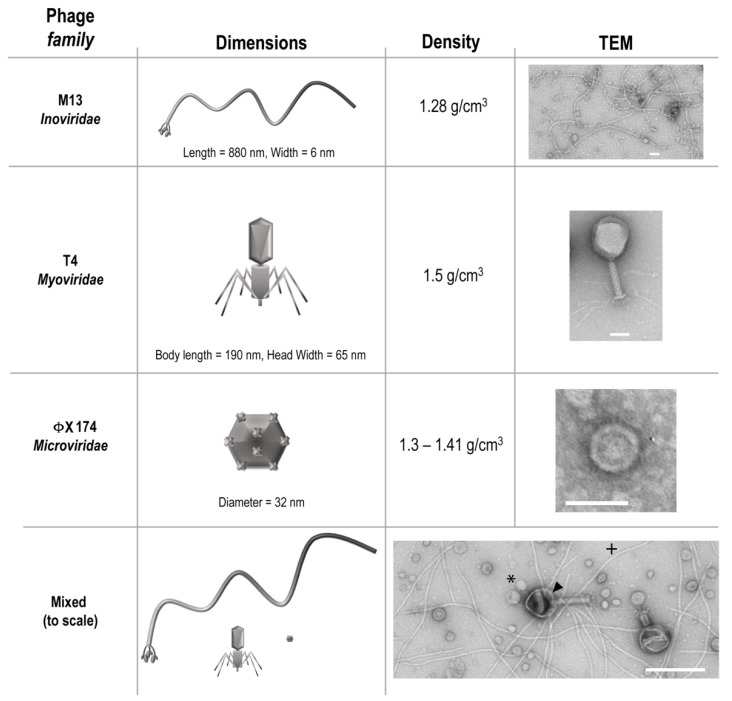
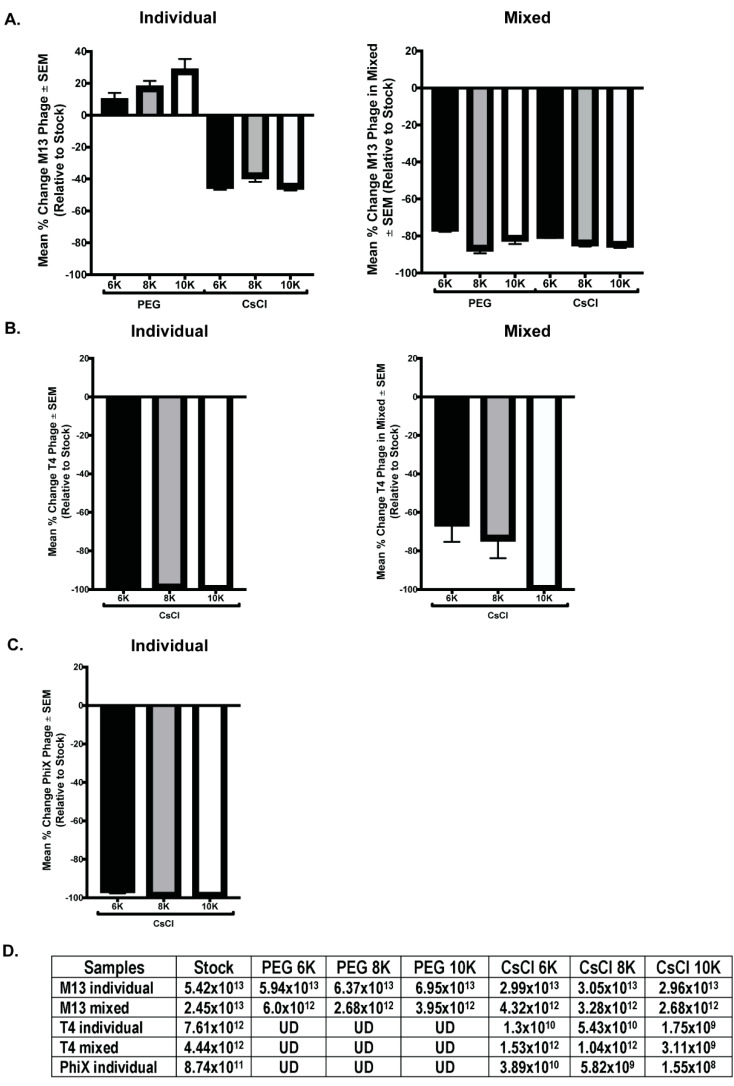
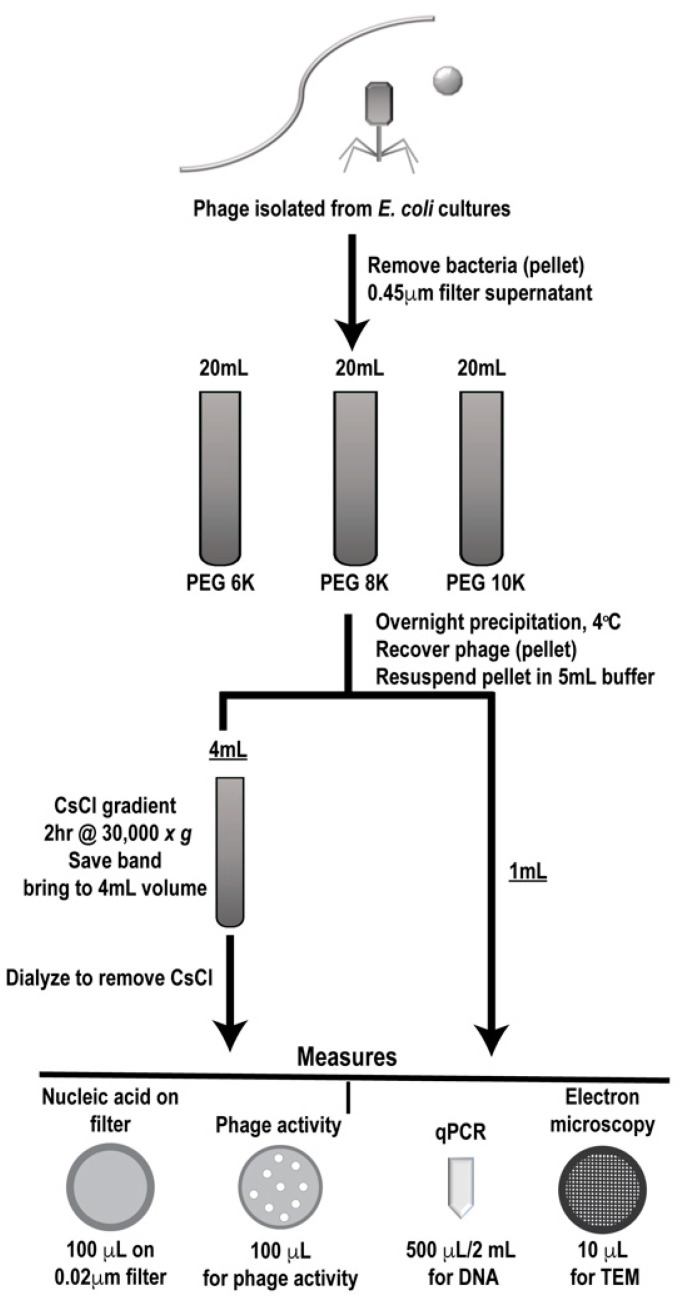
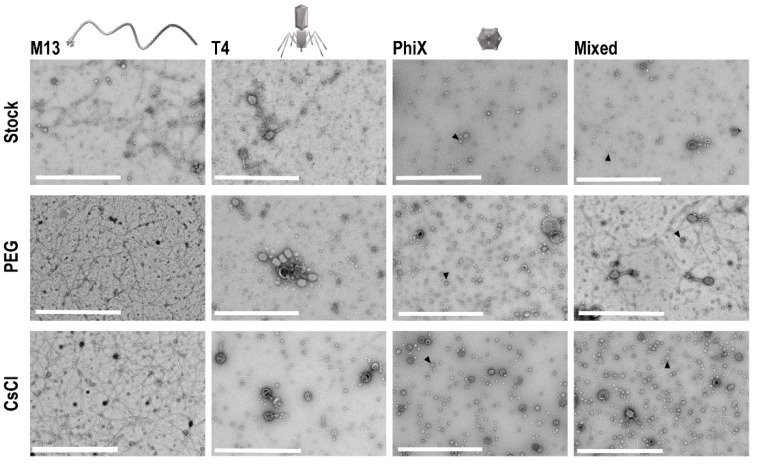
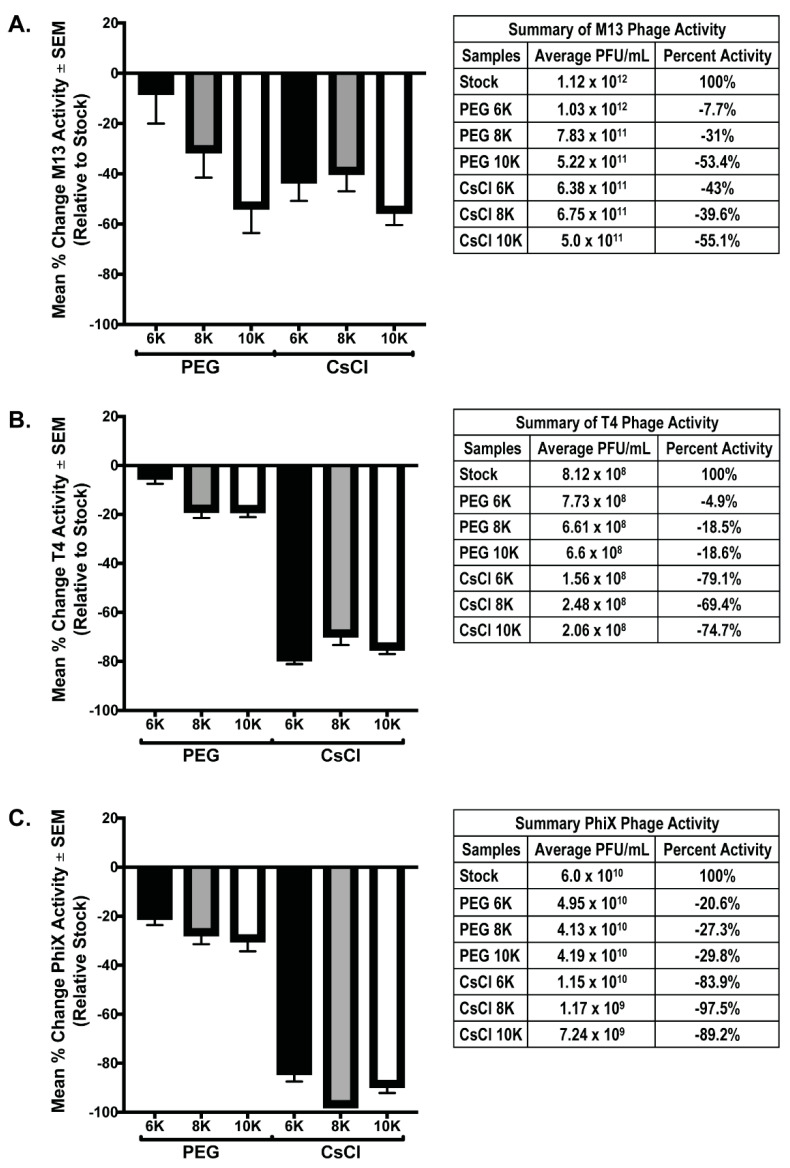
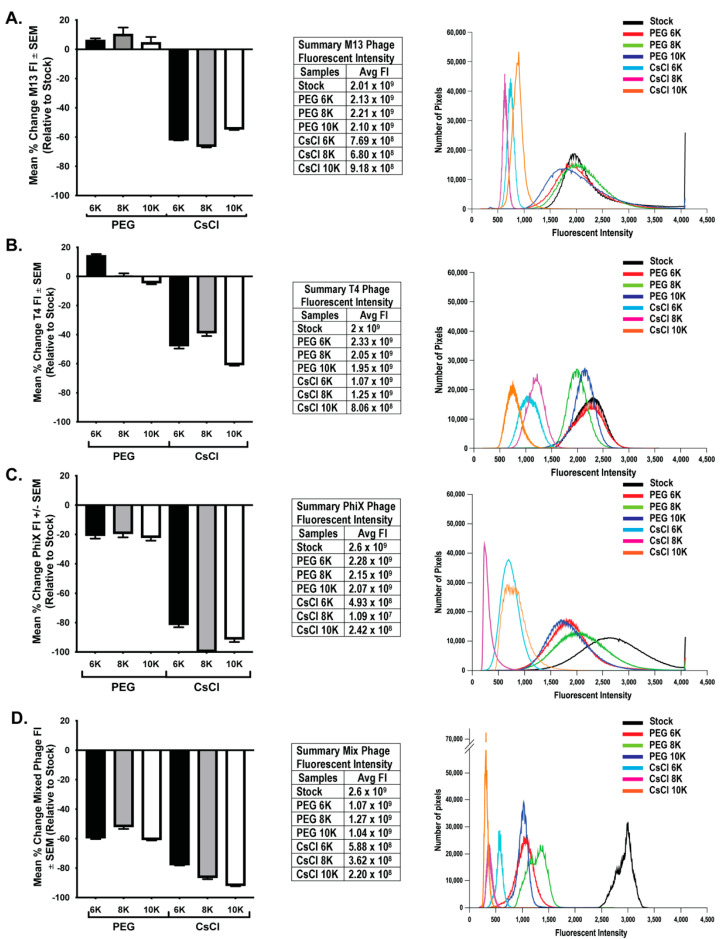
For decades, bacteriophage purification has followed structured protocols focused on generating high concentrations of phage in manageable volumes. As research moves toward understanding complex phage populations, purification needs have shifted to maximize the amount of phage while maintaining diversity and activity. The effects of standard phage purification procedures such as polyethylene glycol (PEG) precipitation and cesium chloride (CsCl) density gradients on both diversity and activity of a phage population are not known. We have examined the effects of PEG precipitation and CsCl density gradients on a number of known phage (M13, T4, and ΦX 174) of varying structure and size, individually and as mixed sample. Measurement of phage numbers and activity throughout the purification process was performed. We demonstrate that these methods, used routinely to generate "pure" phage samples, are in fact detrimental to retention of phage number and activity; even more so in mixed phage samples. As such, minimal amounts of processing are recommended to introduce less bias and maintain more of a phage population.
几十年来,噬菌体的纯化一直遵循着结构化的方案,旨在生成高浓度、可管理体积的噬菌体。随着研究向理解复杂的噬菌体群体转移,纯化的需求已经转向最大限度地提高噬菌体的数量,同时保持多样性和活性。目前还不知道聚乙二醇(PEG)沉淀和氯化铯(CsCl)密度梯度等标准噬菌体纯化程序对噬菌体群体的多样性和活性的影响。我们已经研究了 PEG 沉淀和 CsCl 密度梯度对多种不同结构和大小的已知噬菌体(M13、T4 和 ΦX174)的影响,包括单独和混合样本。在整个纯化过程中都对噬菌体数量和活性进行了测量。我们证明,这些常用的方法实际上不利于噬菌体数量和活性的保持;在混合噬菌体样本中更是如此。因此,建议进行最小量的处理,以减少偏差并保持更多的噬菌体群体。