Li Xueshan, Chen Qiuchi, Li Qingfei, Li Jiamin, Cui Kun, Zhang Yunqiang, Kong Adong, Zhang Yanjiao, Wan Min, Mai Kangsen, Ai Qinghui
Key Laboratory of Aquaculture Nutrition and Feed, Ministry of Agriculture and Rural Affairs, and the Key Laboratory of Mariculture, Ministry of Education, Ocean University of China, Qingdao, China.
Laboratory for Marine Fisheries Science and Food Production Processes, Qingdao National Laboratory for Marine Science and Technology, Qingdao, China.
Front Physiol. 2021 Feb 17;12:631850. doi: 10.3389/fphys.2021.631850. eCollection 2021.
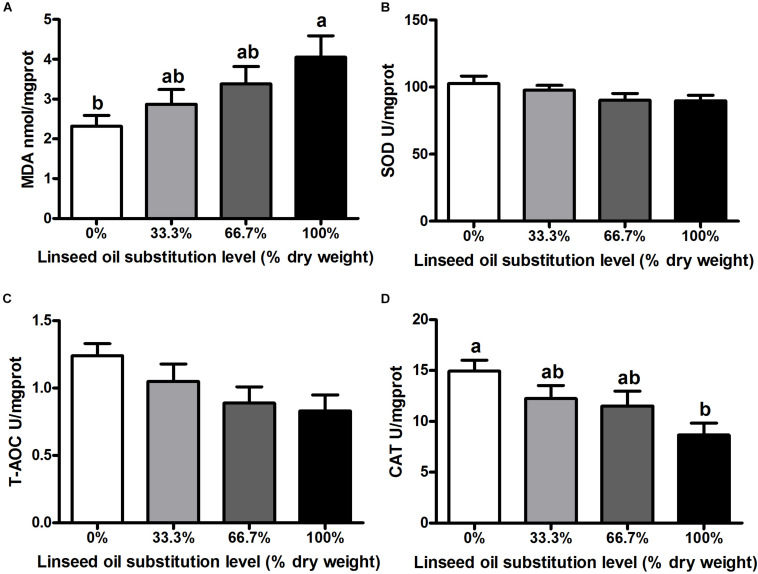
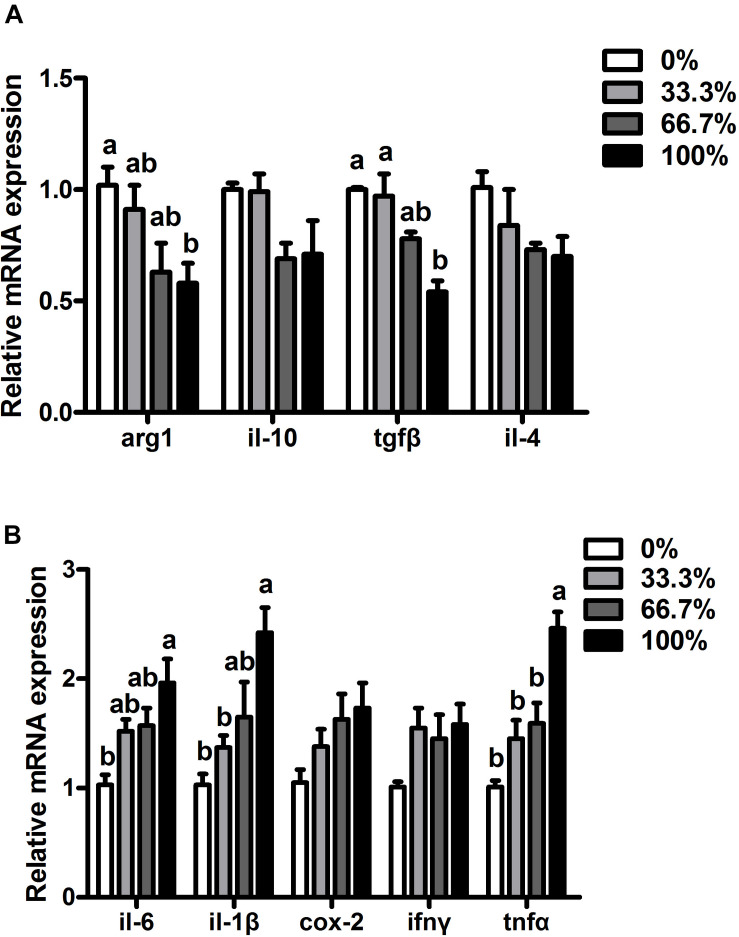
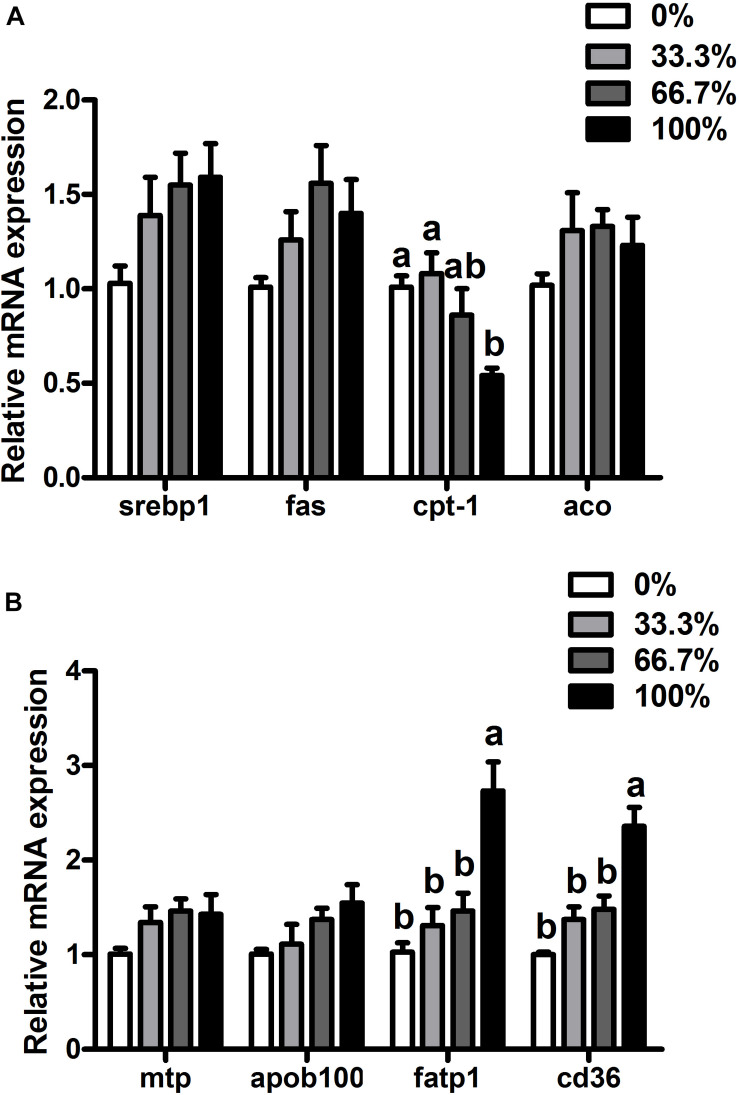
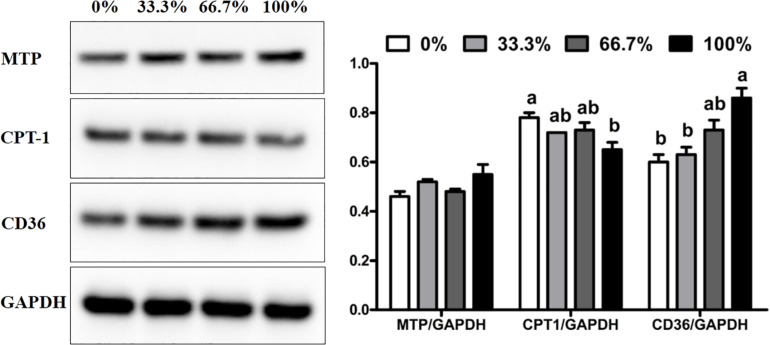
A growth experiment was conducted to evaluate the effects of dietary fish oil (FO) replaced by linseed oil (LO) on the growth performance, antioxidant capacity, hepatic lipid metabolism, and expression of inflammatory genes in large yellow croaker (). Fish (initial weight: 15.88 ± 0.14 g) were fed four experimental diets with 0% (the control), 33.3%, 66.7%, and 100% of FO replaced by LO. Each diet was randomly attributed to triplicate seawater floating cages (1.0 × 1.0 × 2.0 m) with 60 fish in each cage. Results showed that the growth performance of fish fed the diet with 100% LO was markedly decreased compared with the control group ( < 0.05), while no remarkable difference was observed in the growth performance of fish fed diets within 66.7% LO ( > 0.05). The percentage of 18:3n-3 was the highest in the liver and muscle of fish fed the diet with 100% LO among the four treatments. When dietary FO was entirely replaced by LO, fish had a markedly higher total cholesterol, total triglyceride, low-density lipoprotein cholesterol content, and alanine transaminase activity in the serum than the control group ( < 0.05). The concentration of malondialdehyde was markedly higher, while the activity of catalase was markedly lower in fish fed the diet with 100% LO than the control group ( < 0.05). When dietary FO was entirely replaced by LO, hepatic lipid content, transcriptional levels of and , and CD36 protein expression were significantly higher, while transcriptional level of and CPT-1 protein expression were significantly lower than the control group ( < 0.05). As for the gene expression of cytokines, fish fed the diet with 100% LO had markedly higher transcriptional levels of β, α, and than the control group ( < 0.05). In conclusion, the substitution of 66.7% FO with LO had no significant effects on the growth performance of fish, while 100% LO decreased the growth performance and increased the inflammation and hepatic lipid content of fish. The increase of hepatic lipid content was probably due to the increased fatty acid uptake and decreased fatty acid oxidation in fish.
进行了一项生长实验,以评估用亚麻籽油(LO)替代鱼油(FO)对大黄鱼生长性能、抗氧化能力、肝脏脂质代谢及炎症基因表达的影响。实验用鱼(初始体重:15.88±0.14克)投喂四种实验饲料,分别为0%(对照组)、33.3%、66.7%和100%的FO被LO替代的饲料。每种饲料随机分配到三个重复的海水浮动网箱(1.0×1.0×2.0米)中,每个网箱60尾鱼。结果显示,与对照组相比,投喂100% LO饲料的鱼生长性能显著下降(P<0.05),而投喂LO含量在66.7%以内饲料的鱼生长性能未观察到显著差异(P>0.05)。在四种处理中,投喂100% LO饲料的鱼肝脏和肌肉中18:3n-3的百分比最高。当饲料中的FO完全被LO替代时,鱼血清中的总胆固醇、总甘油三酯、低密度脂蛋白胆固醇含量及丙氨酸转氨酶活性显著高于对照组(P<0.05)。投喂100% LO饲料的鱼丙二醛浓度显著高于对照组,而过氧化氢酶活性显著低于对照组(P<0.05)。当饲料中的FO完全被LO替代时,肝脏脂质含量、脂肪酸转运蛋白(FATP)和脂肪酸结合蛋白2(FABP2)的转录水平以及CD36蛋白表达显著高于对照组,而肉碱/有机阳离子转运体2(OCTN2)的转录水平和肉碱棕榈酰转移酶1(CPT-1)蛋白表达显著低于对照组(P<0.05)。至于细胞因子的基因表达,投喂100% LO饲料的鱼β-干扰素(IFN-β)、白细胞介素-1α(IL-1α)和肿瘤坏死因子-α(TNF-α)的转录水平显著高于对照组(P<0.05)。总之,用66.7%的LO替代FO对鱼的生长性能无显著影响,而100%的LO降低了鱼的生长性能,增加了鱼的炎症反应和肝脏脂质含量。肝脏脂质含量的增加可能是由于鱼脂肪酸摄取增加和脂肪酸氧化减少所致。