Department of Gynecology Oncology, Hunan Cancer Hospital and the Affiliated Cancer Hospital of Xiangya School of Medicine, Central South University, Changsha, Hunan, 410013, China.
Department of Radiation Oncology, Hunan Cancer Hospital and the Affiliated Cancer Hospital of Xiangya School of Medicine, Central South University, Changsha, Hunan, 410013, China.
Redox Biol. 2021 Jun;42:101928. doi: 10.1016/j.redox.2021.101928. Epub 2021 Mar 5.
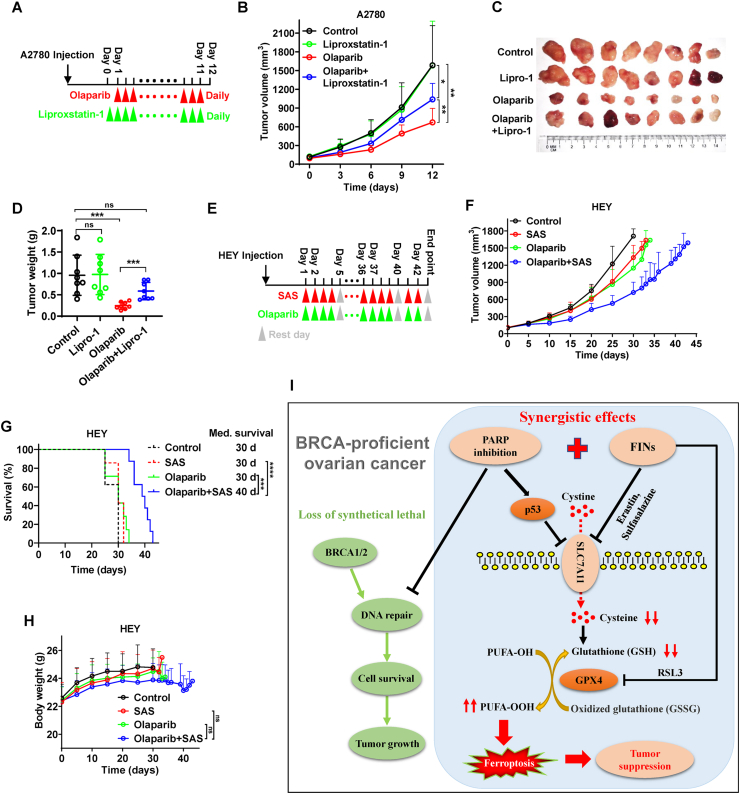
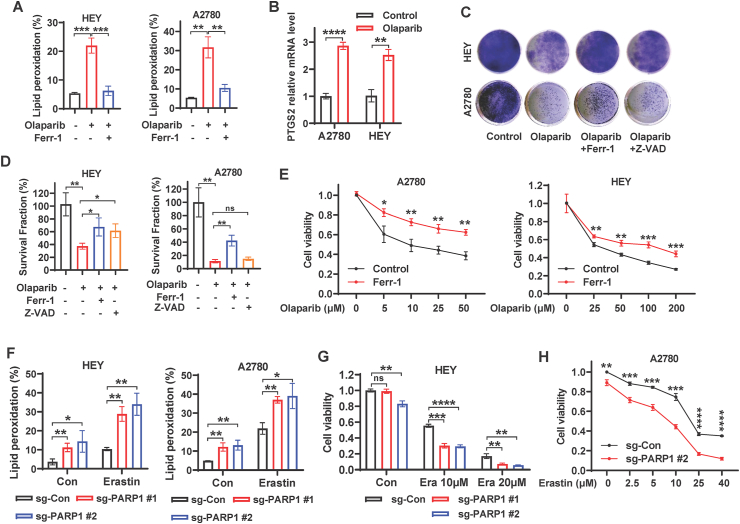
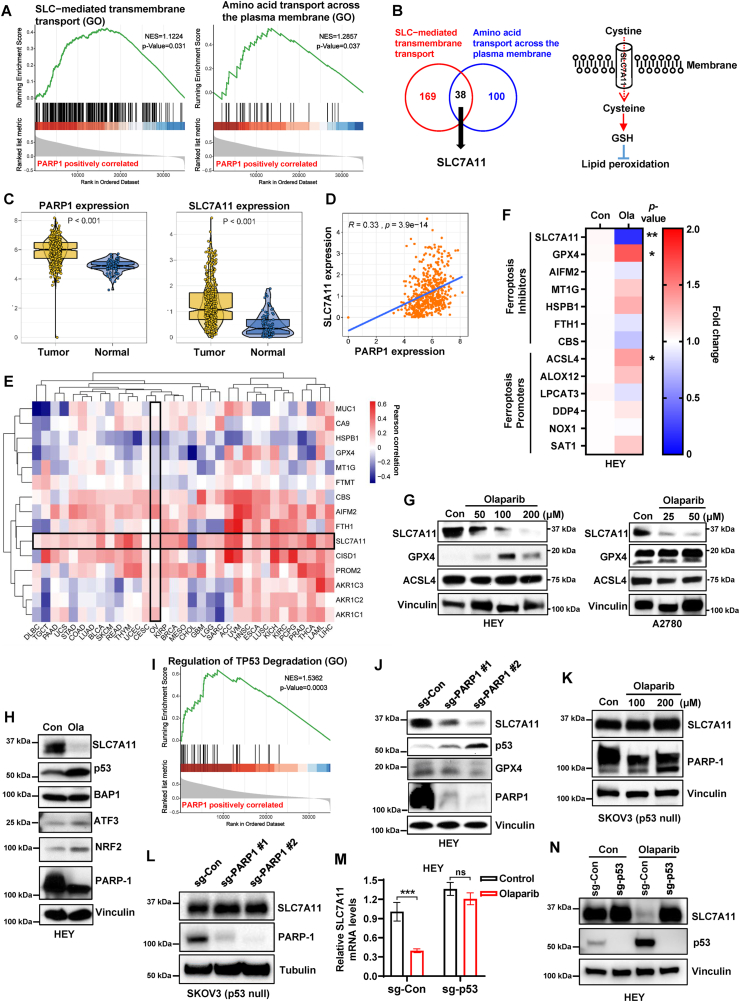
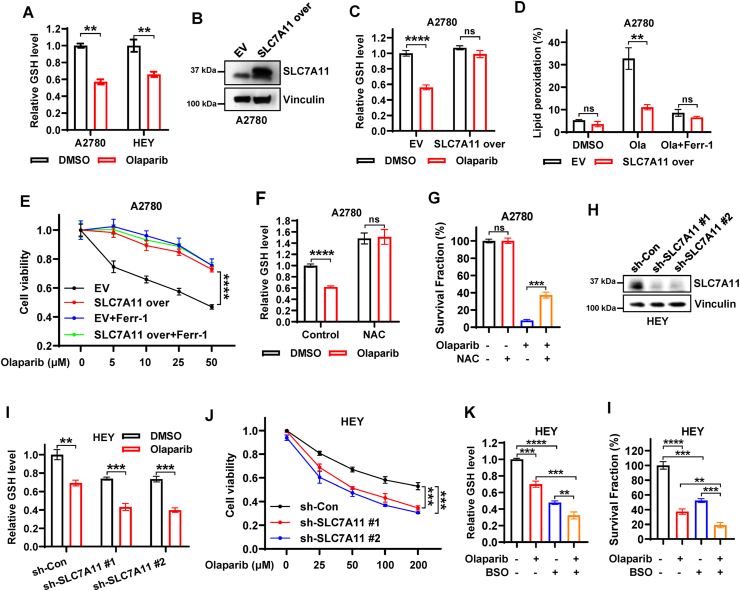
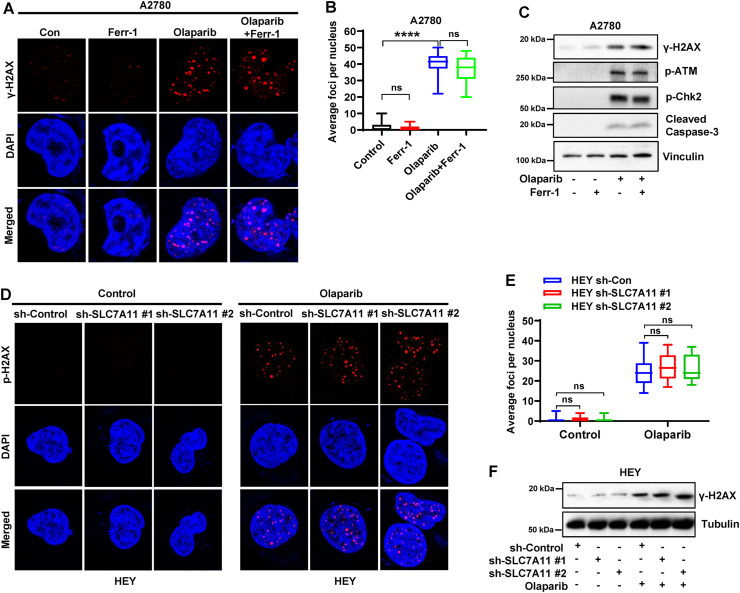
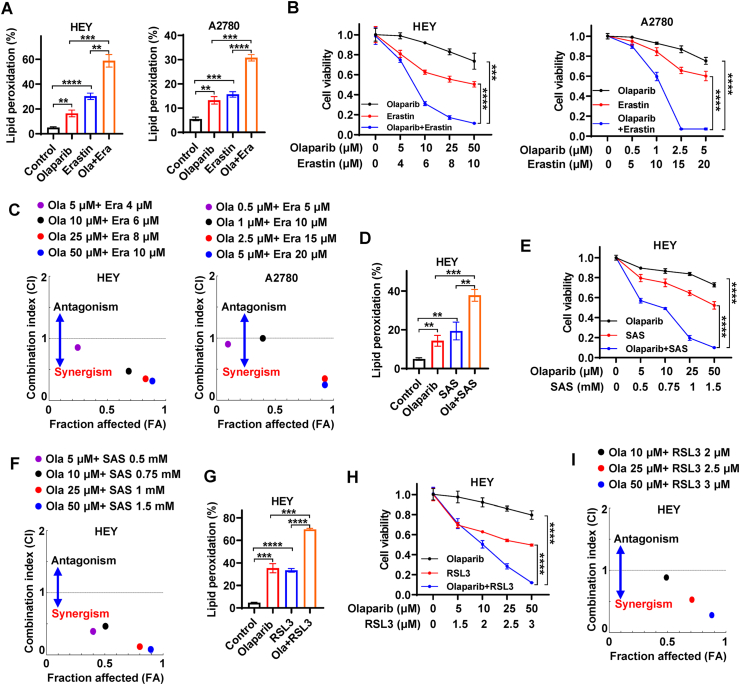
Pharmacologic inhibition of PARP is the primary therapeutic strategy for BRCA mutant ovarian cancer. However, most of patients carry wild-type BRCA1/2 with no significant clinical benefits from PARP inhibitors, calling for the needs to further understanding and developing new strategy when employing PARP inhibitors to treat ovarian cancer. Here, we show that ferroptosis, a form of regulated cell death driven by iron-dependent phospholipid peroxidation, is partly responsible for the efficacy of PARP inhibitor olaparib. Mechanistically, pharmacological inhibition or genetic deletion of PARP downregulates the expression of cystine transporter SLC7A11 in a p53-dependent manner. Consequently, decreased glutathione biosynthesis caused by SLC7A11 repression promotes lipid peroxidation and ferroptosis. Furthermore, ferroptosis perturbation results in significant resistance to olaparib without affecting DNA damage response, while boosting ferroptosis by ferroptosis inducers (FINs) synergistically sensitizes BRCA-proficient ovarian cancer cells and xenografts to PARP inhibitor. Together, our results reveal a previously unappreciated mechanism coupling ferroptosis to PARP inhibition and suggest the combination of PARP inhibitor and FINs in the treatment of BRCA-proficient ovarian cancer.
PARP 的药理学抑制是 BRCA 突变型卵巢癌的主要治疗策略。然而,大多数患者携带野生型 BRCA1/2,从 PARP 抑制剂中没有获得显著的临床获益,这就需要进一步了解和开发新的策略,以在治疗卵巢癌时使用 PARP 抑制剂。在这里,我们表明铁依赖性磷脂过氧化驱动的一种受调控的细胞死亡形式即铁死亡,部分负责 PARP 抑制剂奥拉帕利的疗效。从机制上讲,PARP 的药理学抑制或基因缺失以依赖 p53 的方式下调胱氨酸转运蛋白 SLC7A11 的表达。因此,SLC7A11 抑制导致谷胱甘肽生物合成减少,从而促进脂质过氧化和铁死亡。此外,铁死亡的扰乱会导致对奥拉帕利的显著耐药性,而不影响 DNA 损伤反应,而通过铁死亡诱导剂 (FINs) 增强铁死亡则协同增敏 BRCA 阳性卵巢癌细胞和异种移植瘤对 PARP 抑制剂的敏感性。总之,我们的结果揭示了铁死亡与 PARP 抑制之间以前未被重视的机制,并提示 PARP 抑制剂和 FINs 的联合治疗 BRCA 阳性卵巢癌。