Department of Biochemistry, Max Planck Institute for Chemical Ecology, Hans-Knöll-Straße 8, D-07745 Jena, Germany.
Plant Physiol. 2021 Jun 11;186(2):891-909. doi: 10.1093/plphys/kiab111.
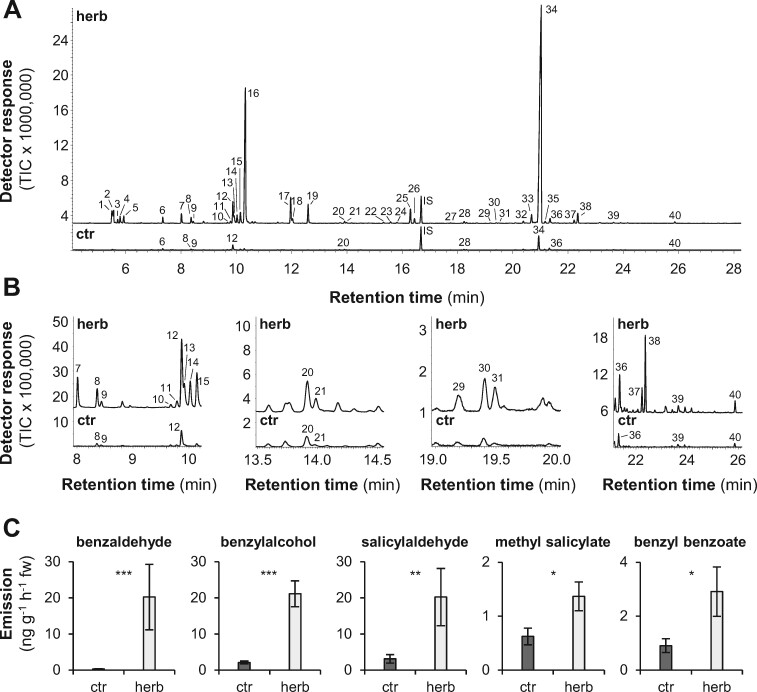
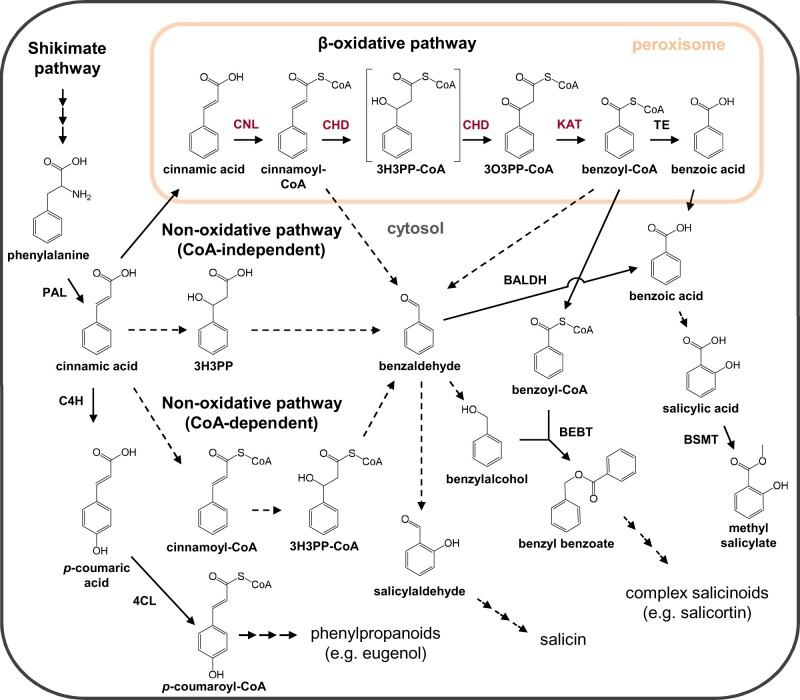
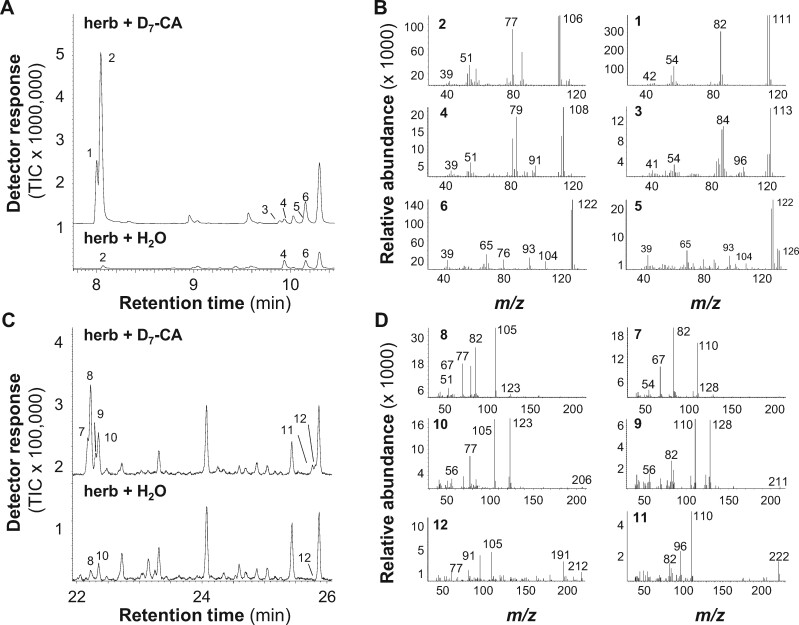
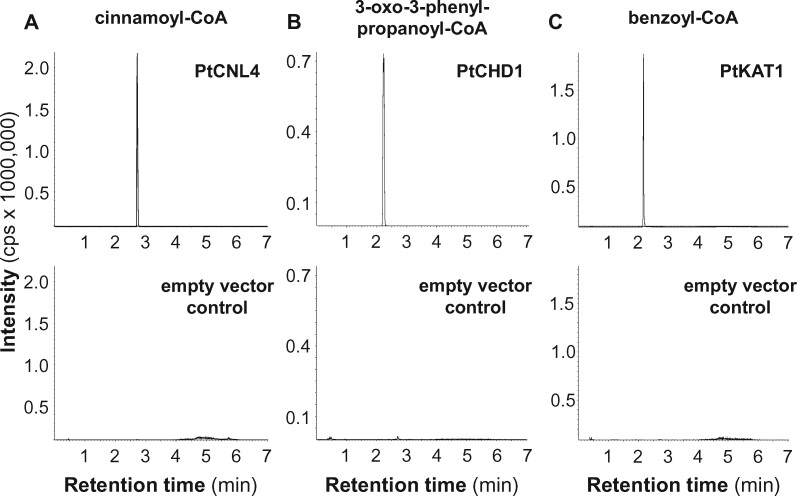
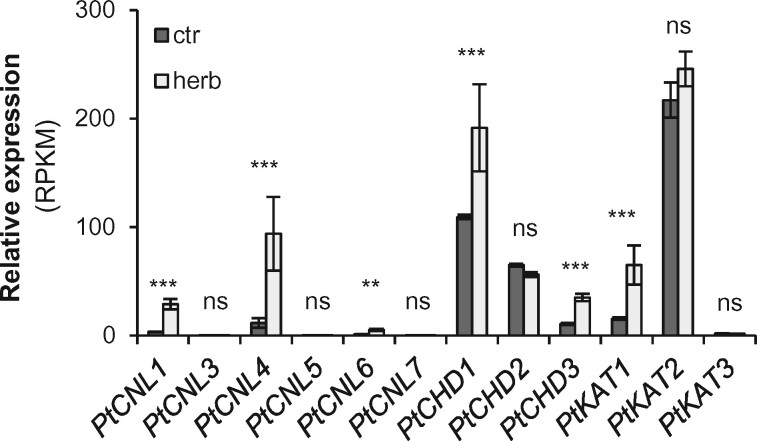
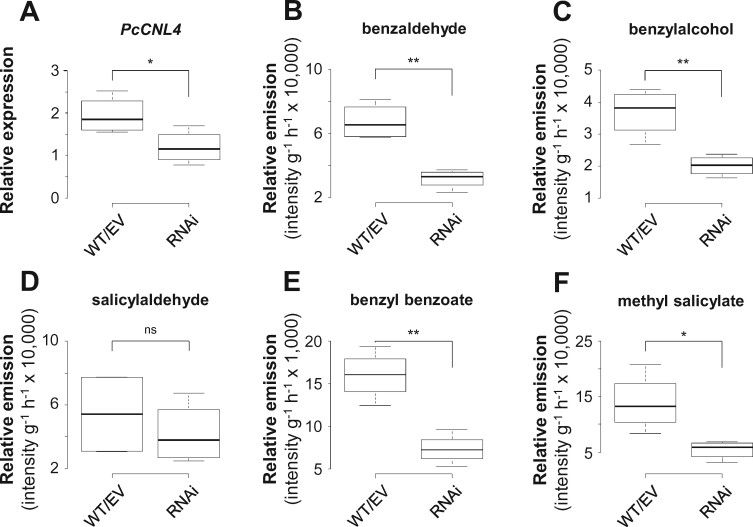
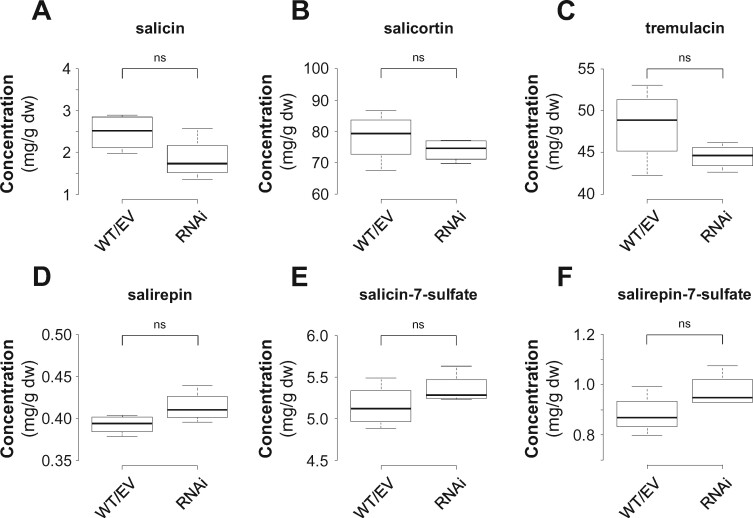
Benzenoids (C6-C1 aromatic compounds) play important roles in plant defense and are often produced upon herbivory. Black cottonwood (Populus trichocarpa) produces a variety of volatile and nonvolatile benzenoids involved in various defense responses. However, their biosynthesis in poplar is mainly unresolved. We showed feeding of the poplar leaf beetle (Chrysomela populi) on P. trichocarpa leaves led to increased emission of the benzenoid volatiles benzaldehyde, benzylalcohol, and benzyl benzoate. The accumulation of salicinoids, a group of nonvolatile phenolic defense glycosides composed in part of benzenoid units, was hardly affected by beetle herbivory. In planta labeling experiments revealed that volatile and nonvolatile poplar benzenoids are produced from cinnamic acid (C6-C3). The biosynthesis of C6-C1 aromatic compounds from cinnamic acid has been described in petunia (Petunia hybrida) flowers where the pathway includes a peroxisomal-localized chain shortening sequence, involving cinnamate-CoA ligase (CNL), cinnamoyl-CoA hydratase/dehydrogenase (CHD), and 3-ketoacyl-CoA thiolase (KAT). Sequence and phylogenetic analysis enabled the identification of small CNL, CHD, and KAT gene families in P. trichocarpa. Heterologous expression of the candidate genes in Escherichia coli and characterization of purified proteins in vitro revealed enzymatic activities similar to those described in petunia flowers. RNA interference-mediated knockdown of the CNL subfamily in gray poplar (Populus x canescens) resulted in decreased emission of C6-C1 aromatic volatiles upon herbivory, while constitutively accumulating salicinoids were not affected. This indicates the peroxisomal β-oxidative pathway participates in the formation of volatile benzenoids. The chain shortening steps for salicinoids, however, likely employ an alternative pathway.
苯环类化合物(C6-C1 芳香族化合物)在植物防御中起着重要作用,通常在受到食草动物侵害时产生。黑棉白杨(Populus trichocarpa)产生多种参与各种防御反应的挥发性和非挥发性苯环类化合物。然而,杨树中它们的生物合成主要尚未解决。我们表明,柳蓝叶甲(Chrysomela populi)取食黑棉白杨叶片会导致苯环类挥发性化合物苯甲醛、苯甲醇和苯甲酸苄酯的排放量增加。柳蓝叶甲取食对部分由苯环单元组成的非挥发性酚类防御糖苷水杨苷的积累几乎没有影响。在植物体内标记实验表明,挥发性和非挥发性杨树苯环类化合物是由肉桂酸(C6-C3)产生的。肉桂酸到 C6-C1 芳香族化合物的生物合成在矮牵牛(Petunia hybrida)花中已有描述,该途径包括一个过氧化物酶体定位的链缩短序列,涉及肉桂酰辅酶 A 连接酶(CNL)、肉桂酰辅酶 A 水合酶/脱氢酶(CHD)和 3-酮酰基辅酶 A 硫解酶(KAT)。序列和系统发育分析使我们能够鉴定出 P. trichocarpa 中的小 CNL、CHD 和 KAT 基因家族。候选基因在大肠杆菌中的异源表达和体外纯化蛋白的特性分析表明,其酶活性与矮牵牛花中描述的相似。灰白杨(Populus x canescens)中 CNL 亚家族的 RNA 干扰介导敲低导致取食后 C6-C1 芳香族挥发物的排放量减少,而组成型积累的水杨苷则不受影响。这表明过氧化物酶体β-氧化途径参与了挥发性苯环类化合物的形成。然而,水杨苷的链缩短步骤可能采用替代途径。