State Key Laboratory of Coal Combustion, Huazhong University of Science and Technology, Wuhan, PR China.
John A. Paulson School of Engineering and Applied Sciences, Harvard University, Cambridge, MA, USA.
Nat Commun. 2021 Mar 16;12(1):1698. doi: 10.1038/s41467-021-21868-z.
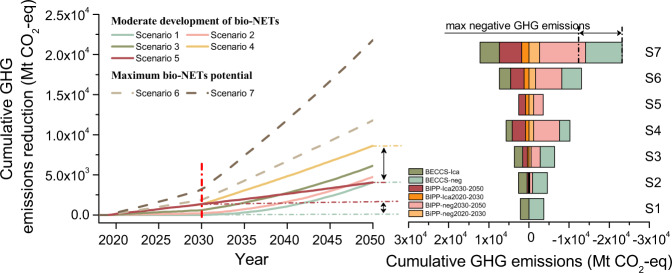
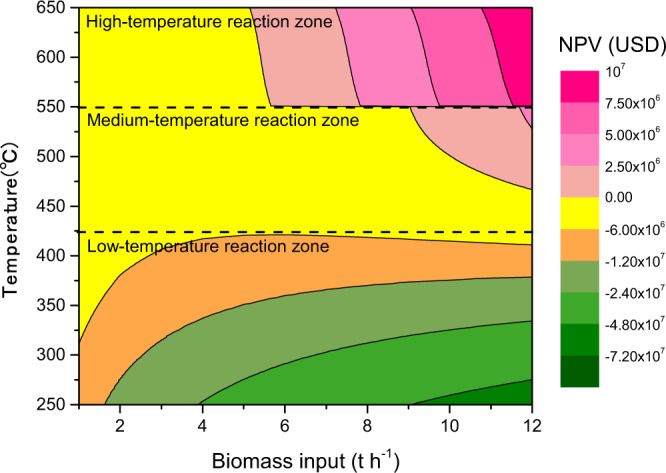
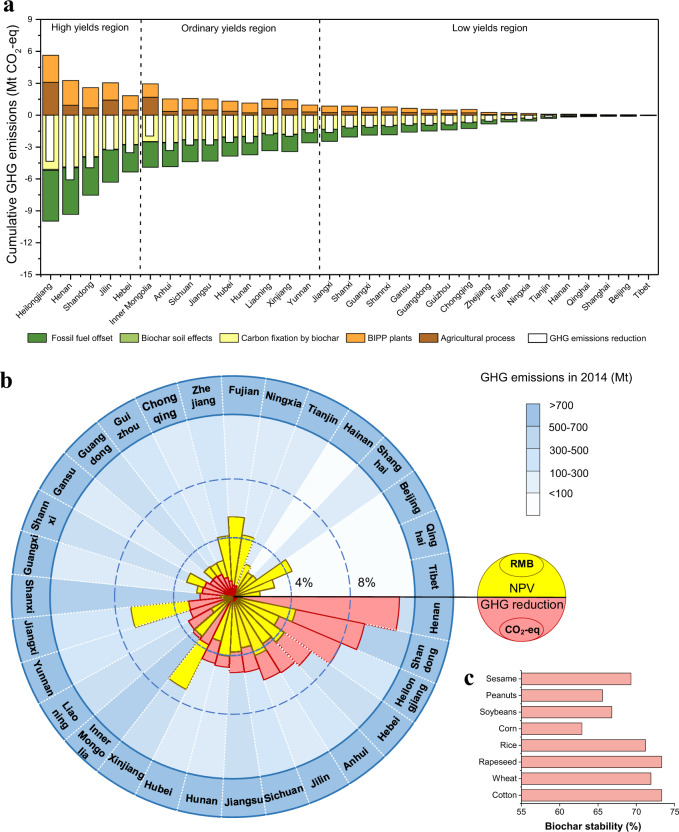
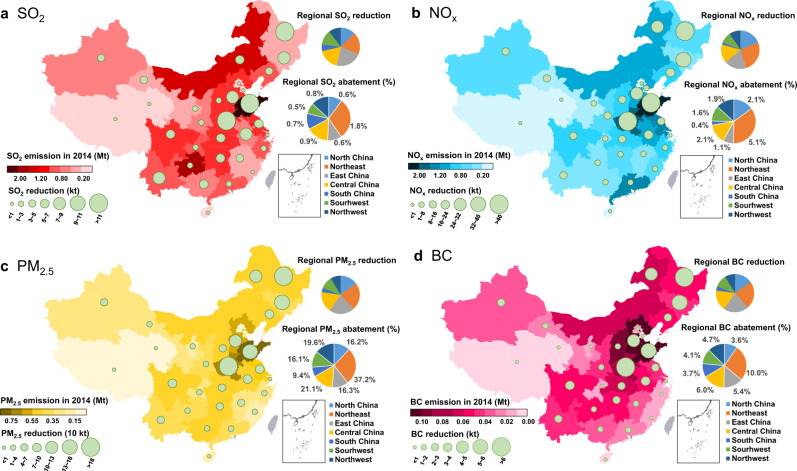
Recognizing that bioenergy with carbon capture and storage (BECCS) may still take years to mature, this study focuses on another photosynthesis-based, negative-carbon technology that is readier to implement in China: biomass intermediate pyrolysis poly-generation (BIPP). Here we find that a BIPP system can be profitable without subsidies, while its national deployment could contribute to a 61% reduction of carbon emissions per unit of gross domestic product in 2030 compared to 2005 and result additionally in a reduction in air pollutant emissions. With 73% of national crop residues used between 2020 and 2030, the cumulative greenhouse gas (GHG) reduction could reach up to 8620 Mt CO-eq by 2050, contributing 13-31% of the global GHG emission reduction goal for BECCS, and nearly 4555 Mt more than that projected for BECCS alone in China. Thus, China's BIPP deployment could have an important influence on achieving both national and global GHG emissions reduction targets.
认识到碳捕获和封存生物能源(BECCS)可能仍需数年时间才能成熟,本研究关注另一种基于光合作用、负碳技术,该技术在中国更易于实施:生物质中温热解多联产(BIPP)。在这里,我们发现,BIPP 系统无需补贴即可盈利,而其在全国范围内的部署可能有助于将 2030 年单位国内生产总值的碳排放比 2005 年减少 61%,此外还将减少空气污染物排放。如果在 2020 年至 2030 年期间使用全国 73%的农作物秸秆,到 2050 年,累计温室气体(GHG)减排量可达 8.62 亿吨 CO-eq,占 BECCS 全球 GHG 减排目标的 13-31%,比中国单独部署 BECCS 预计的减排量多近 4.555 亿吨。因此,中国的 BIPP 部署可能对实现国家和全球温室气体减排目标产生重要影响。