Emergency Department, Xuanwu Hospital, Capital Medical University, Beijing, 100053, China.
Department of Gastroenterology, Xuanwu Hospital, Capital Medical University, Beijing, 100053, China.
BMC Gastroenterol. 2021 Mar 20;21(1):127. doi: 10.1186/s12876-021-01717-5.
The etiology of reflux esophagitis (RE) is multi-factorial. This study analyzed the relationship of depression, anxiety, lifestyle and eating habits with RE and its severity and further explored the impact of anxiety and depression on patients' symptoms and quality of life.
From September 2016 to February 2018, a total of 689 subjects at Xuanwu Hospital Capital Medical University participated in this survey. They were divided into the RE group (patients diagnosed with RE on gastroscopy, n = 361) and the control group (healthy individuals without heartburn, regurgitation and other gastrointestinal symptoms, n = 328). The survey included general demographic information, lifestyle habits, eating habits, comorbidities, current medications, the gastroesophageal reflux disease (GERD) questionnaire (GerdQ), the Patient Health Questionnaire-9 depression scale and the General Anxiety Disorder-7 anxiety scale.
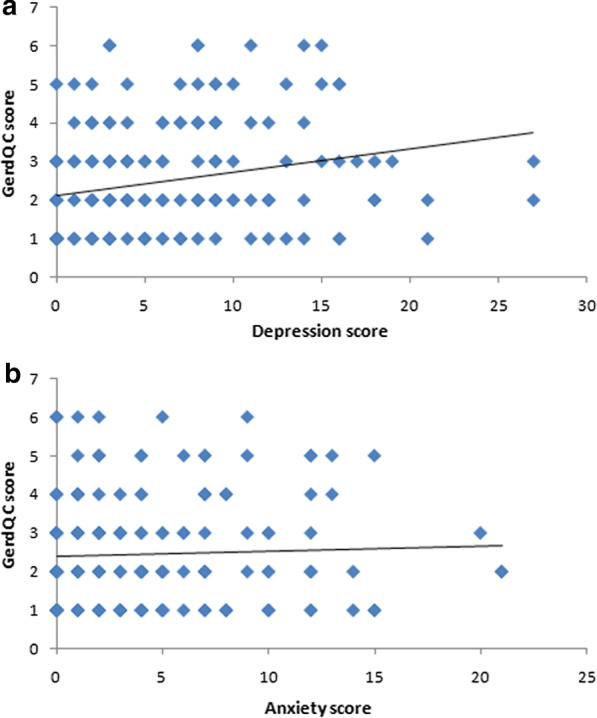
The mean age and sex ratio of the two groups were similar. Multivariate logistic regression analysis identified the following factors as related to the onset of RE (p < 0.05): low education level; drinking strong tea; preferences for sweets, noodles and acidic foods; sleeping on a low pillow; overeating; a short interval between dinner and sleep; anxiety; depression; constipation; history of hypertension; and use of oral calcium channel blockers. Ordinal logistic regression analysis revealed a positive correlation between sleeping on a low pillow and RE severity (p = 0.025). Depression had a positive correlation with the severity of symptoms (r = 0.375, p < 0.001) and patients' quality of life (r = 0.306, p < 0.001), whereas anxiety showed no such association.
Many lifestyle factors and eating habits were correlated with the onset of RE. Notably, sleeping on a low pillow was positively correlated with RE severity, and depression was positively related to the severity of symptoms and patients' quality of life.
反流性食管炎(RE)的病因是多因素的。本研究分析了抑郁、焦虑、生活方式和饮食习惯与 RE 及其严重程度的关系,并进一步探讨了焦虑和抑郁对患者症状和生活质量的影响。
本研究于 2016 年 9 月至 2018 年 2 月在首都医科大学宣武医院进行,共纳入 689 名受试者,根据胃镜检查结果分为反流性食管炎组(RE 组,n=361)和对照组(无烧心、反流等胃肠道症状的健康个体,n=328)。调查内容包括一般人口学资料、生活方式、饮食习惯、并存疾病、当前用药情况、胃食管反流病问卷(GerdQ)、患者健康问卷-9 抑郁量表和广泛性焦虑障碍-7 焦虑量表。
两组间的平均年龄和性别比例相似。多因素 logistic 回归分析确定了以下因素与 RE 发病相关(p<0.05):文化程度低;爱喝浓茶;偏好甜食、面条和酸性食物;睡低枕;饮食过量;晚餐与睡眠之间的间隔时间短;焦虑;抑郁;便秘;高血压病史;使用口服钙通道阻滞剂。有序多因素 logistic 回归分析显示,睡低枕与 RE 严重程度呈正相关(p=0.025)。抑郁与症状严重程度呈正相关(r=0.375,p<0.001)和患者的生活质量(r=0.306,p<0.001),而焦虑则无相关性。
许多生活方式因素和饮食习惯与 RE 的发病有关。值得注意的是,睡低枕与 RE 严重程度呈正相关,抑郁与症状严重程度和患者生活质量呈正相关。