Fung Isaac Chun-Hai, Hung Yuen Wai, Ofori Sylvia K, Muniz-Rodriguez Kamalich, Lai Po-Ying, Chowell Gerardo
Department of Biostatistics, Epidemiology and Environmental Health Sciences, Jiann-Ping Hsu College of Public Health, Georgia Southern University, Statesboro, GA, USA.
Department of Health Sciences, Wilfrid Laurier University, Waterloo, ON, Canada.
Disaster Med Public Health Prep. 2021 Mar 25:1-10. doi: 10.1017/dmp.2021.78.
This study aimed to investigate coronavirus disease (COVID-19) epidemiology in Alberta, British Columbia, and Ontario, Canada.
Using data through December 1, 2020, we estimated time-varying reproduction number, Rt, using EpiEstim package in R, and calculated incidence rate ratios (IRR) across the 3 provinces.
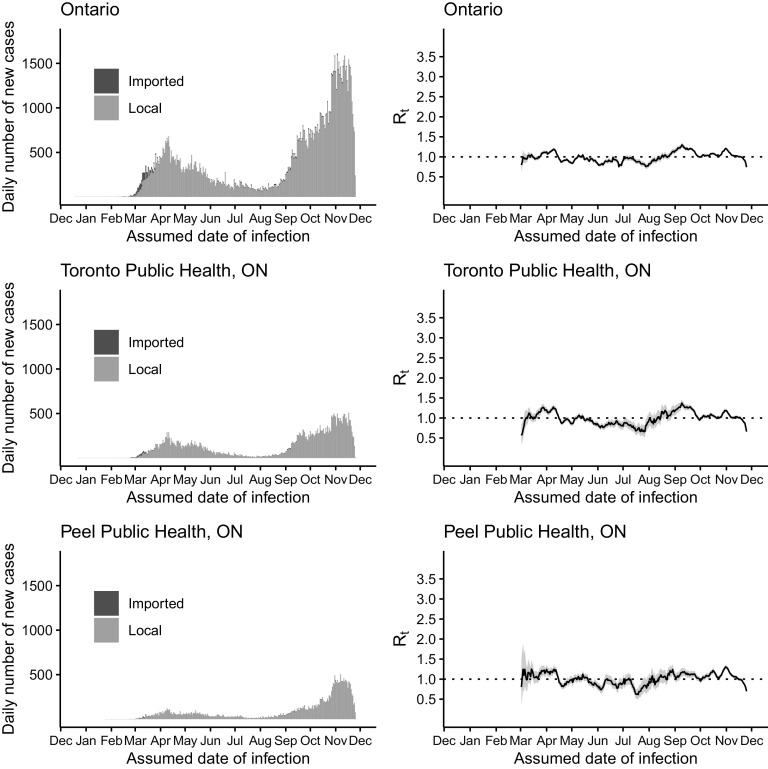
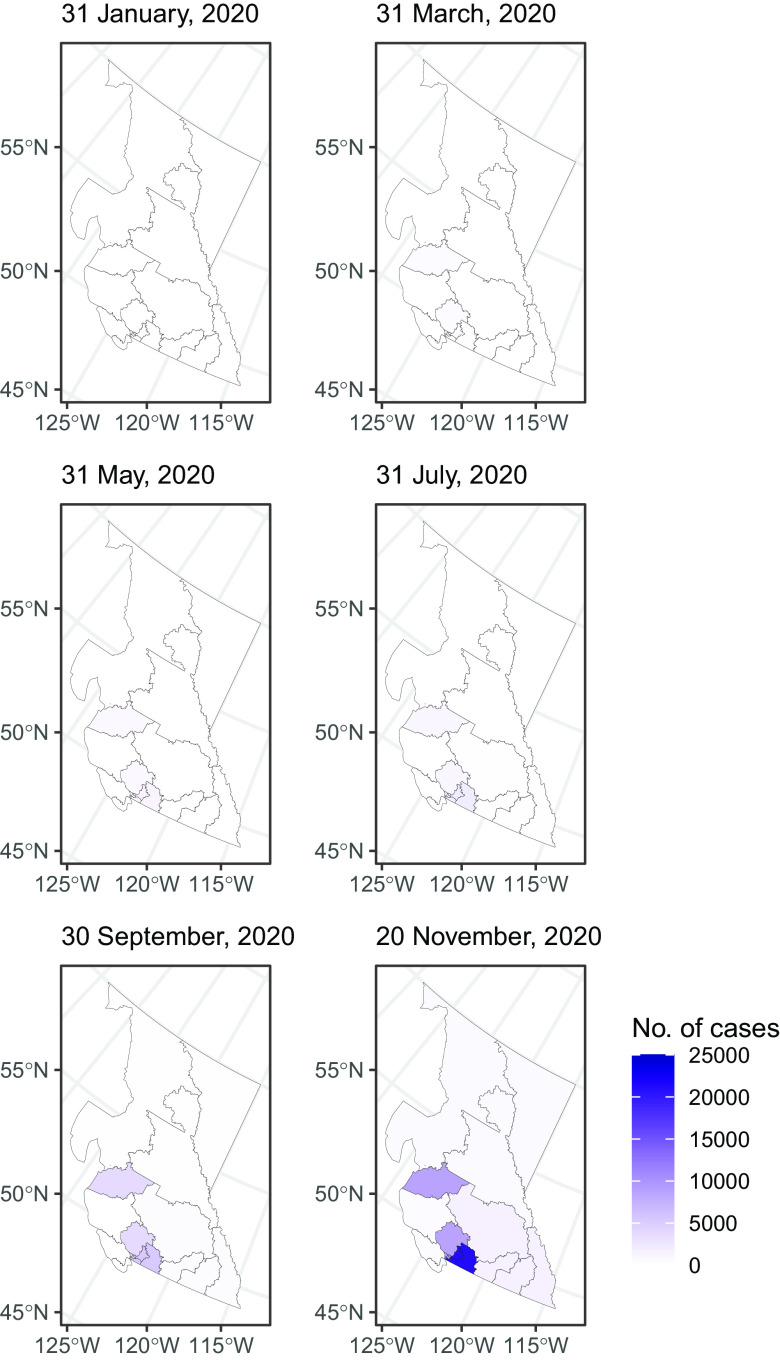
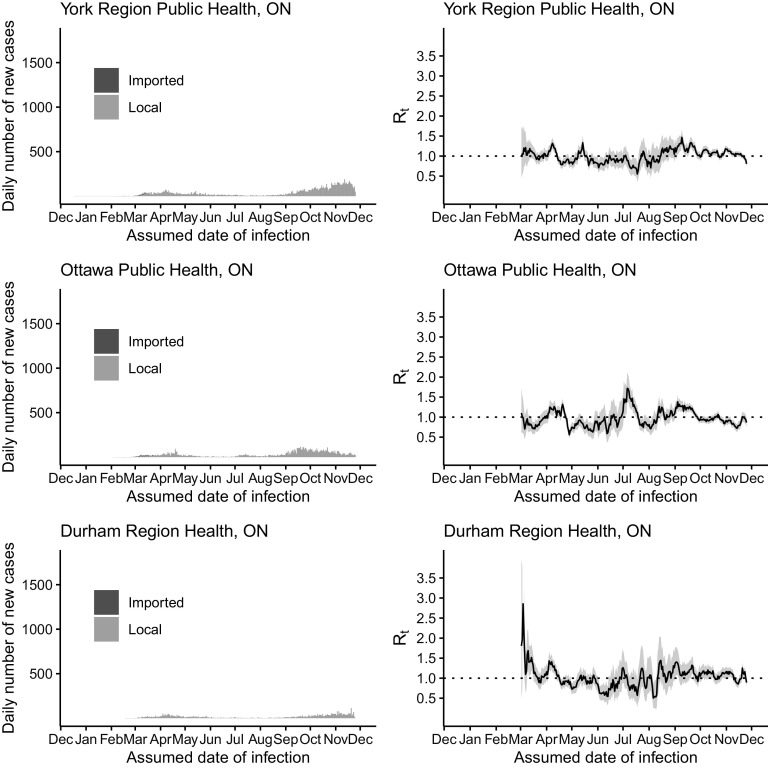
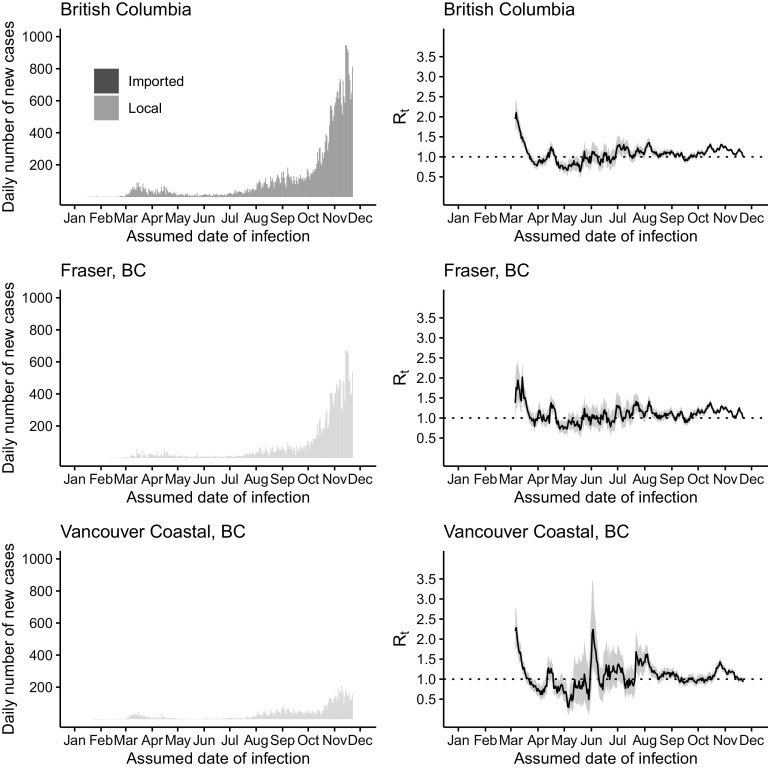
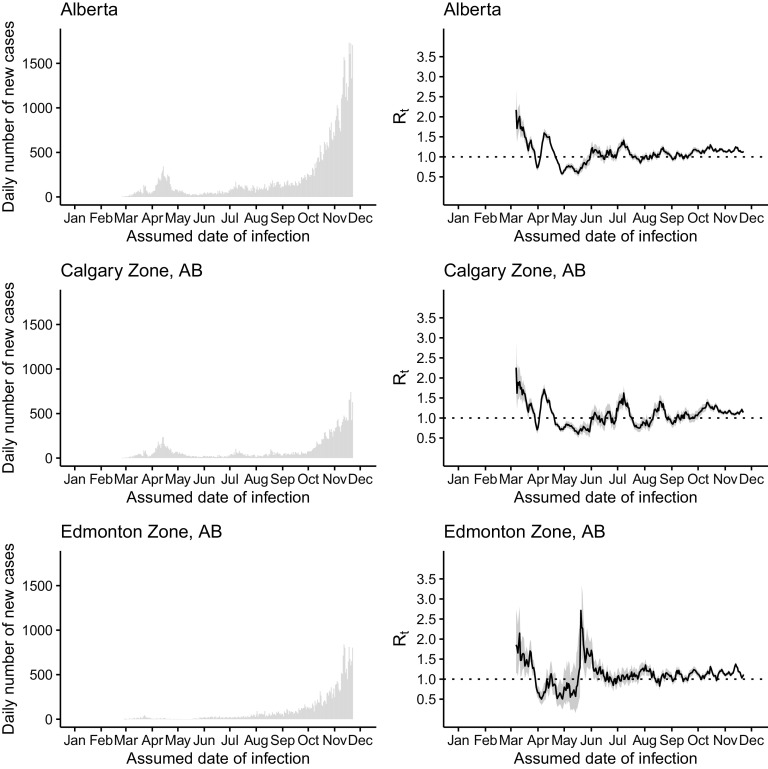
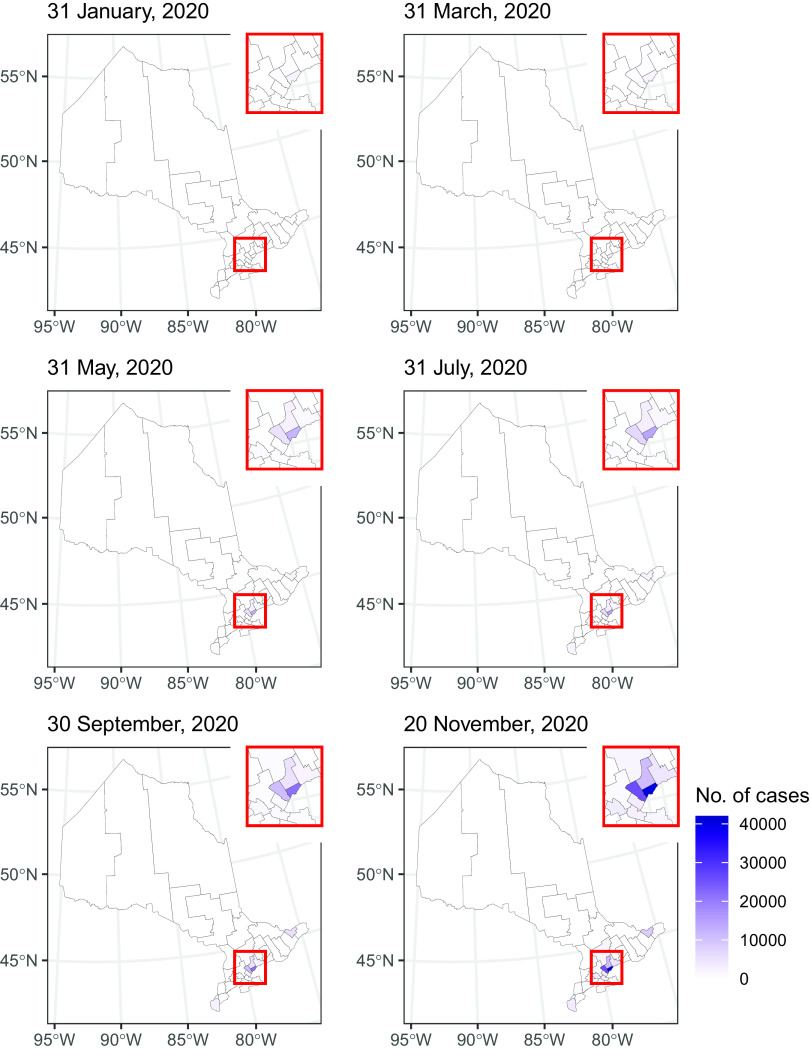
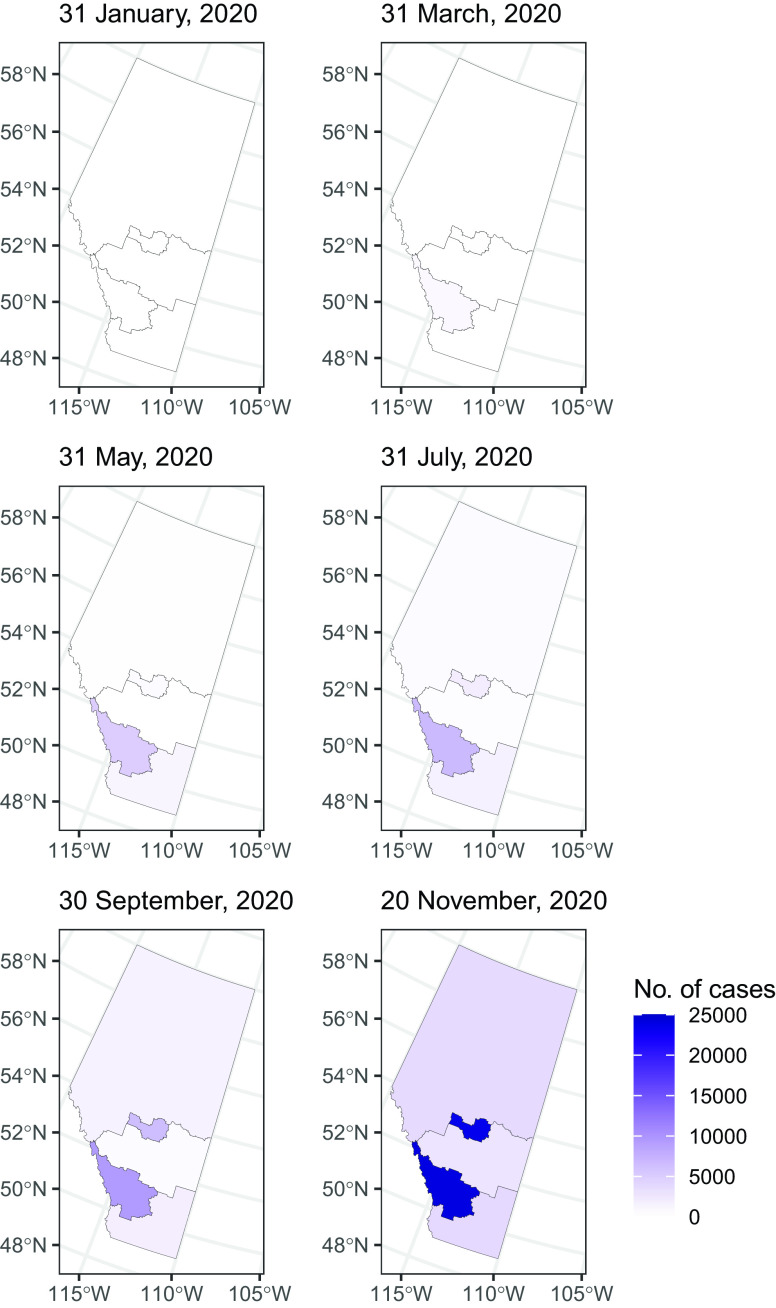
In Ontario, 76% (92 745/121 745) of cases were in Toronto, Peel, York, Ottawa, and Durham; in Alberta, 82% (49 878/61 169) in Calgary and Edmonton; in British Columbia, 90% (31 142/34 699) in Fraser and Vancouver Coastal. Across 3 provinces, Rt dropped to ≤ 1 after April. In Ontario, Rt would remain < 1 in April if congregate-setting-associated cases were excluded. Over summer, Rt maintained < 1 in Ontario, ~1 in British Columbia, and ~1 in Alberta, except early July when Rt was > 1. In all 3 provinces, Rt was > 1, reflecting surges in case count from September through November. Compared with British Columbia (684.2 cases per 100 000), Alberta (IRR = 2.0; 1399.3 cases per 100 000) and Ontario (IRR = 1.2; 835.8 cases per 100 000) had a higher cumulative case count per 100 000 population.
Alberta and Ontario had a higher incidence rate than British Columbia, but Rt trajectories were similar across all 3 provinces.
本研究旨在调查加拿大艾伯塔省、不列颠哥伦比亚省和安大略省的冠状病毒病(COVID-19)流行病学情况。
利用截至2020年12月1日的数据,我们使用R语言中的EpiEstim软件包估计随时间变化的繁殖数Rt,并计算三省的发病率比(IRR)。
在安大略省,76%(92745/121745)的病例位于多伦多、皮尔、约克、渥太华和达勒姆;在艾伯塔省,82%(49878/61169)位于卡尔加里和埃德蒙顿;在不列颠哥伦比亚省,90%(31142/34699)位于弗雷泽和温哥华沿海地区。在三省中,4月之后Rt降至≤1。在安大略省,如果排除聚集场所相关病例,4月时Rt将保持<1。整个夏季,安大略省的Rt保持<1,不列颠哥伦比亚省约为1,艾伯塔省约为1,但7月初Rt>1。在所有三省中,9月至11月Rt>1,反映出病例数激增。与不列颠哥伦比亚省(每10万人684.2例)相比,艾伯塔省(IRR = 2.0;每10万人1399.3例)和安大略省(IRR = 1.2;每10万人835.8例)每10万人口的累计病例数更高。
艾伯塔省和安大略省的发病率高于不列颠哥伦比亚省,但三省的Rt轨迹相似。