Zhang Yuyao, Shi Leiyu, Chen Haiqian, Wang Xiaohan, Sun Gang
Department of Health Management, School of Health Management, Southern Medical University, Guangzhou, Guangdong, 510515, P. R. China.
Department of Health Policy and Management, Bloomberg School of Public Health, Johns Hopkins University, Baltimore, MD, 21205, USA.
Int J Equity Health. 2021 Mar 25;20(1):86. doi: 10.1186/s12939-021-01424-3.
Our research summarized policy disparities in response to the first wave of COVID-19 between China and Germany. We look forward to providing policy experience for other countries still in severe epidemics.
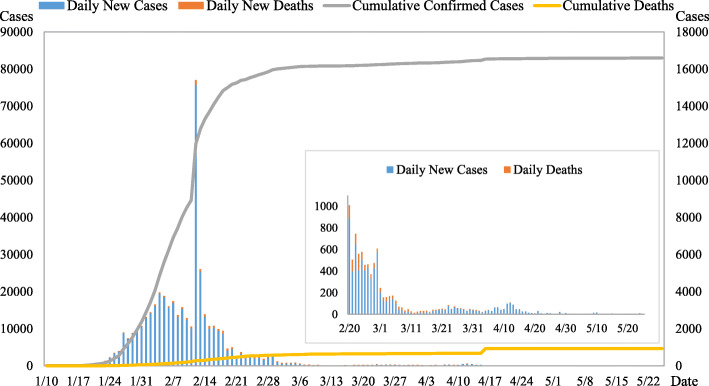
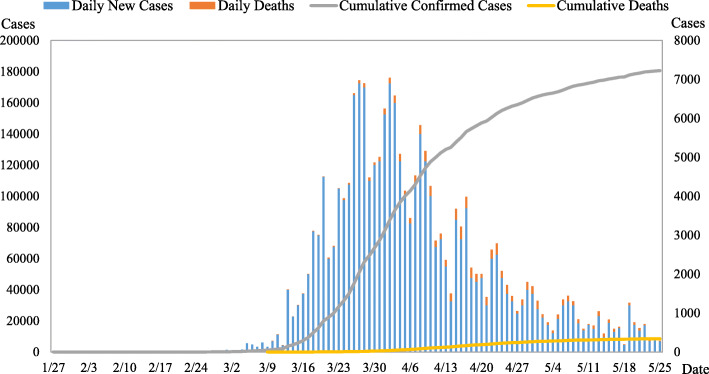
We analyzed data provided by National Health Commission of the People's Republic of China and Johns Hopkins University Coronavirus Resource Center for the period 10 January 2020 to 25 May 252,020. We used generalized linear model to evaluate the associations between the main control policies and the number of confirmed cases and the policy disparities in response to the first wave of COVID-19 between China and Germany.
The generalized linear models show that the following factors influence the cumulative number of confirmed cases in China: the Joint Prevention and Control Mechanism; locking down the worst-hit areas; the highest level response to public health emergencies; the expansion of medical insurance coverage to suspected patients; makeshift hospitals; residential closed management; counterpart assistance. The following factors influence the cumulative number of confirmed cases in Germany: the Novel Coronavirus Crisis Command; large gathering cancelled; real-time COVID-19 risk assessment; the medical emergency plan; schools closure; restrictions on the import of overseas epidemics; the no-contact protocol.
There are two differences between China and Germany in non-pharmaceutical interventions: China adopted the blocking strategy, and Germany adopted the first mitigation and then blocking strategy; China's goal is to eliminate the virus, and Germany's goal is to protect high-risk groups to reduce losses. At the same time, the policies implemented by the two countries have similarities: strict blockade is a key measure to control the source of infection, and improving medical response capabilities is an important way to reduce mortality.
本研究总结了中国和德国在应对第一波新冠疫情时的政策差异。期望为仍处于严重疫情中的其他国家提供政策经验。
我们分析了中华人民共和国国家卫生健康委员会和约翰·霍普金斯大学冠状病毒资源中心提供的2020年1月10日至2020年5月25日期间的数据。我们使用广义线性模型评估主要防控政策与确诊病例数之间的关联,以及中国和德国在应对第一波新冠疫情时的政策差异。
广义线性模型显示,以下因素影响中国的确诊病例累计数:联防联控机制;封锁重灾区;对突发公共卫生事件的最高级别响应;将医疗保险覆盖范围扩大至疑似患者;方舱医院;小区封闭管理;对口支援。以下因素影响德国的确诊病例累计数:新型冠状病毒危机指挥部;取消大型集会;实时新冠风险评估;医疗应急预案;学校停课;限制境外疫情输入;无接触协议。
中国和德国在非药物干预方面存在两点差异:中国采取阻断策略,德国采取先缓解后阻断策略;中国的目标是消灭病毒,德国的目标是保护高危人群以减少损失。同时,两国实施的政策也有相似之处:严格封锁是控制传染源的关键措施,提高医疗应对能力是降低死亡率的重要途径。