Sun Tianjie, Ma Nan, Wang Caiqing, Fan Huifen, Wang Mengxuan, Zhang Jie, Cao Jinfeng, Wang Dongmei
State Key Laboratory of North China Crop Improvement and Regulation, Baoding, China.
Key Laboratory of Hebei Province for Plant Physiology and Molecular Pathology, Baoding, China.
Front Plant Sci. 2021 Mar 9;12:638340. doi: 10.3389/fpls.2021.638340. eCollection 2021.
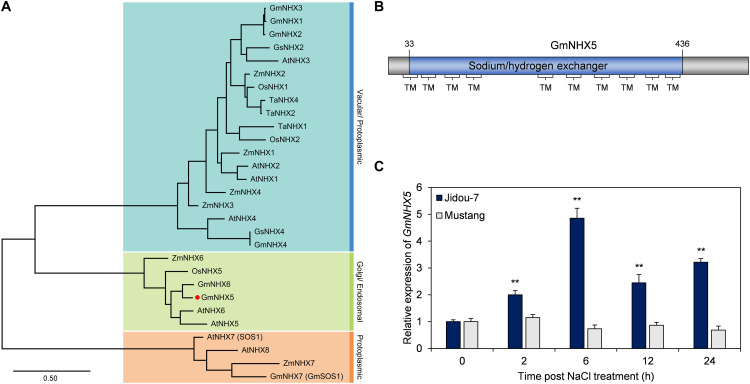
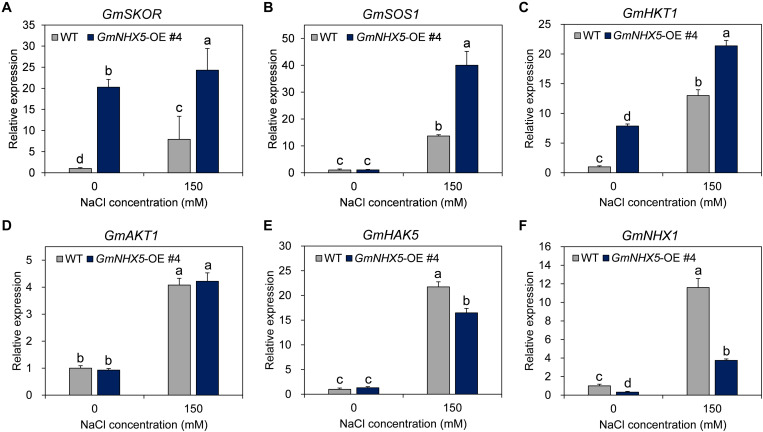
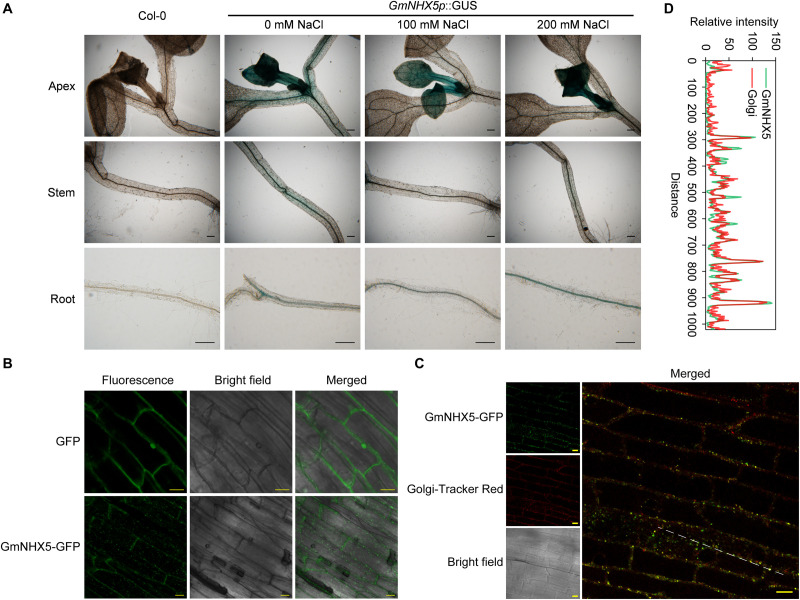
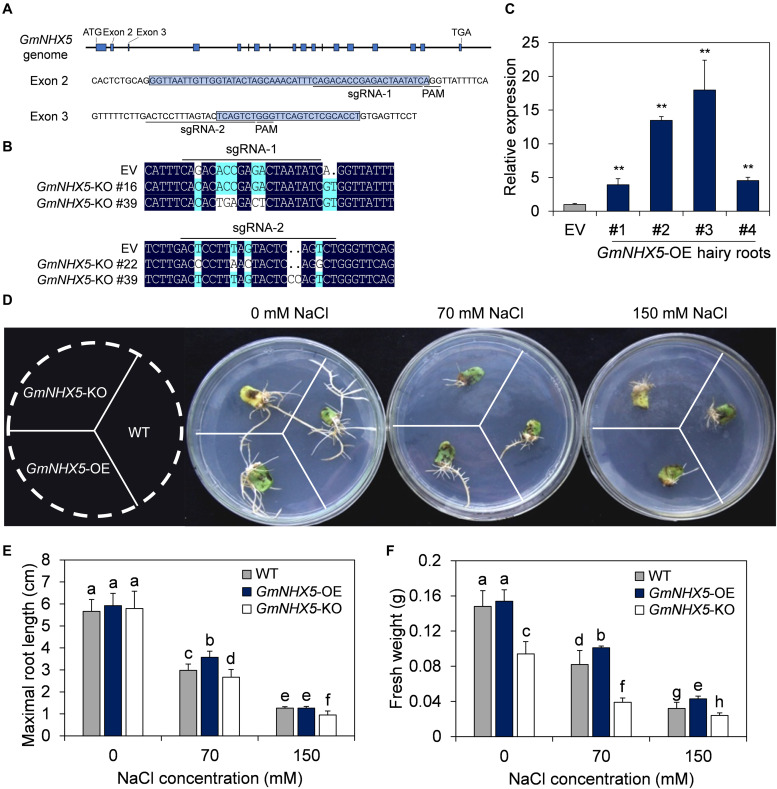
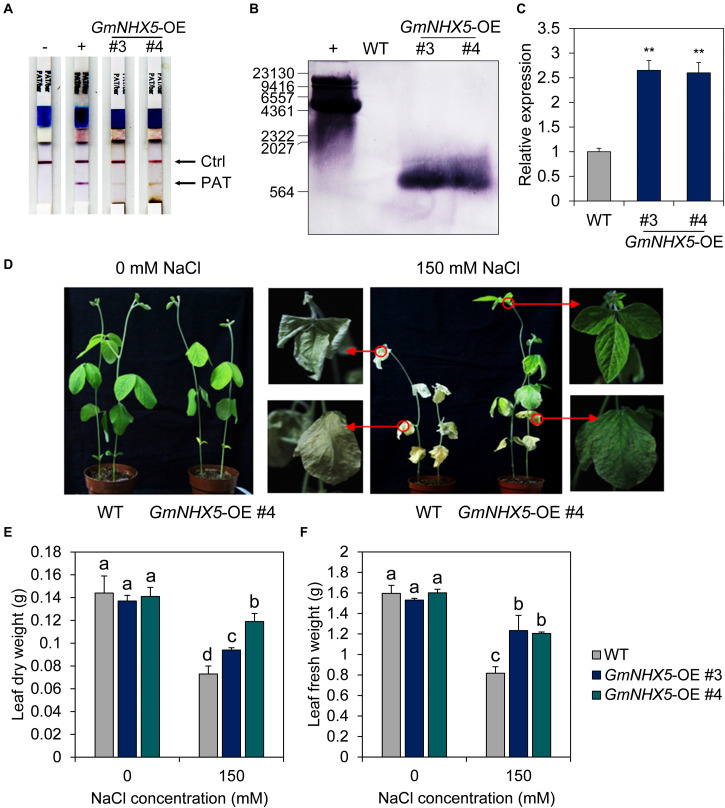
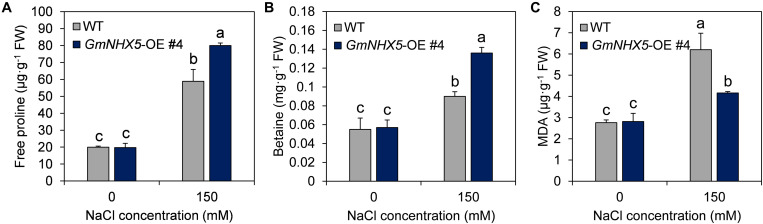
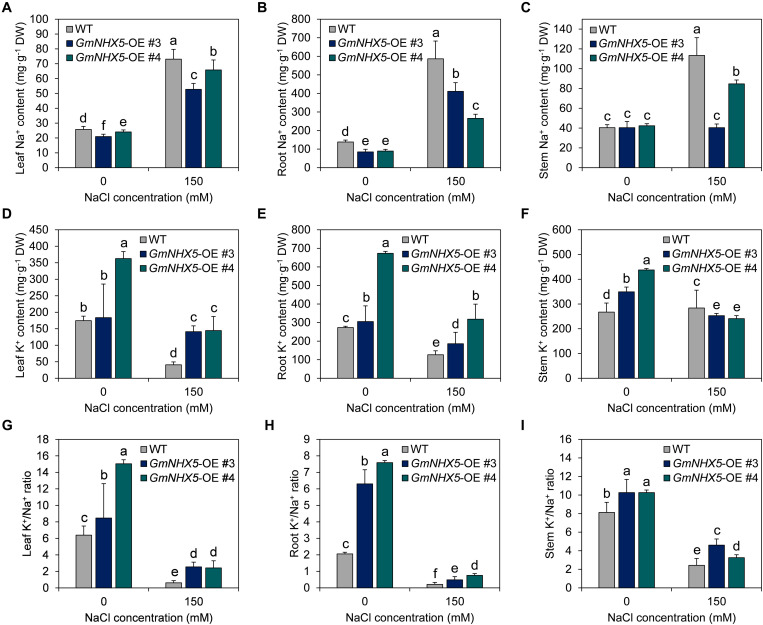
Salt stress caused by soil salinization, is one of the main factors that reduce soybean yield and quality. A large number of genes have been found to be involved in the regulation of salt tolerance. In this study, we characterized a soybean sodium/hydrogen exchanger gene and revealed its functional mechanism involved in the salt tolerance process in soybean. responded to salt stress at the transcription level in the salt stress-tolerant soybean plants, but not significantly changed in the salt-sensitive ones. GmNHX5 was located in the Golgi apparatus, and distributed in new leaves and vascular, and was induced by salt treatment. Overexpression of improved the salt tolerance of hairy roots induced by soybean cotyledons, while the opposite was observed when was knockout by CRISPR/Cas9. Soybean seedlings overexpressing also showed an increased expression of , , and , higher K/Na ratio, and higher viability when exposed to salt stress. Our findings provide an effective candidate gene for the cultivation of salt-tolerant germplasm resources and new clues for further understanding of the salt-tolerance mechanism in plants.
土壤盐渍化引起的盐胁迫是降低大豆产量和品质的主要因素之一。已发现大量基因参与耐盐性调控。在本研究中,我们对一个大豆钠/氢交换器基因进行了表征,并揭示了其参与大豆耐盐过程的功能机制。在耐盐大豆植株中,该基因在转录水平上对盐胁迫有响应,但在盐敏感植株中变化不显著。GmNHX5定位于高尔基体,分布于新叶和维管束中,并受盐处理诱导。该基因的过表达提高了大豆子叶诱导的毛状根的耐盐性,而通过CRISPR/Cas9敲除该基因时则出现相反情况。过表达该基因的大豆幼苗在盐胁迫下还表现出、和的表达增加、更高的K/Na比以及更高的活力。我们的研究结果为耐盐种质资源的培育提供了一个有效的候选基因,并为进一步了解植物耐盐机制提供了新线索。