Sarfraz Muddassar, Mohsin Muhammad, Naseem Sobia, Kumar Amit
College of International Students, Wuxi University, Wuxi, 214105 Jiangsu China.
School of Business, Hunan University of Humanities, Science and Technology, Loudi, Hunan China.
Environ Dev Sustain. 2021;23(11):16208-16226. doi: 10.1007/s10668-021-01324-0. Epub 2021 Mar 24.
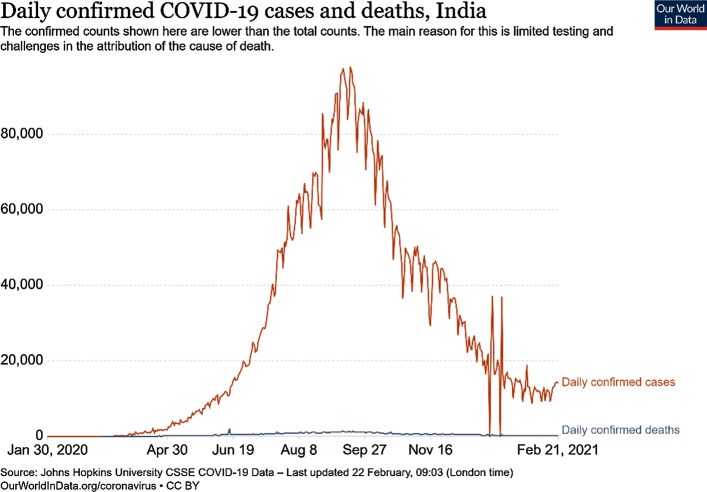
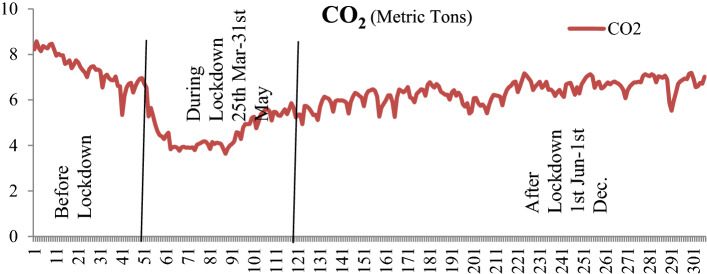
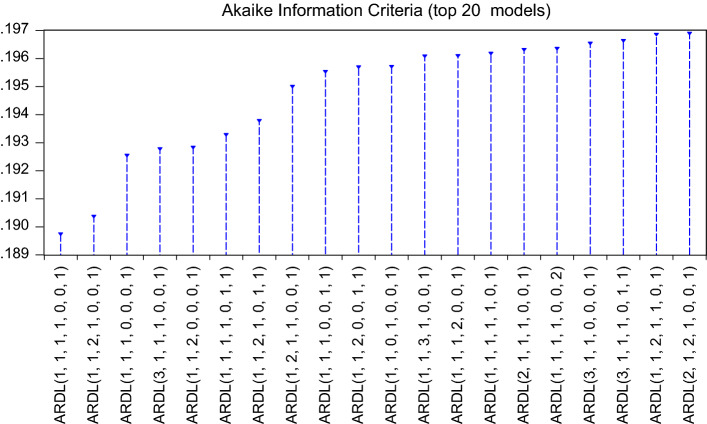
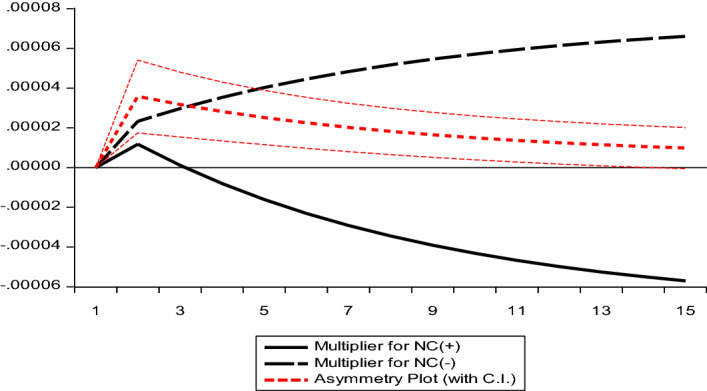
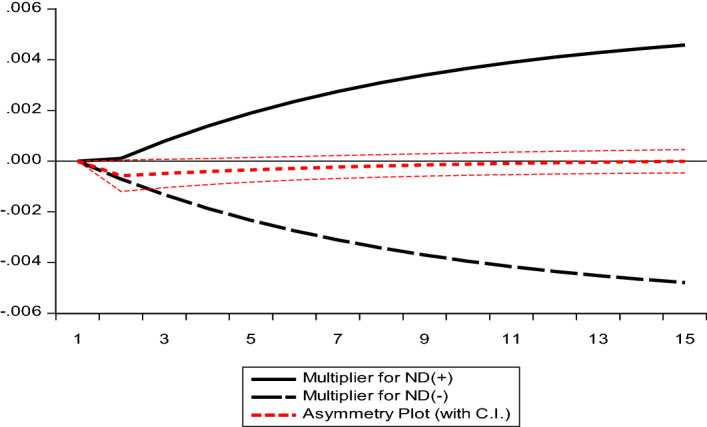
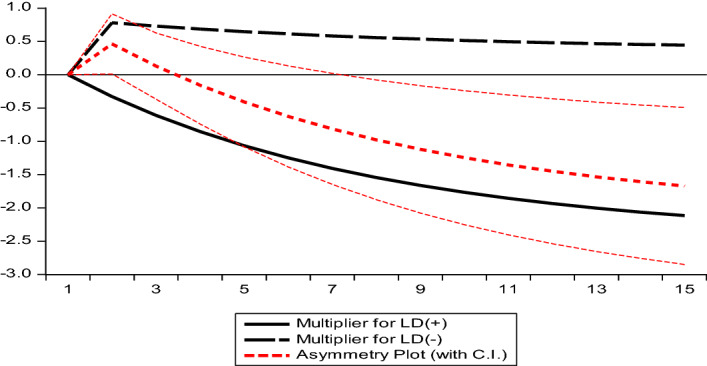
The study aims to examine the CO emissions by considering the implication of COVID-19 under strict lockdown in India. The nonlinear (asymmetric) relationship is investigated between CO emission and COVID-19 with its specific determinants. The positive and negative asymmetries of COVID-19 determinants are also captured by using econometric techniques. The daily data series of CO emission, new confirmed cases, confirmed deaths, and lockdown as dummy variables from January 30, 2020, to December 1, 2020, for India is analyzed by employing the nonlinear autoregressive distributed lag model. This research revealed a significant nonlinear relationship between CO emission and COVID-19. The bound test and asymmetric coefficients are confirmed by the variables' long- and short-run relationships. The dynamic multiplier graphs present that India's strict lockdown due to the rapid increase in COVID-19 patients significantly reduces toxic gas emissions, especially CO emissions. This asymmetric relationship has been proficiently declared that unhealthy public routine, extra traffic, and unhygienic gases released in the air become the reason for environmental destruction. The lockdown is practically imposed for specific periods and reasons, contributing to reducing toxic emissions, but it is not a permanent solution for environmental sustainability. The government of India, policymakers, and environmentalists should make people aware of unhealthy and environmentally envying activities and policies and long-term applicable strategies should be designed to upgrade the environment's quality.
该研究旨在通过考虑印度严格封锁措施下新冠疫情的影响来检验一氧化碳排放量。研究了一氧化碳排放与新冠疫情及其特定决定因素之间的非线性(非对称)关系。还运用计量经济学技术捕捉了新冠疫情决定因素的正负非对称性。采用非线性自回归分布滞后模型,对印度2020年1月30日至2020年12月1日期间一氧化碳排放、新增确诊病例、确诊死亡病例以及作为虚拟变量的封锁措施的每日数据序列进行了分析。这项研究揭示了一氧化碳排放与新冠疫情之间存在显著的非线性关系。通过变量的长期和短期关系证实了边界检验和非对称系数。动态乘数图表明,由于新冠疫情患者数量迅速增加,印度实施的严格封锁显著减少了有毒气体排放,尤其是一氧化碳排放。这种非对称关系已充分表明,不健康的公共日常行为、额外的交通流量以及空气中释放的不卫生气体成为了环境破坏的原因。封锁措施实际上是在特定时期出于特定原因实施的,有助于减少有毒排放,但它并非环境可持续性的永久解决方案。印度政府、政策制定者和环保人士应让人们意识到不健康和对环境有害的活动及政策,并且应制定长期适用的策略来提升环境质量。