Université Paris-Saclay, Commissariat à l'Énergie Atomiques et aux Énergies Alternatives, Centre National de la Recherche Scientifique (CEA, CNRS), Institute for Integrative Biology of the Cell (I2BC), 91198 Gif sur Yvette, France.
Key Laboratory of Algal Biology, Institute of Hydrobiology, Chinese Academy of Sciences, Wuhan 430072, China.
Plant Cell. 2021 Apr 17;33(2):358-380. doi: 10.1093/plcell/koaa030.
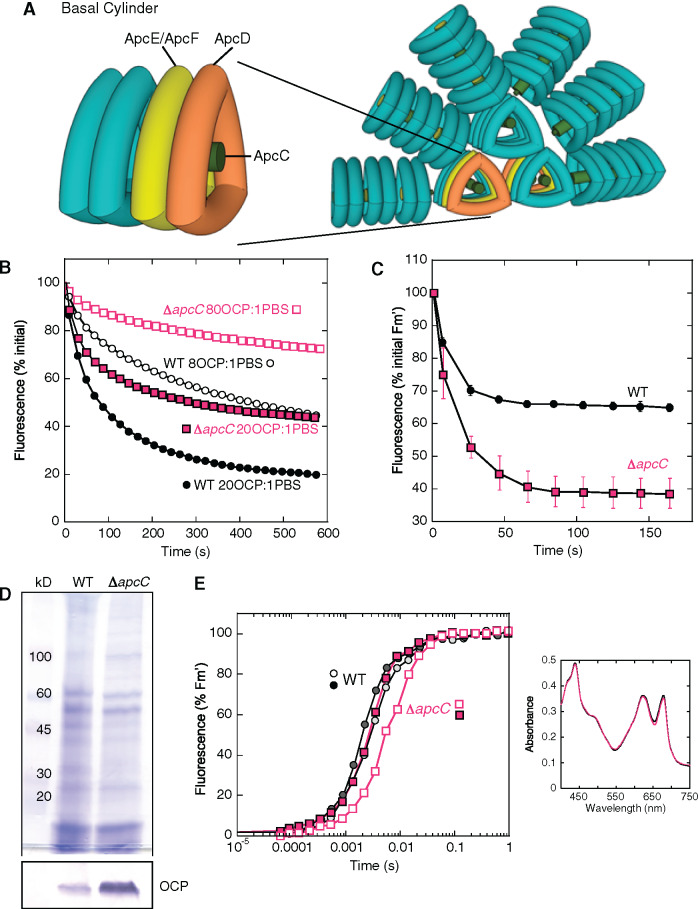
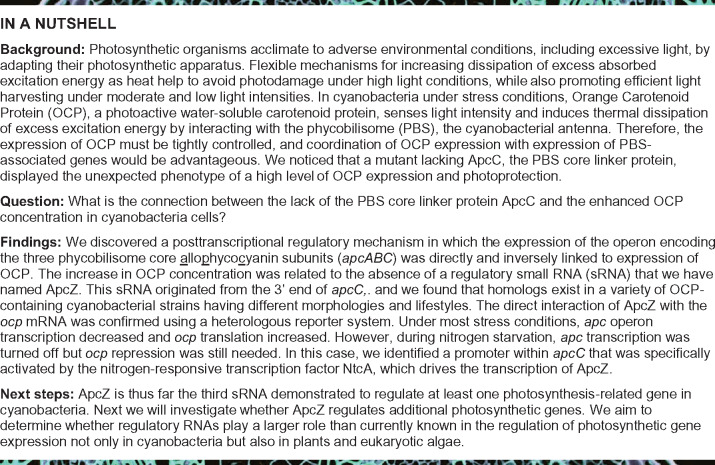
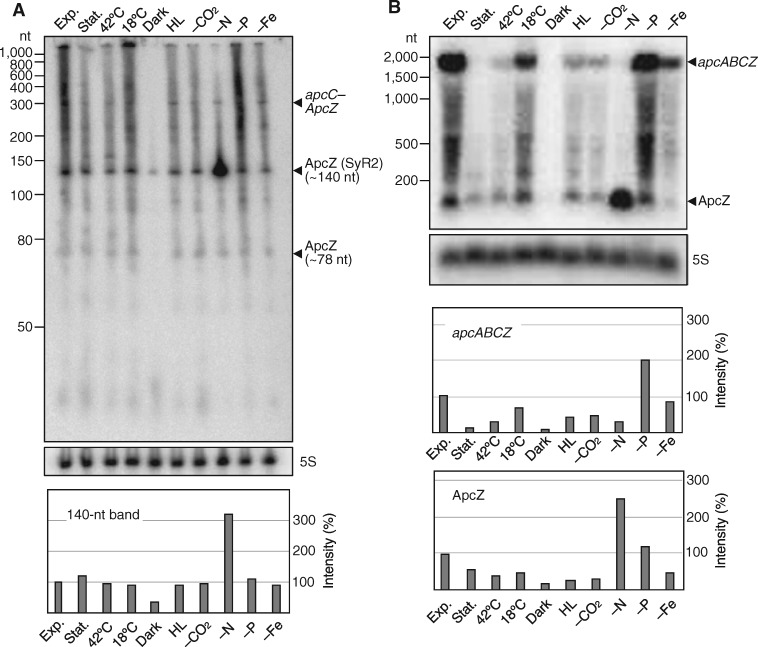
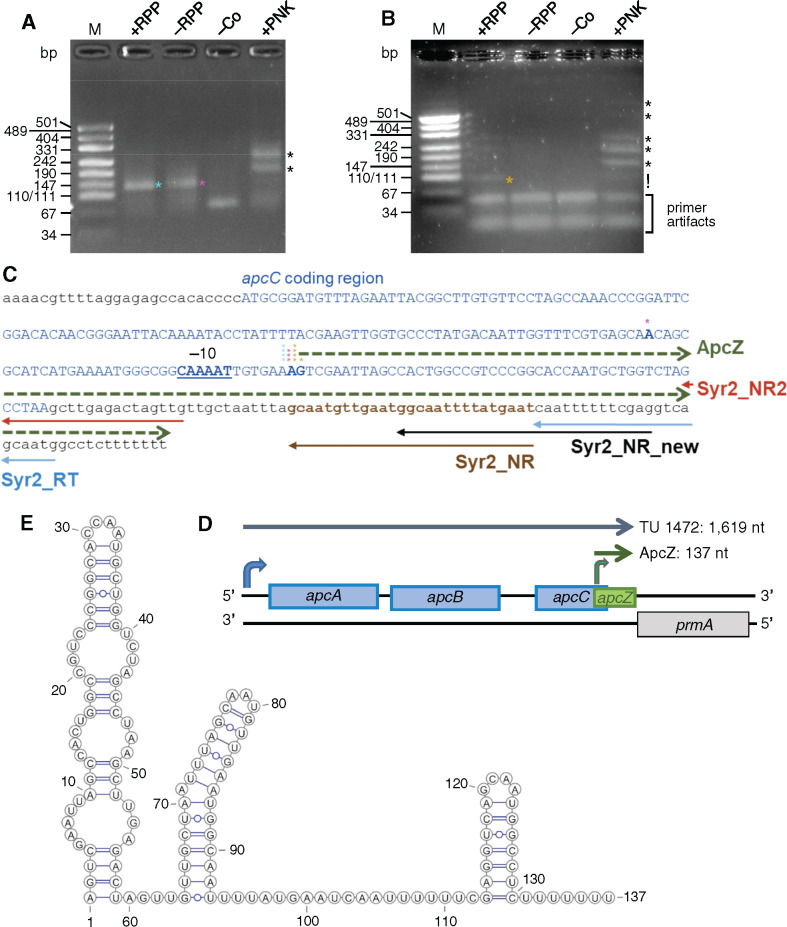
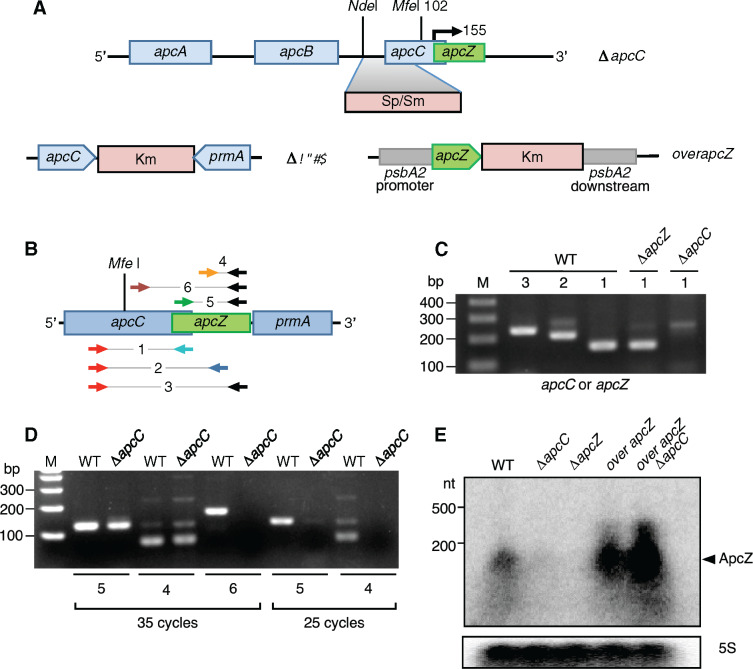
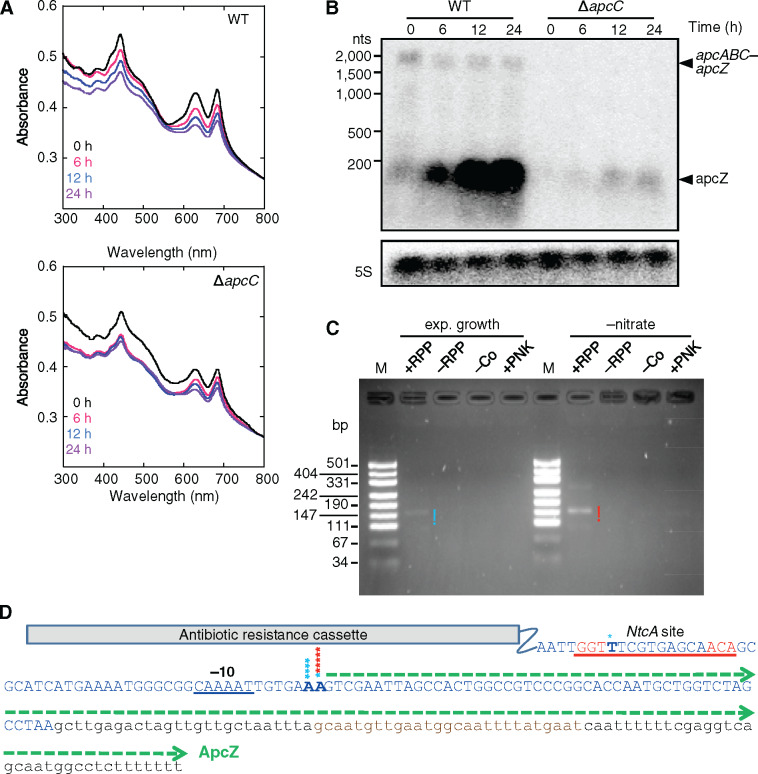
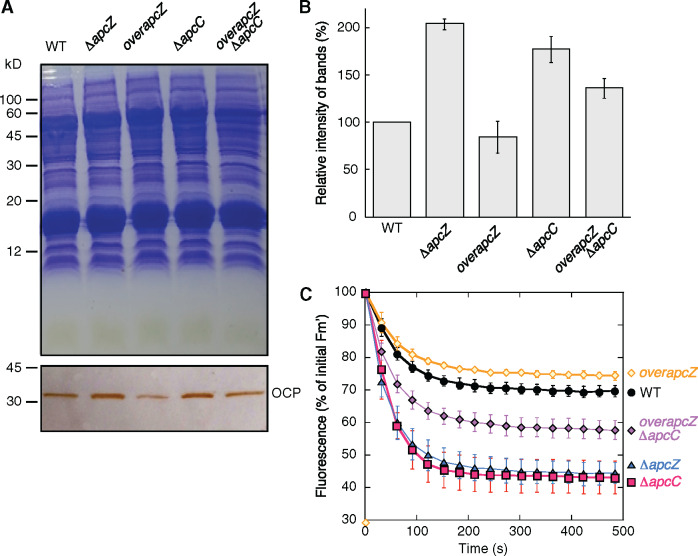
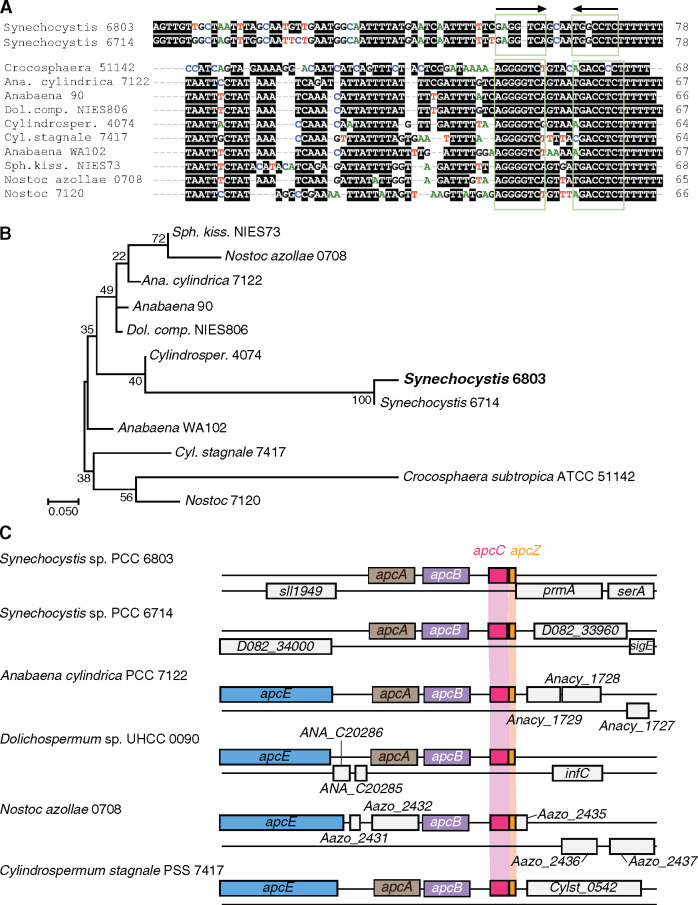
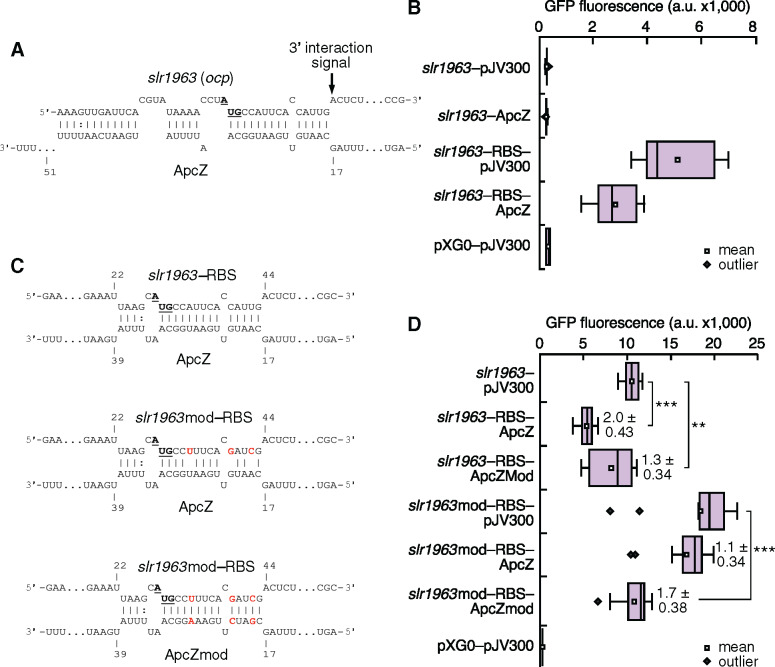
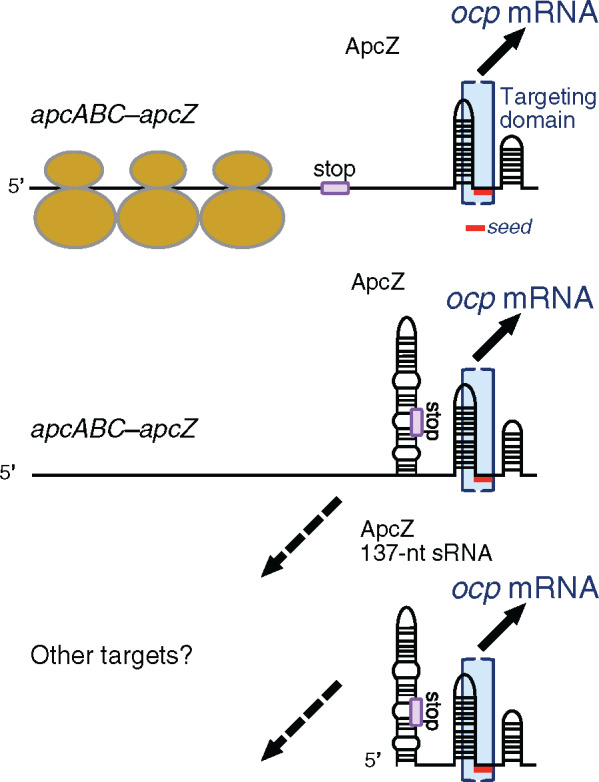
Phycobilisomes (PBSs), the principal cyanobacterial antenna, are among the most efficient macromolecular structures in nature, and are used for both light harvesting and directed energy transfer to the photosynthetic reaction center. However, under unfavorable conditions, excess excitation energy needs to be rapidly dissipated to avoid photodamage. The orange carotenoid protein (OCP) senses light intensity and induces thermal energy dissipation under stress conditions. Hence, its expression must be tightly controlled; however, the molecular mechanism of this regulation remains to be elucidated. Here, we describe the discovery of a posttranscriptional regulatory mechanism in Synechocystis sp. PCC 6803 in which the expression of the operon encoding the allophycocyanin subunits of the PBS is directly and in an inverse fashion linked to the expression of OCP. This regulation is mediated by ApcZ, a small regulatory RNA that is derived from the 3'-end of the tetracistronic apcABC-apcZ operon. ApcZ inhibits ocp translation under stress-free conditions. Under most stress conditions, apc operon transcription decreases and ocp translation increases. Thus, a key operon involved in the collection of light energy is functionally connected to the expression of a protein involved in energy dissipation. Our findings support the view that regulatory RNA networks in bacteria evolve through the functionalization of mRNA 3'-UTRs.
藻胆体(PBS)是原核生物的主要天线,是自然界中效率最高的大分子结构之一,用于收集光能并将能量定向传递到光合作用反应中心。然而,在不利条件下,过量的激发能需要迅速耗散,以避免光损伤。橙黄色类胡萝卜素蛋白(OCP)感知光强,并在应激条件下诱导热能耗散。因此,其表达必须受到严格控制;然而,这种调控的分子机制仍有待阐明。在这里,我们描述了 Synechocystis sp. PCC 6803 中转录后调控机制的发现,该机制中 PBS 的藻蓝蛋白亚基的操纵子表达与 OCP 的表达直接且以相反的方式相关联。这种调节是由 ApcZ 介导的,ApcZ 是一种小的调节 RNA,来源于 tetracistronic apcABC-apcZ 操纵子的 3'-端。在无应激条件下,ApcZ 抑制 ocp 翻译。在大多数应激条件下,apc 操纵子转录减少,ocp 翻译增加。因此,一个关键的参与收集光能的操纵子与一个参与能量耗散的蛋白质的表达在功能上相关联。我们的发现支持这样一种观点,即细菌中的调节 RNA 网络是通过 mRNA 3'-UTR 的功能化进化而来的。