IRMB, University of Montpellier, INSERM, CHU Montpellier, Montpellier, France.
Clinical Immunology and Osteoarticular Diseases Therapeutic Unit, Department of Rheumatology, Lapeyronie University Hospital, Montpellier, France.
Front Immunol. 2021 Mar 16;12:623973. doi: 10.3389/fimmu.2021.623973. eCollection 2021.
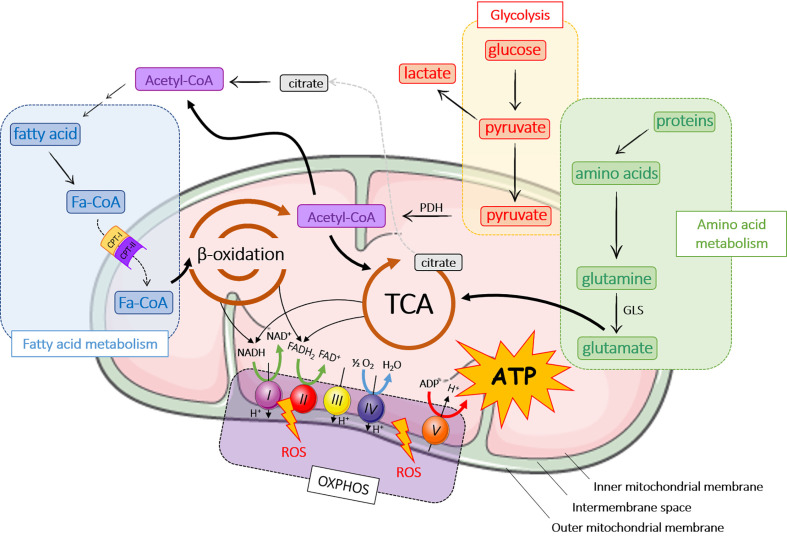
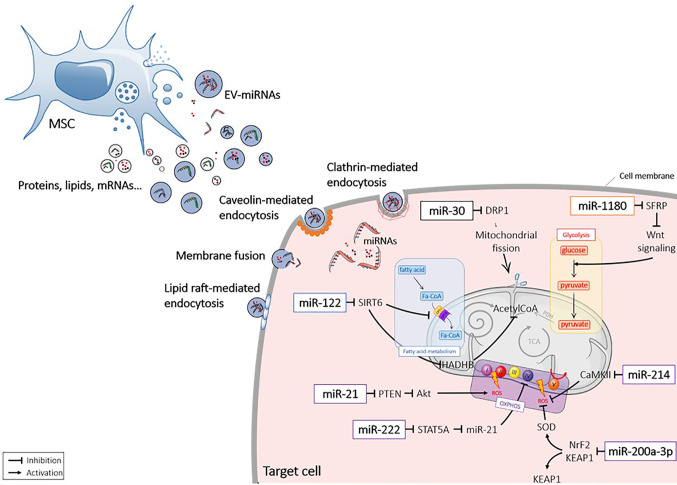
Mesenchymal stromal cells (MSCs) are the most commonly tested adult progenitor cells in regenerative medicine. They stimulate tissue repair primarily through the secretion of immune-regulatory and pro-regenerative factors. There is increasing evidence that most of these factors are carried on extracellular vesicles (EVs) that are released by MSCs, either spontaneously or after activation. Exosomes and microvesicles are the most investigated types of EVs that act through uptake by target cells and cargo release inside the cytoplasm or through interactions with receptors expressed on target cells to stimulate downstream intracellular pathways. They convey different types of molecules, including proteins, lipids and acid nucleics among which, miRNAs are the most widely studied. The cargo of EVs can be impacted by the culture or environmental conditions that MSCs encounter and by changes in the energy metabolism that regulate the functional properties of MSCs. On the other hand, MSC-derived EVs are also reported to impact the metabolism of target cells. In the present review, we discuss the role of MSC-EVs in the regulation of the energy metabolism and oxidative stress of target cells and tissues with a focus on the role of miRNAs.
间充质基质细胞(MSCs)是再生医学中最常被测试的成体祖细胞。它们主要通过分泌免疫调节和促再生因子来刺激组织修复。越来越多的证据表明,这些因子中的大多数是由 MSC 释放的细胞外囊泡(EVs)携带的,这些 EVs 要么是自发释放的,要么是在激活后释放的。外泌体和微泡是研究最多的两种 EVs,它们通过被靶细胞摄取以及在细胞质内释放货物,或者通过与靶细胞表面表达的受体相互作用来刺激下游细胞内途径发挥作用。它们传递不同类型的分子,包括蛋白质、脂质和核酸,其中 miRNA 是研究最广泛的。EVs 的货物可以受到 MSC 所遇到的培养或环境条件的影响,以及调节 MSC 功能特性的能量代谢变化的影响。另一方面,也有报道称 MSC 衍生的 EVs 会影响靶细胞的代谢。在本综述中,我们讨论了 MSC-EVs 在调节靶细胞和组织的能量代谢和氧化应激中的作用,重点讨论了 miRNA 的作用。