Faculty of Biotechnology, University of Wroclaw, 51-148 Wroclaw, Poland.
Biomolecules. 2021 Mar 9;11(3):402. doi: 10.3390/biom11030402.
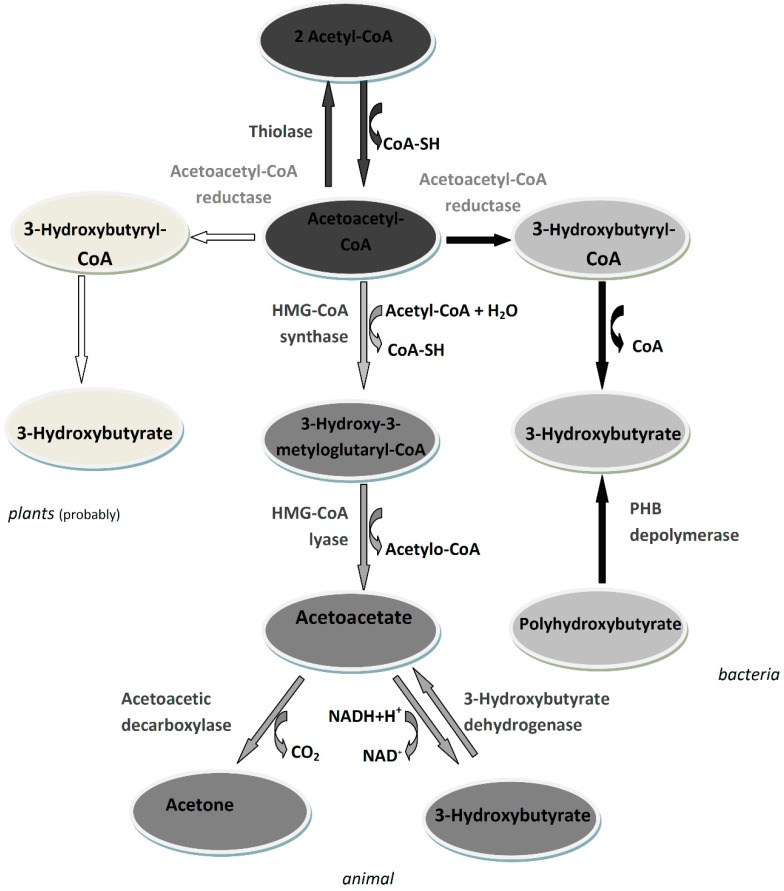
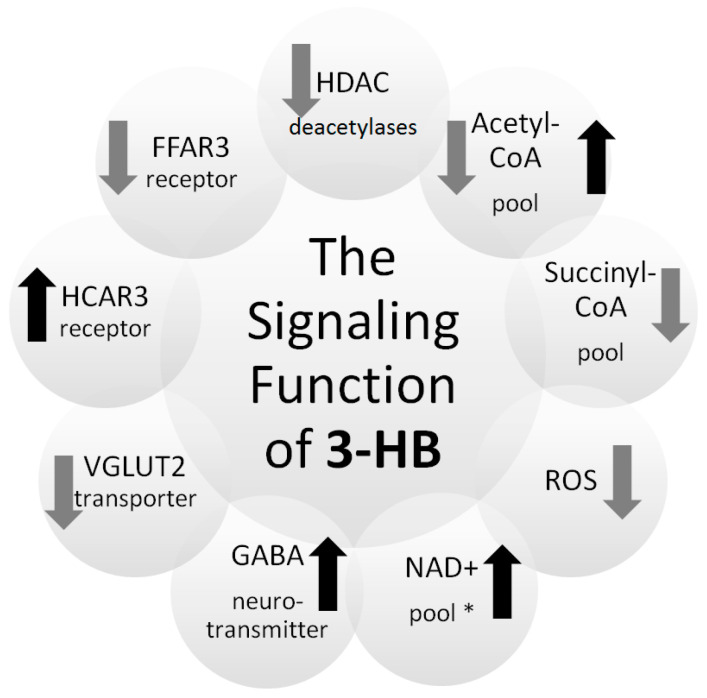
3-hydroxybutyrate (3-HB) as a very important metabolite occurs in animals, bacteria and plants. It is well known that in animals, 3-HB is formed as a product of the normal metabolism of fatty acid oxidation and can therefore be used as an energy source in the absence of sufficient blood glucose. In microorganisms, 3-HB mainly serves as a substrate for the synthesis of polyhydroxybutyrate, which is a reserve material. Recent studies show that in plants, 3-HB acts as a regulatory molecule that most likely influences the expression of genes involved in DNA methylation, thereby altering DNA methylation levels. Additionally, in animals, 3-HB is not only an intermediate metabolite, but also an important regulatory molecule that can influence gene expression, lipid metabolism, neuronal function, and overall metabolic rate. Some of these effects are the direct effects of 3-HB itself, while others are indirect effects, regulated by the metabolites into which 3-HB is converted. One of the most important regulatory functions of 3-HB is the inhibition of the activity of histone deacetylases and thus the epigenetic regulation of many genes. Due to the number of functions of this compound, it also shows promising therapeutic properties.
3-羟基丁酸(3-HB)作为一种非常重要的代谢物,存在于动物、细菌和植物中。众所周知,在动物中,3-HB 是脂肪酸氧化正常代谢的产物,可以在没有足够血糖的情况下用作能量来源。在微生物中,3-HB 主要作为合成聚羟基丁酸的底物,聚羟基丁酸是一种储备物质。最近的研究表明,在植物中,3-HB 作为一种调节分子,可能影响参与 DNA 甲基化的基因的表达,从而改变 DNA 甲基化水平。此外,在动物中,3-HB 不仅是一种中间代谢物,还是一种重要的调节分子,可以影响基因表达、脂质代谢、神经元功能和整体代谢率。这些影响中的一些是 3-HB 本身的直接影响,而另一些是间接影响,由 3-HB 转化而成的代谢物调节。3-HB 的最重要的调节功能之一是抑制组蛋白去乙酰化酶的活性,从而对许多基因进行表观遗传调控。由于该化合物具有多种功能,因此它也表现出有希望的治疗特性。