Argentati Chiara, Morena Francesco, Fontana Chiara, Tortorella Ilaria, Emiliani Carla, Latterini Loredana, Zampini Giulia, Martino Sabata
Department of Chemistry, Biology and Biotechnology, University of Perugia, Via del Giochetto, 06123 Perugia, Italy.
Department of Chemistry, Biology and Biotechnology, University of Perugia, Via Elce di Sotto 8, 06123 Perugia, Italy.
Nanomaterials (Basel). 2021 Mar 18;11(3):779. doi: 10.3390/nano11030779.
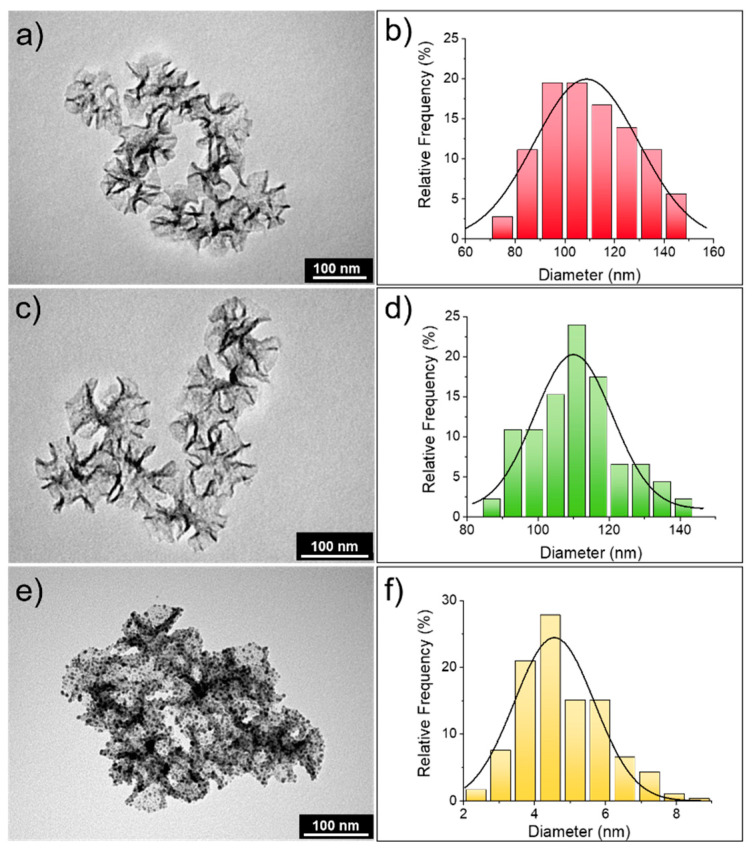
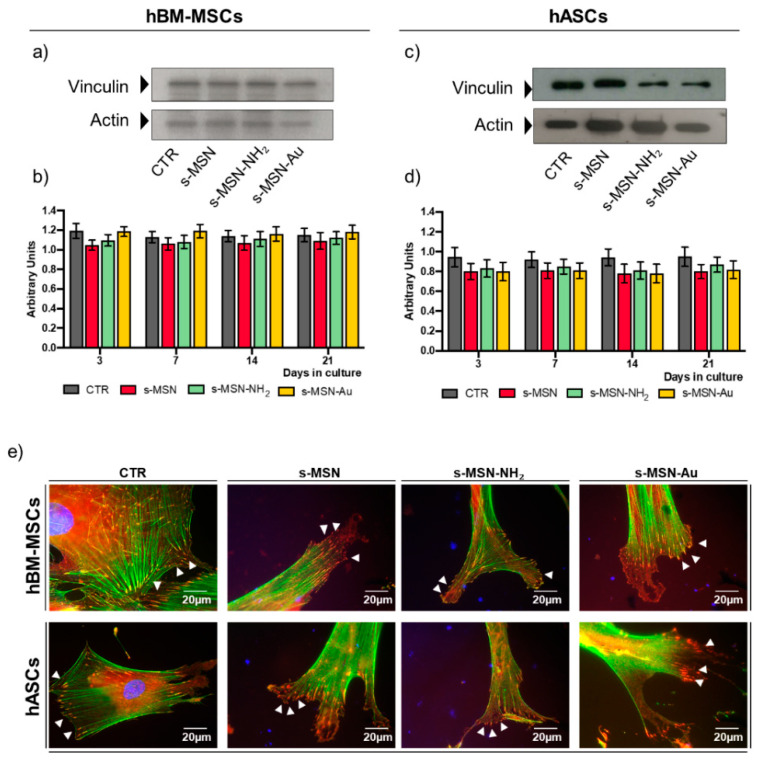
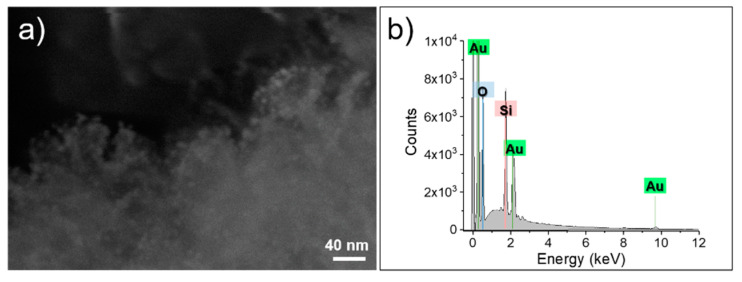
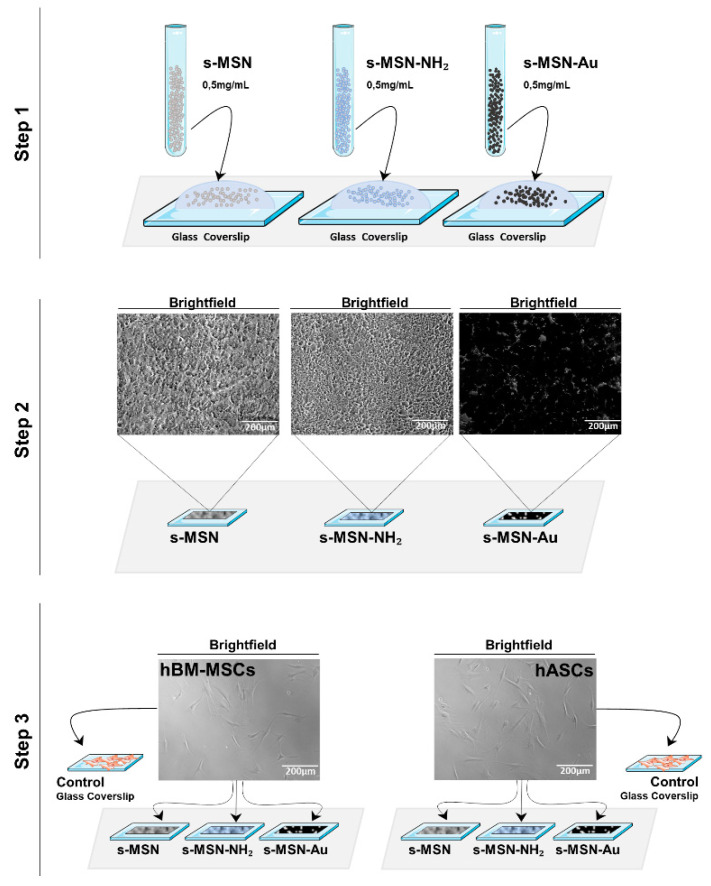
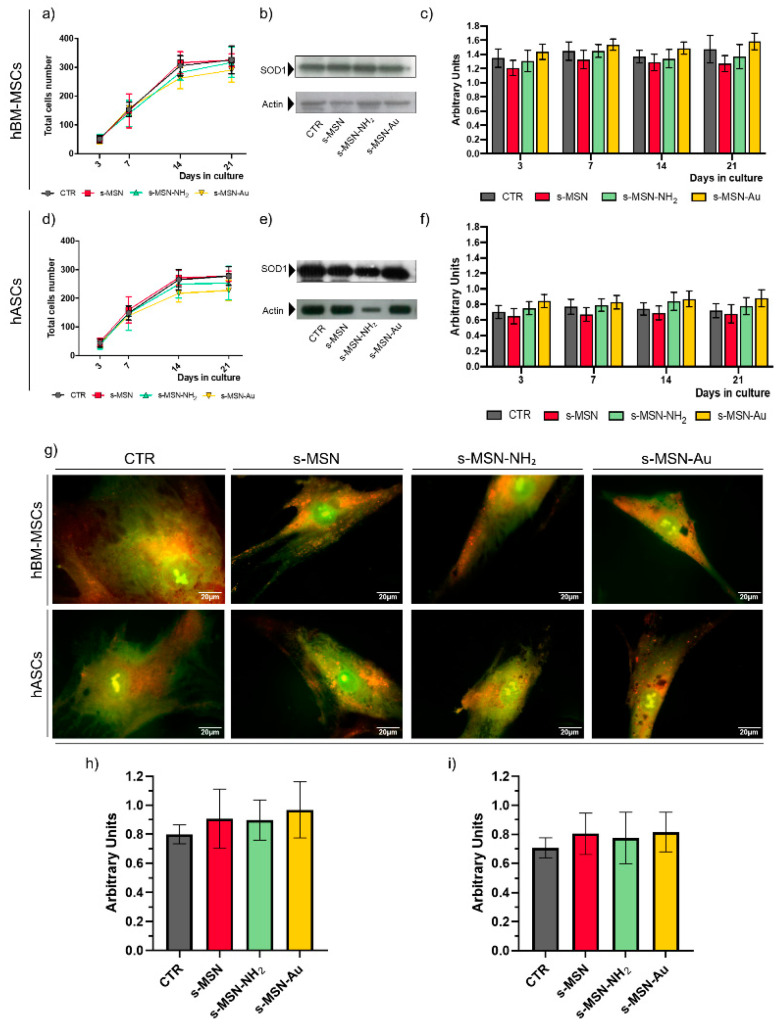
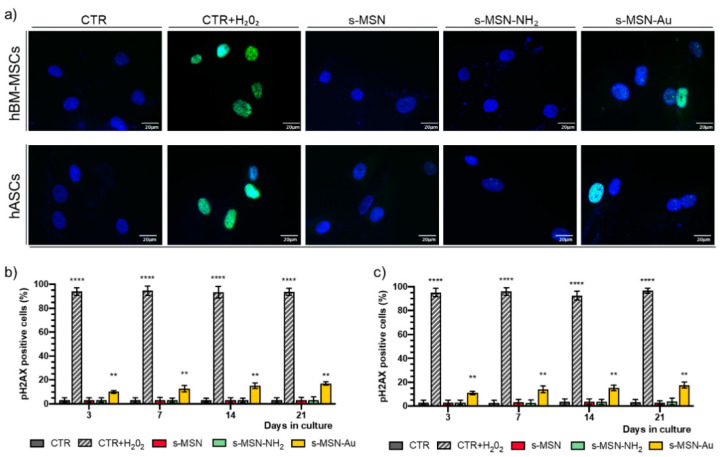
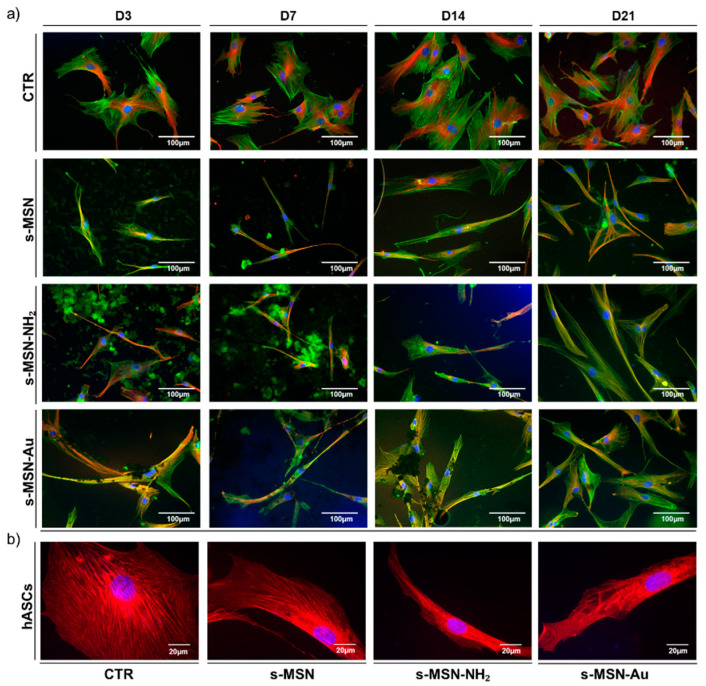
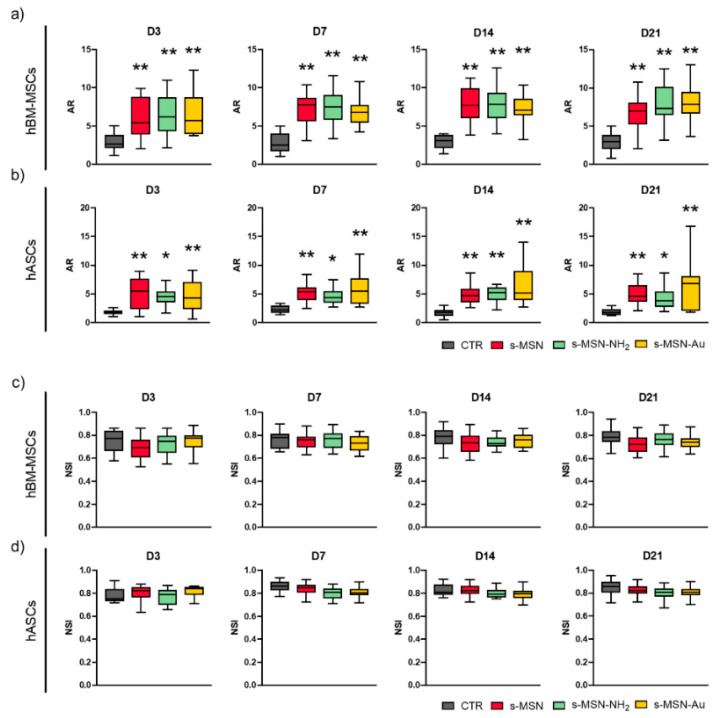
The biomedical translational applications of functionalized nanoparticles require comprehensive studies on their effect on human stem cells. Here, we have tested neat star-shaped mesoporous silica nanoparticles (s-MSN) and their chemically functionalized derivates; we examined nanoparticles (NPs) with similar dimensions but different surface chemistry, due to the amino groups grafted on silica nanoparticles (s-MSN-NH), and gold nanoseeds chemically adsorbed on silica nanoparticles (s-MSN-Au). The different samples were dropped on glass coverslips to obtain a homogeneous deposition differing only for NPs' chemical functionalization and suitable for long-term culture of human Bone Marrow-Mesenchymal stem cells (hBM-MSCs) and Adipose stem cells (hASCs). Our model allowed us to demonstrate that hBM-MSCs and hASCs have comparable growth curves, viability, and canonical Vinculin Focal adhesion spots on functionalized s-MSN-NH and s-MSN-Au as on neat s-MSN and control systems, but also to show morphological changes on all NP types compared to the control counterparts. The new shape was stem-cell-specific and was maintained on all types of NPs. Compared to the other NPs, s-MSN-Au exerted a small genotoxic effect on both stem cell types, which, however, did not affect the stem cell behavior, likely due to a peculiar stem cell metabolic restoration response.
功能化纳米颗粒的生物医学转化应用需要对其对人类干细胞的影响进行全面研究。在此,我们测试了纯净的星形介孔二氧化硅纳米颗粒(s-MSN)及其化学功能化衍生物;我们研究了尺寸相似但表面化学性质不同的纳米颗粒(NPs),这是由于氨基接枝在二氧化硅纳米颗粒上(s-MSN-NH),以及金纳米种子化学吸附在二氧化硅纳米颗粒上(s-MSN-Au)。将不同的样品滴在玻璃盖玻片上,以获得仅因纳米颗粒的化学功能化而不同的均匀沉积,且适合于人骨髓间充质干细胞(hBM-MSCs)和脂肪干细胞(hASCs)的长期培养。我们的模型使我们能够证明,hBM-MSCs和hASCs在功能化的s-MSN-NH和s-MSN-Au上具有与在纯净的s-MSN和对照系统上相当的生长曲线、活力和典型的纽蛋白粘着斑,但也显示出与对照相比,所有类型纳米颗粒上的形态变化。新形状是干细胞特异性的,并且在所有类型的纳米颗粒上都保持不变。与其他纳米颗粒相比,s-MSN-Au对两种干细胞类型都有较小的遗传毒性作用,然而,这并未影响干细胞的行为,可能是由于一种特殊的干细胞代谢恢复反应。