Borkowska Magdalena J, Jaguszewski Miłosz J, Koda Mariusz, Gasecka Aleksandra, Szarpak Agnieszka, Gilis-Malinowska Natasza, Safiejko Kamil, Szarpak Lukasz, Filipiak Krzysztof J, Smereka Jacek
Department of Research Outcomes, Maria Sklodowska-Curie Białystok Oncology Centre, 15-027 Białystok, Poland.
1st Department of Cardiology, Medical University of Gdansk, 80-952 Gdansk, Poland.
J Clin Med. 2021 Mar 15;10(6):1209. doi: 10.3390/jcm10061209.
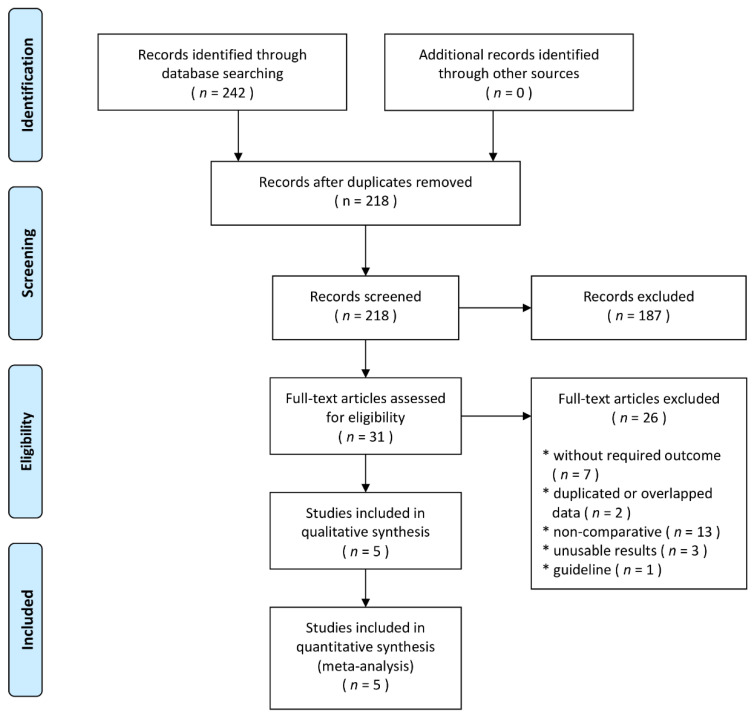
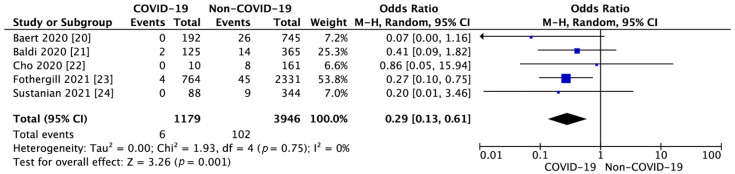
Out-of-hospital cardiac arrest (OHCA) is a challenge for medical staff, especially in the COVID-19 period. The COVID-19 disease caused by the SARS-CoV-2 coronavirus is highly infectious, thus requiring additional measures during cardiopulmonary resuscitation (CPR). Since CPR is a highly aerosol-generating procedure, it carries a substantial risk of viral transmission. We hypothesized that patients with diagnosed or suspected COVID-19 might have worse outcomes following OHCA outcomes compared to non-COVID-19 patients. To raise awareness of this potential problem, we performed a systematic review and meta-analysis of studies that reported OHCA in the pandemic period, comparing COVID-19 suspected or diagnosed patients vs. COVID-19 not suspected or diagnosed group. The primary outcome was survival to hospital discharge (SHD). Secondary outcomes were the return of spontaneous circulation (ROSC), survival to hospital admission or survival with favorable neurological outcomes. Data including 4210 patients included in five studies were analyzed. SHD in COVID-19 and non-COVID-19 patients were 0.5% and 2.6%, respectively (odds ratio, OR = 0.25; 95% confidence interval, CI: 0.12, 0.53; < 0.001). Bystander CPR rate was comparable in the COVID-19 vs. not COVID-19 group (OR = 0.88; 95% CI: 0.63, 1.22; = 0.43). Shockable rhythms were observed in 5.7% in COVID-19 patients compared with 37.4% in the non-COVID-19 group (OR = 0.19; 95% CI: 0.04, 0.96; = 0.04; I = 95%). ROSC in the COVID-19 and non-COVID-19 patients were 13.3% vs. 26.5%, respectively (OR = 0.67; 95% CI: 0.55, 0.81; < 0.001). SHD with favorable neurological outcome was observed in 0% in COVID-19 vs. 3.1% in non-COVID-19 patients (OR = 1.35; 95% CI: 0.07, 26.19; = 0.84). Our meta-analysis suggests that suspected or diagnosed COVID-19 reduces the SHD rate after OHCA, which seems to be due to the lower rate of shockable rhythms in COVID-19 patients, but not due to reluctance to bystander CPR. Future trials are needed to confirm these preliminary results and determine the optimal procedures to increase survival after OHCA in COVID-19 patients.
院外心脏骤停(OHCA)对医护人员来说是一项挑战,尤其是在新冠疫情期间。由严重急性呼吸综合征冠状病毒2(SARS-CoV-2)引起的2019冠状病毒病具有高度传染性,因此在心肺复苏(CPR)过程中需要采取额外措施。由于CPR是一个产生大量气溶胶的操作,它存在病毒传播的重大风险。我们推测,与非新冠患者相比,确诊或疑似感染新冠的患者在院外心脏骤停后的预后可能更差。为提高对这一潜在问题的认识,我们对报告疫情期间院外心脏骤停情况的研究进行了系统评价和荟萃分析,比较了疑似或确诊新冠患者与未疑似或确诊新冠患者组。主要结局是出院存活(SHD)。次要结局是自主循环恢复(ROSC)、入院存活或存活且神经功能良好。对五项研究中纳入的4210例患者的数据进行了分析。新冠患者和非新冠患者的出院存活率分别为0.5%和2.6%(优势比,OR = 0.25;95%置信区间,CI:0.12,0.53;P < 0.001)。新冠组与非新冠组的旁观者心肺复苏率相当(OR = 0.88;95% CI:0.63,1.22;P = 0.43)。观察到新冠患者中可电击心律的比例为5.7%,而非新冠组为37.4%(OR = 0.19;95% CI:0.04,0.96;P = 0.04;I² = 95%)。新冠患者和非新冠患者的自主循环恢复率分别为13.3%和26.5%(OR = 0.67;95% CI:0.55,0.81;P < 0.001)。新冠患者中神经功能良好出院存活的比例为0%,而非新冠患者为3.1%(OR = 1.35;95% CI:0.07,26.19;P = 0.84)。我们的荟萃分析表明,疑似或确诊新冠会降低院外心脏骤停后的出院存活率,这似乎是由于新冠患者中可电击心律的比例较低,而非由于旁观者不愿意进行心肺复苏。需要未来的试验来证实这些初步结果,并确定提高新冠患者院外心脏骤停后存活率的最佳操作。