Masri Syafira, Fauzi Mh Busra
Centre for Tissue Engineering and Regenerative Medicine, Faculty of Medicine, Universiti Kebangsaan Malaysia, Kuala Lumpur 56000, Malaysia.
Polymers (Basel). 2021 Mar 25;13(7):1011. doi: 10.3390/polym13071011.
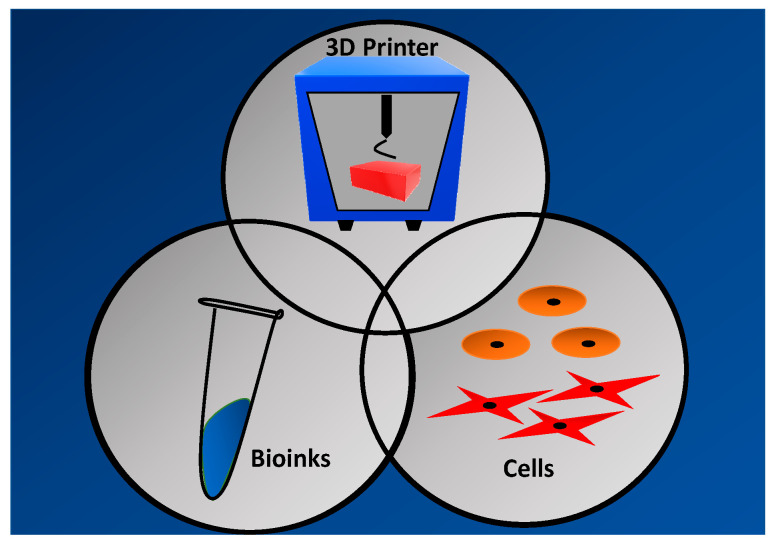
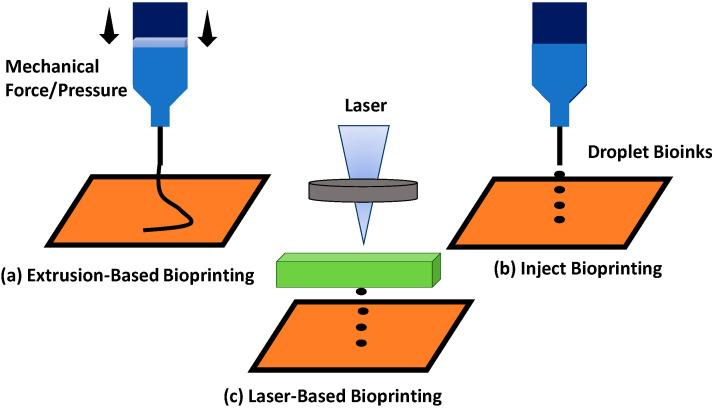
Skin tissue engineering aimed to replace chronic tissue injury commonly occurred due to severe burn and chronic wound in diabetic ulcer patients. The normal skin is unable to be regenerated until the seriously injured tissue is disrupted and losing its function. 3D-bioprinting has been one of the effective methods for scaffold fabrication and is proven to replace the conventional method, which reported several drawbacks. In light of this, researchers have developed a new fabrication approach via 3D-bioprinting by combining biomaterials (bioinks) with cells and biomolecules followed by a suitable crosslinking approach. This advanced technology has been subcategorised into three different printing techniques including inject-based, laser-based, and extrusion-based printing. However, the printable quality of the currently available bioinks demonstrated shortcomings in the physicochemical and mechanical properties. This review aims to identify the limitations raised by using natural-based bioinks and the optimum temperature for various applied printing techniques. It is essential to ensure maintaining the acceptable printed scaffold property such as the optimum pore sizes and porosity that allow cell migration activity. In addition, the properties required for an ideal bioinks design for better scaffold printability were also summarised.
皮肤组织工程旨在替代因严重烧伤和糖尿病溃疡患者慢性伤口而常见的慢性组织损伤。在严重受损组织被破坏并失去功能之前,正常皮肤无法再生。3D生物打印一直是支架制造的有效方法之一,并且已被证明可以取代存在若干缺点的传统方法。有鉴于此,研究人员通过将生物材料(生物墨水)与细胞和生物分子相结合,然后采用合适的交联方法,开发了一种通过3D生物打印的新制造方法。这种先进技术已被细分为三种不同的打印技术,包括基于注射的、基于激光的和基于挤出的打印。然而,目前可用生物墨水的可打印质量在物理化学和机械性能方面存在不足。本综述旨在确定使用天然生物墨水所带来的局限性以及各种应用打印技术的最佳温度。确保维持可接受的打印支架特性,如允许细胞迁移活动的最佳孔径和孔隙率,至关重要。此外,还总结了理想生物墨水设计为实现更好的支架可打印性所需的特性。