Naservafaei Saeid, Sohrabi Yousef, Moradi Parviz, Mac Sweeney Eileen, Mastinu Andrea
Department of Agronomy and Plant Breeding, Faculty of Agriculture, University of Kurdistan, Sanandaj 66314, Iran.
Research of Agricultural and Natural Resources Research Center, Zanjan 45617, Iran.
Plants (Basel). 2021 Mar 5;10(3):496. doi: 10.3390/plants10030496.
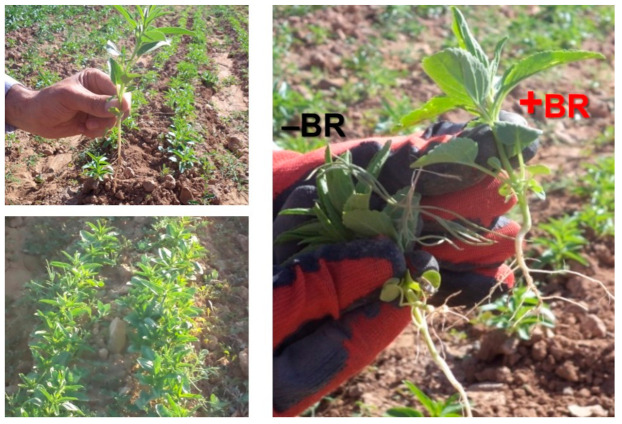
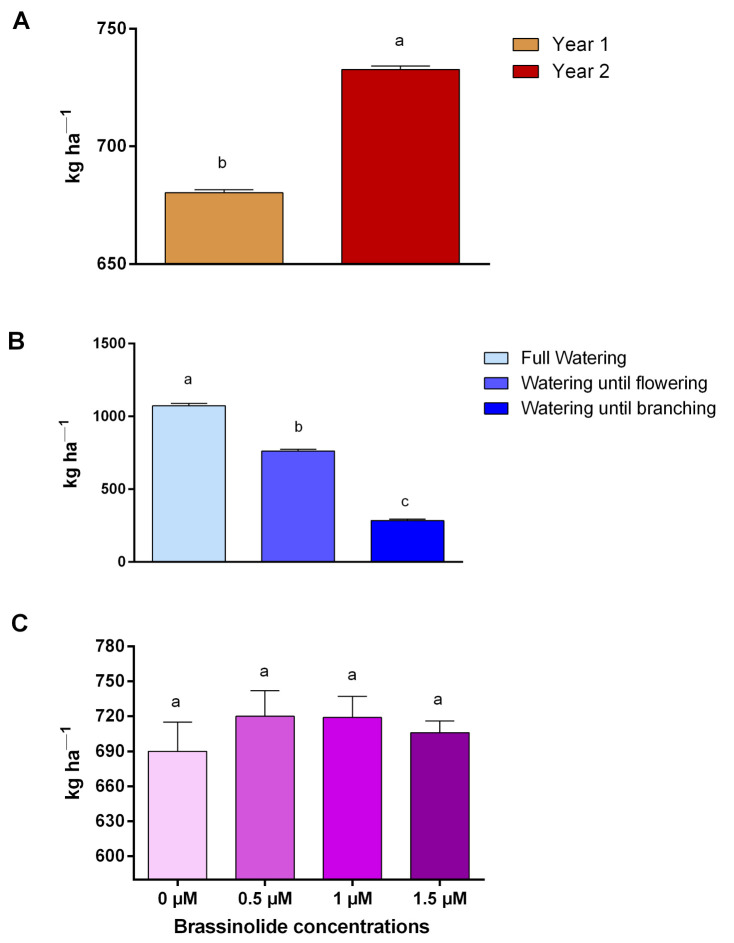
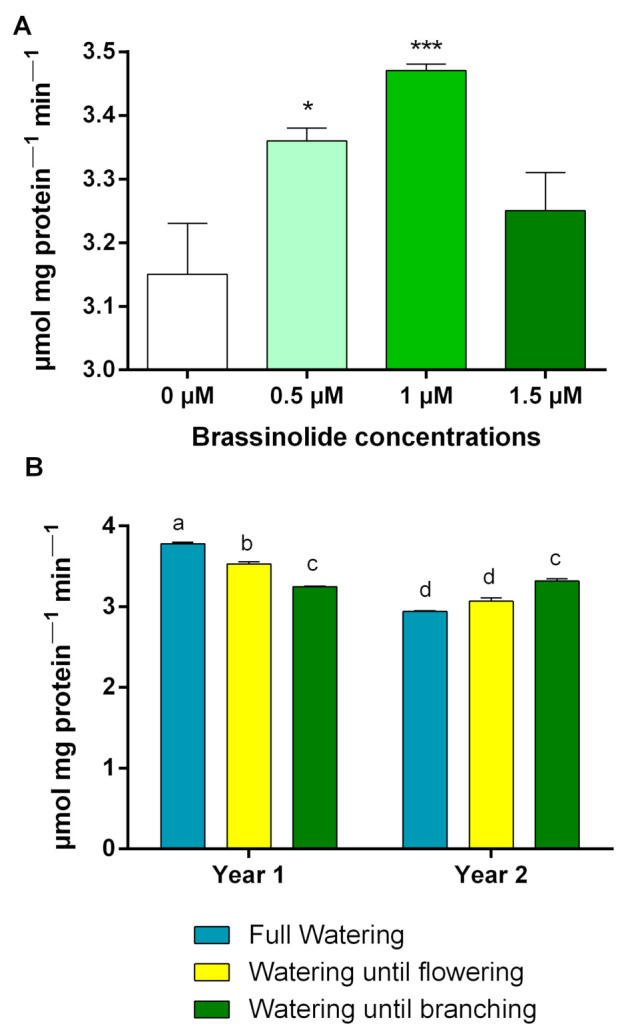
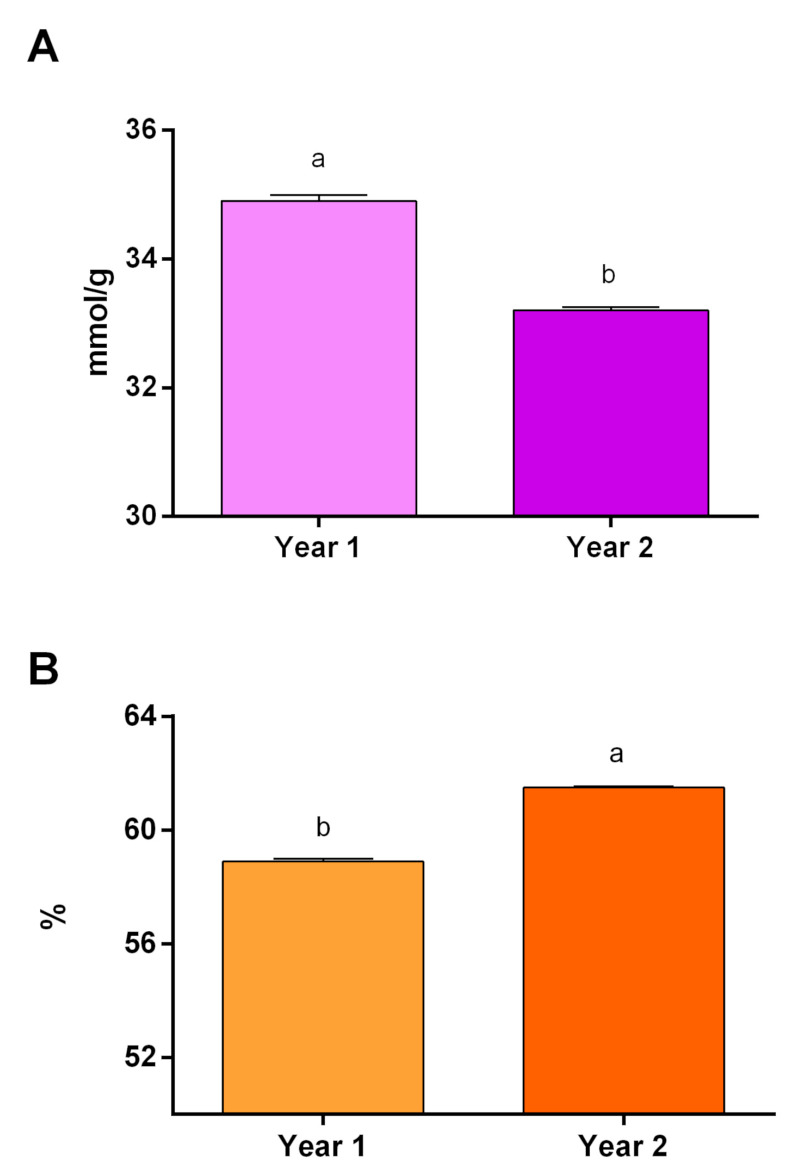
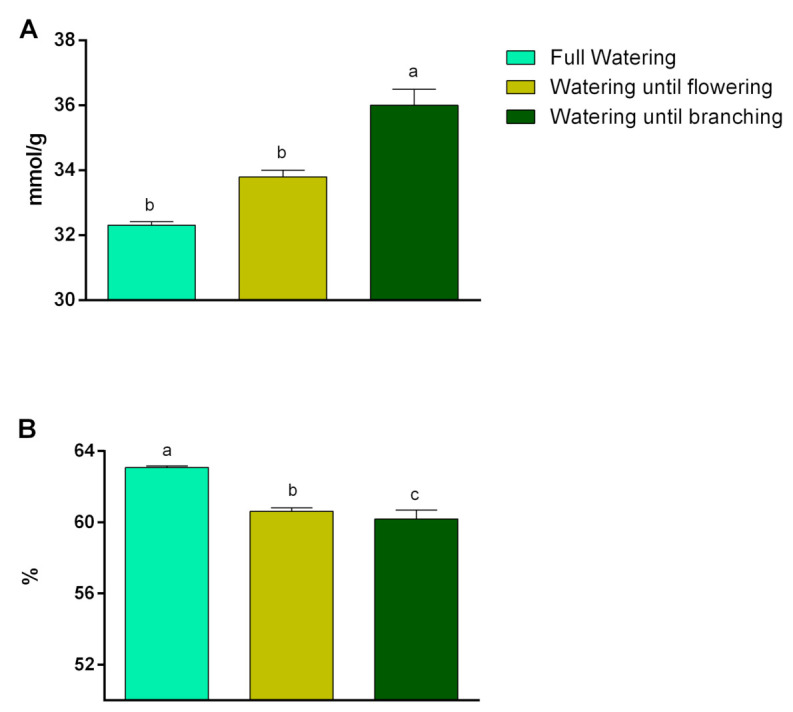
() is an important dry season medicinal plant. Drought, an important abiotic stress, adversely affects the plant's metabolism, which can be alleviated by plant growth regulators like brassinolides. A two-year field experiment was conducted in 2017-2018 to determine the effects of three different irrigation regimes and four brassinolide concentrations on the biochemical properties. A split-plot based on a completely randomized block design in three replicates was used as an experimental design with the following irrigation regimes: full watering, watering until flowering and watering until branching. These were the main plots, and 0, 0.5, 1 and 1.5 μM brassinolide concentrations were applied as the subplots. The results showed that many antioxidant enzymes and some biochemical parameters were affected by brassinolide treatment. Furthermore, the highest membrane stability and grain yield were produced in full watering treatment in the second year, and these treatments were not affected by brassinolide application. Several concentrations of brassinolide differently affected the studied treatments, and our study suggests that the amelioration of the effects of the drought stress on could possibly be achieved through brassinolide-induced elevation of reactive oxygen species (ROS) scavenging defense systems. There is a need for complementary research to prove the effectiveness of foliar application of this growth regulator to improve the growth and yield of under water shortage conditions.
()是一种重要的旱季药用植物。干旱作为一种重要的非生物胁迫,会对植物的新陈代谢产生不利影响,而油菜素内酯等植物生长调节剂可以缓解这种影响。2017年至2018年进行了一项为期两年的田间试验,以确定三种不同灌溉方式和四种油菜素内酯浓度对其生化特性的影响。采用基于完全随机区组设计的裂区试验,重复三次,试验设计如下灌溉方式:充分浇水、浇至开花和浇至分枝。这些是主区,0、0.5、1和1.5μM油菜素内酯浓度作为副区。结果表明,油菜素内酯处理影响了许多抗氧化酶和一些生化参数。此外,第二年充分浇水处理的膜稳定性和籽粒产量最高,且这些处理不受油菜素内酯施用的影响。几种浓度的油菜素内酯对所研究的处理有不同影响,我们的研究表明,通过油菜素内酯诱导提高活性氧(ROS)清除防御系统,可能实现缓解干旱胁迫对()的影响。需要进行补充研究,以证明叶面喷施这种生长调节剂对提高缺水条件下()的生长和产量的有效性。