Department of Pediatric Infectious Diseases, Medical University of Bialystok, Waszyngtona 17, 15-274 Bialystok, Poland.
Department of Theoretical Foundations of Biomedical Sciences and Medical Computer Science, L. Rydygier Collegium Medicum in Bydgoszcz, Nicolaus Copernicus University in Torun, 9 M. Sklodowska-Curie St., 85-094 Bydgoszcz, Poland.
Viruses. 2021 Mar 26;13(4):556. doi: 10.3390/v13040556.
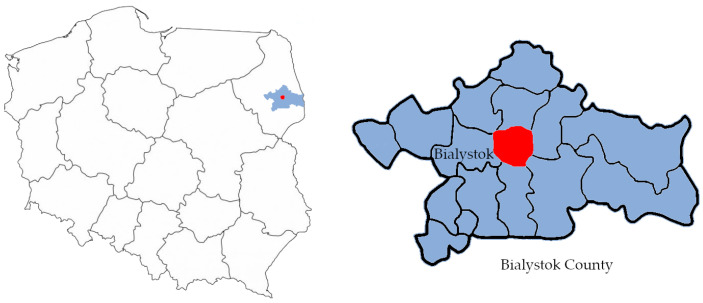
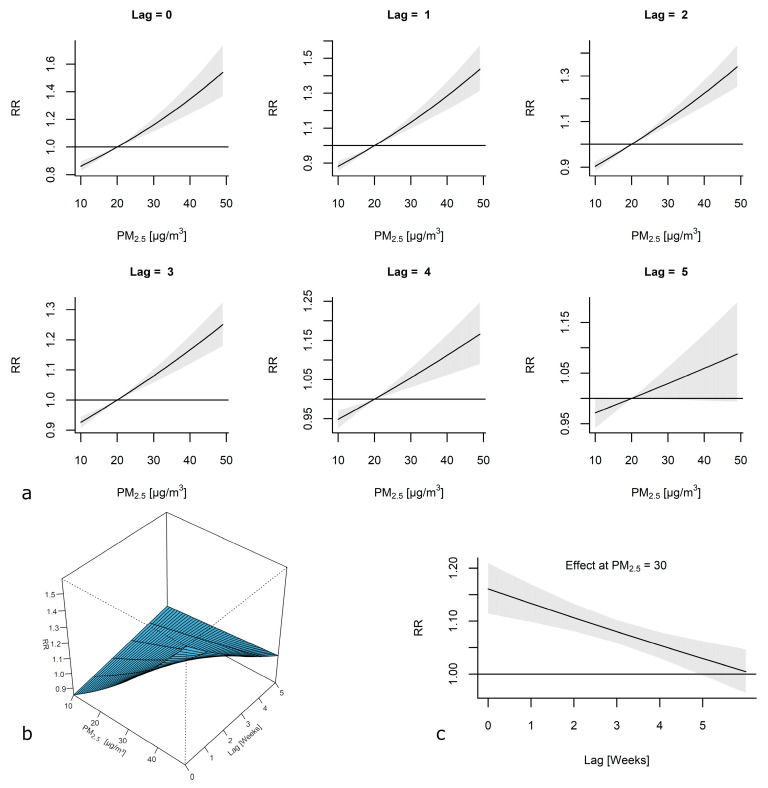
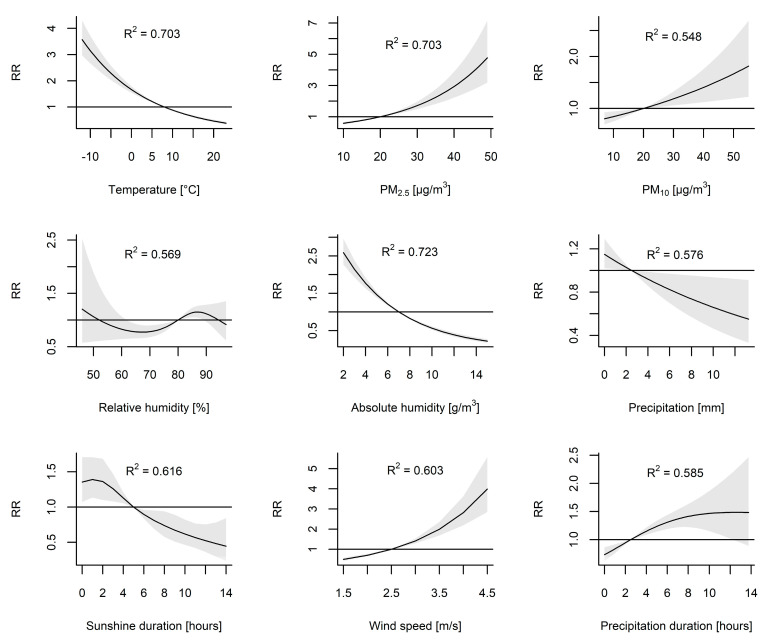
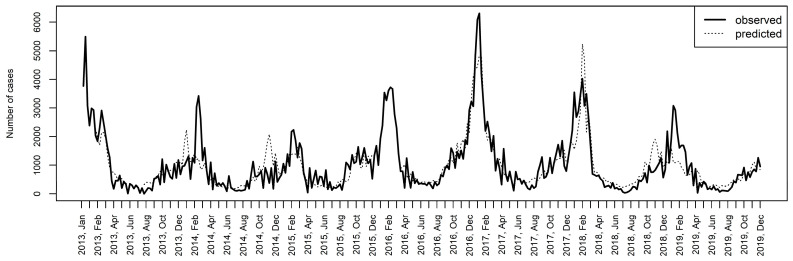
The cold season is usually accompanied by an increased incidence of respiratory infections and increased air pollution from combustion sources. As we are facing growing numbers of COVID-19 cases caused by the novel SARS-CoV-2 coronavirus, an understanding of the impact of air pollutants and meteorological variables on the incidence of respiratory infections is crucial. The incidence of influenza-like illness (ILI) can be used as a close proxy for the circulation of influenza viruses. Recently, SARS-CoV-2 has also been detected in patients with ILI. Using distributed lag nonlinear models, we analyzed the association between ILI, meteorological variables and particulate matter concentration in Bialystok, Poland, from 2013-2019. We found an exponential relationship between cumulative PM pollution and the incidence of ILI, which remained significant after adjusting for air temperatures and a long-term trend. Pollution had the greatest effect during the same week, but the risk of ILI was increased for the four following weeks. The risk of ILI was also increased by low air temperatures, low absolute humidity, and high wind speed. Altogether, our results show that all measures implemented to decrease PM concentrations would be beneficial to reduce the transmission of SARS-CoV-2 and other respiratory infections.
寒冷季节通常伴随着呼吸道感染发病率的增加和燃烧源造成的空气污染增加。由于我们正面临越来越多由新型 SARS-CoV-2 冠状病毒引起的 COVID-19 病例,因此了解空气污染物和气象变量对呼吸道感染发病率的影响至关重要。流感样疾病(ILI)的发病率可用作流感病毒传播的近似指标。最近,ILI 患者中也检测到了 SARS-CoV-2。我们使用分布式滞后非线性模型,分析了 2013-2019 年波兰比亚韦斯托克的 ILI、气象变量和颗粒物浓度之间的关系。我们发现累积 PM 污染与 ILI 发病率之间存在指数关系,在调整了气温和长期趋势后,这种关系仍然显著。污染在同一周内的影响最大,但随后四周的 ILI 风险增加。IL 的风险也随着空气温度降低、绝对湿度降低和风速升高而增加。总的来说,我们的研究结果表明,为降低 PM 浓度而采取的所有措施都将有助于减少 SARS-CoV-2 和其他呼吸道感染的传播。